Samsung Galaxy owners face a slightly different microSD question than other Android users. First, you need to know whether your phone has a card slot at all, because several recent premium Galaxy lines dropped it, while many mid-range Galaxy A-series phones kept it. Second, the cards that carry the Samsung or SanDisk label are not all aimed at the same job: some are everyday phone cards, some are tuned for app loading, and some are built for gaming consoles or high-end cameras. The decision behind this keyword is picking a card that works properly in a Galaxy phone without paying for performance the phone cannot use.
This guide is written for Galaxy owners with a microSD slot who want more room for photos, 4K video, music, and downloaded apps. Six cards are compared using the specifications in their listings, ranging from 64GB to a 1TB model. A console-specific Express card and a USB-C card reader often show up in the same searches, but they are not phone memory cards and are left out. As 2026 buyers sort through look-alike packaging, the sections below explain the speed marks that matter and where a lower-priced card is perfectly sensible.
Our Top Picks
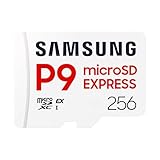
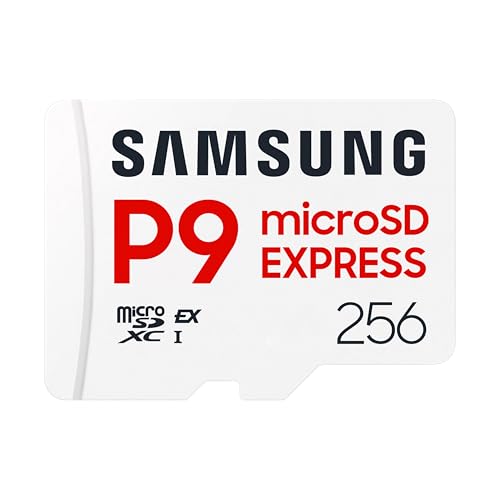 Samsung P9 Express microSDXC 256GB for Nintendo-Switch™ 2256GB0.59 x 0.43 x 0.1 inches0 poundsCheck on Amazon


Top 3 picks at a glance
Quick Picks
As an Amazon Associate we earn from qualifying purchases at no extra cost to you.



| Product | Best for | Key spec from the listing |
|---|---|---|
| Samsung EVO Plus 64GB | Entry-level Galaxy storage | Up to 160MB/s, UHS-I, U3, V10, A3, adapter |
| SanDisk Extreme 128GB (Galaxy A bundle) | Galaxy A-series owners wanting a faster card | Extreme microSDXC, listed for A14 5G, A24, A34 5G, A54 5G |
| Samsung EVO Plus 128GB | The sweet spot for most Galaxy owners | Up to 160MB/s, UHS-I, U3, V10, A3, adapter |
| Samsung EVO Plus 512GB | Large video and media libraries | Up to 160MB/s, UHS-I, A3, 512GB, adapter |
| SanDisk Ultra 128GB | Simple everyday storage | Ultra microSD, works with Samsung cell phones |
| SanDisk Extreme 1TB | Maximum capacity | 1TB Extreme UHS-I, compatible with Samsung phones |
How to Choose
Confirm the slot and the supported capacity
Start with your phone’s specification page. Look for the words “microSD slot” and the maximum supported capacity. Many Galaxy A-series phones accept cards up to 1TB, but older models may stop at 256GB or 512GB, and a few use a hybrid tray that shares space with a second SIM. If your phone has no slot, no card in this guide will help. Cards above 32GB use the exFAT file system, which Galaxy phones handle without trouble, and you should format a new card in the phone rather than on a computer for the best compatibility.
It is also worth knowing how your Galaxy handles the card. By default, the phone treats it as portable storage, and the camera app can be pointed at the card so that new photos and videos are saved there directly. Moving existing files over takes a few minutes in the My Files app, and a faster card shortens that job. Keep the phone’s own storage for apps and system updates, and use the card for media that you want to carry to a laptop or a new phone later.
Understand U3, V10, and A3 on the label
UHS Speed Class U3 guarantees at least 30MB/s sustained writes, and the Video Speed Class V10 guarantees at least 10MB/s, which is enough for Full HD recording. The A3 mark in the Samsung EVO Plus listings stands for the higher tier of application performance, meaning faster random reads and writes, which helps if you run apps from the card or open large galleries. An “up to 160MB/s” figure is a maximum read speed. For video recording, the sustained write class is more important than the headline read number.
Capacity versus price per gigabyte
For casual photo and music use, 64GB or 128GB is comfortable. For 4K video, offline playlists, and large app libraries, 256GB, 512GB, or even 1TB reduces the need to move files. The larger the card, the greater the loss if it fails, so keep backups of irreplaceable photos in the cloud or on a computer. A 1TB card is attractive but is only useful if the phone officially supports that size, so confirm that before buying.
Beware of mismatched products and look-alikes
Search results for Galaxy phones are cluttered with items that are not phone cards. A console memory card built for a gaming handheld may use a different standard, and a card reader is an accessory, not storage. Some listings are bundles that add a reader or an adapter, so read what is included. Counterfeit cards exist, so buy from reputable sellers, test new cards by filling them and verifying the files, and check that the capacity shown by the phone matches what you paid for.
The 6 Best Options
Samsung EVO Plus 64GB
The Samsung EVO Plus 64GB lists up to 160MB/s read speeds, UHS-I, C10, U3, V10, and A3 ratings, with an SD adapter, for phones, tablets, and gaming devices. It is a straightforward, well-rated entry point for Galaxy owners.
- Strength: A3 and U3 ratings cover app use and smooth video recording.
- Strength: Samsung branding gives familiar compatibility for Galaxy phones.
- Trade-off: 64GB fills up quickly with 4K video and large photo libraries.
Skip it if you shoot a lot of video or want to store a large media collection on the card. For a budget Galaxy handset that mostly takes snapshots and plays downloaded music, this size is a tidy match, and the included adapter means the same card can later move to a camera or laptop reader.
SanDisk Extreme 128GB (Galaxy A bundle)
This SanDisk Extreme listing at 128GB is described as compatible with Galaxy A14 5G, A24, A34 5G, and A54 5G models, and it is sold as a bundle. The Extreme line is SanDisk’s performance tier.
- Strength: Extreme-tier card with a model-specific compatibility note for popular Galaxy A phones.
- Strength: 128GB suits a mix of photos, video, and apps.
- Trade-off: Because it is a bundle, you should check what extras are included and whether you actually need them.
Skip it if you only want a standalone card and do not need any additional items. Buyers who own one of the named A-series models get the most reassurance here, while owners of other Galaxy phones should still confirm the slot and capacity limit instead of relying on the model list alone.
Samsung EVO Plus 128GB
The 128GB EVO Plus carries the same up to 160MB/s, UHS-I, C10, U3, V10, and A3 ratings as the 64GB, with an SD adapter. It is the capacity most Galaxy owners will find comfortable.
- Strength: Balanced capacity for everyday photos, music, and downloaded apps.
- Strength: A3 rating supports apps and fast gallery loading.
- Trade-off: V10 is suited to Full HD video, not sustained high-bitrate 4K writes.
Skip it if you plan to record long stretches of 4K video directly onto the card. For most owners, though, it covers daily life well: a year of family photos, a few playlists, and a handful of downloaded series fit comfortably, with headroom left over for a vacation’s worth of clips.
Samsung EVO Plus 512GB
The 512GB EVO Plus lists the same family of speed marks, up to 160MB/s with UHS-I, A3, and an SD adapter, for phones, tablets, and gaming. It suits owners with large libraries.
- Strength: 512GB can hold a large video and music library.
- Strength: Same A3 app performance mark as the smaller sizes.
- Trade-off: Make sure your phone supports a 512GB card, since not every model does.
Skip it if your phone’s maximum card size is lower or you want a lower upfront cost.
SanDisk Ultra 128GB
The SanDisk Ultra is listed as a 128GB micro SD card that works with Samsung cell phones. The title offers few technical details, so the listing’s broader specifications are worth checking.
- Strength: Ultra line is a familiar, mainstream choice for phones.
- Strength: 128GB is a practical size for most users.
- Trade-off: The title does not list A or V ratings, so performance details need verifying.
Skip it if you need a clear A-rating for running apps from the card. It is best treated as a mainstream storage card for photos and music, and shoppers who want proof of app-class performance should compare it against the Extreme or EVO Plus listings that state their ratings outright.
SanDisk Extreme 1TB
This listing offers a 1TB Extreme UHS-I card marketed as compatible with Samsung phones. It is the largest capacity here, aimed at users who want to carry an entire media library.
- Strength: 1TB capacity removes most storage worries.
- Strength: Extreme tier suggests stronger performance than entry cards.
- Trade-off: Only useful if the phone officially supports a 1TB card, and a single card holds a lot to lose.
Skip it if your phone has a lower limit or if you prefer to split data across smaller cards. If you do buy a card this large, set a routine to copy your photos to a computer or cloud account every month, because the bigger the card, the more you stand to lose in a single failure.
Which One Fits Your Situation
You have a Galaxy A-series phone and want a safe pick
The Samsung EVO Plus 128GB is the most balanced option, with A3 and U3 ratings. The SanDisk Extreme 128GB bundle is the alternative if you want a model-specific compatibility note.
You shoot plenty of video
Choose the 512GB EVO Plus or the 1TB Extreme if your phone supports them, and offload files regularly so a single card is never your only copy.
You just need extra room for photos and music
The Samsung EVO Plus 64GB or SanDisk Ultra 128GB covers the basics without paying for more capacity than you need.
You carry the card between a phone and a tablet
The EVO Plus models include an SD adapter, and their listing mentions tablets as well, so a single card can move between devices.
Common Mistakes
- Buying a card before confirming that your Galaxy phone has a microSD slot.
- Choosing a capacity larger than the phone’s supported maximum.
- Treating a console-specific card or a card reader as phone memory.
- Judging a card by the “up to” read speed while ignoring write class and A rating.
- Keeping irreplaceable photos only on the card with no backup.
Related guides
- How To Clean Quest 3 Lenses And Facial Interface
- Vr Facial Interfaces For Glasses Wearers
- Rechargeable Batteries For Solar Lights
Frequently Asked Questions
Do all Samsung Galaxy phones have a microSD slot?
No. Several recent premium Galaxy lines omit it, while many A-series models still include one. Check your model’s specification page before buying a card.
What size card should I buy for a Galaxy phone?
For most people 128GB is plenty, and 256GB or 512GB suits heavy video use. Confirm your phone’s supported maximum first.
Is A3 important on a phone card?
It helps when you run apps from the card or open large galleries, since it reflects faster random reads and writes. For simple photo storage it matters less.
Should I format the card in the phone?
Yes. Formatting in the phone sets the file system and cluster size that the device expects, which reduces compatibility issues.
Related guides
- How to Check VRAM Usage in Windows 11: Task Manager, Game Bar and Overlay Methods
- How Much VRAM for 4K Gaming: 8GB, 12GB or 16GB, and What Actually Fills It
- How Many VRM Phases Do You Need? Match Phase Count and Power Stage Rating to Your CPU
- Best Gaming PCs for VR: Seven Prebuilts Compared by Graphics Card, CPU and Memory (2026)