Game installs have grown faster than most storage budgets. A handful of big releases can fill a 1TB drive, and a library of a dozen titles plus a few mods will push past it without effort. That is the real question behind a search for NVMe SSDs for gaming: not just how fast a drive reads sequential data, but how many games it holds, whether it fits your console or motherboard, and whether it stays cool when a patch rewrites tens of gigabytes.
The eight drives below are all M.2 2280 NVMe models on a PCIe 4.0 interface, spanning capacities from 512GB to 2TB and speeds from the 4800 MB/s class to the 7400 MB/s class. They suit PC builders, laptop upgraders and PlayStation 5 owners alike, which is why heatsinks and console compatibility show up so often in the details. Everything here comes from the listing titles for 2026 shoppers, so verify the rest on each product page.
Our Top Picks



Top 3 picks at a glance
Quick Picks
As an Amazon Associate we earn from qualifying purchases at no extra cost to you.


| Product | Best for | Key spec from the title |
|---|---|---|
| Samsung 990 PRO 2TB | High-end gaming rigs with a big library | PCIe 4.0, up to 7,450 MB/s, 2TB |
| SIX NVMe M.2 PCIe 4.0 1TB | PS5 expansion with a heatsink included | Up to 7350 MB/s, heatsink |
| Kingston NV3 1TB | Budget-minded Gen 4 upgrades | PCIe 4.0 x4, up to 6000 MB/s |
| Acer Predator GM7 1TB | Desktop, laptop and PS5 use | NVMe 2.0, up to 7400 MB/s |
| Fanxiang 1TB Gen4 (4800 MB/s) | Entry-level Gen 4 for PS5 | Up to 4800 MB/s, SLC cache |
| Fanxiang 1TB with heatsink (7000 MB/s) | PS5 and PC with included cooling | Up to 7000 MB/s, heatsink |
| TEAMGROUP T-Force G50 512GB | Small boot-and-games drive | InnoGrit controller, graphene heat spreader |
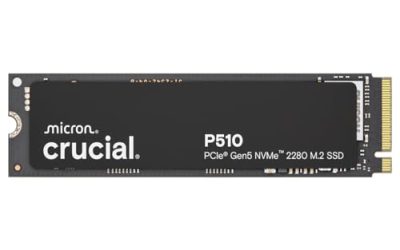
| Crucial P310 2TB | Handhelds, laptops and desktops | Up to 7,100 MB/s, 2TB |
The 8 Best Options
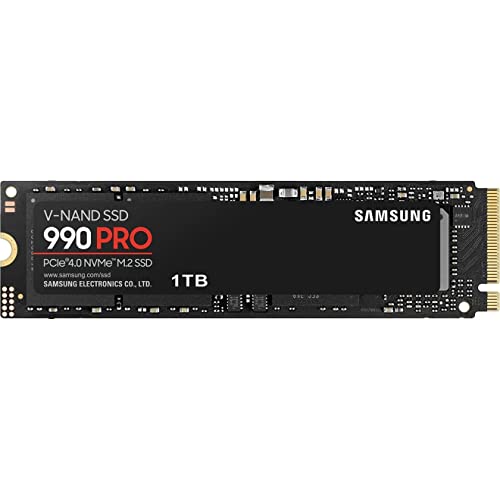
Samsung 990 PRO 2TB
The flagship of this group by title. The listing shows a 2TB capacity, a PCIe 4.0 M.2 2280 form factor, speeds up to 7,450 MB/s and a positioning for high-end computing, gaming and heavy-duty workloads. It is the choice for a builder who wants one large drive that holds a whole library, instead of juggling installs between smaller disks.
Capacity is the quiet strength here. At 2TB, a drive can hold a dozen or more big releases at once with space left for patches and capture clips, which saves repeated downloads. Because it is a bare drive, you will need a motherboard heatsink or a heatsink of your own for sustained use.
- 2TB gives room for a large game library plus updates.
- Up to 7,450 MB/s is the top speed figure in this guide.
- The title targets gaming and heavy workloads, so it works for editing and capture as well.
- The title does not mention a heatsink, so plan cooling separately.
- It is a premium-tier drive, and capacity is the main reason to pay for it.
Skip it if your library is small or your machine is a console, where a heatsink-equipped drive makes installation easier. Buyers who edit video or move large project files will also appreciate the capacity. The next entry offers a heatsink in the box at a smaller capacity.
SIX NVMe M.2 SSD PCIe 4.0 1TB
A lesser-known brand with a spec sheet aimed squarely at console owners. The title lists a 1TB M.2 2280 drive, PCIe 4.0, read speeds up to 7350 MB/s, a heatsink and gaming and PS5 memory expansion use. It is for the buyer who wants fast storage with cooling included and does not want to shop for a separate heatsink.
The included heatsink matters because many console bays and sealed laptops have strict clearance. A drive that arrives ready to install removes one more compatibility question, though buyers should still check the heatsink height against their slot.
- A heatsink is part of the listing, which simplifies console installs.
- Up to 7350 MB/s puts it in the same class as the faster drives here.
- 1TB is a practical size for a console library or a primary PC game drive.
- The brand is far less established, so warranty terms deserve a close read.
- The title names no controller or NAND type, which leaves less to compare.
Skip it if brand reputation and long warranty support matter more to you than included cooling, or if you need more than 1TB. Compared with the Kingston NV3 next, it promises higher peak speed but with a less familiar name.
Kingston NV3 1TB
A familiar name in a straightforward drive. The title shows 1TB, M.2 2280, NVMe, PCIe 4.0 Gen 4×4, speeds up to 6000 MB/s and the part number SNV3S/1000G. It is for the shopper replacing a SATA drive or an old Gen 3 NVMe with something noticeably faster, without paying flagship rates.
Its 6000 MB/s ceiling sits below the 7000 MB/s class, but for game loading the practical difference between fast Gen 4 drives is often small. Buyers who value a recognizable brand and a clean part number for compatibility checks tend to like this tier.
- The brand is widely recognized, which helps with support and returns.
- PCIe 4.0 Gen 4×4 with up to 6000 MB/s is a solid step above SATA and Gen 3.
- A clear part number makes checking compatibility and ordering replacements easy.
- No heatsink is mentioned, so you must supply cooling for long sessions.
- Peak speed trails the 7000 MB/s drives in this guide.
Skip it if you want the highest speed figure or a console-ready package, since the listing mentions neither a heatsink nor a console focus. Compared with the Acer Predator GM7 that follows, it is the more modest and the more conservative choice.
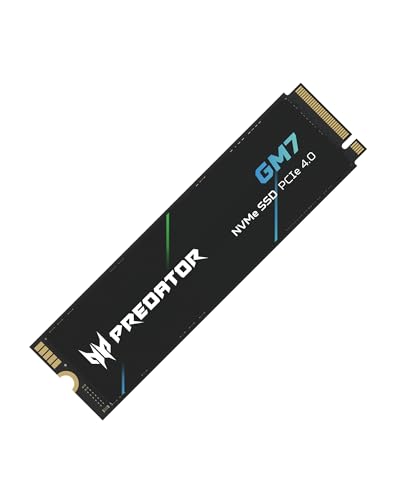
Acer Predator GM7 1TB
Acer’s gaming brand brings a 1TB drive with an M.2 2280 PCIe Gen 4 x4 interface, NVMe 2.0 support and read speeds up to 7400 MB/s. The title says it works in laptops, desktops and the PS5, which makes it one of the most flexible entries here. It suits a household with more than one machine that may swap drives over time.
Speed sits in the top bracket of this guide, and the NVMe 2.0 mention shows a newer specification generation. The title does not state a heatsink, so console owners should confirm what their model requires before purchase. Laptop owners get a similar benefit, since the same drive can later move into a desktop when the machine is replaced.
- Up to 7400 MB/s is near the top of the speed range here.
- Compatibility is listed for laptop, desktop and PS5 use.
- NVMe 2.0 is named in the title.
- A heatsink is not mentioned, so cooling is a separate purchase.
- 1TB fills quickly if you keep many large games installed.
Skip it if you need more than 1TB for the same money class or an included heatsink. It pairs naturally with the first Fanxiang drive, which sits much lower on speed but is aimed at the same console buyers.
Fanxiang 1TB Gen4 (up to 4800 MB/s)
This Fanxiang listing is the slowest Gen4-class drive here by its stated speed. The title lists a 1TB NVMe PCIe Gen4 M.2 internal gaming SSD for PS5, up to 4800 MB/s, 3D NAND and an SLC cache. It is for the shopper whose priority is a low-cost bump in storage rather than peak throughput.
For most game libraries, the main gain from an NVMe drive is capacity and responsiveness, and a 4800 MB/s drive is still many times quicker than a hard disk. It makes the most sense for a second slot that holds older games. The compromise is that the speed gap to the 7000 MB/s models is real if you copy large files often.
- Positioned as an affordable way to add 1TB of console or PC storage.
- 3D NAND with an SLC cache is named in the title.
- PS5 use is listed.
- Up to 4800 MB/s is the lowest peak speed among the Gen 4 drives here.
- No heatsink is mentioned, so a console install needs a separate one.
Skip it if you want top-tier transfer speeds or a drive that comes ready for a console bay, or if you regularly copy very large files. The next listing, from the same brand, answers both points.
Fanxiang 1TB with Heatsink (up to 7000 MB/s)
A second Fanxiang line, this time with a heatsink and a much higher stated speed. The title shows a 1TB NVMe internal gaming SSD for PS5, up to 7000MB/s, M.2 PCIe Gen 4 and a heatsink for storage expansion. It is for console owners who want a plug-and-play upgrade without hunting for compatible cooling.
Together with the previous listing, it shows how one brand can offer both a basic and a faster tier, so read the capacity and speed on each title instead of assuming they match. The heatsink version targets sustained loading and large patches, where heat can cause a drive to slow down.
- A heatsink is part of the package.
- Up to 7000 MB/s is a clear step above the other Fanxiang listing.
- PS5 compatibility is stated directly.
- The brand is less established than Samsung, Kingston or Crucial.
- 1TB may feel tight for large libraries.
Skip it if you need the biggest capacity or a major-brand warranty. Compared with the TEAMGROUP drive next, it has twice the capacity but a more generic profile.
TEAMGROUP T-Force G50 512GB
The smallest drive in the guide by capacity. The title lists 512GB, SLC caching, 3D TLC NAND, an InnoGrit controller, PCIe Gen4x4, M.2 2280 and an ultra-thin graphene heat spreader, with PS-series compatibility. It makes sense as a dedicated game drive for a small-form-factor PC or as a second disk beside a larger boot drive.
Controller and NAND type are spelled out here, which gives experienced buyers more to compare, and the slim profile suits builders who care about clearance more than headline speed. The thin heat spreader is also helpful in tight laptop and console bays where a bulky heatsink will not fit.
- The title names its controller and NAND, which helps informed buyers.
- An ultra-thin graphene heat spreader suits tight spaces.
- Gen4x4 NVMe with PS-series compatibility is listed.
- 512GB fills fast and holds only a few large games.
- The title gives no peak speed figure, so compare it carefully.
Skip it if you want one drive to hold your whole library, or if you play several very large games at once. It sets up a contrast with the final pick, the Crucial P310 2TB, which has four times the capacity.
Crucial P310 2TB
Crucial’s entry lists 2TB, PCIe Gen4 NVMe M.2 2280, speeds up to 7,100MB/s and use in laptops, desktops (PC) and handheld gaming consoles, along with included Acronis data recovery software. It is for buyers who want a large drive in a form factor that also suits handheld PCs and thin laptops.
The handheld mention is notable and sets it apart from most of the other listings. Devices with limited internal storage are a common reason to upgrade, and a 2TB drive transforms how many games you can carry. The bundled recovery software is an added convenience when cloning an old drive.
- 2TB offers the same capacity as the Samsung flagship.
- Up to 7,100 MB/s is a strong speed for the class.
- Handheld console, laptop and desktop use are all listed.
- No heatsink is mentioned.
- Peak speed is a little below the fastest drives in the guide.
Skip it if you want a drive with included cooling for a console. Against the Samsung 990 PRO, which opened this list, it targets a similar capacity from a different brand with a handheld focus.
Who Needs an NVMe Drive for Gaming
The honest answer is anyone whose library no longer fits or whose load screens drag. Modern open-world titles stream large amounts of data while you play, and a slow disk shows up as texture pop-in and long waits.
Anyone still gaming from a hard disk or a SATA drive gains the most, but even owners of older Gen 3 NVMe drives often upgrade because capacity runs out before speed does. The groups below are the typical buyers.
A quick way to size your purchase is to list the games you play monthly, add the ones you would reinstall within a season, and then add a quarter for patches, mods and screenshots. That total, not the speed on the box, tells you whether 1TB or 2TB is the right tier.
PC builders and upgraders
Builders can choose any drive in this guide, depending on motherboard slots and cooling. A fast Gen 4 drive for the system and games, plus a motherboard heatsink, is the standard approach. If your board has a second M.2 slot, a cheaper drive can hold the overflow.
PlayStation 5 owners
Console owners should look for drives that name PS5 compatibility and include or accommodate a heatsink. Several listings here do, and the bay has limited clearance, so measure before ordering. Capacity matters because game files for the console tend to be large, and deleting and redownloading titles is slow on many home connections. A larger drive pays back in patience, and it also keeps you from juggling installs every time a new release arrives.
Laptop and handheld users
Thin devices often have a single slot and little cooling. A drive that lists laptop or handheld use, such as the Crucial P310 or Acer GM7, avoids guesswork. Thin heat spreaders are better here than tall heatsinks. Handheld buyers in particular should favor 2TB, since the built-in storage on most devices is small and games are the main thing filling it.
How to Choose
Capacity before speed
Treat 1TB as the minimum for a main gaming drive today and 2TB as the comfortable target. A 512GB drive is only suitable as a boot disk or a small second disk. Leave at least 10 to 15 percent of any SSD free so it can maintain performance and manage wear. If you keep recordings or mod folders on the same disk, size up one tier.
Interface and form factor
Every drive here is M.2 2280 and PCIe 4.0 x4, so it fits standard slots on modern boards and many laptops. Confirm your motherboard has a free M.2 slot supporting NVMe and that your device accepts 2280 length. Older boards limited to PCIe 3.0 will still run these drives but at reduced speed.
Speed class
The listings sit in three bands: 4800 MB/s, 6000 MB/s and 7000 MB/s or more. For gaming, the jump from SATA to any of them is large, while the jump between bands is modest in load times. Pay extra for speed only if you also move large files or edit video.
Cooling
Heat is the usual cause of throttling during long copies or big patches. Check whether your motherboard provides a heatsink, whether your console demands one, and how tall your laptop bay allows. Drives with a heatsink in the listing, like the SIX and Fanxiang models, solve this directly.
Controller, NAND and cache
Titles mentioning SLC cache, 3D NAND or a named controller, such as the InnoGrit chip on the TEAMGROUP drive, give clues about design. Sustained writes slow down once the cache is full, which is the main trade-off of budget models. For game installs that rarely matter, but for heavy copying they do.
Power and battery considerations
Laptops and handhelds care about drive power draw, because it affects battery life and heat inside a sealed body. Listings that mention laptop or handheld use, like the Acer GM7 and Crucial P310, are designed with those devices in mind. Desktop buyers can ignore this point.
Warranty and brand support
Established makers usually publish clearer warranty terms and endurance ratings, and that has value for a drive that stores your library, saves and mods for years. Where a title gives no warranty information, read the product page and the seller’s policy before buying.
Where budget models cut corners
Low-cost drives tend to omit heatsinks, use smaller caches and publish fewer details about their parts. They may also cap sustained speeds well below the headline figure. Ignore the largest speed number on its own and weigh capacity, cooling and warranty first. Also watch for listings that mix SATA and NVMe wording, or that do not name the interface at all, since those are easy to buy by mistake.
Bare Drive vs Drive with a Heatsink
Gamers face this decision more than any other: buy a bare drive and use the motherboard heatsink, or pay for a drive that includes its own cooling. The table frames it.
| Factor | Bare drive | Drive with heatsink |
|---|---|---|
| Desktop with motherboard heatsink | Works well, no extra part | Often unnecessary, may not fit under the cover |
| PS5 expansion bay | Needs a separate heatsink | Ready if height fits |
| Thin laptop or handheld | Usually the right choice | May be too tall |
| Examples in this guide | Samsung 990 PRO, Kingston NV3, Crucial P310 | SIX, Fanxiang 7000 MB/s |
The rule of thumb is simple: let the host device decide. A desktop with a motherboard cover already has cooling, a console has a fixed bay that expects a certain heatsink, and a thin device has no room for either. Buying the wrong style costs you either a second purchase or a drive that throttles.
Choose a bare drive for PCs
Most desktop boards ship with M.2 heatsinks, so a bare drive is cheaper and avoids fit problems. Laptops and handhelds generally have no room for an added heatsink either, so a bare drive or a thin heat spreader is the safer route. If your board has no cover, a low-profile clip-on heatsink is inexpensive.
Choose a heatsink drive for consoles
The PS5 slot expects cooling and has a defined clearance, so a listing that includes a suitable heatsink saves effort. Still check the heatsink dimensions against the console’s requirements before installing.
Setup, Compatibility and Upgrade Tips
What to check before buying
Confirm the free M.2 slot, its supported interface and length, the heatsink situation and the capacity you need. On consoles, review the maker’s list of supported specifications for speed and height. For laptops, confirm the slot is NVMe and not SATA-only.
It also helps to update your motherboard firmware and storage drivers before installing, and to note down the serial number and warranty terms. If your old drive is smaller, use a USB enclosure to clone it, so you do not have to reinstall the operating system.
What to upgrade first
If your games sit on a hard disk, moving them to any NVMe drive here is the single biggest improvement. Keep the operating system on the fastest drive, install games you play often on NVMe and archive the rest. Cloning software, such as the recovery tool bundled with the Crucial drive, can move your data across. After that, move your capture clips and mods to the new drive too.
Common compatibility traps
Buying a drive that is too tall for a console bay is the most frequent error. Another is using a PCIe 3.0 slot and expecting Gen 4 speeds, or buying a SATA M.2 drive that looks identical but is far slower. Some motherboards disable a SATA port when a second M.2 slot is used, so read the manual. Finally, a larger heatsink may block a graphics card on tight boards. If you install a drive in a second slot, confirm that it does not share lanes with the first, which can reduce speeds on some budget motherboards.
Which One Fits Your Situation
You want one drive for a growing PC library
Capacity is the deciding factor, and fewer drives mean fewer slots used. The Samsung 990 PRO 2TB is the strongest candidate, offering 2TB and a top speed figure. Add a motherboard heatsink and it should serve for years.
You are upgrading a PS5 and want a simple install
Cooling and clearance are the main concerns here. The Fanxiang 1TB with heatsink or the SIX 1TB with heatsink both list console use and cooling. Confirm the heatsink height and warranty terms.
You carry a handheld or thin laptop
Space and heat limit the choice, so a bare drive is usually best. The Crucial P310 2TB lists handheld, laptop and desktop use, plus a large capacity that avoids constant uninstalling.
You just need an affordable speed bump
Not every upgrade needs a flagship. The Kingston NV3 1TB offers PCIe 4.0 and a recognized brand at a modest tier, which is plenty for most game libraries.
One more habit pays off: after installing, open the drive health tool from the maker or the operating system, confirm the link runs at the expected PCIe speed, and update the drive firmware if an update exists. A drive that quietly negotiated a slower link is a common and easily fixed surprise.
Common Mistakes
- Choosing 512GB because it is cheap, then running out of space after a few installs.
- Ignoring heatsink height in a console or laptop bay.
- Paying for peak speed that your slot or workload cannot use.
- Filling the drive to the brim and losing performance.
- Assuming every PCIe 4.0 listing has the same sustained speed.
- Forgetting to check the warranty on lesser-known brands.
Related guides
- How To Clean Quest 3 Lenses And Facial Interface
- Vr Facial Interfaces For Glasses Wearers
- Micro Sd Cards For Samsung Galaxy Phones
Frequently Asked Questions
Is NVMe worth it for gaming?
Yes, especially when replacing a hard disk or SATA drive. Games load and patch faster, and big libraries fit on one disk. The gap between NVMe tiers is smaller than the gap between NVMe and older storage.
How much capacity should I buy?
One terabyte is a practical minimum and two terabytes is comfortable for most libraries. Choose 512GB only for a small second drive. Leave some space free for performance.
Do I need a heatsink?
Desktop boards often include one. Consoles generally need one, and laptops often have no room for a tall one. Choose according to your device rather than the drive alone.
Will these drives work in a PS5?
The titles of the SIX, both Fanxiang, Acer and TEAMGROUP listings reference console use. Several listings name PS5 compatibility, but you should still check height, speed and heatsink requirements for your console version. Do not rely on the title alone.
Is PCIe 4.0 enough?
For gaming, yes, and every drive in this guide uses it. Game loading depends on more than raw drive speed, so a Gen 4 drive covers current needs for nearly every player. Faster interfaces are mostly for heavy workstation tasks.
Are lesser-known brands safe?
Many work well, though the margin for error is smaller than with major makers, but warranty support and part transparency vary. Read the listing carefully, back up important saves and favor sellers with clear return terms.
Final Words
For gaming storage, capacity and cooling usually decide more than a few hundred megabytes per second. Choose 1TB at minimum, 2TB if your library is large, and match the heatsink to your device: a bare drive for desktops and handhelds, a cooled drive for consoles. Established brands add comfort around warranty, while newer names offer included extras. Whichever you pick, confirm slot, height and interface on the product page, and keep a little free space on the disk. A drive that fits your device and your library today will also be easy to move to the next machine you buy.
Related guides
- How to Check VRAM Usage in Windows 11: Task Manager, Game Bar and Overlay Methods
- How Much VRAM for 4K Gaming: 8GB, 12GB or 16GB, and What Actually Fills It
- How Many VRM Phases Do You Need? Match Phase Count and Power Stage Rating to Your CPU
- Best Gaming PCs for VR: Seven Prebuilts Compared by Graphics Card, CPU and Memory (2026)