The best gaming PC for VR in this set is the one whose graphics card fits the headset you own, and on paper that points to the CyberPowerPC Gamer Xtreme with the GeForce RTX 5070 12GB for most buyers who want a long-lived machine. Seven prebuilt listings are compared here, from an entry model built around an RTX 3050 6GB to a premium tower with 64GB of memory. Everything below rests on the listing titles, manufacturer documentation and general PC-building knowledge, so each claim is the seller’s claim until you confirm it on the product page.
Our Top Picks
Top picks at a glance

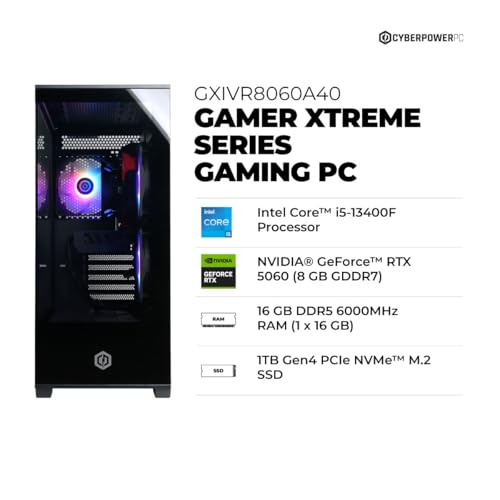
CyberPowerPC Gamer Xtreme VR Gaming PC, Intel Core i5-13400F 2.5GHz, GeForce RTX 5060 8GB, 16GB DDR5, 1TB PCIe 4.0 SSD, WiFi Ready & Windows 11 Home (GXiVR8060A40)


As an Amazon Associate we earn from qualifying purchases. Product prices and availability are accurate as of the date/time indicated.

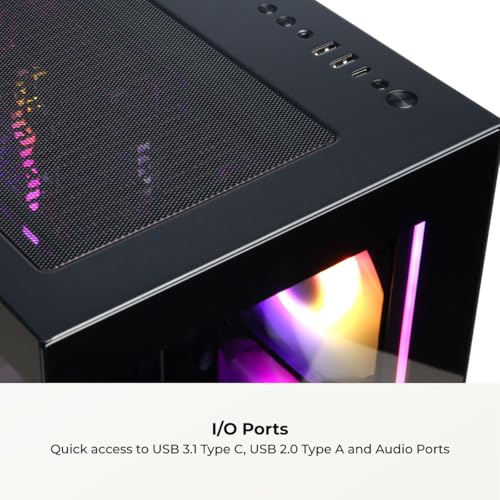
CyberPowerPC Gaming PC, AMD Ryzen 7 8700F, GeForce RTX 5060 Ti 8GB | Gamer Master, 16GB DDR5, 1TB PCIe 4.0 SSD, WiFi Ready & Windows 11 Home (GMA2900A3)




As an Amazon Associate we earn from qualifying purchases. Product prices and availability are accurate as of the date/time indicated.

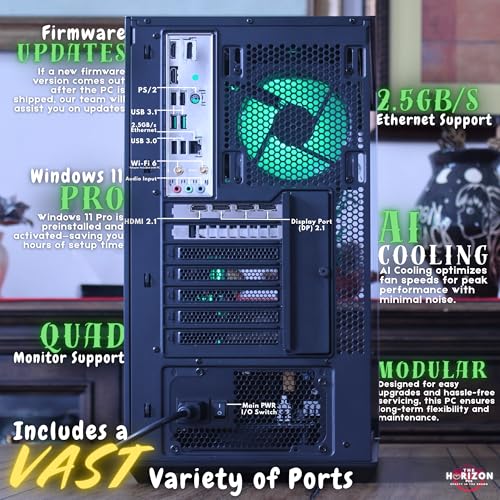
The Horizon Autherium Dragon RGB I9 RTX Gaming PC || 64GB RAM || 5TB Storage || Core I9 Upto 5.4Ghz || RTX 5070 OC || Windows 11 PRO || 360MM AIO || 2.4GB/s WiFi, VR, Gaming Ready Desktop Computer





As an Amazon Associate we earn from qualifying purchases. Product prices and availability are accurate as of the date/time indicated.

Gaming PC Desktop Computer RTX 4060, i7-11700F, 16GB DDR4 RAM | 1TB NVMe SSD, WiFi 6 / BT5.4,Liquid Cooled, 9x ARGB Fans, Windows 11, VR Ready High FPS Gaming Tower


As an Amazon Associate we earn from qualifying purchases. Product prices and availability are accurate as of the date/time indicated.
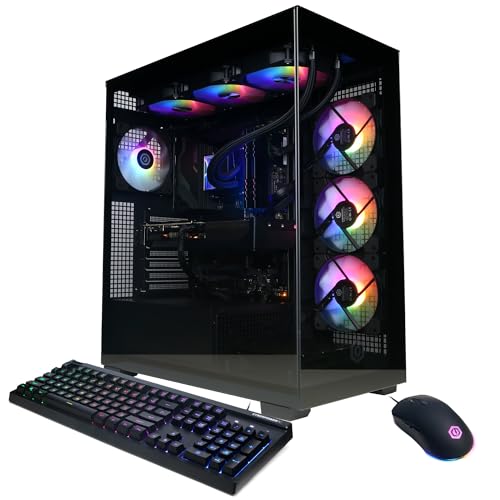
CyberPowerPC Gaming PC, Intel Core i9-14900KF, GeForce RTX 5070 12GB | Gamer Xtreme VR, 32GB DDR5, 2TB PCIe 4.0 SSD, WiFi Ready & Windows 11 Home (GXiVR8080A39)


As an Amazon Associate we earn from qualifying purchases. Product prices and availability are accurate as of the date/time indicated.

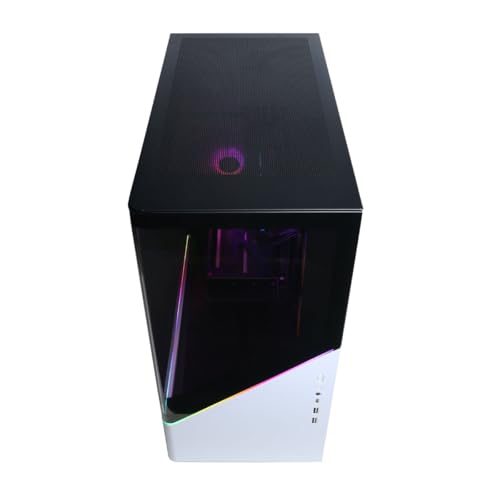
CyberPowerPC Gaming PC, Intel Core i7-14700F, GeForce RTX 5060 Ti 8GB | Gamer Xtreme, 16GB DDR5, 1TB PCIe 4.0 SSD, WiFi Ready & Windows 11 Home (GXiVR8040A19)




As an Amazon Associate we earn from qualifying purchases. Product prices and availability are accurate as of the date/time indicated.
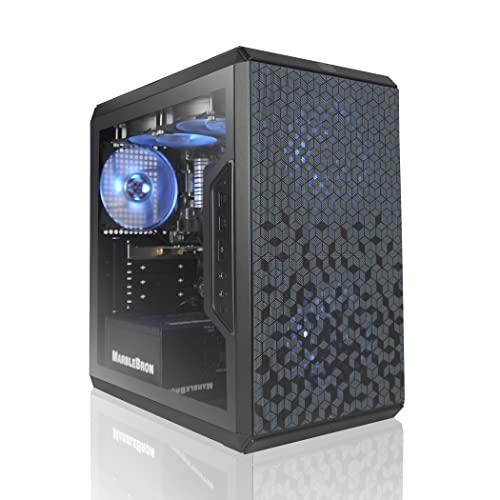
AVGPC Q-Box Series Gaming PC - 4.2 GHz Max Boost AMD Ryzen 5 5500 6-Core 16-Thread CPU, RTX 3050 6GB Graphics Card, Liquid Cooler, 16GB DDR4 3200, 500SSD Windows 11 AC WiFi…


As an Amazon Associate we earn from qualifying purchases. Product prices and availability are accurate as of the date/time indicated.
| Model | Key points from the title | Price tier | Best for |
|---|---|---|---|
| CyberPowerPC Gamer Xtreme VR (GXiVR8080A39) | Core i9-14900KF, RTX 5070 12GB, 32GB DDR5, 2TB PCIe 4.0 SSD | Premium | High render resolution and long-term headroom |
| CyberPowerPC Gamer Xtreme (GXiVR8040A19) | Core i7-14700F, RTX 5060 Ti 8GB, 16GB DDR5, 1TB SSD | Mid to premium | Balanced VR and flat-screen play |
| CyberPowerPC Gamer Master (GMA2900A3) | Ryzen 7 8700F, RTX 5060 Ti 8GB, 16GB DDR5, 1TB SSD | Mid to premium | AMD-platform buyers who want a strong CPU |
| CyberPowerPC Gamer Xtreme VR (GXiVR8060A40) | Core i5-13400F, RTX 5060 8GB, 16GB DDR5, 1TB SSD | Mid | Sensible entry into current-generation VR |
| The Horizon Autherium Dragon RGB | Core i9, RTX 5070 OC, 64GB RAM, 5TB storage, 360mm AIO | Premium | Capacity-hungry users who also create content |
| Evounic Gaming PC | RTX 4060, i7-11700F, 16GB DDR4, 1TB NVMe, liquid cooled | Budget to mid | Lower budgets that accept an older platform |
| AVGPC Q-Box Series | Ryzen 5 5500, RTX 3050 6GB, 16GB DDR4, liquid cooler | Budget | Light VR titles and lower render resolution |
Tiers are relative inside this group of seven. Check the current listing for the price, because it moves.
What changes when the screen sits on your face
A flat monitor asks a graphics card to draw one image per frame. A headset asks for two, one per eye, at a refresh rate that is usually 72Hz, 90Hz or higher, and it expects every frame to arrive on time. A late frame is not just a stutter on a screen; in a headset it can feel like a lurch. That is why VR buyers tend to size the graphics card first and treat the processor, memory and storage as supporting parts.
Resolution adds a second twist. Headset software often renders at a higher internal resolution than the panel shows, so that the image stays sharp after lens correction. The result is a pixel load closer to a high-end monitor than to the headset’s advertised panel numbers. A card that feels excessive for 1080p gaming may be sitting close to its limit in a demanding VR title.
Finally, the way you connect the headset matters. Some headsets need a particular video output, some run wireless from the PC over your home network, and some use a USB-C link. None of that appears in a gaming PC title, so confirm it against your headset’s published requirements before ordering.
Spec concepts that decide a VR purchase
| Concept | What to look for | Why it matters in VR |
|---|---|---|
| Graphics card class | Current-generation mid-range or better for modern headsets | Two images per frame at a high refresh rate |
| Video memory | 8GB is workable; 12GB gives more room for high render resolution | Large textures and supersampling both consume it |
| CPU single-thread speed | Recent six-core or better with good clock speeds | Physics, tracking and game logic must finish inside each frame |
| System memory | 16GB minimum, 32GB for heavy multitasking or mods | Background apps compete with the VR title |
| Storage | 1TB NVMe is a minimum for large VR libraries | VR games are often large and benefit from quick loads |
| Cooling and power supply | Named cooler, named power supply wattage | Sustained load for long sessions needs stable power and temperatures |
How we picked these
Each listing was read for the parts named in its title, grouped by graphics card class, and compared on CPU, memory, storage and cooling claims. Where a title is vague, ambiguous or full of marketing, that is stated in the entry. Nobody on the team used or measured these units. The basis is published specifications, manufacturer documentation and buyer reviews, and every performance statement below is general reasoning about the named parts rather than a result.
The seven listings
CyberPowerPC Gamer Xtreme VR (GXiVR8080A39)
This is the strongest graphics card in the group by title: a GeForce RTX 5070 with 12GB, paired with a Core i9-14900KF, 32GB of DDR5 and a 2TB PCIe 4.0 SSD. The extra video memory is the most useful feature here, because higher render resolutions and heavy VR mods eat video memory quickly. The 2TB drive also suits a library that has grown past a handful of large titles.
Think of it as a system you buy once and keep for several headset generations. The K-series processor draws substantial power under sustained load, and the title names neither the cooler nor the power supply, so those are the first things to confirm. The KF suffix means there is no integrated graphics, which is fine with a dedicated card but leaves no fallback if the card ever needs service.
- Pro: 12GB card and 32GB DDR5 give real headroom for demanding VR.
- Pro: 2TB storage fits a large library without an immediate upgrade.
- Con: cooler and power supply are not named in the title.
- Con: sits at the upper end of the group, so it is overkill for light VR.
Question to ask before buying: what power supply wattage and which cooler type ship with this model?
CyberPowerPC Gamer Xtreme (GXiVR8040A19)
A Core i7-14700F with an RTX 5060 Ti 8GB, 16GB DDR5 and a 1TB PCIe 4.0 SSD describes a balanced, current-generation system. The F-suffixed processor is locked, so it runs at a more modest power draw than the K-series part in the first entry, which usually makes cooling less demanding. The 8GB card is suitable for many headsets, though high render resolutions may want more video memory over time.
A useful scenario is a household that splits time between VR and ordinary gaming at 1440p. The processor has plenty of thread count for streaming or voice chat alongside a game, while the card keeps flat-screen frame rates high. The 16GB memory is the thing to watch; it is adequate today but fills up fast when apps pile up.
- Pro: capable CPU with a lower power draw than a K-series chip.
- Pro: DDR5 platform and PCIe 4.0 storage are current choices.
- Con: 16GB memory limits heavy multitasking.
- Con: 8GB video memory leaves less margin than a 12GB card.
Question to ask before buying: is there a free memory slot so 32GB can be added later?
CyberPowerPC Gamer Master (GMA2900A3)
The only AMD-platform entry among the CyberPowerPC systems, it pairs a Ryzen 7 8700F with an RTX 5060 Ti 8GB, 16GB DDR5 and a 1TB PCIe 4.0 SSD. Ryzen 8000 F-series processors lack integrated graphics, so the dedicated card is the only display output, which is normal in a gaming PC but worth remembering. The Ryzen 7 is an eight-core class part, a good fit for games that lean on several threads.
Compare it directly with the Core i7 entry above: the graphics card is the same class by title, so the decision comes down to platform preference, upgrade path and what each manufacturer lists for the motherboard and power supply. The title names neither. If you plan a processor upgrade in a few years, ask about the socket and the motherboard model.
- Pro: eight-core CPU class suits VR plus background tasks.
- Pro: same GPU class as the Core i7 option, so the choice is about platform.
- Con: motherboard and power supply are not named.
- Con: 16GB memory is the minimum, not a cushion.
Question to ask before buying: which motherboard ships in it, and does it support a future processor?
CyberPowerPC Gamer Xtreme VR (GXiVR8060A40)
This one pairs a Core i5-13400F with an RTX 5060 8GB, 16GB DDR5 and a 1TB PCIe 4.0 SSD. It is the lowest-cost current-generation entry in the CyberPowerPC lineup here, and the graphics card is a step below the Ti models. For lighter VR titles or a headset that does not demand very high render resolution, that is a sensible place to begin.
A realistic buyer is someone new to VR who wants a machine that will not be obsolete when the novelty settles. The six-plus-four core layout of the i5-13400F class handles game logic well, and the DDR5 platform leaves a path to more memory. The trade-off is less headroom for demanding titles or high render scaling.
- Pro: current-generation card and DDR5 platform at a lower tier.
- Pro: the VR in the model name signals the seller targets this use.
- Con: the weakest of the RTX 50-series entries in the group.
- Con: 16GB memory and 8GB video memory leave little margin.
Question to ask before buying: what is the lowest render scale you are happy running in your favorite titles?
The Horizon Autherium Dragon RGB
The title is a block of marketing text: Core i9 “upto 5.4Ghz”, RTX 5070 OC, 64GB of RAM, 5TB of storage, Windows 11 Pro, a 360mm AIO and a “2.4GB/s WiFi” claim. The unit mix is unusual; Wi-Fi speeds are quoted in megabits or gigabits per second, so treat that line as promotional and verify the Wi-Fi standard on the listing. The title also omits the exact i9 model, RAM generation and storage layout, which you need for a fair comparison.
What the title does tell you is useful: a 360mm liquid cooler suggests the seller expected sustained load, 64GB of memory suits video editing or heavy modding, and the 5TB capacity removes storage worries. Windows 11 Pro helps if you also work from the machine. It is a good fit for a creator who also plays VR and wants a single computer for both.
- Pro: very large memory and storage capacity.
- Pro: 360mm AIO named in the title.
- Con: CPU model, RAM type and Wi-Fi standard are unclear.
- Con: a smaller brand with a long keyword title, so confirm warranty terms.
Question to ask before buying: which exact Core i9 and which RAM generation ship in this build?
Evounic Gaming PC Desktop (RTX 4060, i7-11700F)
An RTX 4060 with an Intel Core i7-11700F, 16GB of DDR4, a 1TB NVMe SSD and Wi-Fi 6 with Bluetooth 5.4. The processor belongs to an older generation, and the DDR4 platform has less upgrade runway than the DDR5 systems in this group. The graphics card is still a capable mid-range part for many VR titles, and the liquid cooler with nine ARGB fans suggests the seller prioritized thermals and looks.
It suits a buyer who wants a lower price than the DDR5 systems and accepts that the platform is a generation or two behind. The older CPU may hold back certain CPU-heavy VR games, while the card is the part that carries most of the load in typical titles. The commas in the title are a mix of full-width and standard characters, a small sign of a loosely edited listing.
- Pro: lower tier than the DDR5 builds while keeping a mid-range card.
- Pro: liquid cooler and plenty of fans named.
- Con: older CPU generation and DDR4 limit future upgrades.
- Con: loosely edited title, so confirm the power supply and case details.
Question to ask before buying: which power supply wattage ships, and is the memory in a dual-channel pair?
AVGPC Q-Box Series Gaming PC (Ryzen 5 5500, RTX 3050 6GB)
This is the lowest-tier system here and the weakest for VR. The RTX 3050 6GB is an entry card from an earlier generation, and the 6GB of video memory is on the small side for anything beyond lighter titles. The title lists “500SSD” without units, so confirm whether that means 500GB, a size that fills quickly with VR games. A Ryzen 5 5500 is a six-core AM4 processor, adequate for the price class.
It could suit someone testing whether they enjoy VR before spending more, using lower render resolutions and simpler titles. It is not a system to buy if you plan to play the most demanding experiences. The title repeats an ellipsis at the end, which suggests the listing was truncated, so read the full description.
- Pro: the lowest entry point in the group.
- Pro: liquid cooler named, which is unusual at this tier.
- Con: entry GPU with 6GB of video memory limits VR scope.
- Con: storage size is ambiguous and likely small.
Question to ask before buying: what exactly is the storage capacity, and can a second drive be added?
Which listing for which user
| If you are… | Start with | Why | Watch for |
|---|---|---|---|
| Buying a long-term VR machine | GXiVR8080A39 | 12GB card, 32GB DDR5, 2TB storage | Cooler and power supply details |
| Splitting time between VR and 1440p gaming | GXiVR8040A19 | Strong CPU with a Ti-class card | Only 16GB memory |
| Preferring an AMD platform | GMA2900A3 | Eight-core CPU, same GPU class | Motherboard unnamed |
| Entering VR on a moderate budget | GXiVR8060A40 | Current generation at a lower tier | Less headroom for heavy titles |
| Streaming, editing and playing VR | Horizon Autherium Dragon | 64GB RAM and 5TB storage | Unclear CPU model and Wi-Fi claim |
| Spending as little as possible on a mid GPU | Evounic RTX 4060 | Mid-range card at a lower tier | Older platform |
| Trying VR on a very tight budget | AVGPC Q-Box | Lowest entry point | 6GB card, unclear storage |
Worked example: the frame budget
This example uses assumptions, not measurements. Suppose a headset renders each eye at 2160 by 2160 pixels after supersampling and runs at 90Hz. Each frame then holds 4,665,600 pixels per eye, or about 9.3 million for both eyes. At 90 frames per second the card must produce roughly 840 million pixels every second, and each frame has a budget of about 11.1 milliseconds.
| Scenario | Pixels per frame | Frames per second | Pixels per second |
|---|---|---|---|
| Assumed headset, 2160 x 2160 per eye | About 9.3 million | 90 | About 840 million |
| 1440p monitor at 144Hz | About 3.7 million | 144 | About 531 million |
| 1080p monitor at 60Hz | About 2.1 million | 60 | About 124 million |
The assumed headset asks for roughly 1.6 times the pixel throughput of a 1440p monitor at 144Hz, before counting the extra work VR games do for lens correction and stereo rendering. Your headset will differ, and so will your render scale, but the arithmetic shows why a card that is comfortable on a flat monitor can be pushed hard in VR. Lowering the render scale from 100 percent to 80 percent reduces the pixel count by roughly a third, which is the first setting to try if frames drop.
Buying checklist
- Open your headset maker’s recommended specification and note the graphics card class and video output.
- Match the card in the listing to that class, then prefer one step above it.
- Confirm memory: 16GB is the floor, and check for a free slot.
- Look for a named power supply wattage and cooler type; if the title omits them, ask the seller before ordering.
- Check the case size if you may upgrade the graphics card.
- Read the warranty terms and who services the system.
Before settling on a model, a temperature plan helps; our guide on lowering gaming PC VR temperatures explains airflow and fan curve habits that apply to any of these towers. If you are deciding between two specific systems, the head-to-head CyberPowerPC Gamer Xtreme VR versus The Horizon Autherium Dragon comparison goes deeper on that pair. For a wider view of the budget range, the gaming PC under 2000 roundup and the gaming PC under 3000 list show alternatives.
Mistakes and fixes
| Mistake | Why it hurts | Fix |
|---|---|---|
| Trusting the VR-ready badge | Sellers apply it to very different parts | Compare parts to the headset’s specification |
| Spending on processor and skimping on the card | VR is mostly graphics-bound | Put budget into the graphics card first |
| Ignoring video memory | High render scales consume it fast | Prefer 12GB if you want headroom |
| Assuming the power supply is good | Titles rarely name it | Ask for brand and wattage |
| Ignoring storage units | Ambiguous labels like 500SSD hide the size | Confirm capacity and drive type |
| Forgetting the headset connection | Cable, port or router needs go unmet | Check the headset’s connection requirements |
The pattern behind most regrets is buying for the headline numbers. A 64GB memory count looks impressive, yet a 12GB graphics card does more for a VR session than the extra RAM. Spend on the bottleneck, and ask about the parts that titles leave out.
Verdict by use case
For a durable all-round pick, the GXiVR8080A39 stands out on the title alone. For a balanced system without paying for a flagship, the GXiVR8040A19 or the AMD-based GMA2900A3 split the difference. The GXiVR8060A40 is the sensible way into current-generation VR, and the Horizon Autherium Dragon makes sense when capacity and a liquid cooler matter more than a clear specification sheet. The Evounic and AVGPC systems suit tight budgets, with the AVGPC model best limited to lighter titles.
If you want more, the gaming PC bundle with monitor list is useful when you need a display as well.
Frequently asked questions
How much graphics power does a VR gaming PC really need?
VR asks the graphics card to draw two images per frame at a high refresh rate, so it is harder work than a flat monitor at the same refresh. A mid-range current-generation card handles many headsets comfortably, while an entry card from the previous generation limits you to lighter titles or lower render resolution. Check your headset maker’s recommended specification, then add some headroom, because render resolution is often set above the panel’s native pixel count.
Is 16GB of RAM enough for a VR gaming PC?
It is the usual starting point and works for most single-game sessions. Trouble shows up when you keep a browser, voice chat, streaming software and a mod manager open next to a large VR title. Two of the seven listings here pair a strong graphics card with only 16GB, which leaves little cushion. Look for a spare memory slot or a stated upgrade path so you can move to 32GB later without replacing the kit.
Does a VR-ready label on a listing mean anything?
It is a marketing label rather than a certification you can check. The seller decides what to call VR-ready, and the same word appears on an entry card with 6GB of video memory and on a current-generation card with 12GB. Ignore the badge and compare the parts named in the title against the recommended specification published by your headset’s manufacturer, including the video output your headset needs.
Should I buy a prebuilt or build my own PC for VR?
A prebuilt saves time and usually includes a warranty on the whole system, which is useful if you want to plug in and play. Building gives more control over the power supply, cooler and motherboard, which prebuilt titles rarely name. If you buy a prebuilt, confirm the power supply wattage, the number of free memory slots and whether the case has room for a larger card later, since those details decide how long the machine stays useful.
Do I need a wired connection to my router for wireless VR streaming?
For wireless streaming from a PC to a headset, a dedicated router on the 5GHz or 6GHz band close to the play space generally works better than a wireless link from the PC itself. Wi-Fi on the PC matters less than people expect, because the PC is best connected by cable while the headset is the wireless end. Treat the Wi-Fi feature in these titles as a convenience for downloads and updates.
Can a VR-capable gaming PC also handle everyday gaming and work?
Yes. A system sized for VR is usually stronger than needed for flat-screen games at 1080p or 1440p, so desktop gaming, video editing and multitasking all sit comfortably within its range. The reverse is not true: a basic office or entry gaming desktop can run flat games but may struggle with VR. If your budget is tight, favor the graphics card first, then memory, then storage capacity.