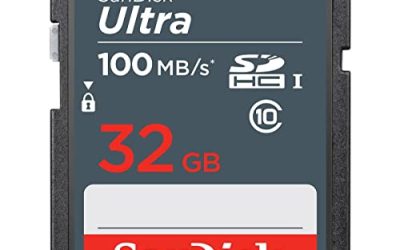
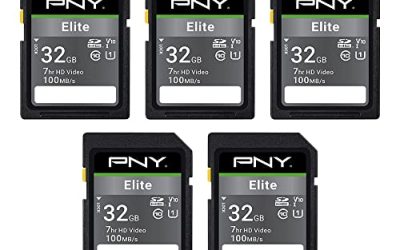
A security camera asks more of a memory card than almost any other device. A phone writes in bursts and then sits idle, but a camera set to continuous recording writes day and night, overwrites its oldest footage in a loop and is expected to keep doing it for years. A card that looks identical on the shelf to a camera-shop favorite can wear out in a few months under that kind of load, and you often discover it only when you need footage and the file is corrupted or missing.
This guide is for people setting up or rescuing a home camera, a doorbell with a card slot, a trail camera or a dash cam. We compare eight microSD cards from their listing titles, from small 32GB packs sized for a 1080p camera to a High Endurance card made for constant recording. The goal is to match capacity, speed class and endurance to the way your camera records in 2026, rather than to chase the biggest number on the label.
Our Top Picks
 SANDISK 128GB High Endurance Video microSDXC Card with128 GB0.4 x 0.6 x 0.1 inches0 PoundsCheck on Amazon


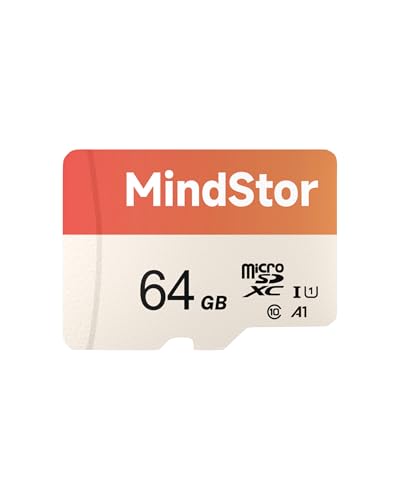
Top 3 picks at a glance
Quick Picks
As an Amazon Associate we earn from qualifying purchases at no extra cost to you.




| Product | Best for | Key spec from the title |
|---|---|---|
| Speederlash 32GB 2-Pack | Two small 1080p cameras | 32GB, 90MB/s, U1, A1, adapter |
| GIGASTONE 128GB 2-Pack | Pairs of cameras at higher resolution | A1, V30, 4K video, 95MB/s |
| MindStor 128GB | Single camera with long retention | 90MB/s read, U1, A1 |
| SanDisk 128GB High Endurance Video | Continuous recording, dash cams | High Endurance, C10, U3, V30, 4K UHD |
| GIGASTONE 32GB 5-Pack | Outfitting several cameras | Five microSDHC cards, Class 10, U1, A1 |
| MindStor 64GB | Middle-ground storage | 64GB, 90MB/s read, U1, A1 |
| TF Card 128GB 2-Pack | General-purpose backup cards | UHS-I, C10, A1, adapter |
| SanDisk Ultra 256GB | Largest capacity on this list | 195MB/s read, V10, U1, C10, A4 |
How to Choose
Match capacity to bitrate and retention
Estimate how much footage you want to keep and how heavily the camera compresses. As a rough rule, a 1080p camera recording continuously at a modest bitrate produces somewhere between 10GB and 40GB per day, so a 32GB card holds about a day and a 128GB card anywhere from three to a dozen. Motion-triggered recording stretches those numbers a lot. Also check the maximum card size your camera supports, because many models stop at 128GB or 256GB and will not read anything larger.
Choose a speed class that meets the video, not the headline
For 1080p, U1 (10MB/s minimum sustained) is enough. For 4K or high-bitrate cameras, look for U3 or V30 (30MB/s minimum), which several listings here carry. The big read speeds in the titles, 90MB/s to 195MB/s, matter when you copy footage to a computer, not while the camera is recording, because the sustained write speed is what protects you from dropped frames.
Prioritize endurance for continuous recording
Flash memory has a finite number of write cycles. Cards sold as High Endurance are built and rated for constant overwriting, and the SanDisk High Endurance Video card in this list is the only one whose title says so. Standard cards, including common Ultra and no-name packs, can work well in motion-triggered setups but are more likely to fail under 24/7 use. If footage matters, treat endurance as the first filter.
What to ignore and where budget cards cut corners
Ignore bundled adapters and vague claims about compatibility with every device; they say little about reliability. Budget multipacks cut corners on controller quality and rarely publish endurance data, so buy from a seller you trust and format the card inside the camera. Plan to replace a standard card on a schedule, and check its health occasionally by confirming that recent clips play back.
The 8 Best Options
Speederlash 32GB 2-Pack
This pair of 32GB microSDHC cards lists 90MB/s, U1 and A1, with an adapter, and names security cameras, dash cams, trail cameras and home surveillance with 1080p footage. It fits small cameras that do not need a lot of storage.
- Strength: two cards let you stock two cameras or keep a spare.
- Strength: U1 matches the sustained speed a 1080p camera needs.
- Trade-off: 32GB holds only a short loop of continuous footage.
A pair of small cards is a natural fit for a doorbell and a garage camera that only save short, motion-triggered clips. The second card doubles as a swap: pull the full card, copy the clips, and drop in the spare so the camera is never blind for long. Format each card in the camera itself the first time.
Skip it if your camera records 4K or you want weeks of history.
GIGASTONE 128GB 2-Pack
A two-pack of 128GB microSDXC cards rated A1 and V30 for 4K video, at 95MB/s. The title names security cameras, dash cams and drones among its uses.
- Strength: V30 provides headroom for higher-bitrate recording.
- Strength: two 128GB cards make deployment across two cameras simple.
- Trade-off: the title does not call out endurance for continuous recording.
The V30 mark is the part to focus on, because it promises the sustained write speed that higher-resolution cameras demand. That makes this pair a reasonable fit for two outdoor cameras with decent bitrates, or one security camera and one dash cam, where dropped frames would be more annoying than a slightly shorter loop.
Skip it if you want a card specifically built for 24/7 overwriting.
MindStor 128GB
A single 128GB microSDXC card with a 90MB/s read figure, U1 and A1, aimed at security cameras, dash cams, trail cameras and 1080p home surveillance. It suits one camera with a long retention window.
- Strength: 128GB gives noticeably more recording history than 32GB packs.
- Strength: U1 is an appropriate class for 1080p footage.
- Trade-off: U1 may be underpowered for 4K cameras.
For a front-door camera on a motion-only schedule, 128GB stretches a long way and cuts how often you must visit the camera. Pair it with a monthly habit of playing back a recent clip to confirm the card is still healthy, which is the cheapest insurance against missing footage.
Skip it if your camera needs U3 or V30 sustained speed.
SanDisk 128GB High Endurance Video
This is the only card in the group that is explicitly a High Endurance Video model, with Class 10, U3 and V30 markings, 4K UHD support and an adapter. The title points to dash cams and home monitoring systems.
- Strength: the High Endurance designation is aimed at constant overwriting.
- Strength: U3 and V30 handle high-bitrate and 4K cameras.
- Trade-off: it carries a higher price tier than the generic packs.
If a camera is covering a driveway, a shop floor or a nursery where continuous footage is the whole point, this is the kind of card to start with. The extra cost is easiest to justify when you compare it with the cost of an empty gap in the recording on the one day something happens.
Skip it if your camera records only on motion and your budget is tight.
GIGASTONE 32GB 5-Pack
Five microSDHC cards at 32GB each, Class 10, U1 and A1, with security cameras, Wyze Cam and Roku named. It is meant for equipping a bunch of devices.
- Strength: five cards cover several cameras or spares.
- Strength: Full HD is the stated recording target, which matches typical home cameras.
- Trade-off: 32GB per card limits the loop length.
Five small cards make sense for a renter or a small business with a handful of inexpensive cameras, such as Wyze-style models, where each unit saves modest 1080p clips. Label each card with its camera location in marker, so you always know which footage came from which room.
Skip it if one camera needs long retention.
MindStor 64GB
A single 64GB microSDXC with 90MB/s read, U1 and A1. It lands between the small and large cards for owners who want more than a day of footage without stepping to 128GB.
- Strength: a balanced capacity for an average home camera.
- Strength: same 1080p-focused feature list as its 128GB sibling.
- Trade-off: U1 only, so it is not a 4K choice.
Think of this as the sweet spot for a camera that records both motion and short continuous bursts. Sixty-four gigabytes offers a few days of history in many 1080p setups, and replacing it later is easy because the card is not expensive.
Skip it if you want a 4K-ready speed class.
TF Card 128GB 2-Pack
A generic pair of 128GB cards listed as UHS-I, C10 and A1, with an adapter, positioned for tablets, phones, cameras, car audio and game consoles. Security cameras are not named in the title.
- Strength: two 128GB cards at a modest entry cost.
- Strength: UHS-I and A1 satisfy basic 1080p use.
- Trade-off: the general-purpose positioning gives little assurance about surveillance reliability.
Because the title is aimed at phones, tablets and cameras in general, treat this pair as a stopgap or as spares for non-critical cameras. Use one in a low-stakes camera, keep the other in a drawer, and avoid it for the entrance you most want covered.
Skip it if the footage is important or the camera records around the clock.
SanDisk Ultra 256GB
The biggest card here lists 256GB, a 195MB/s read speed, V10, U1, C10 and A4. It is a general Full HD card rather than a purpose-built surveillance model.
- Strength: largest capacity for long recording history.
- Strength: a recognizable brand with fast read speeds for copying footage.
- Trade-off: V10 and U1 limit sustained write speed, and the title does not claim endurance.
Where a camera can accept it, 256GB stretches recording history farther than any other card here and lets you pull footage less often. Use it in a camera you have confirmed supports large cards, and keep in mind that ordinary Ultra-class cards are made for general use rather than endless overwriting.
Skip it if your camera caps card size below 256GB.
Which One Fits Your Situation
You record continuously, all day
Use the SanDisk 128GB High Endurance Video card. Its design intent matches the constant overwriting that wears out ordinary cards.
You have several cheap cameras around the house
The GIGASTONE 32GB 5-Pack covers them at once, and Full HD is plenty for most budget cameras.
You have one camera and want a month of motion clips
The MindStor 128GB or the SanDisk Ultra 256GB give the most space, as long as your camera accepts the capacity.
You run a higher-resolution camera or dash cam
Pick the GIGASTONE 128GB 2-Pack for its V30 rating, or the High Endurance card for the best fit.
Common Mistakes
- Putting a standard card in a camera that records 24/7 and expecting it to last for years.
- Buying a card larger than the camera supports.
- Choosing by read speed while ignoring the sustained write class.
- Skipping a periodic playback check, so a failed card goes unnoticed.
- Formatting on a computer instead of inside the camera.
Related guides
- How To Clean Quest 3 Lenses And Facial Interface
- Micro Sd Cards For Samsung Galaxy Phones
- Vr Facial Interfaces For Glasses Wearers
Frequently Asked Questions
Do I need a High Endurance card?
For continuous recording, it is the safer choice. For motion-only recording, a standard card often works, though it may wear sooner.
How big should the card be?
Estimate the daily footage from your camera’s bitrate and multiply by the days you want to keep. A 128GB card suits most single-camera setups.
Is U1 enough for a security camera?
For 1080p, usually yes. For 4K, choose U3 or V30.
How often should I replace the card?
Replace standard cards on a schedule, such as annually for heavy use, and sooner if clips fail to play back.
Related guides
- How to Check VRAM Usage in Windows 11: Task Manager, Game Bar and Overlay Methods
- How Much VRAM for 4K Gaming: 8GB, 12GB or 16GB, and What Actually Fills It
- How Many VRM Phases Do You Need? Match Phase Count and Power Stage Rating to Your CPU
- Best Gaming PCs for VR: Seven Prebuilts Compared by Graphics Card, CPU and Memory (2026)