Few things end a shoot faster than a card that cannot keep up. A 4K clip can record fine for ten seconds and then stop with a write error, or a drone flight can finish with a corrupted file because the card could not sustain the bitrate. That is the real question behind a search for the best SD cards for 4K video: not top speed on paper, but a sustained write speed that stays above what the camera needs for the entire recording.
This guide is for people recording 4K on a mirrorless camera, action cam, drone, dash cam or phone. The eight options mix full-size SD cards and microSD cards, so the first filter is the slot your device uses. Based on the listed specs, nearly every card is rated V30 and UHS-I, with read speeds from 95MB/s up to 245MB/s and capacities from 64GB to 256GB. For 2026 shooters, the V30 rating is the line that matters, and the rest is capacity, brand and extras.
Our Top Picks




Top 3 picks at a glance
Quick Picks
As an Amazon Associate we earn from qualifying purchases at no extra cost to you.




| Product | Best for | Key spec from the title |
|---|---|---|
| Gigastone 128GB microSD 2-Pack | Dash cams, security cameras and drones | 2-pack, A1, V30, 95MB/s, UHS-I |
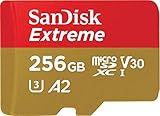
| SanDisk Extreme 256GB microSD with Adapter | Action cams needing the fastest microSD | 245MB/s read, 170MB/s write, V30, A2, 5K and 4K |
| Gigastone 128GB microSD (GoPro, DJI) | Action cameras and Nintendo Switch | Read and write up to 100 and 50MB/s |
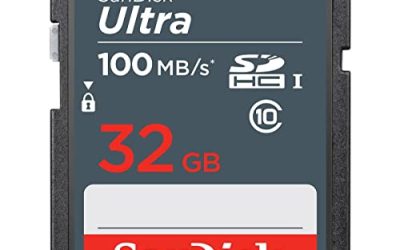
| Gigastone 256GB SD Card | Large-capacity full-size SD | UHS-I, A1, V30, up to 170MB/s |
| SanDisk Extreme PRO 64GB SD | Compact 4K backup card | 200MB/s read, 90MB/s write, V30, U3 |
| SanDisk Extreme 256GB microSD | Phones, action cams and drones | 190MB/s read, 130MB/s write, 4K |
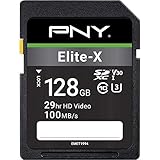
| PNY Elite-X 128GB SDXC | DSLR and mirrorless basics | C10, U3, V30, up to 100MB/s read |
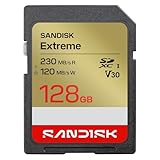
| SanDisk Extreme 128GB SD | Balanced full-size 4K card | 230MB/s read, 120MB/s write, V30, U3 |
How to Choose
Match the form factor to the device
Four of these cards are full-size SD and four are microSD. DSLRs and mirrorless cameras generally take full-size SD, while action cams, drones, dash cams and phones take microSD, and a few cards include an adapter. Putting a microSD in an adapter works in most full-size slots, but a card made for the slot is cleaner. Check which your device uses before comparing speeds.
Look for V30 and U3 as the baseline
V30 means a guaranteed minimum sustained write speed of 30MB/s, and U3 is the same level for the older rating system. Seven of the eight titles list V30. For common 4K at moderate bitrates, V30 is enough, but if your camera records high-bitrate 4K or 5K, check the manual for the requirement. Write speeds listed in the titles range from 50MB/s on one microSD to 170MB/s on the SanDisk Extreme microSD, which gives headroom.
Capacity decides how much footage you carry
Capacities in this group are 64GB, 128GB and 256GB. 4K video consumes storage fast, so 64GB suits short clips or a backup, while 128GB and 256GB suit long sessions. A two-pack gives a spare for dash cams or drones, which often record in a loop and can wear cards. Plan capacity around how often you can offload. As a rough guide, high-bitrate 4K can consume roughly a gigabyte or more per minute, so a 64GB card may cover only about an hour. If you travel without a laptop, favor the larger cards or carry two.
App ratings, warranty and corners cut
A1 and A2 ratings measure app performance and matter if the card holds apps in a phone, not for pure video. Two Gigastone listings include a five-year free data recovery offer, which is a notable extra. Budget cards cut corners on endurance and support rather than basic speed, and heavy loop recording, such as a dash cam, wears cards faster. Ignore the big read figure and look at write speed and the V rating.
The 8 Best Options
Gigastone 128GB microSD 2-Pack
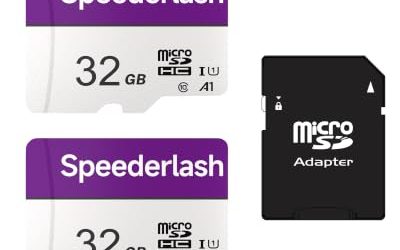
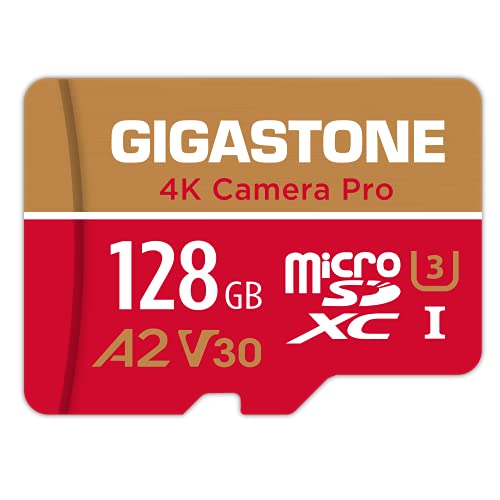
This pack gives two 128GB microSD cards rated A1 and V30 for 4K video recording, with 95MB/s speed and UHS-I. The title points to security cameras, dash cams and drones, where a second card is handy. Always-on devices write constantly, so having a fresh card ready to swap in is more valuable than squeezing out a few extra megabytes per second. For a family that runs a dash cam in one car and a drone on weekends, one pack can cover both.
- Strength: two cards in the pack provide a spare for always-on cameras.
- Strength: V30 and A1 ratings cover 4K and app use.
- Trade-off: 95MB/s is modest compared with the Extreme-line cards.
Skip it if your camera needs very high write speeds.
SanDisk Extreme 256GB microSD with Adapter
This SanDisk Extreme lists up to 245MB/s read and 170MB/s write, UHS-I, V30, U3, C10 and A2, rated for 5K and 4K UHD, with an adapter included. It is the fastest microSD in the group by the numbers. The A2 rating also makes it a sensible choice for a phone that stores apps on the card, so the same purchase can serve a camera and a handset. Pairing it with the adapter means it can double as a full-size card in a pinch.
- Strength: 170MB/s write and A2 rating give plenty of headroom.
- Strength: an included adapter extends it to full-size slots.
- Trade-off: it is the premium tier, with a higher cost than the budget cards.
Skip it if you only shoot basic 4K clips and do not need top speed.
Gigastone 128GB microSD (GoPro, DJI)
Gigastone lists this 128GB microSD for GoPro, action cameras, DJI drones and the Nintendo Switch, with read and write up to 100 and 50MB/s. The title also offers five years of free data recovery. That safety net is unusual at this tier and appeals to travelers who cannot reshoot a trip. It is a card for people who want reliable 4K from a compact camera without paying for the top speed class.
- Strength: it names GoPro, DJI and Switch use.
- Strength: the five-year data recovery offer is a useful safety net.
- Trade-off: 50MB/s write is lower than the Extreme cards.
Skip it if you shoot at the highest bitrates.
Gigastone 256GB SD Card
This is a 256GB full-size SD card, UHS-I, A1 and V30, with 4K UHD video speeds up to 170MB/s, and the five-year data recovery offer. It is a large-capacity SD for cameras. At 256GB it can hold hours of 4K at moderate bitrates, which suits event coverage or a long travel day where offloading is not possible. Owners of mirrorless bodies that take UHS-I cards will find it a straightforward fit.
- Strength: 256GB offers long recording time.
- Strength: V30 and the data recovery offer add confidence.
- Trade-off: it is a lesser-known brand than SanDisk or PNY.
Skip it if you prefer a major brand for critical shoots.
SanDisk Extreme PRO 64GB SD
This full-size card lists 200MB/s read and 90MB/s write, UHS-I, V30, U3, C10 and 4K UHD, for backup and transfer. It is the smallest capacity here, so it fits short shoots or a backup role. Many shooters keep one small, fast card in the camera bag as an emergency spare, and a 64GB Extreme PRO is a reasonable candidate. It also works as a dedicated card for photography with the occasional 4K clip.
- Strength: 90MB/s write is strong for a UHS-I card.
- Strength: a trusted Extreme PRO line with V30.
- Trade-off: 64GB fills quickly with 4K footage.
Skip it if you record long 4K sessions without offloading.
SanDisk Extreme 256GB microSD
This microSD lists 190MB/s read and 130MB/s write for 4K video on smartphones, action cams and drones. It sits between the budget and top-tier microSD options. Phones that record 4K, small drones and action cameras all benefit from the 130MB/s write figure, which leaves room for higher-bitrate modes. Buyers who do not need an adapter will find it simpler than the bundled version.
- Strength: 130MB/s write suits action cam and drone video.
- Strength: 256GB of capacity for long flights and trips.
- Trade-off: no adapter or A-rating is mentioned in the title.
Skip it if you need a full-size SD card.
PNY Elite-X 128GB SDXC
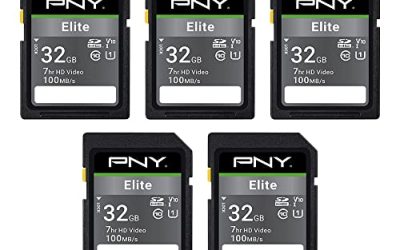
PNY’s Elite-X is a 128GB SDXC card with C10, U3 and V30 and up to 100MB/s read, for 4K UHD and Full HD content. It targets DSLR and mirrorless basics. The Elite-X line is a common choice for people who want a recognizable name and a V30 rating without chasing the fastest specs. It suits a hobbyist who shoots a mix of photos and standard 4K clips and wants predictable behavior.
- Strength: V30 and U3 handle 4K recording.
- Strength: a simple, widely supported full-size SD.
- Trade-off: the 100MB/s read figure is lower than the Extreme cards, and no write speed is listed.
Skip it if you need very high sustained write speeds.
SanDisk Extreme 128GB SD
This SD card lists up to 230MB/s read and 120MB/s write, UHS-I, V30, U3 and C10, with 4K UHD recording. It is a balanced full-size option. For many mirrorless shooters, a 128GB V30 card is the sweet spot between capacity and cost, because it holds a full day of footage and can be offloaded without panic. The stated write speed leaves comfortable headroom above the V30 floor.
- Strength: 120MB/s write is high for UHS-I.
- Strength: 128GB suits a full day of 4K.
- Trade-off: UHS-I limits it compared with UHS-II cards.
Skip it if your camera needs V60 or V90.
Which One Fits Your Situation
Action cam or drone pilot
The SanDisk Extreme 256GB microSD with Adapter is the top pick for speed, with 170MB/s write and A2. The Gigastone GoPro and DJI card is a lower-cost alternative.
Mirrorless or DSLR video
The SanDisk Extreme 128GB SD gives 120MB/s write with V30 in a full-size card. The PNY Elite-X suits simpler needs.
Dash cam or security camera
The Gigastone 128GB microSD 2-Pack provides two cards for loop recording, and a spare matters when cards wear.
Long shoots with minimal offloading
The Gigastone 256GB SD Card gives large capacity and the five-year data recovery offer, which helps with long sessions.
Common Mistakes
- Buying a microSD for a device that needs full-size SD, or the reverse.
- Choosing by read speed and ignoring write speed and V30.
- Using a 64GB card for long 4K sessions.
- Running one card in a dash cam without a spare for loop recording.
- Assuming A1 or A2 helps video, when they mainly help app performance.
Related guides
- How To Clean Quest 3 Lenses And Facial Interface
- Micro Sd Cards For Samsung Galaxy Phones
- Vr Facial Interfaces For Glasses Wearers
Frequently Asked Questions
Is V30 enough for 4K?
For many cameras, yes. V30 guarantees 30MB/s sustained writes. Higher-bitrate 4K or 5K modes may need more, so check your camera manual.
Do I need UHS-II for 4K video?
Usually not. Nearly all of the cards here are UHS-I, which handles common 4K. UHS-II helps for higher bitrates and fast bursts.
What does the five-year data recovery offer mean?
Two Gigastone listings advertise free data recovery for five years. Read the terms, since it is a service offer, not a substitute for backups.
Can I use a microSD in a full-size slot?
Yes, with an adapter. The SanDisk Extreme 256GB includes one, but a card made for the slot is more convenient.
Related guides
- How to Check VRAM Usage in Windows 11: Task Manager, Game Bar and Overlay Methods
- How Much VRAM for 4K Gaming: 8GB, 12GB or 16GB, and What Actually Fills It
- How Many VRM Phases Do You Need? Match Phase Count and Power Stage Rating to Your CPU
- Best Gaming PCs for VR: Seven Prebuilts Compared by Graphics Card, CPU and Memory (2026)