An Android phone that still has a microSD slot offers something increasingly rare: cheap, removable storage that you can swap, back up, or move to a new device. But the card you choose changes how the phone behaves. A slow card makes the gallery stutter, delays burst photos, and can turn a game installed to the card into a loading-screen marathon, while a card with the right app performance rating keeps things smooth. The decision behind “best micro SD cards for Android phones” is therefore about three things: the capacity your phone supports, the speed classes that matter for your use, and whether you want a single card or a multi-pack.
This guide is for owners of Android phones with a microSD slot who want extra room for photos, 4K video, music, offline maps, and apps. Eight cards and card packs are compared using only the specifications in their listings, from 64GB entry cards to 256GB models and two-packs of 128GB cards. In 2026 the spec sheets are crowded with letters and numbers, so the sections below decode the ones that affect real phone use and flag the ones that are mostly decoration.
Our Top Picks
 DIGIERA 128GB CT100 microSDXC UHS-I Memory Card with128GB0.59 x 0.43 x 0.1 inches0 PoundsCheck on Amazon


Top 3 picks at a glance

Quick Picks
As an Amazon Associate we earn from qualifying purchases at no extra cost to you.




| Product | Best for | Key spec from the listing |
|---|---|---|
| Patriot EP 64GB | Everyday 4K-capable phone storage | A1, V30, Android phones, tablets, 4K |
| SanDisk Ultra 256GB | Large media libraries | Up to 195MB/s read, UHS-I, U1, A4, 256GB |
| Patriot LX Series 64GB | Light, basic storage | 64GB microSD flash memory card |
| DIGIERA 128GB CT100 | App performance and video | 100MB/s, U3, V30, A2, 4K UHD, adapter |
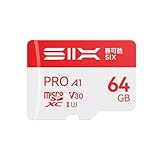
| SIX M100 64GB | Video-capable budget card | 100MB/s, A1, U3, V30, 4K UHD, adapter |
| MORIC 2 Pack 128GB | Two cards for phone plus camera | 2 cards, C10, A1, adapter |
| 2 Pack 128GB TF Card | Multi-device households | 2 cards, C10, UHS-I, A1, adapter |
| Patriot EP 128GB | Mid-size media storage | A1, V30, Android phones, tablets, 4K |
How to Choose
Check what your phone supports first
Before buying, look at the phone’s specifications for the maximum supported card size and the slot type. Many phones accept microSDXC cards from 64GB through 512GB or more, but some older models top out at 128GB or 256GB. Cards above 32GB use the exFAT file system, which modern Android handles without trouble. If the phone has a hybrid slot that shares space with the second SIM, you must choose between a second line and extra storage. Treat a card as removable storage first, and as an extension of internal memory only if you use adoptable storage.
Adoptable storage deserves a warning: it formats the card so that it becomes part of the phone’s internal storage, which means it can no longer be pulled out and read in a computer without being reformatted. It also makes the card’s speed matter more, since the phone treats it as a main drive. If you only want a place for photos and music, keep the card as plain portable storage and enjoy the simplicity of swapping it between devices.
Decode the speed ratings that matter
Class 10 (C10) and UHS Speed Class U1 or U3 describe sustained write speeds for video. U3 supports at least 30MB/s writes, and V30 is the video class equivalent, suited to 4K recording. The A1 and A2 ratings describe random read and write performance for running apps; A1 means at least 1,500 read and 500 write input-output operations per second, A2 raises that figure. An A-rated card helps when apps or games load from storage. The “up to 100MB/s” or “up to 195MB/s” figures are maximum reads, not guaranteed everyday speeds, and write speed usually matters more for video.
Match capacity to the way you use the phone
For photos, music, and casual video, 64GB or 128GB is a comfortable size. For heavy 4K recording, offline media, or large game libraries, 256GB or more reduces the need to offload files. Larger cards cost more per card but offer better value per gigabyte. Be skeptical of unusually cheap high-capacity cards from unfamiliar sellers, since counterfeit and falsely labeled cards exist. A multi-pack makes sense if you will split cards between a phone, a camera, and a tablet.
Where budget cards cut corners
Cheaper cards often cut corners on sustained write speed, long-term durability, and warranty support. Listings may highlight peak read speeds while saying little about write performance or endurance. Always format a new card in the phone, copy a large file to confirm that it works correctly, and keep a backup of important photos elsewhere. Remember that a microSD card is not a substitute for a real backup, because cards can fail without warning.
The 8 Best Options
Patriot EP 64GB
This Patriot card lists A1 and V30 ratings and is marketed for Android phones, tablets, and 4K video. The V30 rating means it is intended for sustained video recording.
- Strength: V30 and A1 ratings cover both 4K recording and app use.
- Strength: Marketed for Android devices, which reduces compatibility worries.
- Trade-off: 64GB fills quickly if you record a lot of 4K video.
Skip it if you want to store a large video library or many offline apps. For a second phone, a spare device, or a child’s handset, this size is often plenty, and the 4K-ready video rating means the card will not hold the phone back if the camera app is set to its highest quality.
SanDisk Ultra 256GB
The SanDisk Ultra lists up to 195MB/s read speed, UHS-I, Full HD video, V10, U1, C10, and A4 ratings at 256GB. The A4 rating points to strong app performance.
- Strength: A4 and 195MB/s read figures suit app loading and fast file transfers.
- Strength: 256GB capacity offers lots of room for media.
- Trade-off: U1 and V10 classes target Full HD, not sustained 4K recording.
Skip it if you shoot a lot of 4K video directly to the card. It makes the most sense as a library card that holds music, downloaded shows, and photo backups, because its strengths are fast reading and app responsiveness rather than sustained recording to the card.
Patriot LX Series 64GB
The Patriot LX Series is listed simply as a 64GB micro SD flash memory card, with no speed class details in the title. It is a basic capacity option.
- Strength: Straightforward 64GB capacity for photos, music, and documents.
- Strength: Easy to use as a basic extra storage card.
- Trade-off: The title lists no A-rating or video class, so check the specification page before buying.
Skip it if you need verified video or app performance ratings. Because the title is so sparse, shoppers should look at the full product details for the speed class and card type before purchase, and treat the card as a simple storage add-on rather than a performance upgrade for demanding phone tasks.
DIGIERA 128GB CT100
The DIGIERA lists microSDXC UHS-I, up to 100MB/s, C10, U3, V30, A2, and 4K UHD support with an adapter, for smartphones, tablets, and cameras. Among the cards here, the combination of U3, V30, and A2 is the most complete on paper.
- Strength: A2 plus V30 and U3 cover apps and 4K video together.
- Strength: 128GB with an adapter suits phones and cameras alike.
- Trade-off: Lesser-known brand, so warranty and long-term durability need extra caution.
Skip it if you only want cards from established flash-memory brands.
SIX M100 64GB
The SIX M100 lists up to 100MB/s read, A1, U3, V30, and 4K UHD support at 64GB, with an adapter, for Android phones, tablets, and dash cams.
- Strength: U3 and V30 support video recording, including on dash cams.
- Strength: Adapter included for use in laptops or card readers.
- Trade-off: 64GB capacity is limited for 4K video users.
Skip it if you want more than 64GB or want an established brand. The dash-cam mention is a useful hint that the card is designed for continuous writing, so it can double as a reasonable spare if you move it between a phone and a vehicle camera.
MORIC 2 Pack 128GB
This MORIC set contains two 128GB cards with an adapter, listed as Class 10 and A1 for cameras, dash cams, smartphones, tablets, and drones. The two-card format is the selling point.
- Strength: Two cards total 256GB across devices for a modest per-card cost.
- Strength: A1 rating supports basic app use.
- Trade-off: No U3 or V30 rating is listed, so sustained 4K video recording is not assured.
Skip it if your main use is 4K video capture.
2 Pack 128GB TF Card
This pack lists two 128GB micro memory cards with an adapter, C10, UHS-I, and A1 ratings, for smartphones, tablets, cameras, personal computers, and gaming consoles. It targets households that share cards across devices.
- Strength: Two-pack suits a phone plus a tablet or camera.
- Strength: Versatile compatibility across many devices.
- Trade-off: Generic branding and no video class in the title mean you should verify performance.
Skip it if you want a single, well-documented card from an established maker.
Patriot EP 128GB
The larger sibling of the EP 64GB, this card lists A1 and V30 for Android phones, tablets, and 4K video. It shares the same speed ratings in a roomier size.
- Strength: V30 and A1 suit 4K recording and app use.
- Strength: 128GB offers a sensible balance of capacity and cost.
- Trade-off: Heavy 4K shooters will still want 256GB or more.
Skip it if you want the A2 or A4 app rating.
Which One Fits Your Situation
You record a lot of video on your phone
The DIGIERA 128GB CT100 and the Patriot EP 128GB both list V30 ratings, which is the video class to look for. The DIGIERA also lists U3 and A2.
You want the most storage in one card
The SanDisk Ultra 256GB leads this guide in capacity and lists an A4 app rating. Confirm that your phone accepts a card of that size, copy your existing files to a computer before swapping cards, and consider keeping the old card as a second backup so that a single failure cannot erase your only copy of family photos.
You want to install apps or games on the card
Prefer a card with a strong A rating such as the SanDisk Ultra with A4 or the DIGIERA with A2, because app loading depends on random access speed.
You need cards for several devices
The MORIC 2 Pack and the generic 2 Pack TF Card give you two 128GB cards. They suit a phone plus a camera or tablet.
Common Mistakes
- Buying on the “up to” read speed alone and ignoring write speed and video class.
- Choosing a card larger than the phone supports, which causes it to be unreadable.
- Putting essential photos only on the card with no backup.
- Ignoring the A1 or A2 rating when planning to run apps from the card.
- Buying an unusually cheap high-capacity card from an unknown source and getting a mislabeled one.
Related guides
- How To Clean Quest 3 Lenses And Facial Interface
- Vr Facial Interfaces For Glasses Wearers
- Micro Sd Cards For Samsung Galaxy Phones
Frequently Asked Questions
What speed class do I need for an Android phone?
U1 or C10 is enough for photos and Full HD video. For 4K recording, look for U3 and V30. For apps, look for A1 or A2.
Can I install apps on a microSD card?
Many Android phones support moving some apps or using adoptable storage, though behavior varies by manufacturer. A card with an A-rating helps.
How much storage should I get?
64GB suits casual use, 128GB suits most people, and 256GB or more suits heavy video users. Check the maximum your phone supports first.
Why does my phone say the card is slow?
Phones may warn when a card’s speed class is low for the task. A newer card with a higher write class usually resolves the notice.
Related guides
- How to Check VRAM Usage in Windows 11: Task Manager, Game Bar and Overlay Methods
- How Much VRAM for 4K Gaming: 8GB, 12GB or 16GB, and What Actually Fills It
- How Many VRM Phases Do You Need? Match Phase Count and Power Stage Rating to Your CPU
- Best Gaming PCs for VR: Seven Prebuilts Compared by Graphics Card, CPU and Memory (2026)