Our Short List of 3

- Best for: Compact and mid-tower builds that need a full triple-fan RTX 5070 in a 2.5-slot body.
- Graphics coprocessor: NVIDIA GeForce RTX 5070
- Video memory: 12GB GDDR7, 192-bit, 28 Gbps
- Engine clock: OC mode 2587 MHz
- CUDA cores: 6144

- Best for: Short card bays, older cases, and builds reusing a 650W-class power supply.
- Graphics coprocessor: NVIDIA GeForce RTX 5070
- Video memory: 12GB GDDR7, 192-bit, 28 Gbps
- Boost clock: 2542 MHz, 2557 MHz in Extreme Performance mode
- Interface: PCI Express 5.0

- Best for: Long-term owners who value reinforced construction and included sag support.
- Graphics coprocessor: NVIDIA GeForce RTX 5070
- Video memory: 12GB GDDR7
- Interface: PCI Express 5.0
- Outputs: HDMI and DisplayPort 2.1
All 4 Picks at a Glance
| Product | Specs | Action |
|---|---|---|
| ASUS Prime GeForce RTX 5070 OC Edition |
| Check price on Amazon |
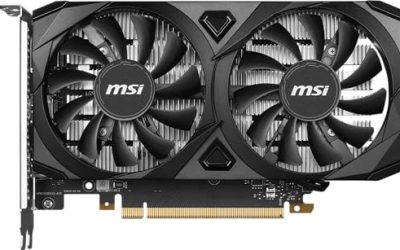
| MSI GeForce RTX 5070 12G Ventus 2X OC |
| Check price on Amazon |
| ASUS TUF GeForce RTX 5070 OC Edition |
| Check price on Amazon |
 ASRock Radeon RX 9070 Challenger 16GB OC |
| Check price on Amazon |
The real decision in this tier is not which chip generation to buy, because every card here is current. It is how the same class of GPU gets packaged: 12GB or 16GB of memory, a compact dual-fan cooler or a long triple-fan one, a single 16-pin power lead or two familiar 8-pin plugs. Those packaging choices decide whether a card suits 1440p high-refresh play, a small case, or a VR headset that punishes dropped frames.
This guide serves three groups: 1440p gamers upgrading from an older midrange card, VR players who need steady frame pacing, and builders working inside compact cases. The five cards below were chosen from their Amazon listing names and stated specifications, covering both the RTX 5070 family and the RX 9070 family so the memory, cooler, and power trade-offs sit side by side.
Our Top Picks
Top 3 picks at a glance
Quick Picks
As an Amazon Associate we earn from qualifying purchases
| Product | Best for | Key spec from title |
|---|---|---|
| ASUS Prime GeForce RTX 5070 OC Edition | Small cases that still need three fans | 12GB GDDR7, 2.5-slot design |
| MSI GeForce RTX 5070 12G Ventus 2X OC | Short card bays and simple builds | 12GB GDDR7, 192-bit |
| ASUS TUF GeForce RTX 5070 OC Edition | Buyers who prize build durability | 12GB GDDR7, 3.125-slot design |
| ASRock Radeon RX 9070 Challenger 16GB OC | More memory without leaving the tier | 16GB GDDR6, 256-bit |
| PowerColor Reaper AMD Radeon RX 9070 XT | The strongest raster step inside the class | 16GB GDDR6 |
How to Choose
VRAM Capacity for Your Target Resolution
Memory capacity shapes how long a card stays comfortable. The RTX 5070 models here carry 12GB of GDDR7, which handles 1440p texture settings well today, while the two Radeon cards carry 16GB of GDDR6 on a wider 256-bit bus. That extra capacity matters in texture-heavy games, in VR titles that load large environments, and when you keep a card through several release cycles. If you play at 1080p and upgrade often, 12GB is a reasonable fit. If you run a high-resolution headset or plan to hold the card for years, the 16GB listings deserve the closer look.
Raster Performance Versus Upscaling Features
Raw raster speed and upscaling support pull in different directions, and the listings state the feature sets plainly. The RTX 5070 cards list DLSS 4 with multi frame generation under the Blackwell architecture, which raises frame rates in supported games by generating additional frames. The Radeon cards are built on RDNA 4 and lean on their larger memory and strong native rendering instead. Decide by your library: if your main games support DLSS frame generation, the NVIDIA listings offer a feature the AMD cards do not. If you mostly play titles without it, compare boost clocks and memory first.
Cooler Size and Case Fit
Cards in this tier range from the 236 mm dual-fan Ventus 2X OC to triple-fan designs around 290 to 304 mm long, and thickness runs from 2.5 slots to the TUF card at 3.125 slots. Measure your case before ordering: check the stated card length against the space behind your front intake, and check slot width against the expansion slots a thick card will cover. A 2.5-slot card such as the ASUS Prime or the ASRock Challenger leaves the slot below it usable more often, while a 3.125-slot cooler can block it entirely in a compact motherboard layout.
Power Connector and PSU Headroom
The power sections of these listings differ more than the performance does. The RTX 5070 cards use a single 16-pin connector, and their listings recommend supplies in the 650W to 750W range depending on model. The Radeon cards use two 8-pin connectors, with recommended supplies of 700W for the Challenger and a 750W minimum stated for the Reaper. Builders with an older supply often find the 8-pin route simpler, while a newer ATX supply with a native 16-pin lead suits the NVIDIA cards. Either way, follow the recommended wattage printed in the listing you choose.
The 5 Best Options
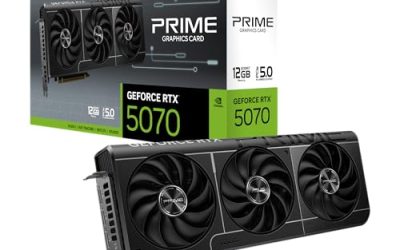
ASUS Prime GeForce RTX 5070 OC Edition
- Best for: Compact and mid-tower builds that need a full triple-fan RTX 5070 in a 2.5-slot body.
- Graphics coprocessor: NVIDIA GeForce RTX 5070
- Video memory: 12GB GDDR7, 192-bit, 28 Gbps
- Engine clock: OC mode 2587 MHz
- CUDA cores: 6144
Compact and mid-tower builds that need a full triple-fan RTX 5070 in a 2.5-slot body.
At 304 mm long it is still a long card despite the SFF-Ready label, so confirm front clearance in your case.
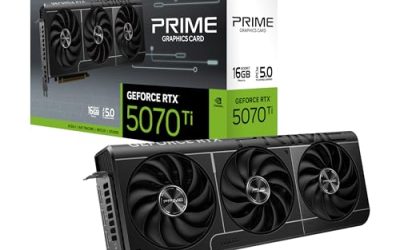
The Prime is the pick for builders who want a triple-fan RTX 5070 that still respects smaller cases. ASUS lists it as SFF-Ready with a 2.5-slot body, three Axial-tech fans, and a dual BIOS, so it brings the cooling layout of larger cards into a footprint many compact towers accept. Its stated OC mode clock of 2587 MHz and 1005 AI TOPS headline the listing, and the 12GB of GDDR7 on a 192-bit bus matches the tier. Choose it when case space is tight but you do not want to drop to a dual-fan design.
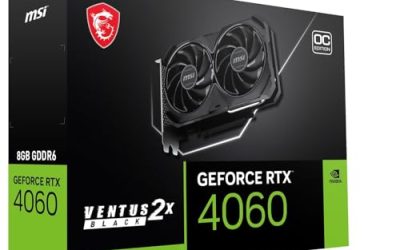
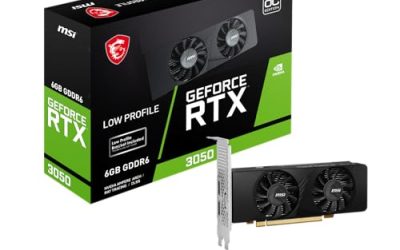
MSI GeForce RTX 5070 12G Ventus 2X OC
- Best for: Short card bays, older cases, and builds reusing a 650W-class power supply.
- Graphics coprocessor: NVIDIA GeForce RTX 5070
- Video memory: 12GB GDDR7, 192-bit, 28 Gbps
- Boost clock: 2542 MHz, 2557 MHz in Extreme Performance mode
- Interface: PCI Express 5.0
Short card bays, older cases, and builds reusing a 650W-class power supply.
The dual-fan cooler has less thermal mass than the triple-fan cards here, so leave it clear airflow room in a tight case.
The Ventus 2X OC is the shortest card in this roundup at 236 mm, which makes it the natural fit for older mid-towers and small cases that reject triple-fan cards. MSI lists a dual-fan TORX Fan 5.0 cooler with Zero Frozr fan stop at low load, a boost clock of 2542 MHz rising to 2557 MHz in the Extreme Performance profile, and a 250W draw through one 16-pin connector. The memory setup matches its siblings at 12GB of GDDR7. Pick it when physical fit and a modest 650W supply recommendation matter more than cooler size.
ASUS TUF GeForce RTX 5070 OC Edition
- Best for: Long-term owners who value reinforced construction and included sag support.
- Graphics coprocessor: NVIDIA GeForce RTX 5070
- Video memory: 12GB GDDR7
- Interface: PCI Express 5.0
- Outputs: HDMI and DisplayPort 2.1
Long-term owners who value reinforced construction and included sag support.
The 3.125-slot thickness and 13-inch length are the largest in this roundup, so measure both dimensions before ordering.
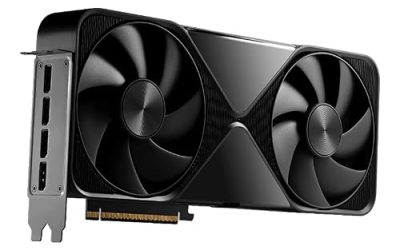
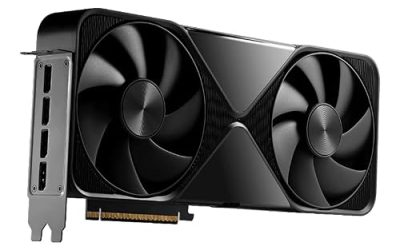
The TUF card is the durability-first version of the RTX 5070 in this set. Its listing calls out military-grade components, a protective PCB coating, and Axial-tech fans inside a 3.125-slot body, and the box contents include a graphics card holder to support the heavier cooler. The memory and interface match the other RTX 5070 listings at 12GB of GDDR7 and PCIe 5.0, so the choice here is about construction rather than specification. It suits buyers who keep a card for many years, move their PC often, or simply prefer the reinforced build.
ASRock Radeon RX 9070 Challenger 16GB OC
- Best for: Players who want 16GB of memory and standard 8-pin power in a mid-size card.
- Graphics coprocessor: AMD Radeon RX 9070, RDNA 4
- Compute units: 56, with 3584 stream processors
- Video memory: 16GB GDDR6, 256-bit, 20 Gbps
- Clocks: Boost up to 2520 MHz, game clock 2070 MHz
Players who want 16GB of memory and standard 8-pin power in a mid-size card.
It skips the DLSS feature set of the NVIDIA cards, so check how your main games handle upscaling before choosing it.
The Challenger answers the memory question directly: 16GB of GDDR6 on a 256-bit bus, where the RTX 5070 cards stop at 12GB. ASRock lists an RDNA 4 GPU with 56 compute units, a boost clock up to 2520 MHz, and a triple-fan cooler with 0dB silent cooling in a 2.5-slot, 290 mm body. Power comes through two 8-pin connectors with a 700W supply recommended and a stated 220W board draw, which keeps it friendly to existing builds. Choose it for texture-heavy 1440p play and VR worlds where memory headroom is the priority.
PowerColor Reaper AMD Radeon RX 9070 XT
The Reaper is the step up that stays inside this class: the RX 9070 XT chip with the same 16GB of GDDR6 as the Challenger, aimed at buyers who want the strongest native rendering this tier offers. PowerColor keeps the design plain and functional, and the listing states a 750W minimum power supply, the highest requirement in this roundup, which tells you where the card sits. It fits gamers who play at 1440p with high settings, push into 4K in lighter titles, or drive a demanding VR headset and want memory and raster speed together.
Specs
- Graphics coprocessor: AMD Radeon RX 9070 XT
- Video memory: 16GB GDDR6
- Interface: PCI Express 5.0 x16
- Form factor: ATX
- Power: 750W minimum PSU stated in the listing
- Model: RX9070XT 16G-A
Best for: Buyers who want the most raster performance and 16GB of memory this tier provides.
Watch out for: The 750W minimum supply requirement rules out many smaller existing power supplies, so check yours before ordering.
Which One Fits Your Situation
You Play at 1440p With a High-Refresh Monitor
Start with the RTX 5070 cards if your games support DLSS 4, since frame generation suits high-refresh panels well. The ASUS Prime gives you the triple-fan version in a 2.5-slot body, while the MSI Ventus 2X OC covers shorter cases. If your library leans on native rendering instead, the ASRock Challenger brings 16GB of memory for texture-heavy titles at the same resolution.
You Are Building in a Compact Case
Measure first, then choose between the two shorter paths here. The MSI Ventus 2X OC is the shortest card listed at 236 mm with a dual-fan cooler. The ASUS Prime is longer at 304 mm but keeps a slimmer 2.5-slot profile and an SFF-Ready designation. Avoid the 3.125-slot TUF unless your case states clear support for very thick cards.
You Play VR and Hate Dropped Frames
VR rewards memory headroom and steady delivery over headline features. The two 16GB Radeon cards, the ASRock Challenger and the PowerColor Reaper, give large VR environments more room, and the Reaper adds the stronger chip for demanding headsets. If your VR library uses DLSS in supported titles, an RTX 5070 card such as the Prime covers that path instead.
You Are Reusing an Older Power Supply
Check the connector type before the wattage. The Radeon cards use two 8-pin plugs that most older supplies already provide, with recommendations of 700W and a 750W minimum. The RTX 5070 cards need a 16-pin lead or the adapter in the box, and their recommendations start lower at 650W for the Ventus. Match the listing requirements to the supply you already own.
Common Mistakes
- Ordering by chip name alone and ignoring card length, then finding a 304 mm card does not clear the front of the case.
- Assuming every card in the tier uses the same power lead, when these listings split between one 16-pin connector and two 8-pin connectors.
- Treating 12GB and 16GB as a minor detail, even though memory capacity decides how texture settings hold up in newer games and VR worlds.
- Reusing a power supply below the wattage the listing recommends, instead of checking the stated 650W to 750W range for the exact model.
- Blocking the slots below the card with a 3.125-slot cooler without checking what the motherboard layout still needs to hold.
Frequently Asked Questions
Is 12GB of VRAM enough for 1440p gaming?
For most current 1440p games, yes, and all three RTX 5070 cards here pair that capacity with fast GDDR7 memory. The pressure points are extreme texture settings, heavy modifications, and large VR environments. If those describe your play, the 16GB Radeon listings in this roundup give you more headroom without leaving the tier.
Do these cards need a PCIe 5.0 motherboard?
No. Every card here uses a PCI Express 5.0 interface, but that interface is backward compatible with PCIe 4.0 and 3.0 slots, so an older motherboard still accepts the card. What matters more is physical clearance for the cooler and a power supply that meets the wattage and connector stated in the listing you pick.
Which card here is best for VR?
It depends on your library. The PowerColor Reaper pairs the RX 9070 XT chip with 16GB of memory, which suits demanding headsets and large environments. The ASRock Challenger offers the same memory with a lower 220W draw. If your VR titles support DLSS frame generation, one of the RTX 5070 cards is the better match instead.
Can I run one of these cards on a 650W power supply?
Only where the listing says so. The MSI Ventus 2X OC lists a 650W recommendation, so it fits that supply class. The other cards here ask for more: 700W for the ASRock Challenger, 750W recommended for the ASUS Prime, and a 750W minimum for the PowerColor Reaper. Always follow the figure printed for your exact model.
Related guides
More from Amazon
Programs that pair well with the guide above. Offers and eligibility are set by Amazon and may change.
Free shipping on eligible items, Prime Video and more. Eligible new members can start with a free trial.
Start a Prime free trialAd-free music streaming. Eligible new subscribers can start with a free trial.
Try Music Unlimited freeA Prime membership for ages 18-24 with a trial period. Eligibility is set by Amazon.
See Prime for Young AdultsAudiobooks and podcasts to listen to on the go. Eligible new members can start with a free trial.
Try Audible freeAs an Amazon Associate we earn from qualifying purchases.