Call of Duty covers a lot of ground in a single franchise: cinematic single-player campaigns, fast competitive multiplayer lobbies, and the wide open maps of Warzone. Each mode leans on a graphics card a little differently, but they all reward the same fundamentals — enough video memory for the texture settings you want to run, modern display outputs that can feed a high-refresh monitor, and cooling that stays composed through long sessions. This guide compares three current-generation cards whose Amazon US listings could be opened and verified in full.


One ground rule before the picks: none of the three product pages below publishes FPS figures or benchmark results for Call of Duty, so this guide makes no frame-rate claims of any kind. Every comparison here rests on specifications the manufacturers themselves publish on the listings — memory capacity and type, clock speeds, display outputs, cooler design, and physical size. Availability also needs an honest note: the listing copies reviewed for this guide did not confirm live stock for these cards, so treat availability as unconfirmed and check the live listing before you order.
As an Amazon Associate, we earn from qualifying purchases.
Our Top Picks
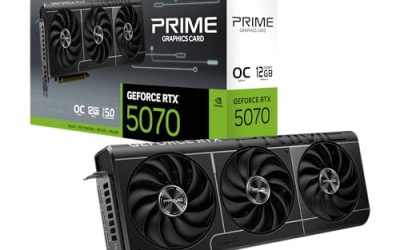
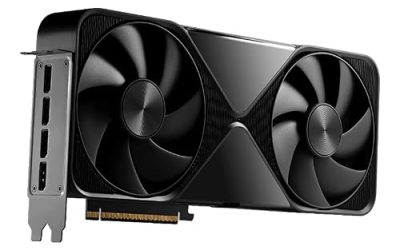
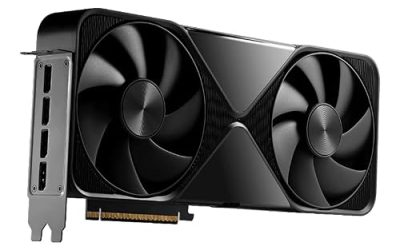
- ASUS SFF-Ready Prime NVIDIA GeForce RTX 5070 GraphicsRTX507012 x 5 x 2 inches3.3 poundsCheck on Amazon
Quick answer
If you want the balanced middle option, the ASUS Prime GeForce RTX 5070 (B0DS6V1YSY) pairs 12 GB of GDDR7 memory with a triple-fan, 2.5-slot cooler and three DisplayPort 2.1b outputs. If raw memory capacity matters most to you, the XFX Swift Radeon RX 9070 XT (B0DXLG4FJ3) carries the largest frame buffer here at 16 GB of GDDR6, behind a triple-fan cooler. If you want the lightest, simplest current-generation step up, the MSI GeForce RTX 5060 Shadow 2X OC (B0F4LP8VH5) is a compact dual-fan card with 8 GB of GDDR7 and fan-stop cooling. All three are current-generation gaming cards; they differ mainly in memory capacity, memory generation, cooler size, and weight.
Key takeaways
- No FPS data appears on any of the three listings — these picks are based on verified published specifications only, not benchmark claims.
- Memory capacity spans 8 GB (RTX 5060), 12 GB (RTX 5070), and 16 GB (RX 9070 XT), so texture-setting headroom is the clearest dividing line.
- The two NVIDIA cards use newer GDDR7 memory; the AMD card uses GDDR6 but offers the most of it.
- All three cards publish modern DisplayPort and HDMI outputs suitable for high-refresh gaming monitors.
- Cooling ranges from MSI’s compact dual-fan design with fan-stop to full triple-fan coolers on the ASUS and XFX cards.
- Availability was unconfirmed in the listing copies reviewed — verify live stock on the exact ASIN before buying.
The picks
ASUS Prime GeForce RTX 5070 — the balanced 12 GB option
The ASUS Prime is built around NVIDIA’s GeForce RTX 5070 on the Blackwell architecture, and its listing leads with 12 GB of GDDR7 memory and a published GPU clock speed of 2542 MHz. That memory figure is the headline for Call of Duty players: 12 GB sits comfortably above the entry tier and gives texture settings more room to breathe at higher resolutions than an 8 GB card can offer, while the GDDR7 generation is the newest memory standard among the three cards in this guide. ASUS also publishes a maximum display resolution of 7680×4320 and a full output set — three native DisplayPort 2.1b ports plus one native HDMI 2.1b port, with HDCP support — so a multi-monitor desk or a single high-refresh display is easy to drive from one card.
Physically, this is a substantial but case-friendly card. ASUS describes a 2.5-slot, SFF-Ready design cooled by three Axial-tech fans, with a phase-change GPU thermal pad and a Dual BIOS switch. It measures 12 inches long and 5 inches wide and weighs 3.3 lb, so it needs a case with real clearance, but the SFF-Ready shaping is aimed at smaller builds than most triple-fan cards tolerate. The box includes the card, a 1-to-2 adapter cable, an ASUS Velcro hook and loop strap, a speedsetup manual, and a thank-you card, and ASUS publishes a 3-year warranty. For a player who wants one card that covers campaign, multiplayer, and Warzone without dropping to the entry tier, this is the most rounded specification sheet of the three.
Specs
- GPU: NVIDIA GeForce RTX 5070 (Blackwell)
- Memory: 12 GB GDDR7
- GPU clock speed: 2542 MHz
- Outputs: 3× DisplayPort 2.1b, 1× HDMI 2.1b, HDCP support
- Interface: PCI-Express x16
- Cooler: 3 Axial-tech fans, 2.5-slot SFF-Ready design, Dual BIOS, phase-change GPU thermal pad
- Max display resolution: 7680×4320
- Dimensions and weight: 12″L × 5″W, 3.3 lb
- Model: PRIME-RTX5070-12G; warranty: 3 years
See the ASUS Prime RTX 5070 on Amazon
XFX Swift Radeon RX 9070 XT — the most memory in this guide
The XFX Swift is the AMD entry here, built on the Radeon RX 9070 XT, and its defining specification is memory capacity: 16 GB of GDDR6, the largest frame buffer of the three cards. For Call of Duty players who like to push texture quality upward and keep it there across big Warzone maps, published capacity is the simplest form of headroom, and this card has the most of it. XFX publishes a full clock ladder for the card — a 1660 MHz base clock, a 2400 MHz game clock, and a 2970 MHz boost clock — which is more clock detail than the other two listings provide, and a published maximum resolution of 3840×2160.
The Swift uses a triple-fan cooler, matching the ASUS on airflow hardware, and the card weighs 3.3 lb, so it asks for the same kind of case clearance and support consideration as the other large card here. The trade-off against the ASUS is one of specification philosophy rather than quality: the XFX gives you more memory capacity on the GDDR6 standard, while the ASUS gives you less capacity on the newer GDDR7 standard. Neither listing publishes Call of Duty frame rates, so the honest way to choose between them is by the rest of your system — your monitor’s resolution, the texture settings you prefer, and which output and driver ecosystem you already run. If capacity is your priority, this is the card in the guide built around it.
Specs
- GPU: AMD Radeon RX 9070 XT
- Memory: 16 GB GDDR6
- Clocks: 1660 MHz base, 2400 MHz game, 2970 MHz boost
- Cooler: triple-fan design
- Max display resolution: 3840×2160
- Weight: 3.3 lb
- Model: RX-97TSWF3B9; manufacturer: XFX
See the XFX Swift RX 9070 XT on Amazon
MSI GeForce RTX 5060 Shadow 2X OC — the compact current-generation step
The MSI Shadow 2X OC is the entry point of this trio, built around NVIDIA’s GeForce RTX 5060, also on the Blackwell architecture. Its listing publishes 8 GB of GDDR7 memory on a 128-bit interface, with an Extreme Performance clock figure of 2535 MHz in the title. Eight gigabytes is the smallest buffer here, and that is the honest limitation to weigh: it suits players who run competitive multiplayer settings — where lower texture loads are common by choice — more than players who max out every texture option. In return, you get current-generation architecture and GDDR7 memory in the lightest, simplest package of the three.
MSI keeps the hardware deliberately compact. The cooler is a dual-fan design using TORX FAN 5.0 fans with ZERO FROZR fan-stop, which halts the fans entirely when temperatures allow, and the whole card weighs just 1.9 lb — a little over half the weight of the two triple-fan cards. Outputs are modern and complete: three DisplayPort 2.1a ports and one HDMI 2.1b port, so a high-refresh monitor connects exactly as it would on the bigger cards. The box is minimal — the graphics card and a quick setup guide — which fits the card’s role: a straightforward, space-friendly upgrade into the current generation for a build that does not need, or cannot fit, a large triple-fan card.
Specs
- GPU: NVIDIA GeForce RTX 5060 (Blackwell)
- Memory: 8 GB GDDR7, 128-bit
- Clock: Extreme Performance 2535 MHz
- Outputs: 3× DisplayPort 2.1a, 1× HDMI 2.1b
- Cooler: dual-fan TORX FAN 5.0, ZERO FROZR fan-stop
- Weight: 1.9 lb
- In the box: graphics card, quick setup guide
- Model: G5060-8S2C; manufacturer: MSI
See the MSI RTX 5060 Shadow 2X OC on Amazon
How to choose
Start with your monitor, because it decides how much card you actually need. Call of Duty’s own published PC requirements for the current title are the ground truth for minimum and recommended hardware — check them first, then use the specifications above to see where each card sits relative to that guidance. A player on a 1080p high-refresh monitor running competitive settings asks far less of a graphics card than a player driving a large 1440p or 4K display with textures turned up, and the right pick from this trio follows from that difference.
Memory is the clearest spec to shop by. Texture quality is the setting that consumes video memory most directly, and large-map modes load a lot of it. The RX 9070 XT’s 16 GB is the most headroom, the RTX 5070’s 12 GB is the middle path, and the RTX 5060’s 8 GB is the budget of the group — best matched to players who deliberately run leaner settings. Memory generation is the second axis: GDDR7 on the two NVIDIA cards is the newer standard, while the AMD card answers with capacity. Neither listing publishes game benchmarks, so treat that as a specification trade-off, not a proven performance gap.
Then check the physical and practical fit. The ASUS is 12 inches long in a 2.5-slot design and the XFX is a full triple-fan card at 3.3 lb, so measure your case clearance and consider GPU support for heavier cards. The MSI, at 1.9 lb with a dual-fan cooler and fan-stop, is the easiest fit and the quietest citizen at idle. Finally, confirm your power supply meets the card maker’s recommendation on the live listing, and buy by exact model name and ASIN — similar-looking model names from the same brand are often different listings with different specifications.
Who should skip
Skip all three cards if you need verified benchmark numbers before you buy. That is a reasonable position — it is simply not something these listings provide, and any guide quoting Call of Duty frame rates for these exact cards is getting them from somewhere other than the product pages. You should also look beyond this trio if you play at 4K with every texture option at maximum and want memory headroom past 16 GB, or if your build is a laptop, since all three are desktop PCI-Express cards. And if you need a card in hand this week, note that availability for these listings was unconfirmed in the copies reviewed here — if a live listing shows no purchase option, waiting or choosing a confirmed-in-stock alternative beats ordering against uncertainty.
FAQ
How much VRAM does Call of Duty need?
It depends on the title, your resolution, and your texture settings, which is why Activision publishes per-title PC requirements — use those as the reference. What this guide can say from the listings is how the three verified cards stack up on published capacity: 16 GB on the RX 9070 XT, 12 GB on the RTX 5070, and 8 GB on the RTX 5060. Higher texture settings consume more memory, so players who turn textures up should weight capacity heavily.
Do these product pages publish FPS figures for Call of Duty?
No. None of the three listings publishes frame-rate data, benchmark charts, or settings-specific performance claims for Call of Duty or any other game. This guide therefore makes no FPS claims; the comparisons rest on published specifications such as memory, clocks, outputs, and cooling.
GDDR7 or more GDDR6 — which matters more?
They are different kinds of advantage. GDDR7 is the newer memory standard and appears on the RTX 5070 (12 GB) and RTX 5060 (8 GB); the RX 9070 XT offers the most capacity at 16 GB on GDDR6. Because the listings publish no comparative benchmarks, the practical approach is to decide by capacity first — matched to your resolution and texture settings — and treat memory generation as a secondary, forward-looking plus.
Are these cards in stock right now?
Availability was unconfirmed in the listing copies reviewed for this guide: the pages verified the products and their specifications but did not confirm a live purchase offer. Check the live Amazon listing for the exact ASIN before ordering, and be wary of similarly named listings, which can be different cards with different specifications.
Final verdict
Three verified cards, three clear roles. The XFX Swift RX 9070 XT is the pick when memory capacity leads your decision — 16 GB is the most headroom here, and its published clock ladder is the most detailed of the trio. The ASUS Prime RTX 5070 is the balanced choice, trading some capacity for newer GDDR7 memory, a flexible 2.5-slot SFF-Ready triple-fan design, and the widest output set. The MSI RTX 5060 Shadow 2X OC is the compact, lightweight route into the current generation, best suited to competitive-settings players and smaller builds. Whichever you choose, confirm live availability on the exact listing first — and let the game’s own published requirements, not invented benchmark numbers, be your performance reference.
Product and ASIN Reference
| Product | ASIN | GPU | Memory |
|---|---|---|---|
| ASUS Prime GeForce RTX 5070 | B0DS6V1YSY | NVIDIA GeForce RTX 5070 | 12 GB GDDR7 |
| XFX Swift Radeon RX 9070 XT Triple Fan | B0DXLG4FJ3 | AMD Radeon RX 9070 XT | 16 GB GDDR6 |
| MSI GeForce RTX 5060 8G Shadow 2X OC | B0F4LP8VH5 | NVIDIA GeForce RTX 5060 | 8 GB GDDR7 |
Related guides
More from Amazon
Programs that pair well with the guide above. Offers and eligibility are set by Amazon and may change.
Free shipping on eligible items, Prime Video and more. Eligible new members can start with a free trial.
Start a Prime free trialAd-free music streaming. Eligible new subscribers can start with a free trial.
Try Music Unlimited freeA Prime membership for ages 18-24 with a trial period. Eligibility is set by Amazon.
See Prime for Young AdultsAudiobooks and podcasts to listen to on the go. Eligible new members can start with a free trial.
Try Audible freeAs an Amazon Associate we earn from qualifying purchases.