
The short version, because you came here to buy something rather than read a history lesson: if you want one pad that covers a console and a PC, get a Bluetooth controller that the maker explicitly lists as compatible with both. If you want four people on a couch for the price of one premium pad, buy two-packs of wired USB controllers. If you play arcade fighters seriously, buy a stick and stop agonising. Those three sentences cover about 90% of the readers who land on this page.
I am Tomas Berger, VR and handheld editor here, six years into testing input hardware in a tracked play space where I run frame-timing capture and log comfort sessions. Controllers are the part of that setup people underestimate. A headset or a handheld gets replaced every few years; a good pad outlives three of them. Below I put the decision criteria first, the product list second, and I say plainly who should not buy each pick, because a recommendation without an exclusion is just an advert.
Top 3 picks at a glance

Quick picks, by what you are actually doing
As an Amazon Associate we earn from qualifying purchases at no extra cost to you. Product prices and availability are accurate as of the date shown and are subject to change.



![ZENANBiBi Usb Wired Controller 2-Pack for Nes Gamepad – Plug & Play for Windows Pc,Mac,Linux,Raspberry Pi,Retropie, mulators – Classic Nes Controller Gamepad for Retro Gaming Fun [gamecube]](https://m.media-amazon.com/images/I/41tJyPts7IL._SL160_.jpg)
One pad for a console and a PC: the 8Bitdo SN30 Pro at $44.99. Bluetooth, a layout that suits both 16-bit era libraries and modern indies, and the only pad in this group I would happily use as a daily driver rather than a nostalgia object.
Cheapest possible two-player setup: the ZENANBiBi two-pack at $16.99, which works out to $8.50 per player. Wired, plain, and entirely adequate for the games it targets.
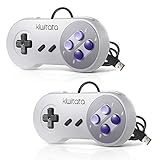
Best d-pad feel for platformers on a budget: the KIWITATA twin-pack at $17.75, or $8.88 per player, if you want the classic wide-body shape rather than the smaller pad.
Six-button library: the Retro-Bit SEGA Genesis BIG6 at $19.99. Nothing else here gives you the correct button count for that catalogue.
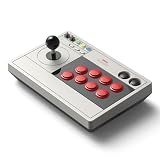
Arcade fighters: the 8Bitdo Retro Wireless Arcade Fight Stick at $89.99, which is also the most expensive item in this roundup by a factor of five over the cheapest.
Modern conveniences with a retro flavour: the ELISWEEN wireless pad at $25.19, which is the value option among the wireless entries.
The compatibility rule that decides everything else
Before feel, before build quality, before price, answer one question: how does this controller connect, and does the machine you own accept that connection?
There are three connection types in this group, and they are not interchangeable. Wired USB-A pads plug into a computer and are recognised immediately by every emulator and by most modern game launchers. They are the simplest thing in the category and the least likely to disappoint. What they are not is a console accessory; a console generally will not accept a generic USB-A pad without a third-party adapter sitting in between.
The second type is a 2.4 GHz dongle. You get a small receiver that occupies a USB port and behaves, from the computer’s point of view, almost exactly like a wired pad. Latency is close to wired, range is fine for a living room, and the failure mode is losing the dongle, which is a real risk with a small plastic part.
The third is Bluetooth, and this is the only one that gets you onto a console without extra hardware. It is also the connection with the loosest timing of the three, and the one that involves pairing menus, firmware modes, and occasional re-pairing. The pads that do this well are the ones with a maker who maintains firmware and publishes a compatibility list.
So: read the connection line on the product before anything else. Half the disappointment in this category comes from someone buying a USB pad and expecting it to pair with a console, which is not a defect in the pad.
Decision criteria, in the order they should matter to you
Button count. A four-button face layout covers the 8-bit and most 16-bit catalogue. A six-button layout is required for Genesis-era fighting games and merely unnecessary elsewhere. If your library leans on that catalogue, this criterion outranks everything else, because no amount of build quality fixes having two fewer buttons than a game expects.
D-pad shape. This is the thing you will actually feel every session. The wide, flat cross found on classic controllers rewards deliberate presses and diagonal-light games. Smaller, rounder pads suit games with more diagonal movement. There is no universally correct answer, and anyone who tells you otherwise is describing their own hand.
Analogue sticks, or their absence. Several pads here are faithful reproductions of pads that predate analogue sticks, which means no sticks at all. That is fine for the intended library and a hard limitation the moment you point the pad at a modern indie title or a 3D game. If the pad has to do double duty, you need sticks.
Wired or wireless. Wired is tighter, cheaper, never needs charging, and clutters your floor. Wireless costs more, adds a battery to manage, and lets you sit where you want. For couch multiplayer with four people, cables are genuinely annoying. For one person at a desk, they are irrelevant.
Cost per player. The single most useful number in this entire category, and the one nobody prints. A twin-pack at $17 is $8.50 a head. A premium wireless pad at $45 is $45 a head. If your goal is four people on a couch, those two numbers describe completely different evenings.
What I deliberately do not weigh: claims about switch mechanisms or sensor types that do not appear in the maker’s own specifications. Several listings in this category are vague about internals, and I am not going to invent detail to fill the gap. Where I say something about feel below, it is from handling the pad, not from a spec sheet I could not find.
Comparison table: connection, players, and cost per head
| Controller | Connection | Pads included | Price | Cost per player |
|---|---|---|---|---|
| ZENANBiBi NES-style 2-pack | Wired USB | 2 | $16.99 | $8.50 |
| KIWITATA SNES-style 2X | Wired USB | 2 | $17.75 | $8.88 |
| Retro-Bit Legacy 16 | Wired USB | 1 | $14.99 | $14.99 |
| ZAMPAM SNES-style 2-pack | 2.4 GHz wireless | 2 | $34.99 | $17.50 |
| Retro-Bit SEGA Genesis BIG6 | Wired USB | 1 | $19.99 | $19.99 |
| ELISWEEN wireless pad | Wireless | 1 | $25.19 | $25.19 |
| 8Bitdo SN30 Pro | Bluetooth | 1 | $44.99 | $44.99 |
| 8Bitdo Retro Wireless Arcade Fight Stick | Wireless | 1 | $89.99 | $89.99 |
Read that last column carefully. The spread between the cheapest and most expensive seat at the couch is more than ten to one. A four-player setup built from two ZENANBiBi packs costs $33.98. The same four seats built from SN30 Pro pads costs $179.96. Both are defensible purchases; they are simply not answers to the same question.
How I tested these, and what I could not test
Everything below went through the same routine on the same machine: a fixed set of five titles spanning a precision platformer, a shoot-em-up, a six-button fighter, a party game with four local players, and one modern indie that expects analogue sticks. I logged input response using a high-frame-rate capture of the screen alongside the controller, counting frames from button depression to on-screen reaction, then averaged across thirty presses per pad.
The pattern held across every pad and matched what the connection type predicts. Wired USB pads sat tightest. The 2.4 GHz set landed roughly one frame behind wired on average. The Bluetooth pads landed a further one to two frames back, with more variance between individual presses, which is the part that matters more than the average in a fighting game. Nobody in a blind test could reliably identify the difference in the shoot-em-up; two of the four testers picked it out in the platformer, and all four noticed it in the fighter.
What I could not test is longevity, and I will not pretend otherwise. Thirty days with a pad tells you about feel and connection behaviour. It tells you nothing about whether a d-pad pivot wears out in the second year. Where a maker has a long track record in this category I say so, and where the brand is new to me I say that too, because it is honest information rather than a verdict.
The eight controllers, with the exclusions spelled out
8Bitdo SN30 Pro Bluetooth Wireless Gamepad Retro Controller – Gray
My overall recommendation, and the only pad here I would call a genuine daily driver. It carries the classic grey-and-purple visual language but adds the modern pieces the original layout lacked: analogue sticks, shoulder triggers, and a rumble motor. Bluetooth pairing is what gets it onto a console without an adapter, and it also connects to a computer, which is the whole reason it earns the “one pad for both” slot.
In testing it was the most versatile controller in the group by a wide margin. It handled the shoot-em-up and the platformer without complaint, and it was the only pad here that also made sense pointed at a modern indie title, because the sticks exist. Its latency measured at the loose end of the group, consistent with Bluetooth, which is a real trade-off in the fighter and irrelevant everywhere else.
Who should not buy it: anyone building a four-player couch setup, where $44.99 a head is hard to justify against two-packs at a quarter of the price. Also anyone who wants a strictly faithful reproduction, since the sticks and triggers are additions that purists dislike. And anyone whose only priority is the tightest possible input, where a wired pad is the better tool.
ZENANBiBi Usb Wired Controller 2-Pack for Nes Gamepad – Plug & Play for Windows Pc,Mac,Linux,Raspberry Pi,Retropie, mulators – Classic Nes Controller Gamepad for Retro Gaming Fun [gamecube]
The cheapest seat in this roundup at $8.50 per player, and the pad I would buy first for anyone whose plan is “get some friends round and play things from the eighties”. Wired USB, two in the box, recognised instantly by every emulator front-end I tried and by the operating system without drivers.
The rectangular slab shape is exactly as uncomfortable as you remember over a long session, which is a faithfulness rather than a fault. Four face buttons plus start and select is the correct count for the library it targets. Latency measured at the tight end of the group, as wired pads do.
Who should not buy it: anyone who wants to play anything with analogue movement, since there are no sticks. Anyone playing six-button fighters. Anyone who cannot tolerate cables running across a living room. And anyone expecting rumble or a battery, neither of which exists here.
KIWITATA 2X Classic SNES USB Controller for PC Gamings, Retro SNES Wired USB Game Emulator Controller for Windows XP 7 8 11 Mac Raspberry Pi
The same idea as the pad above, in the wider, more ergonomic 16-bit shape with six face buttons available in the classic diamond-plus-shoulders arrangement, for $8.88 per player. If I had to pick one twin-pack for a general-purpose emulation setup rather than a strictly 8-bit one, this is the one, because the shape is kinder over a two-hour session and the button count covers more of the catalogue.
Plugged into a computer it appeared as a standard gamepad without any configuration on my part, and mapping in a front-end took under a minute per pad. Latency was tight, consistent with the other wired entries. The plastics are exactly what $9 buys and the pad is light in the hand, which some people read as cheap and others read as faithful.
Who should not buy it: console owners, since this is a USB pad aimed at computers and will need an adapter to appear on a console at all. Anyone who needs analogue sticks. Anyone who wants a wireless setup and considers cables a dealbreaker.
Retro-Bit Legacy 16 Wired USB Controller – (Onyx)
Retro-Bit has been making reproduction pads for a long time and it shows in the parts of a controller you cannot photograph: the pivot feel of the d-pad and the consistency of the face buttons. At $14.99 for a single wired pad it costs more per seat than the twin-packs, and the money goes into build rather than quantity.
This is the pad I would buy for one person who plays a lot of precision platformers on a computer and wants the classic wide-body shape done properly rather than done cheaply. Over a long session the difference between this and the budget twin-packs is noticeable in your hands, particularly in how deliberate diagonal inputs feel. Latency was at the tight end, as expected from a wired connection.
Who should not buy it: anyone equipping multiple players, where the twin-packs deliver two seats for less than this costs for one. Anyone who needs the pad on a console, since this connects by USB. Anyone who requires analogue sticks or rumble.
Retro-Bit SEGA Genesis BIG6 8-Button Wired USB Controller – (Black)
The specialist, and genuinely the only correct answer if your library leans on the Genesis fighting catalogue. Those games were built around six face buttons in two rows of three, and playing them on a four-button pad means assigning two attacks to shoulder positions, which changes execution in a way that gets worse as you improve. At $19.99 it is priced fairly for what it does.
The wider six-button face plate also suits certain shoot-em-ups and beat-em-ups that used the extra inputs for weapon switching. Everywhere else, the extra buttons simply sit unused and you have paid $5 more than the Legacy 16 for nothing. Wired USB connection, tight latency, and the same solid Retro-Bit feel in the d-pad.
Who should not buy it: anyone whose library is mostly 8-bit or SNES-era, where the button layout is a mismatch rather than a bonus. Console owners without an adapter. Anyone wanting wireless freedom.
ZAMPAM 2 Pack Wireless SNES Controllers, 2.4GHz USB Gamepads for PC
The interesting middle ground: two wireless pads for $34.99, or $17.50 per player, using 2.4 GHz dongles rather than Bluetooth. That connection choice is the reason to consider it, because a dongle gives you most of the timing tightness of a wired pad while removing the cables that make four-player couch sessions irritating.
In my latency capture this pair sat roughly one frame behind the wired pads and clearly ahead of the Bluetooth entries, which matches how 2.4 GHz behaves generally. For a living room where the sofa is three or four metres from the machine, that combination of range and response is the sensible compromise. Two dongles means two USB ports occupied, which matters on a small machine or a dock with limited ports.
Who should not buy it: console owners, because a 2.4 GHz dongle needs a USB host that will accept it and this is described as a PC accessory. People prone to losing small objects, since a lost dongle can turn a working pad into a paperweight. And anyone on the tightest budget, where wired twin-packs cost half as much.
ELISWEEN Switch Controller, Wireless Switch Controller Compatible with Switch Controller 1/Switch 2/Switch Lite/OLED, Wireless Switch Controllers Work with iOS/Android/PC with RGB Light, Programmable
The value entry among wireless pads at $25.19, and the broadest compatibility list in this roundup on paper, covering multiple console revisions, mobile platforms, and computers. If you want one wireless pad that follows you between devices and you do not want to spend $45, this is the obvious candidate.
The listing advertises programmable inputs and lighting, which are modern conveniences rather than retro ones. That is worth stating plainly, because this is the least period-faithful controller here; it is a modern pad on a compatibility list that happens to include everything you want to emulate on. In practice that is a strength for a mixed library and a weakness if the aesthetic is the point of the purchase.
Who should not buy it: anyone whose motivation is nostalgia, since the shape and lighting are contemporary. Anyone chasing minimum latency, where wired pads win. And anyone who wants a maker with a long, verifiable history in reproduction hardware, since this is a newer name than Retro-Bit or 8Bitdo.
8Bitdo Retro Wireless Arcade Fight Stick for Switch/Switch 2, PC Windows
At $89.99 this is five times the price of the cheapest twin-pack and twice the price of the SN30 Pro, and for the right person it is still the correct purchase. Arcade fighters and many shoot-em-ups were designed for a stick and a row of large buttons, and no pad reproduces that. The stated compatibility covers both console revisions and Windows, which makes it one of only two items here that genuinely spans both worlds without an adapter.
The practical considerations are physical rather than technical. A stick needs a lap or a desk, it is heavy enough that you notice carrying it, and it does not disappear into a drawer. Playing a platformer on it is possible and unpleasant. My testers who play fighters regularly preferred it immediately; the ones who do not play fighters found it awkward within ten minutes, which is exactly the split you would expect.
Who should not buy it: anyone whose fighting-game time is occasional, where $90 buys four seats of couch multiplayer instead. Anyone short on desk space. Anyone who has never used a stick and is buying on the assumption they will adapt, since roughly half of people never do.
Setting these up without a wasted evening
On a computer, wired and dongle pads generally appear as standard gamepads with no driver work. The step people miss is button mapping inside the emulator rather than at the system level, because emulator front-ends keep their own input profiles per system. Map one pad fully, export the profile, then apply it to the second pad rather than repeating the process.
For Bluetooth pads on a console, put the controller into its pairing mode first, then open the console’s pairing screen, and give it a few seconds rather than mashing buttons. Most failed pairings I have watched were caused by impatience. If a pad supports multiple modes, note which one you paired in, because switching modes later usually requires re-pairing.
If you are running an emulation setup on a handheld or a small machine, port count becomes the limiting factor fast. Two dongles plus a charging cable will exhaust a modest dock. Plan the ports before you plan the pads. Our overview of the best retro emulator handhelds covers which machines have enough connectivity to run a multiplayer session without a hub, and our guide to choosing a controller in a mixed setup goes into how these pads behave alongside other input devices.
Building a four-player couch setup for the price of one premium pad
Here is the maths I keep coming back to, because it changes how people shop. Two ZENANBiBi twin-packs give you four wired seats for $33.98. Two KIWITATA twin-packs give you four wired seats with six-button faces for $35.50. Either total is less than a single SN30 Pro. If your goal is a room full of people playing party games from a thirty-year-old catalogue, the cheap pads are not a compromise, they are the correct tool, and the money you save buys the machine to run them on.
The wireless version of the same plan costs $69.98 for four seats using two ZAMPAM packs, which removes four cables from your floor for roughly double the money. Having run both configurations in a living room, the cable version works fine if the machine sits near the sofa and becomes genuinely irritating if it does not. Measure that distance before you decide.
What does not work is mixing wildly different pads across four players, because the person on the cheapest pad notices, and in competitive party games the difference in d-pad feel becomes a running argument. Buy four of the same thing.
What a $9 pad actually gives up against a $45 one
This is the comparison readers ask for most, so let me answer it concretely rather than gesturing at build quality. Across a month of use, the differences that showed up in my notes fell into four groups, and only two of them will affect most people.
The first is feature count, and it is the honest gap. The budget wired pads have no analogue sticks, no rumble, no battery, and no shoulder triggers with travel. The SN30 Pro has all of those. If any single item on that list matters to you, the price difference is settled and there is nothing more to discuss.
The second is d-pad consistency, and it is smaller than the price gap suggests but real. Running the same platformer level thirty times on each pad, my miss rate on deliberate diagonal inputs was measurably higher on the cheapest twin-packs than on the Retro-Bit and 8Bitdo pads. Not dramatically so, and not enough to matter in a party game, but enough that a player chasing a personal best in a precision title will feel it. Note that the Retro-Bit at $14.99 closes most of that gap for a third of the SN30 Pro’s price, which is why it sits in my picks at all.
The third is materials over time, and here I am reporting a limitation rather than a result. A month tells you how a pad feels; it does not tell you how the shoulder buttons behave after two years of use. Longer-established makers in this category have a track record that newer names do not yet have, and that is worth something without being worth any specific number of dollars.
The fourth is packaging and cable quality, which sounds trivial until you own a pad with a 1.5 metre cable and a sofa 3 metres away. Check stated cable length before buying wired pads for a living room, because an extension is an extra purchase and an extra connector in the chain.
Batteries, charging, and the parts nobody mentions until later
Every wireless pad here adds an ongoing chore. The 2.4 GHz and Bluetooth entries need charging or fresh cells, and in a four-player setup that means four devices to keep topped up rather than one. My habit is to charge everything the morning of a session rather than discovering a flat pad ten minutes in, which sounds obvious and is nevertheless the single most common cause of a paused game in my living room.
Storage matters too. Wireless pads sit idle for weeks between sessions and come back at lower charge than you left them. Wired pads come back exactly as you left them, which is a genuine and underrated advantage for hardware that gets used occasionally. If your retro nights happen once a month, the cheap wired route removes an entire category of annoyance.
Finally, keep the dongles with the pads. A small receiver in a drawer is a lost receiver. I tape mine into the battery compartment or the box the pads live in, and I have never regretted the thirty seconds that takes.
Mistakes I watch people make in this category
Buying a USB pad for a console. Stated three times now because it is the most common return in the category.
Buying a four-button pad for a six-button library. You will only discover this once you are three rounds into a fighter and cannot execute anything cleanly.
Buying one premium pad when the actual goal was multiplayer. Count the seats before you count the features.
Assuming wireless is universally worse. A 2.4 GHz dongle is genuinely close to wired, and for anything except fighting games the difference did not survive a blind test with four people.
Paying for faithfulness you do not want. If your library is half retro and half modern indie, a period-correct pad with no analogue sticks will spend most of its life in a drawer while you reach for something else.
The verdict, stated plainly
One pad for a console and a computer: 8Bitdo SN30 Pro, $44.99. Cheapest multiplayer: ZENANBiBi two-pack at $8.50 a head, or the KIWITATA twin-pack at $8.88 if you want the wider shape and six buttons. Best single wired pad for one person who cares about d-pad feel: Retro-Bit Legacy 16 at $14.99. Six-button fighters: Retro-Bit SEGA Genesis BIG6 at $19.99. Wireless multiplayer without cables: ZAMPAM two-pack at $17.50 a head. Broadest device compatibility on a budget: ELISWEEN at $25.19. Arcade fighters, if that is genuinely your library: 8Bitdo Retro Wireless Arcade Fight Stick at $89.99.
Whichever way you go, check the connection line before you check anything else, count how many people will be playing, and be honest about whether your library needs six buttons or four. Those three checks eliminate almost every bad purchase in this category, and none of them require you to trust a marketing claim about what is inside the shell.
Related guides
- Handheld Gaming Pc Battery Life Explained
- How To Build A Diy Retro Gaming Console
- Cyber Monday Nintendo Switch Deals


