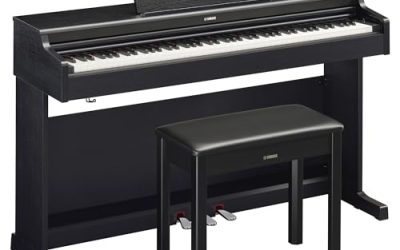
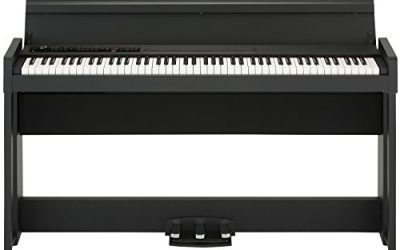
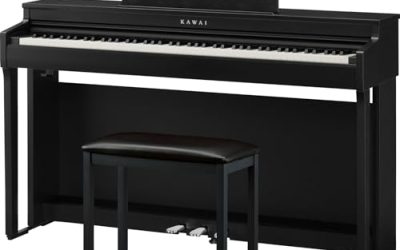
Classical piano study asks more of an instrument than casual playing does. A student working through Bach, Beethoven, Chopin, and Debussy needs an action that builds finger control, a sound that rewards careful phrasing, and pedals that handle the long, sustained passages classical repertoire is built on. When you are choosing among the best Kawai console digital pianos for classical piano students, you are choosing the instrument a student will sit at every day through scales, graded exams, and recital preparation.
Kawai has built acoustic grand pianos for nearly a century, and that heritage shows in its console digital pianos. The key actions were developed to recreate the touch of a Kawai grand, and the sound is sampled from the Shigeru Kawai SK-EX concert grand. The three Kawai consoles below share an 88-key weighted action, a furniture cabinet with a three-pedal unit, built-in speakers, and Bluetooth for apps and backing tracks, and they differ in the action, the speaker system, and the depth of the sound engine.
Top 3 picks at a glance


What to Look For
Key action. Classical technique is built on control, and the action decides how much of it a student develops. Kawai’s Responsive Hammer III action, used in the CN201 and CN301, uses graded hammers and counterweights to recreate the feel of a grand piano, with heavier touch in the bass and lighter touch in the treble. The Grand Feel Compact action in the CA401 goes further with wooden keys, closer still to an acoustic instrument, which matters when a student is preparing for exams played on a real grand.
Polyphony for sustained repertoire. Classical pieces lean on the sustain pedal, and a piano with too little polyphony will cut notes off mid-phrase. The CN201 and CA401 carry 192-note polyphony, while the CN301 steps up to 256 notes, which keeps dense, heavily pedalled passages in Chopin and Debussy clean.
Sound engine. Kawai samples its own Shigeru Kawai SK-EX concert grand for these instruments, and the CN and CA series use Harmonic Imaging to reproduce the full character of the piano across the keyboard. A convincing grand piano sound helps a student develop tone, dynamics, and phrasing, which are exactly the qualities a classical examiner listens for.
Three pedals. Advanced classical repertoire asks for all three pedals, damper, soft, and sostenuto, and a single sustain pedal limits what a student can learn. All three models below have a fixed three-pedal unit with half-pedal support, so pedalling technique develops correctly from the first lesson.
Practice tools. Bluetooth MIDI and audio connect the piano to learning apps, a built-in recorder lets a student listen back to a performance, and Kawai’s Virtual Technician lets a teacher adjust touch and tone in fine detail.
The Best Kawai Console Digital Pianos for Classical Piano Students
Kawai CN201 Digital Piano, Premium Satin Black
ASIN: B0C6BVTKH4
Amazon: https://www.amazon.com/dp/B0C6BVTKH4
The CN201 is the focused practice instrument in Kawai’s console line, and it concentrates on the two things that matter most for classical study: the keyboard and the sound. Its Responsive Hammer III action recreates the touch of a Kawai grand piano, and its SK-EX concert grand sounds use 88-key stereo sampling with Harmonic Imaging. Nineteen voices cover grand piano, electric piano, strings, and organ tones, and Bluetooth MIDI and audio connect to learning apps and backing tracks.
The dual 20-watt speaker system gives a clear, balanced sound for a practice room, and the Virtual Technician provides 18 adjustable parameters for touch and tone, so a teacher can fine-tune the action to a student’s hand.
Who it suits: Classical students and families who want a genuine grand-piano feel and a clean, focused practice instrument without paying for a larger speaker system.
Considerations: The speaker system is modest next to the CN301, so players who want room-filling sound for performance may prefer the bigger model. The cabinet is a full-size piece of furniture, so check your floor space first.
Kawai CN301 88-Key Digital Piano with Responsive Hammer III, Rosewood
ASIN: B0CQCV986L
Amazon: https://www.amazon.com/dp/B0CQCV986L
The CN301 takes the CN201’s action and sound and adds a substantially bigger audio and recording package, which is what makes it the stronger choice for a classical student working on longer pieces. It uses the same Responsive Hammer III action and the same SK-EX concert grand sound, but its 40-watt speaker arrangement projects more richly into a room, and its 256-note polyphony handles dense, pedalled repertoire with ease. Bluetooth MIDI and audio, a recorder with more flexibility, and USB connectivity support both practice and recording.
The rosewood cabinet gives the piano a classic furniture presence, and the three-pedal unit with half-pedal support develops expressive pedalling technique for the sustained passages in Romantic repertoire.
Who it suits: Advancing classical students who need extra polyphony for sustained repertoire and a speaker system that carries a performance to listeners in the room.
Considerations: The extra speaker and recording features add size and weight, and players who mostly practice through headphones may find the CN201 covers their needs for less.
Kawai CA401 Digital Concert Piano, Premium Satin Black
ASIN: B0C6BJLH99
Amazon: https://www.amazon.com/dp/B0C6BJLH99
The CA401 is the premium choice in this group, built around Kawai’s Grand Feel Compact action with wooden keys. That wooden-key action is the closest of the three to playing a real grand piano, with a natural, substantial feel under the fingers that rewards expressive playing in classical repertoire. The sound comes from the latest SK-EX Competition Grand recreation using Progressive Harmonic Imaging, with 192-note polyphony and a redesigned 40-watt speaker system.
Bluetooth MIDI and audio, a recorder, lesson functions, and a modern cabinet with a rounded topboard and tapered legs complete an instrument that looks like a permanent piece of furniture rather than a piece of electronics. The three-pedal unit uses Kawai’s Grand Feel Pedal System with half-pedal support, which gives the fine pedal control that classical phrasing demands.
Who it suits: Serious classical students and adult learners who want wooden keys and the most acoustic-like touch Kawai puts in a console at this level, especially those preparing for graded exams on acoustic pianos.
Considerations: Availability on Amazon US for the CA401 can be limited, so confirm the listing and the seller before ordering. The wooden-key action and premium cabinet place it above the CN models, so compare it practical with the CN301 if you can.
Comparison Table
| Model | Key Action | Sound Engine | Polyphony | Speakers | Bluetooth |
|---|---|---|---|---|---|
| Kawai CN201 | Responsive Hammer III | SK-EX, Harmonic Imaging | 192 notes | Dual 20-watt | MIDI and audio |
| Kawai CN301 | Responsive Hammer III | SK-EX, Harmonic Imaging | 256 notes | 40-watt system | MIDI and audio |
| Kawai CA401 | Grand Feel Compact, wooden keys | SK-EX Competition Grand | 192 notes | 40-watt system | MIDI and audio |
FAQ
Is a Kawai console piano good for graded classical piano exams?
Yes. The weighted actions and three-pedal units in the CN and CA series build the technique used on acoustic pianos in exam rooms, and the realistic grand piano sound helps students develop tone and dynamics.
How much polyphony does a classical student need?
For most study repertoire, 192 notes is enough. For dense, heavily pedalled Romantic pieces, the CN301 with 256-note polyphony gives extra headroom.
What makes the CA401 different from the CN models?
The CA401 uses Kawai’s Grand Feel Compact action with wooden keys, which feels closer to an acoustic grand than the Responsive Hammer III action. It also uses the newer SK-EX Competition Grand sound and a redesigned speaker system.
Do classical students need three pedals?
Yes. Beginner pieces use the sustain pedal, but intermediate and advanced classical repertoire asks for the soft and sostenuto pedals as well. A console piano with a full three-pedal unit supports that progression.
Conclusion
The Kawai CN201 is the focused choice for daily classical practice, the CN301 adds the speaker power and 256-note polyphony for a piano that also performs, and the CA401 brings wooden keys and the most acoustic-like touch of the three. All three carry the Shigeru Kawai grand piano sound that makes long practice sessions enjoyable, so pick the one whose action and speakers match the student’s level and ambitions.
Disclosure: As an Amazon Associate, we earn from qualifying purchases.
Related guides
More from Amazon
Programs that pair well with the guide above. Offers and eligibility are set by Amazon and may change.
Free shipping on eligible items, Prime Video and more. Eligible new members can start with a free trial.
Start a Prime free trialAd-free music streaming. Eligible new subscribers can start with a free trial.
Try Music Unlimited freeA Prime membership for ages 18-24 with a trial period. Eligibility is set by Amazon.
See Prime for Young AdultsAudiobooks and podcasts to listen to on the go. Eligible new members can start with a free trial.
Try Audible freeAs an Amazon Associate we earn from qualifying purchases.