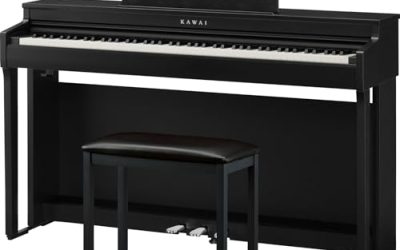
Classical piano study asks more of an instrument than casual playing does. A student working through Bach inventions, Chopin nocturnes, and graded exam pieces needs a keyboard that builds real finger strength, pedals that behave like a teacher’s acoustic piano, and a sound that rewards careful listening. The best Casio console digital pianos for classical piano students meet those demands in a family home, with headphone practice and built-in lesson tools.
The three Casio consoles below all share an 88-key weighted action and a three-pedal unit. They differ in the action, the speaker system, and the depth of their practice features, and those differences decide which one will carry a student from first scales to advanced repertoire.
Top 3 picks at a glance


What to Look For
Key action. A classical student practices scales, arpeggios, and fast passagework every day, so the action must be graded, heavier in the bass and lighter in the treble, with a consistent response across the keyboard. Casio’s Tri-Sensor Scaled Hammer Action II tracks each key with three sensors for accurate timing and dynamics, while the Smart Hybrid Hammer Action in the AP-S450 adds spruce and resin keys for a touch closer to an acoustic grand. That control transfers directly to the acoustic pianos used in lessons and exams.
Polyphony. Sustained classical repertoire with heavy pedalling needs generous polyphony, so held notes do not cut off when new ones are played. All three models below carry 256-note polyphony, which keeps long phrases and layered pedalling clean.
Pedals. A fixed three-pedal unit with damper, soft, and sostenuto pedals, plus half-pedal support, trains proper pedalling from the first lesson. Classical repertoire uses the damper pedal constantly, so a console with a proper pedal unit matters far more than a portable keyboard with a single pedal.
Sound and lesson material. Casio’s AiR sound source reproduces the resonance and decay of a grand piano. Look for a built-in music library and lesson functions, a metronome, and a recorder, so the student can work through set pieces, keep time, and listen back to their own playing.
Quiet practice. Classical students practice daily, often early or late in the day. Dual headphone outputs let a student and a teacher listen together, and a headphone mode that keeps the tone full at low volume makes evening practice practical.
The Best Casio Console Digital Pianos for Classical Piano Students
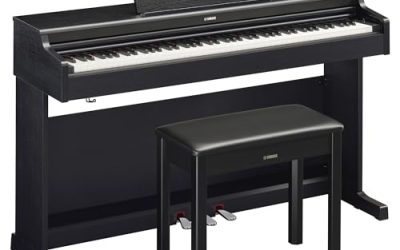
Casio Celviano AP-S450 Digital Piano, Black
ASIN: B0CSNHCGSH
Amazon: https://www.amazon.com/dp/B0CSNHCGSH
The AP-S450 is the strongest Casio console for a classical student, because it pairs the most advanced action in this group with a sound set built around two concert grands. Its Smart Hybrid Hammer Action Keyboard in the Celviano edition uses spruce and resin keys with counterweights, giving a natural, substantial touch that prepares fingers for an acoustic piano. The Multi-Dimensional Morphing AiR sound source includes Hamburg and New York grand piano tones among its 26 tones, with string and damper resonance that make sustained classical phrasing feel alive.
A 40-watt four-speaker system fills a practice room with a detailed, room-filling tone, and 256-note polyphony keeps pedalled passages clean. The 60-song music library supports structured study, and the Instant RePlayer lets a student listen back to a recent passage and check phrasing and dynamics. A Visual Information Bar works as a timeline for finding a passage again, and the included Bluetooth adapter connects the piano to the Casio Music Space app. Three fixed pedals with a continuously variable damper pedal train expressive pedalling, and dual headphone outputs support quiet practice and side-by-side work with a teacher. The slim cabinet with a sliding soft-close key cover fits neatly against a wall.
Who it suits: Classical students who want wooden keys, two distinct concert grand sounds, and the deepest practice tools Casio puts in a console.
Considerations: The slim cabinet is a modern design rather than a traditional upright look. Confirm the listing includes the Bluetooth adapter, which is part of the standard package.
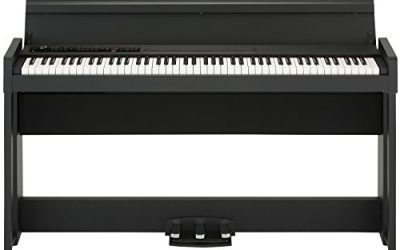
Casio Privia PX-870 88-Key Weighted Console Digital Piano, Black
ASIN: B074FTLNK3
Amazon: https://www.amazon.com/dp/B074FTLNK3
The PX-870 is the best all-rounder in Casio’s console line, and it is the model most classical students should choose first. It uses the Tri-Sensor II Scaled Hammer Action with simulated ebony and ivory key textures, and pairs it with the AiR sound source, 19 tones, and 256-note polyphony. Its 40-watt four-speaker system is the most powerful of the Privia consoles, so scales and repertoire sound full and clear across a room without headphones.
Concert Play lets a student perform alongside orchestral recordings, and the built-in recorder, metronome, and three-pedal unit with half-pedal support cover the daily practice routine. USB-MIDI connects the piano to learning apps and recording software on a computer or tablet. The slim, elegant cabinet with a sliding key cover fits a bedroom or study.
Who it suits: Classical students who want the best balance of action, sound, and speaker power in a Casio console, with room to grow into advanced repertoire.
Considerations: A bench is not always included with the piano-only listing, so check whether your listing includes one or plan for it separately. The PX-870 has no built-in Bluetooth, so app connections use a USB cable.
Casio Privia PX-770 88-Key Weighted Console Digital Piano, Black
ASIN: B074FTTTMZ
Amazon: https://www.amazon.com/dp/B074FTTTMZ
The PX-770 is the entry point into Casio’s console line, and it covers the fundamentals of classical study well. It shares the Tri-Sensor II Scaled Hammer Action, the AiR sound source with 19 tones, 256-note polyphony, and USB-MIDI with the PX-870, so the playing experience is very close. The difference is the speaker system: a 16-watt stereo setup instead of the PX-870’s 40-watt four-speaker arrangement, which is ample for a practice room or bedroom and keeps the piano quieter for the rest of the household.
Concert Play, a recorder, a metronome, and a three-pedal unit are all included, so a student can work through lesson material, keep time, and listen back to their playing. The slim cabinet fits neatly against a wall, and the sliding key cover keeps dust off the keys between sessions.
Who it suits: Younger classical students and beginners who want a proper weighted console for daily practice in a smaller space.
Considerations: The smaller speaker system is less suited to playing for a room full of listeners, so students who perform regularly may prefer the PX-870 or AP-S450. Check whether the listing you choose includes a bench.
Comparison Table
| Model | Key Action | Sound Engine | Polyphony | Speakers | Tones |
|---|---|---|---|---|---|
| Casio AP-S450 | Smart Hybrid Hammer, spruce and resin keys | AiR, Hamburg and New York grands | 256 notes | 40-watt four-speaker | 26 |
| Casio PX-870 | Tri-Sensor II Scaled Hammer Action | AiR | 256 notes | 40-watt four-speaker | 19 |
| Casio PX-770 | Tri-Sensor II Scaled Hammer Action | AiR | 256 notes | 16-watt stereo | 19 |
FAQ
Is a Casio console piano suitable for graded piano exams?
Yes. The weighted actions and three-pedal units build the technique used on acoustic pianos in exam rooms, and the realistic AiR grand piano sound helps students develop tone and dynamics.
What is the difference between the PX-870 and the PX-770?
Both share the same action, sound engine, and 256-note polyphony. The PX-870 has a 40-watt four-speaker system, while the PX-770 has a 16-watt stereo system. Choose the PX-870 for a larger room; choose the PX-770 for a smaller practice space.
What makes the AP-S450 different from the Privia models?
The AP-S450 uses Casio’s Smart Hybrid Hammer Action with spruce and resin keys, which feels closer to an acoustic grand than the Tri-Sensor II action. It also includes two distinct concert grand piano tones, a 60-song music library, the Instant RePlayer, and Bluetooth through an included adapter.
Do Casio digital pianos need tuning?
No. Digital pianos hold their pitch permanently and never need tuning.
Conclusion
The Casio AP-S450 is the top choice for a classical student who wants wooden keys and the deepest practice tools, the PX-870 is the best all-round console for most students, and the PX-770 covers the same fundamentals for smaller rooms. All three share the weighted action, 256-note polyphony, and three-pedal unit that classical study depends on, so match the choice to the student’s level and the room the piano will live in.
Disclosure: As an Amazon Associate, we earn from qualifying purchases.
Related guides
More from Amazon
Programs that pair well with the guide above. Offers and eligibility are set by Amazon and may change.
Free shipping on eligible items, Prime Video and more. Eligible new members can start with a free trial.
Start a Prime free trialAd-free music streaming. Eligible new subscribers can start with a free trial.
Try Music Unlimited freeA Prime membership for ages 18-24 with a trial period. Eligibility is set by Amazon.
See Prime for Young AdultsAudiobooks and podcasts to listen to on the go. Eligible new members can start with a free trial.
Try Audible freeAs an Amazon Associate we earn from qualifying purchases.