
Designing a modern living room is no longer just about choosing the right sectional sofa or matching your coffee table to your bookshelves. Today, our homes are high-tech hubs, and the media console is the heart of family entertainment. The PlayStation 5, with its striking futuristic silhouette, is a centerpiece in millions of living rooms. However, as games grow larger, the console’s internal storage quickly fills up, forcing homeowners to face a crucial hardware decision: expanding their storage with an M.2 Solid State Drive (SSD).
When shopping for storage upgrades, you will immediately run into the debate of an m2 ssd with heatsink vs without heatsink ps5. On the surface, this looks like a technical detail reserved for computer builders. In reality, this choice directly impacts your home environment—influencing everything from the ambient noise levels in your quiet reading nook to the thermal safety of your expensive wooden media cabinets. Understanding how these drives handle heat, and whether you should buy a pre-assembled unit or build your own with aftermarket parts, is essential for maintaining a peaceful, efficient home theater setup.
As an Amazon Associate we earn from qualifying purchases at no extra cost to you.

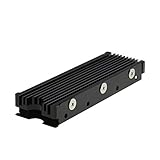

Our Top Picks
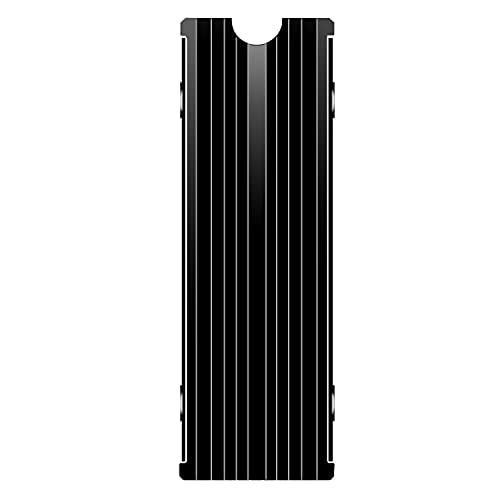 M.2 Heatsink Cooler 2280 SSD Double-Sided Heat Sink3"L x 0.95"W x 0.4"H3 x 0.95 x 0.4 inches0.1 PoundsCheck on Amazon
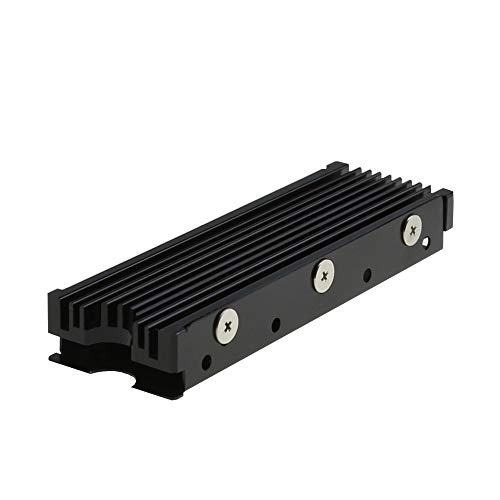 MHQJRH M.2 2280 SSD heatsink for PC /Double Side Heatsink(black)3 x 0.95 x 0.4 Inches0.1 poundsCheck on Amazon

Top 3 picks at a glance
Quick Verdict
If you want a hassle-free, quiet, and safe home entertainment setup, the M.2 SSD with a heatsink is the clear winner. Sony explicitly requires a cooling structure for any M.2 SSD installed in the PS5. Running a high-speed Gen4 SSD (which reads data at 5,500 MB/s or faster) without a heatsink will cause the drive to quickly overheat, trigger thermal throttling, slow down your games, and potentially damage your console.
However, “with heatsink” does not mean you have to buy an expensive pre-packaged drive. You can easily purchase a bare SSD (without a heatsink) and manually attach a highly rated, affordable third-party cooler. Budget-friendly options like the M.2 Heatsink Cooler 2280 SSD Double-Sided Heat Sink with Thermal Silicone pad for PS5/PC PCIE NVME M2 SSD(Black) (around $5) or the MHQJRH M.2 2280 SSD heatsink for PC / PS5 M.2 PCIE NVMe SSD or M.2 SATA SSD (around $6) offer exceptional cooling performance for a fraction of the cost of pre-assembled drives. For those who want the absolute best integration with the console’s natural airflow, investing in a custom-engineered cover like the SABRENT M.2 NVMe PS5 heatsink (SB-PSHS) (around $13) is the premier choice for long-term peace of mind.
Side by Side
To help you understand how these two configurations stack up within a home environment, here is a direct comparison of their key attributes:
| Feature | M.2 SSD with Heatsink (Pre-installed) | M.2 SSD Without Heatsink (Bare Drive) |
|---|---|---|
| Acoustic Comfort | Excellent; keeps the console fan running at a whisper-quiet whisper. | Poor; heat buildup forces the PS5 fan to spin at maximum RPM, creating distracting room noise. |
| Durability | High; keeps drive temperatures under 60°C, extending the lifespan of your data. | Low; operating at 80°C+ accelerates chip degradation and risks early drive failure. |
| Price Range | $80 to $260 (depending on storage capacity from 1TB to 4TB). | $65 to $220 (requires purchasing a separate heatsink for an extra $6 to $15). |
| Maintenance | Zero maintenance; sealed and protected from dust accumulation. | Requires manual cleaning of thermal pads and checking tension screws over time. |
| Space Needed | Requires up to 11.25mm of vertical clearance inside the expansion bay. | Ultra-thin (approx. 2.3mm), but cannot be safely run in this state inside a PS5. |
| Look | Industrial, premium, and clean inside the console bay. | Exposed circuit board (PCB) with green or black silicon and delicate chips. |
| Resale Value | High; easy to sell as a complete, ready-to-use drive for console or PC users. | Moderate; buyers typically prefer drives that do not require buying extra parts. |
| Best For | Busy households, plug-and-play users, and closed media consoles. | DIY enthusiasts, budget-conscious buyers, and custom-cooled setups. |
Where M2 Ssd with Heatsink Wins
The primary advantage of buying an M.2 SSD with a pre-installed heatsink is safety and simplicity. When a solid-state drive reads and writes modern, high-definition game files, it processes massive amounts of data. This process generates intense localized heat. Without a proper thermal dissipation path, the drive’s controller chip can rapidly exceed 80°C (176°F). A pre-installed aluminum or copper heatsink acts as a thermal sponge, drawing heat away from the sensitive silicon chips and distributing it across a larger surface area where air can carry it away.
For your home, this translates directly to a quieter living space. When the PS5 detects high temperatures in its expansion bay, it increases the speed of its main internal fan. In a quiet living room or bedroom, a screaming console fan can ruin the immersion of a movie or a quiet gaming session. A heatsink keeps the drive operating at a comfortable 50°C to 60°C, meaning the console fan can stay at a low, imperceptible hum.
Additionally, pre-installed heatsinks eliminate the risk of installation errors. There is no need to worry about applying thermal silicone pads with the wrong thickness, stripping tiny screws, or damaging the delicate flash memory chips during assembly. You simply open the PS5 expansion slot, slide the drive in, tighten one screw, and enjoy a perfectly cooled storage upgrade.
Where Without Heatsink Ps5 Wins
Purchasing a bare M.2 SSD—without a pre-installed heatsink—wins purely on financial flexibility and customization. Bare drives are invariably cheaper than their pre-shielded counterparts, often saving you anywhere from $15 to $40 upfront. If you are willing to spend five minutes doing a simple DIY project, you can combine a bare drive with an affordable aftermarket heatsink to save money without sacrificing performance.
Using a bare drive as your starting point allows you to customize your cooling solution to fit your exact home setup. For example, if your PS5 sits inside a tight, poorly ventilated cabinet, standard sandwich-style heatsinks might struggle. Instead, you can pair your bare drive with a specialized, high-performance cooler like the SABRENT M.2 NVMe PS5 heatsink (SB-PSHS). This clever piece of engineering replaces the stock metal slot cover of the PS5 expansion bay entirely, converting the entire bay door into a massive aluminum radiator that utilizes the console’s negative pressure system to pull hot air out. This level of customized thermal management is impossible if you buy a drive with a permanently attached, generic factory heatsink.
Cost Over 5 Years
When calculating the true cost of ownership for your home electronics, looking at the initial purchase price is only half the story. You must factor in longevity, replacement rates, and potential risks to the main console. Let us break down the estimated costs over a five-year period for three different scenarios:
- Scenario A: Pre-Installed Heatsink Drive. You buy a premium 2TB SSD with a factory-installed heatsink for $150. Over five years, the drive runs cool, experiences zero thermal degradation, and requires no maintenance. Total 5-year cost: $150.
- Scenario B: Bare Drive + Quality Aftermarket Heatsink. You buy a bare 2TB SSD for $120 and pair it with the MHQJRH M.2 2280 SSD heatsink for around $6. The assembly takes five minutes. The thermal performance matches or beats factory drives. Total 5-year cost: .
- Scenario C: Bare Drive Without a Heatsink (Not Recommended). You buy a bare 2TB SSD for $120 and install it directly into the PS5 with no cooling structure. Within 18 to 24 months of heavy daily use, the extreme heat cycles degrade the flash controller. The drive begins to stutter, corrupts your save files, and eventually fails completely, forcing you to buy a replacement drive. Total 5-year cost: $240+ (plus the headache of lost data).
While an SSD itself draws very little power (typically between 2 to 8 watts under load), a hot drive forces the PS5’s internal fan to draw more wattage to keep the entire system cool. While the energy cost difference on your monthly utility bill is negligible, the physical wear and tear on your console’s primary cooling fan is real. Replacing a worn-out console fan is far more expensive and difficult than installing a simple heatsink today.
Which One for Your Home
Every home has its own unique layout, noise tolerance, and daily habits. Here is how to choose the right configuration based on your specific living situation.
Small Apartment or Studio
In a small apartment or studio, your living room, bedroom, and workspace are often the same room. Acoustic control is your top priority. A noisy console fan can disrupt a sleeping partner or distract you while working from home. For these compact spaces, choosing a pre-installed heatsink or pairing a bare drive with a high-efficiency cooler is essential. Keeping the drive cool ensures your console remains a silent, unobtrusive part of your living space.
Family Home with Kids and Pets
If you have children who play games for hours on end, or pets that shed hair, your home entertainment center is a high-stress environment. Pet dander and dust quickly find their way into console vents, insulating the internal components and raising ambient temperatures. For these busy households, a heavy-duty cooling solution is non-negotiable. Using a bare drive with a sturdy aftermarket shield like the M.2 Heatsink Cooler 2280 SSD Double-Sided Heat Sink with Thermal Silicone pad for PS5/PC PCIE NVME M2 SSD(Black) provides double-sided thermal protection, ensuring that even if dust reduces overall console airflow, your storage drive remains protected from heat spikes.
Rental Home or Dorm Room
If you rent your home or live in a temporary space, you likely want simple, portable, and tool-free tech. You may not want to keep track of tiny screws, thermal pads, and hex wrenches during your next move. In this scenario, buying a pre-installed M.2 SSD with a factory heatsink is the smartest move. It is a single, solid piece of hardware that you can plug in within two minutes, and easily slide out and pack away when it is time to move to your next apartment.
Long-Term Home with Custom Media Cabinets
For homeowners with custom, built-in entertainment centers where consoles are enclosed behind glass or wooden doors, heat management is a critical design challenge. Closed cabinets trap hot air, raising the ambient temperature inside the console bay. Looking ahead to 2026, as home theater designs favor completely hidden and integrated technology, managing cabinet heat is more important than ever. If your PS5 lives in an enclosed console, you should buy a bare drive and pair it with a specialized heat-dissipating cover like the SABRENT M.2 NVMe PS5 heatsink (SB-PSHS). This setup maximizes the console’s internal airflow dynamics, helping push heat out of the expansion slot and away from the console’s core, preserving both your console and your fine furniture from heat buildup.
FAQ
Does Sony officially require a heatsink for the PS5 M.2 SSD expansion?
Yes. Sony’s official documentation explicitly states that any M.2 SSD installed in the PS5 expansion slot must have an effective heat dissipation structure, such as a heatsink or a thermal transfer sheet. Running a drive without any cooling element can lead to system instability, thermal throttling, and hardware damage.
What are the maximum dimensions allowed for a PS5 SSD heatsink?
The total dimensions of the SSD and the heatsink combined must not exceed 110mm in length, 25mm in width, and 11.25mm in height. Additionally, there are specific clearance requirements below and above the board: no more than 2.45mm of bulk below the SSD, and no more than 8.0mm of bulk above it. Always check these measurements before purchasing an aftermarket heatsink.
Can I buy a cheap aftermarket heatsink instead of a pre-installed one?
Absolutely. Buying a bare SSD and installing a budget-friendly aftermarket cooler is a highly popular and cost-effective method. As long as the aftermarket heatsink fits within Sony’s size limits and uses quality thermal silicone pads to make clean contact with the drive’s chips, it will perform just as well as—and sometimes better than—a factory-installed heatsink.
Will installing an aftermarket heatsink myself void my PS5 warranty?
No. Opening the PS5’s side panels and accessing the M.2 expansion bay is fully supported by Sony and does not void your console’s warranty. However, you must be careful not to damage the internal components of the console or the SSD itself during the installation process, as physical damage caused by user error is not covered under standard warranties.
Related guides
- Best Free MMOs on Steam: Subscription Limits, Pay-to-Win and Time Cost (2026)
- Best Free Horror Games on Steam: How to Pick One That Fits Your PC and Your Nerves (2026)
- Black Frame Insertion vs VRR: Which Smoothness Feature Should You Use?
- Best Webcams for Streaming: 11 Listings Compared by Resolution, Focus and Light (2026)








