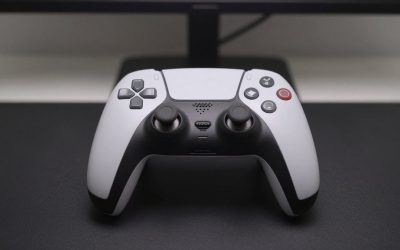
Upgrading your PlayStation 5 DualSense controller with a set of thumb grips is one of the cheapest ways to instantly improve your gaming performance. However, most players approach this purchase entirely wrong. They jump online, buy the cheapest multi-pack available, and slap the tallest grips onto their joysticks without a second thought.
This approach leads to missed shots, hand fatigue, and even chronic wrist pain. The biggest mistake gamers make is assuming that “more height always equals more precision.” In reality, choosing the wrong thumb grip height can actively ruin your muscle memory. If your hands are on the smaller side, forcing your thumb to stretch over a 12mm high-rise grip shifts your hand into an unnatural claw grip, causing tendon strain within thirty minutes of gameplay. Conversely, using a flat skin when you need leverage for high-sensitivity sniper shots defeats the purpose of the upgrade entirely. To get the most out of your controller, you need to understand the physics of lever length, joint ergonomics, and how to choose a ps5 controller thumb grip height that complements your specific physiological needs and gaming style.
As an Amazon Associate we earn from qualifying purchases at no extra cost to you.


Our Top Picks
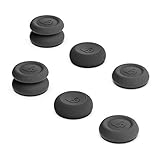
 16-in-1 Performance Thumb Grips Joystick Caps for PS5/4/Xbox/SwitchHigh-Rise, Mid-Ris, Low-Rise0.8 x 0.8 x 0.2 inches0 poundsCheck on Amazon
 NEWDERY LIFE Thumb Grips for PS5/PS4/Switch Pro Controllers0.75 x 0.75 x 0.2 inches0 PoundsCheck on Amazon


Top 3 picks at a glance
Decide These 3 Things First
Before comparing millimeter measurements and rubber textures, you must establish your baseline gaming profile. This prevents you from buying a mismatched set that ends up sitting in a drawer.
- Your Primary Game Genre: First-person shooters (FPS) demand micro-adjustments at high stick sensitivities, which benefit from a tall right stick. Action-adventure, sports, and fighting games require rapid, full-tilt directional changes, which are much easier to execute on low-rise or mid-rise grips.
- Your Hand Size: Measure your hand from the base of your palm (first wrist crease) to the tip of your middle finger. If your hand is under 7 inches (17.8 cm), high-rise grips over 10mm will likely cause joint strain. If your hand is over 7.5 inches (19 cm), a taller grip actually helps prevent your fingers from bunching up and cramping.
- Your Current Thumbstick Condition: Inspect your DualSense. If the original gray rubber is completely intact, slip-on style grips will work perfectly. If the rubber is peeling, torn, or worn down to the hard plastic, you will need deep-pocket replacement caps or specialized molded grips that can grip the bare plastic dome securely.
1. Height and Arc Distance (The Physics of Aiming)
The primary reason to adjust your thumbstick height is to increase your analog stick’s “arc distance.” By raising the height of the thumbstick, you lengthen the lever. A longer lever means your thumb has to travel a physically larger distance to tilt the analog stick to its outer edge. This gives you a wider physical space to make micro-adjustments, allowing you to turn your in-game sensitivity up while maintaining precise control.
Thumb grip heights generally fall into three strict categories:
- Low-Rise (1.5mm to 3.0mm height increase): These add minimal height and are designed primarily for added texture, grip, and protecting the original rubber. They add roughly 10% to 15% more arc distance. They are ideal for the left analog stick (movement) across all genres.
- Mid-Rise (5.0mm to 7.5mm height increase): A versatile middle ground that increases arc distance by 30% to 42%. These are perfect for action-adventure games, third-person shooters, or gamers with smaller hands who find high-rise grips uncomfortable but still want an aiming boost.
- High-Rise (10.0mm to 12.5mm height increase): Designed almost exclusively for the right analog stick (aiming) in FPS games. These increase your physical arc distance by up to 120%. This allows you to play at maximum in-game sensitivity settings while still being able to make tiny, one-millimeter aiming corrections.
2. Material Composition and Durometer Rating
Not all rubber grips feel or wear the same. The material dictates how much sweat your controller can handle before your thumbs start slipping during intense matches. You will generally choose between two materials: pure silicone and Thermoplastic Elastomers (TPE).
Silicone is incredibly soft, flexible, and inexpensive to manufacture. However, cheap silicone has a low durometer (hardness) rating, usually around 30A to 40A. This makes it feel squishy, which can absorb too much of your thumb’s force and slightly delay your inputs. Over time, silicone can also absorb skin oils, leading to a slick, greasy feel that requires frequent washing.
High-quality performance grips utilize TPE (Thermoplastic Elastomer) blends with a durometer rating of 50A to 60A. This material feels firm, offering a solid connection to the joystick mechanism without flexing under pressure. TPE resists sweat and oils much better than silicone, ensuring your thumb stays locked in place during long play sessions. As we look toward the gaming setups of 2026, ergonomic customization has shifted from a niche pro-gamer secret to a standard wellness practice, making high-durability TPE the preferred choice for everyday players.
3. Attachment Style and Base Fit
A thumb grip is useless if it slips, spins, or pops off mid-fight. The mounting mechanism must match the 16.5mm to 17.0mm diameter of the DualSense analog stick dome.
There are two primary attachment styles:
- Slip-On/Stretch Caps: These feature a flexible rubber skirt that stretches over the entire perimeter of the OEM stick. They are highly secure but can be difficult to install. Ensure the inner collar has a lip of at least 1.5mm to prevent the cap from sliding off during aggressive lateral movements.
- Pronged Snap-On Grips: These utilize three or four hard plastic or stiff rubber prongs that clip under the lip of the joystick dome. While they provide an incredibly stable, zero-twist connection, poorly manufactured plastic prongs can chew into the soft rubber of your original DualSense controller over time. Look for soft-coated prongs to protect your controller’s finish.
4. Ergonomic Profile: Concave vs. Convex
The shape of the surface is just as important as the height. The profile determines how your thumb transfers force to the stick.
Concave grips feature a bowl-like indentation that cradles your thumb. The raised edges give your thumb a physical wall to push against. This is highly recommended for the right stick (aiming) because it prevents slipping when making rapid, directional corrections.
Convex (domed) grips bulge outward in the center. This design is optimized for rolling movements, allowing your thumb to glide smoothly across the surface. It is highly favored by fighting game players and sports game players who need to execute fluid, circular motions on the left analog stick.
5. Weight and Tension Balance
Every gram of weight you add to the top of your analog stick changes its center of gravity and its return-to-center tension. The internal spring mechanism of the standard DualSense analog stick is calibrated for the weight of the bare plastic stick (approximately 10 to 12 grams of force required to deflect).
Adding a heavy metal or thick solid-rubber thumb grip weighing over 3.5 grams can cause two issues:
- It can slow down the “snap-back” speed of the stick, making your inputs feel slightly muddy or sluggish.
- It can accelerate the onset of stick drift, as the extra top-heavy weight makes it harder for worn-out internal springs to pull the potentiometer back to the exact deadzone center.
For optimal performance, choose grips that weigh between 1.0 and 2.5 grams per cap.
6. Price Tiers and Bundle Value
While thumb grips are a budget-friendly accessory, understanding what you get at different price points will prevent you from overpaying or buying garbage.
- Budget Tier (around $5 to around $8): Usually sold as massive 12-in-1 or 16-in-1 packs of generic silicone. These are great if you have multiple controllers or want to test different heights. However, the silicone is often thin, prone to tearing, and may slip on the thumbstick dome during intense play.
- Mid-Range Tier (around $9 to around $15): This is the sweet spot. You will find specialized 3-pair (6-piece) mix-and-match sets from reputable brands. These sets usually include a pair of low-rise skins, mid-rise CQC grips, and high-rise FPS grips. They use premium TPE materials and offer precise, snug fits.
- Premium Tier (around $16 to around $30+): This tier includes officially licensed performance gear, magnetic swappable thumbstick systems, or aluminum alloy replacements. These are intended for competitive esports players who want zero flex and the ability to hot-swap heights on the fly.
Spec Checklist
Use this quick reference table to match your budget and gaming style with the correct thumb grip specifications.
| Specification | Budget Tier ($5 – $8) | Mid-Range Tier ($9 – $15) | Premium Tier ($16 – $30+) |
|---|---|---|---|
| Material | Standard Silicone | High-purity TPE / Proprietary Rubber | Composite TPE / Aluminum / Magnetic Bases |
| Height Options Included | Often single-height bulk packs | Mixed sets (e.g., 2mm, 6mm, and 10mm) | Precision heights or swappable modules |
| Weight per Grip | 2.5g to 4.0g (bulkier) | 1.2g to 2.2g (optimized) | Under 1.5g (ultra-lightweight composites) |
| Attachment Security | Loose stretch-fit (prone to spinning) | Snug stretch-fit or soft-prong snap-on | Multi-point locking or magnetic anchor |
| Lifespan (Heavy Play) | 2 to 4 months | 8 to 12 months | 12 to 24+ months |
Red Flags to Avoid
When shopping for PS5 controller thumb grips, look out for these design flaws that can ruin your gaming experience:
- Free-Spinning Bases: If a user review mentions that the grip “spins on the joystick,” avoid it. A spinning grip ruins muscle memory because your thumb loses its point of reference when you make sudden directional changes.
- Oily Residue/Off-Gassing: Low-quality silicone often bleeds plasticizers over time, leaving a sticky, chemical-smelling oil on your hands and the controller. This oil can seep into the analog stick housing and damage the internal potentiometers.
- Sharp Plastic Prongs: Avoid snap-on grips that feature sharp, hard plastic mounting tabs. Under pressure, these tabs will slice into your DualSense’s original rubber joystick cover, permanently ruining it.
- Overly Aggressive Textures: While some texture is necessary, patterns with sharp, raised plastic spikes or deep, hard ridges will cause painful blisters during extended play sessions. Opt for micro-textures or soft-domed patterns.
FAQ
Does a higher thumb grip actually improve aim in FPS games?
Yes, but only on your aiming stick (typically the right stick). By raising the height by 10mm, you increase your physical arc distance by over 100%. This allows you to raise your in-game look sensitivity while maintaining the ability to make tiny, precise aiming adjustments. It does not magically make you a better player, but it expands the physical limits of your controller’s analog input.
Can I use PS4 or Xbox thumb grips on a PS5 DualSense controller?
It depends on the attachment style. The PS5 DualSense joystick dome is approximately 16.7mm in diameter, which is nearly identical to the PS4 DualShock 4 but slightly larger than the Xbox Series X/S joysticks (which are around 15.5mm). Highly elastic silicone slip-on grips can stretch to fit both, but rigid, pronged snap-on grips designed for Xbox will not fit a PS5 controller without snapping the tabs or damaging the joystick.
How do I clean sweat and oil buildup off my thumb grips?
Do not use harsh rubbing alcohol or chemical solvents, as these can break down TPE and cheap silicone, causing them to become sticky. Instead, pop the grips off the controller and wash them in a bowl of warm water with a few drops of mild dish soap. Use a soft-bristled toothbrush to scrub sweat out of the textured crevices, rinse thoroughly with cold water, and let them air-dry completely before reinstalling.
Will adding tall thumb grips cause stick drift over time?
Heavy thumb grips (weighing over 4 grams) can strain the internal centering springs of the analog stick module, making it harder for the stick to return to a perfect 0% deadzone. However, standard lightweight grips (1.5g to 2.5g) will not cause stick drift. Stick drift is typically caused by dust, hair, and wear on the internal carbon tracks of the potentiometer inside the controller, not by lightweight external rubber caps.
Related guides
- Best Free MMOs on Steam: Subscription Limits, Pay-to-Win and Time Cost (2026)
- Best Free Horror Games on Steam: How to Pick One That Fits Your PC and Your Nerves (2026)
- Black Frame Insertion vs VRR: Which Smoothness Feature Should You Use?
- Best Webcams for Streaming: 11 Listings Compared by Resolution, Focus and Light (2026)