
Connecting a classic system like the Super Nintendo, PlayStation 2, or Sega Genesis to a modern 4K or 8K display requires navigating a maze of analog-to-digital signal conversion. While HDMI adapters have made this process vastly simpler than hunting down old CRT televisions, they are far from plug-and-play perfection. As we navigate 2026, retro gaming enthusiasts frequently encounter frustrating technical hiccups that threaten to ruin a nostalgic gaming session, ranging from complete signal loss to jarring audio sync issues.
Whether you are dealing with a blank screen, garbled audio, or awkward image stretching that ruins carefully crafted pixel art, most adapter issues stem from insufficient power delivery, resolution handshakes, or incorrect television settings. Understanding the root cause of these technical glitches saves you hours of guesswork and prevents unnecessary hardware replacements. In this troubleshooting guide, we break down the most common problems retro gamers face with HDMI adapters and provide straightforward, actionable fixes to get your classic hardware running smoothly.
As an Amazon Associate we earn from qualifying purchases at no extra cost to you. Product prices and availability are accurate as of the date shown and are subject to change.
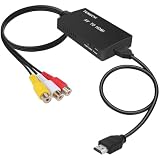
No Signal or Black Screen on Startup
One of the most panic-inducing issues occurs when you flip the power switch on your console and your modern television displays a blank blue screen or a “No Signal” warning. This typically happens because many modern flat-panel displays struggle to process the non-standard 240p or 288p video signals natively outputted by older retro hardware. If your adapter is a passive pass-through device rather than an active upscaler, the television simply cannot interpret the incoming framerate and resolution combination.
To fix this, first ensure that your adapter is receiving adequate electrical power. Many compact adapters require an auxiliary micro-USB or USB-C power cable; plugging this into a weak television USB port often causes intermittent power drops. Next, check your console’s AV multi-out port for dust, corrosion, or bent pins. Cleaning the contacts with isopropyl alcohol and a cotton swab usually restores a clean connection.
Audio Delay or Complete Lack of Sound
Experiencing audio that falls a fraction of a second behind the on-screen action, or losing sound entirely, completely destroys the immersion of classic retro soundtracks. This issue is frequently caused by your television trying to process surround sound formats that an older stereo-only adapter cannot properly decode, or by improper audio pass-through settings in your TV menu.
To resolve audio lag, navigate to your television’s sound settings and switch the digital audio output format from “Bitstream” or “Dolby” to “PCM” or “Stereo Uncompressed.” This forces the TV to process a direct, unencoded audio stream from the adapter. If you are getting no sound at all, unplug the HDMI cable, power down both the television and the console for thirty seconds, and reconnect them to force a fresh digital handshake.
Stretched or Distorted Aspect Ratios
Modern widescreen televisions default to filling every available inch of display space, which causes classic 4:3 retro games to look grotesquely stretched, wide, and pixelated. Characters appear short and fat, and circular HUD elements transform into distorted ovals. While this is primarily a display setting issue rather than a hardware failure, it is one of the most visually jarring complaints among retro enthusiasts.
The fix requires manual intervention on your television remote. Open your TV picture settings, look for options labeled “Aspect Ratio,” “Screen Fit,” or “Just Scan,” and change the setting from “16:9 Wide” back to “4:3.” If your specific HDMI adapter includes hardware toggle switches or an on-screen menu, verify that you have not inadvertently forced a widescreen anamorphic flag that overrides your television’s display preferences.
Noticeable Input Lag During Fast-Playing Gameplay
If you notice a sluggish, delayed reaction between pressing a button on your controller and seeing the action on screen, your HDMI adapter or display is introducing input lag. This makes reflex-heavy genres like fighting games, platformers, and shoot-’em-ups practically unplayable. Basic analog-to-digital conversion and internal upscaling chips always introduce a tiny amount of processing delay.
To minimize this frustrating lag, locate your television remote and ensure that “Game Mode” or “PC Mode” is explicitly enabled for the HDMI port you are using. Game mode bypasses heavy post-processing features like motion smoothing, noise reduction, and advanced color grading, stripping away unnecessary processing milliseconds. If your adapter is an ultra-budget model with heavy built-in scaling filters, upgrading to a dedicated line multiplier will drastically reduce latency.
Visual Artifacts, Interference, and Static Lines
Seeing shimmering static lines, rolling horizontal bars, or weird color bleeding across your screen usually indicates electrical interference or a poor physical connection. Because retro consoles output analog signals before conversion, they are highly susceptible to electromagnetic interference generated by nearby power strips, Wi-Fi routers, or poorly shielded HDMI cables.
To clear up the visual noise, isolate your adapter cable away from tangled power cords and heavy electrical bricks. Ensure that your HDMI cable is securely fastened and not bent at an extreme angle near the connector head. If the artifacts persist, try swapping out the HDMI cable for a certified high-speed alternative, as degraded copper wiring inside a cheap cable can easily corrupt delicate video data.
Intermittent Disconnections and Power Drops
A black screen that blinks out for two to three seconds before returning—often accompanied by the television briefly flashing its resolution banner in the corner—indicates an unstable HDMI handshake or a fluctuating power supply. This frequently happens when the USB cable providing power to the adapter is loose, frayed, or plugged into an underpowered USB port on the back of the television.
To fix this, stop drawing power from the television’s USB port and instead plug the adapter’s power cable directly into a dedicated USB wall charger, such as a phone charging brick. This ensures a steady, uninterrupted flow of electrical current. Additionally, inspect the physical weight of the adapter; heavy adapters hanging straight out of the console port can sag, pulling the pins away from a solid connection.
Color Distortion and Washed-Out Brightness
When classic games look unusually dark, muddy, or possess an aggressive neon color tint, your adapter is likely misinterpreting the RGB color range or luminance levels sent by the console. Many modern displays expect a full RGB range (0-255), while older adapters might output a limited range (16-235), resulting in crushed blacks and bleached-out whites.
Check your television’s picture settings for an option called “Black Level” or “HDMI RGB Range” and toggle it between “Normal/Auto” and “Low” until the contrast balances out. If your adapter features physical switches for RGB versus Component output, double-check that the switch matches the specific cable type plugged into your retro console’s multi-out port.
Related Guides
If you are looking to upgrade your classic gaming setup further this year, be sure to explore our expert hardware roundups. You can find top-tier choices in our guide to the Best HDMI Adapters for Retro Game Consoles, or keep your modern hardware running at peak operational temperatures by browsing through the Best Cooling Fans for Playstation 5 Consoles.
FAQ
Why won’t my cheap adapter display anything on my smart TV?
Many modern smart TVs struggle to process the non-standard 240p or 288p signals outputted by older consoles without an active line doubler or upscaler. If your adapter lacks internal processing hardware, the TV simply cannot recognize the incoming analog-to-digital video feed.
Do HDMI adapters cause noticeable input lag?
Yes, basic analog-to-digital conversion and scaling processes can introduce a small amount of input lag depending on the hardware quality. However, utilizing television game modes and investing in dedicated line multipliers minimizes this delay to virtually imperceptible levels.
Why does my retro game look blurry on a 4K TV?
Modern displays use aggressive smoothing algorithms designed for high-definition video, which destroys crisp pixel art. Turning off motion interpolation, disabling noise reduction, and enabling dedicated game mode on your television will drastically sharpen the image.
Can a bad power supply ruin my retro adapter?
Insufficient or unstable power via cheap USB cables can cause overheating, random video drops, and long-term signal degradation. Always plug your adapter’s auxiliary power cable into a dedicated wall charger rather than a weak television USB port.


