
A console costs less upfront and requires zero setup, while a comparably performing gaming PC costs 40 to 150 percent more at purchase but offers higher visual fidelity ceilings, cheaper software over time, and component-level upgradeability a console can never match. Neither option is objectively better; the right choice depends on how much you value simplicity versus long-term flexibility and how many years you plan to keep the hardware.
Tomas Berger runs both PC and console hardware side by side on his test bench specifically to keep performance and cost comparisons current rather than relying on stale generational assumptions. This guide breaks the decision down across the factors that actually matter: upfront cost, real performance, game libraries, subscription costs, upgrade paths, and total five-year ownership cost.
As an Amazon Associate we earn from qualifying purchases at no extra cost to you. Product prices and availability are accurate as of the date shown and are subject to change.

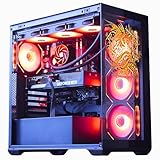


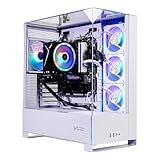


Top 3 picks at a glance
Upfront Cost: What You Actually Pay At Purchase
A PlayStation 5 or Xbox Series X currently sits in the $450-550 range at typical retail pricing, with the digital-only PS5 and the Xbox Series S undercutting that by $100-200 for reduced storage and, in the Series S case, reduced GPU performance targeting 1440p rather than native 4K. This price includes a controller, and the console is immediately ready for gaming once connected to a display, with no additional purchases required beyond the games themselves.
A gaming PC capable of matching current-generation console performance at 1080p to 1440p typically starts around $700-900 for a prebuilt system with a GPU in the RTX 4060 or RX 7600 class, and climbs to $1,200-1,800 for a build targeting native 4K performance comparable to a PS5 Pro. Building the same specification yourself, rather than buying prebuilt, typically saves 10-15 percent but requires assembly time and troubleshooting knowledge a console purchase never demands.
The console price also doesn’t include a monitor or TV, though most buyers already own one, similarly true for PC buyers, so that cost is usually a wash between the two options and worth excluding from a fair comparison unless you’re building an entirely new setup from scratch. Peripherals differ more: a console needs at most an extra controller for local multiplayer, commonly $50-70, while a PC typically needs a keyboard, mouse, and often a controller as well for genres where a gamepad is preferred, adding $60-150 depending on quality tier chosen.
Bundle and sale timing affects both options meaningfully. Console bundles that include a game or extra controller regularly appear around major sales periods, effectively lowering the real entry price by $50-100. PC component prices fluctuate independently by part, meaning a PC build’s total cost can shift significantly depending on which specific sale window a buyer times their purchase around, particularly for GPUs which see the widest price swings of any component.
Financing and payment plan availability differs by retailer rather than by platform category itself, so this factor shouldn’t meaningfully sway the console-versus-PC decision on its own, though it’s worth checking current offers from major retailers before finalizing a purchase either direction.
Performance And Visual Fidelity: What The Hardware Actually Delivers
Current-generation consoles target a fixed, optimized performance envelope: the PS5 and Xbox Series X both aim for either 4K at 30-60fps with ray tracing enabled, or 1440p upscaled to 4K at 60-120fps with reduced settings, depending on the specific game’s performance mode options. This fixed target lets developers optimize precisely for known hardware, often extracting more visual quality per teraflop of GPU power than an equivalent PC GPU achieves in an unoptimized, generalized PC port.
A PC needs roughly one tier higher GPU than a console’s on-paper specifications to match this optimized output, because PC games run through additional abstraction layers (DirectX or Vulkan translated through a wider range of driver and hardware combinations) that consoles bypass with hardware-specific optimization. An RTX 4070, meaningfully more powerful on paper than the PS5’s GPU, is closer to a fair matchup for native 4K performance parity than a same-tier comparison would suggest.
Where PC pulls ahead unambiguously is uncapped settings and frame rate ceiling. A PC with sufficient GPU headroom can run at 144Hz, 240Hz, or higher refresh rates that no current console supports at matching resolution and detail settings, which matters significantly for competitive shooters and fast-paced genres where input-to-display latency and motion clarity affect actual gameplay outcomes, not just visual smoothness.
Ray tracing and upscaling technology also differ: NVIDIA’s DLSS, running on RTX-series GPUs, generally produces higher quality upscaled image output than AMD’s FSR, used by both AMD-equipped PCs and both current consoles (which use AMD hardware), meaning an NVIDIA PC has an upscaling quality advantage current consoles structurally can’t match regardless of driver updates.
Load times, once a major differentiator, have largely converged since both current consoles ship with fast NVMe-equivalent storage as standard, similar to what’s now common on gaming PCs; a PC with a mid-range NVMe SSD loads games at speeds comparable to a PS5 or Series X, though a PC still requires the buyer to specifically choose SSD storage rather than it being guaranteed by default the way it is on current consoles.
Game Library, Exclusives And Cross-Platform Availability
Console exclusives remain a real factor in the decision, though the gap has narrowed considerably compared to previous generations. Sony has increasingly brought former PlayStation exclusives to PC on a delay, typically 6 months to 2 years after console launch, covering major franchises that previously stayed console-only indefinitely. Microsoft’s approach differs structurally: nearly all Xbox first-party titles release simultaneously on PC through the same Xbox app or Steam, a direct consequence of Xbox positioning itself as a platform-agnostic ecosystem rather than console-exclusive hardware.
Nintendo remains the clearest holdout, with virtually no first-party Nintendo titles available on PC through official channels, meaning players specifically wanting Nintendo franchises need Nintendo hardware regardless of PC or other console ownership, a separate category this comparison doesn’t fully resolve since Nintendo occupies a different market position than PlayStation and Xbox.
PC’s library advantage runs the opposite direction: PC exclusives and PC-first releases, particularly in strategy, simulation, and indie genres, along with the enormous backlog of older titles available through storefronts like Steam and GOG at steep discount, give PC owners access to a far larger total catalog even accounting for console-exclusive titles unavailable there. Modding support, essentially nonexistent on consoles due to closed hardware and storage restrictions, extends the effective lifespan and replayability of many PC titles well beyond their console counterparts.
Cross-platform play has become standard for most major multiplayer titles regardless of chosen platform, meaning the “which platform has the bigger multiplayer population” concern that mattered heavily in previous console generations is largely moot for current major releases, though some competitive titles still segregate input methods (controller versus mouse/keyboard) into separate matchmaking pools even within cross-platform play.
Digital storefront sales differ meaningfully in depth and frequency: PC storefronts, particularly Steam during seasonal sales, regularly discount titles 50-80 percent within months of release, while console storefront sales tend to be shallower and less frequent, a real ongoing cost difference for buyers who purchase many games per year rather than a handful of day-one releases.
Backward Compatibility And Hardware Longevity
Current-generation consoles offer strong but not complete backward compatibility: the PS5 plays the vast majority of PS4 titles natively, and the Xbox Series X/S plays most Xbox One, Xbox 360, and even original Xbox titles through Microsoft’s more extensive compatibility program. Neither console, however, plays titles from two generations prior to their immediate predecessor without that specific compatibility effort having been made by the platform holder, meaning very old console libraries can become effectively inaccessible without keeping the original older hardware.
PC backward compatibility is structurally different and generally stronger over very long timeframes, since a modern Windows PC can still run many PC games from 15-20+ years ago with minimal or no compatibility layer needed, particularly for titles that don’t rely on now-defunct online services or DRM systems that have since been shut down. Older console generations don’t share this advantage since their entire software ecosystem depends on manufacturer-maintained emulation or compatibility layers that can be discontinued at the platform holder’s discretion.
Hardware longevity differs in kind rather than degree. A console’s performance ceiling is entirely fixed at purchase and remains fixed for its full 6-7 year generational lifespan; a PC’s performance ceiling can be extended incrementally by upgrading individual components, discussed in more detail in the next section, meaning a PC’s useful lifespan for staying current with new releases is more a function of upgrade budget than a fixed hardware generation boundary.
Physical durability, all else equal, tends to favor consoles slightly for average consumers, since consoles are sealed, purpose-built systems with less thermal and dust management burden placed on the owner compared to a PC’s more exposed component layout, though a well-maintained PC with adequate case airflow and periodic dust cleaning shows no meaningful reliability disadvantage in practice.
Repairability leans toward PC overall, since individual failed components (a dead GPU, a failed power supply, a bad stick of RAM) can typically be diagnosed and replaced individually on a PC, while a console failure often requires manufacturer service or full unit replacement since components aren’t designed for easy independent swapping by the end user.
Online Services, Subscriptions And Ongoing Costs
Both PlayStation and Xbox require a paid subscription (PlayStation Plus, Xbox Game Pass Ultimate or Xbox Live Gold equivalent tiers) simply to play most multiplayer games online, an ongoing cost of roughly $60-180 per year depending on tier, that’s mandatory rather than optional for a large portion of the modern gaming library’s core experience. PC gaming has no equivalent mandatory online fee; multiplayer access through Steam or other PC storefronts doesn’t require any separate platform subscription beyond the games themselves.
Subscription game services exist on both platforms as optional value additions: Xbox Game Pass offers a large rotating library of games for a monthly fee and is available on both Xbox consoles and PC, somewhat blurring the platform distinction for this specific service. PlayStation’s equivalent, PlayStation Plus Extra/Premium tiers, is console-exclusive. PC has its own subscription options through services like EA Play and various cloud gaming subscriptions, though none carries the same mandatory-for-multiplayer requirement that console online subscriptions do.
Cloud save and cross-save functionality is generally included with paid subscriptions on console and is typically free or built into storefront accounts on PC, a minor but real ongoing value difference over years of ownership.
Peripheral and accessory ongoing costs differ by ecosystem: console controllers, particularly official first-party models, run $60-80 and wear out or drift (a well-documented stick-drift issue across multiple console generations) requiring periodic replacement, while PC peripherals span a far wider price and durability range, giving buyers more control over how much they spend maintaining their input devices over time.
Repair and extended warranty costs also differ structurally: console repairs typically go through manufacturer service centers with fixed pricing, while PC component failures can often be resolved by replacing only the specific failed part at whatever current market price that component carries, which is frequently, though not always, cheaper than a full console repair or replacement.
Upgradeability: Console Generations Versus Component-Level PC Swaps
A console’s upgrade path is binary: the hardware you buy is the hardware you have until the next full console generation launches, typically 6-7 years later, at which point the only “upgrade” option is purchasing an entirely new console. Mid-generation refreshes, like the PS5 Pro, exist but require a full new purchase rather than an incremental upgrade to existing hardware, and older console hardware retains essentially no resale or trade-in value once a generation matures.
A gaming PC’s upgrade path is incremental and component-specific. A GPU upgrade alone, without touching any other component, can extend a PC’s performance ceiling by one or more full tiers, commonly costing $300-800 depending on target performance level, a fraction of a full system replacement cost. CPU, RAM, and storage can similarly be upgraded independently as needs or budgets allow, letting owners spread upgrade costs over years rather than facing one large lump-sum replacement.
This incremental upgrade path does require more ongoing knowledge and attention than console ownership; knowing when a specific component has become the bottleneck limiting performance, and confirming compatibility between new and existing parts (motherboard socket type, power supply wattage headroom, case physical clearance) adds a research burden console owners never face.
Resale value differs meaningfully in PC’s favor for individual components: a two- or three-year-old GPU retains meaningful resale value on secondhand markets, letting upgraders recoup some cost when replacing it, while console hardware resale value drops sharply once a successor generation is available, since there’s no component-level market for console internals.
For buyers who expect to keep hardware for 5+ years and want to stay reasonably current with new releases throughout that period, PC’s incremental upgrade model offers a meaningfully lower total cost path than accepting a fixed console performance ceiling for the full generational lifespan.
Controller Versus Mouse And Keyboard: Input Precision And Genre Fit
Input method is often underweighted in the console-versus-PC decision despite directly affecting gameplay outcomes in many genres. Mouse and keyboard offers substantially higher precision for aiming in shooters, since a mouse translates physical hand movement directly to cursor position, while an analog stick requires holding a directional input and waiting for acceleration curves to catch up to the desired aim point, a structural precision disadvantage regardless of player skill.
This precision gap is well-documented enough that competitive shooter matchmaking on cross-platform titles frequently segregates mouse/keyboard players from controller players, or applies aim-assist specifically to controller inputs to partially offset the precision difference, both implicit acknowledgments of the real gameplay impact input method carries.
Controllers retain clear advantages for certain genres regardless of platform: platformers, fighting games, and many third-person action titles are designed around analog stick movement and face-button layouts that feel more natural with a gamepad than translated to keyboard inputs. PC gaming fully supports controllers as a first-class input option, meaning PC owners aren’t forced to choose mouse/keyboard exclusively; the platform advantage of PC here is having both options available depending on genre, rather than being locked into whichever input a console’s ecosystem defaults to.
Racing and flight simulation genres benefit from specialized peripherals (wheels, pedals, HOTAS flight sticks) that have historically had broader driver and compatibility support on PC than on console, though console support for these peripherals has improved in recent generations and is no longer the clear PC-only advantage it once was.
For players whose primary genre interest is competitive shooters or strategy games, PC’s input flexibility carries real gameplay weight beyond convenience; for players focused on platformers, fighting games, or narrative action titles, the input method question matters considerably less to the platform decision overall.
Handheld And Portable Options On Both Sides
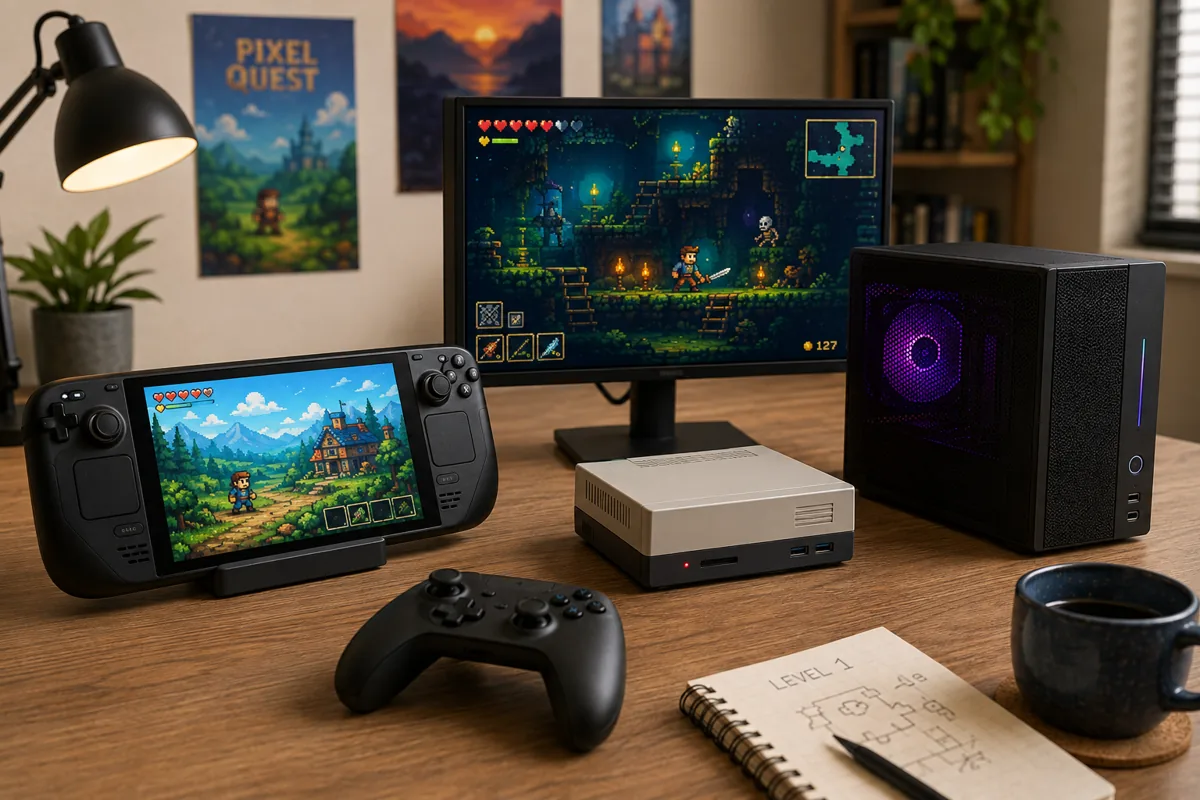
Console portability historically meant a separate dedicated device (the Nintendo Switch being the clearest modern example), while PC portability has traditionally meant a full gaming laptop, bulkier and less battery-efficient than a purpose-built handheld. This distinction has blurred substantially with the rise of Windows and SteamOS-based handheld gaming PCs like the Steam Deck, ASUS ROG Ally, and Lenovo Legion Go, which run full PC game libraries in a handheld form factor.
These PC handhelds don’t fully match dedicated console handheld battery life or thermal efficiency, since they’re running a more general-purpose OS and hardware stack rather than console-optimized firmware, typically delivering 1-3 hours in demanding titles compared to a more optimized dedicated handheld console’s efficiency in games built specifically for its fixed hardware target. Detailed runtime figures and settings tradeoffs for PC handhelds are covered in our dedicated handheld battery life guide linked below.
Library access on PC handhelds is a clear advantage over dedicated console handhelds: a Steam Deck or ROG Ally can run the full breadth of a Steam or other PC storefront library, rather than being limited to a single platform’s exclusive handheld catalog, though performance for the most demanding recent AAA titles requires the same settings compromises full-size gaming PCs face when hardware is undersized relative to a game’s requirements.
Cloud gaming/streaming apps (Xbox Cloud Gaming, GeForce Now) extend both console and PC libraries to devices that couldn’t otherwise run them locally, including phones and low-power tablets, somewhat reducing the portability gap between platforms for players with reliable high-speed internet access, though this depends entirely on connection quality and isn’t a substitute for local hardware in areas with inconsistent internet.
For buyers specifically prioritizing portability as a primary use case rather than a secondary consideration, the decision increasingly comes down to library preference (console-exclusive handheld titles versus full PC library access) rather than a fundamental technology gap, since both categories have matured considerably in recent years.
Total Cost Of Ownership Over Five Years
The table below estimates a realistic five-year total cost for a moderate gamer on each platform, including hardware, mandatory online subscriptions where applicable, and an average annual game-buying budget, using typical retail and sale pricing rather than best-case discount scenarios.
| Cost Category | PS5/Xbox Series X | Mid-Tier Gaming PC |
|---|---|---|
| Initial hardware | $500 | $1,000 |
| Extra controller/peripherals | $70 | $120 (keyboard, mouse, controller) |
| Online subscription (5 years) | $300-450 | $0 (not required) |
| Games (5 years, ~10/year at typical sale pricing) | $1,200 | $750 (deeper PC sales) |
| Mid-cycle upgrade or repair | $0 (fixed hardware) | $300-500 (typical GPU/RAM upgrade) |
| Approximate 5-year total | $2,070-2,220 | $2,170-2,370 |
The five-year totals land closer together than the upfront cost gap suggests, largely because console online subscription fees and shallower console sale discounts erode the initial price advantage over time. Buyers who skip the mid-cycle PC upgrade, accepting reduced settings on newer titles instead, can bring the PC total below the console total; buyers who buy many games per year at full price on either platform will see both totals rise roughly proportionally.
This comparison assumes a moderate, realistic usage pattern rather than extremes in either direction; a buyer who plays almost exclusively free-to-play or Game Pass titles changes the game-cost line dramatically for either platform, while a buyer chasing maximum visual fidelity on PC should expect the initial hardware and upgrade lines to run meaningfully higher than shown here.
Decision Framework: Which Option Actually Fits Your Situation
Choose a console if simplicity and predictable cost matter most, if your primary interest includes Nintendo or other platform-exclusive franchises unavailable elsewhere, or if you prefer a “buy once, play immediately” setup without ongoing settings management or troubleshooting. Console remains the lower-friction option for casual to moderate gamers who don’t need the highest possible frame rates or visual settings ceiling.
Choose a gaming PC if you play competitive shooters or genres where mouse precision meaningfully affects outcomes, if you want access to modding, a larger back-catalog library, and deeper storefront sales, or if you expect to keep hardware for 5+ years and prefer spreading upgrade costs incrementally rather than facing a full generational replacement. PC also makes sense for buyers who already use their machine for non-gaming purposes, since the hardware cost is then shared across work, creative, or productivity use rather than being a gaming-only expense.
A genuinely common and reasonable answer for many households is both: a console for simplicity, couch co-op, and platform exclusives, paired with a PC for competitive genres, modding, and library depth. This isn’t a cop-out answer so much as a reflection of how differently the two platforms serve overlapping but distinct needs, and many enthusiast gamers do own both rather than treating the decision as strictly either-or.
Whichever direction you lean, buying decisions should weigh actual usage patterns, specifically which genres you play most and how many years you plan to keep the hardware, more heavily than headline spec comparisons or marketing claims from either side, since those real usage factors are what determine which platform’s tradeoffs you’ll actually notice day to day.
Frequently Asked Questions
Is a gaming PC really more expensive than a console overall?
Upfront yes, often by $500 to $1,500 depending on target performance tier, but over a five-year window the gap narrows or reverses for PC owners who skip paid online subscriptions and buy games during PC-specific sales, which run deeper and more frequently than console storefront discounts.
Can a mid-range gaming PC match a PlayStation 5 or Xbox Series X in performance?
A PC with an RTX 4060 Ti or RX 7700 XT class GPU generally matches or exceeds current-generation console performance at 1080p and comes close at 1440p, though matching console-optimized efficiency exactly requires roughly one performance tier higher PC hardware than the console’s on-paper specs suggest.
Do I lose access to exclusive games by choosing PC over console?
Yes for a shrinking but still real list of first-party titles, though Sony and Microsoft have both increased day-one or delayed PC releases of previously console-exclusive franchises in recent years, narrowing the gap considerably compared to previous console generations.
Is a console genuinely easier to use than a gaming PC?
For pure “turn on and play” simplicity, yes, since consoles ship as a fixed, pre-tested hardware and software combination requiring no driver management or settings tuning, while a PC trades that simplicity for configurability and performance headroom.
Which option holds its value better over time?
A gaming PC generally holds functional value longer because individual components can be upgraded piecemeal as needed, while a console’s entire performance ceiling is fixed at purchase and only resets with a full generational replacement roughly every six to seven years.
If you’re leaning PC, our best VR ready gaming PC guide covers systems that also handle flat-screen gaming comfortably at higher tiers. Console shoppers should see best gaming console for current model comparisons and best console accessories for controllers and storage add-ons. If portability is the deciding factor either way, our best handheld gaming PC roundup covers the PC side of that specific comparison.


