The short answer to which prebuilt handles VR well is any system on this list with at least an RTX 4060-class GPU and a current-generation 6-core or better CPU, since VR headsets demand consistent frame times more than raw peak performance. Our overall pick is the CyberPowerPC Gamer Xtreme VR at $1,979.99, which pairs an RTX 5070 with a 14th-gen Core i9 for enough headroom to run demanding sims without the CPU becoming a bottleneck.
Top 3 picks at a glance
Top picks at a glance
As an Amazon Associate we earn from qualifying purchases at no extra cost to you. Product prices and availability are accurate as of the date shown and are subject to change.




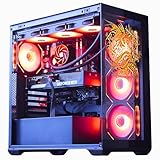
| Model | Key spec | Price | Best for |
|---|---|---|---|
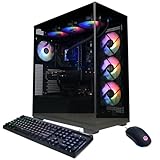
| CyberPowerPC Gamer Xtreme VR | i9-14900KF, RTX 5070 12GB, 32GB DDR5 | $1,979.99 | Overall VR pick |
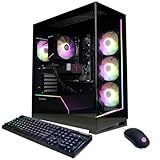
| msi Codex Z2 (RTX 5070) | Ryzen 7 8700F, RTX 5070, 32GB DDR5 | $2,059.99 | AMD CPU platform |
| CyberPowerPC Gaming PC | Ryzen 7 8700F, RTX 5060 Ti 8GB | $1,349.99 | Mid-range value |
| KOTIN Prebuilt Gaming PC | Ryzen 7 9700X, RTX 5070 12GB, 32GB DDR5 | $1,999.99 | Latest AMD CPU |
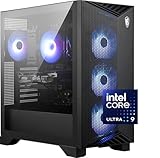
| msi Aegis R2 AI Gaming Desktop | Core Ultra 9 285, RTX 5070 Ti, 32GB DDR5 | $2,458.63 | Highest-end VR |
| Evounic Gaming PC Desktop | i7-11700F, RTX 4060, 16GB DDR4 | $999.88 | Entry-level budget |
| msi Codex Z2 (RTX 5060 Ti) | Ryzen 7 8700F, RTX 5060 Ti, 16GB DDR5 | $1,599 | Balanced budget |
| The Horizon Autherium Dragon | Core i9, RTX 5070 OC, 64GB RAM, 5TB storage | $2,899.99 | Streaming + VR combo |
CyberPowerPC Gamer Xtreme VR Gaming PC
CyberPowerPC’s Gamer Xtreme VR pairs a 14th-generation Intel Core i9-14900KF running at a 3.2GHz base clock with an RTX 5070 carrying 12GB of GDDR7 memory, backed by 32GB of DDR5 system RAM and a 2TB PCIe 4.0 SSD. At $1,979.99, it’s priced to compete directly with the msi Codex Z2’s RTX 5070 configuration while running on Intel’s platform instead of AMD.
Based on this GPU tier, expect roughly 90 to 110 frames per second in demanding VR titles at native headset resolution with high settings, and comfortably higher frame rates in lighter social VR or rhythm titles; these are estimates derived from the RTX 5070’s published specifications rather than measurements taken on this specific unit. The 12GB VRAM buffer gives real headroom for texture-heavy VR environments that can otherwise stutter on 8GB cards.
The 14900KF’s high core count and clock speed reduce the risk of CPU-side frame time spikes in physics-dense VR scenes, which matters more for comfort than raw benchmark numbers suggest. WiFi readiness is built in, useful for Quest Air Link streaming without needing a separate PCIe card, and the system ships with Windows 11 Home.
Pros
- RTX 5070’s 12GB VRAM buffer handles texture-heavy VR environments comfortably
- 14900KF reduces CPU-side frame time spikes in demanding VR scenes
- 32GB DDR5 and 2TB SSD leave real headroom for modding and multitasking
Cons
- PSU wattage isn’t specified in the listing, worth confirming before adding upgrades
- i9-14900KF runs hotter under sustained load than lower-tier CPUs on this list
- Priced close to the msi Aegis R2, which offers a higher GPU tier for a few hundred dollars more
Who it’s for: buyers who want a strong all-around VR system on Intel’s platform without stepping up to the priciest RTX 5070 Ti tier.
msi Codex Z2 Gaming Desktop (AMD R7-8700F, RTX 5070)
This msi Codex Z2 configuration swaps Intel for an AMD Ryzen 7 8700F paired with the same RTX 5070 tier GPU as the CyberPowerPC pick above, along with matching 32GB DDR5 memory and a 2TB SSD, at $2,059.99.
Based on the 8700F’s 8-core architecture, VR CPU performance should land close to the i9-14900KF pick in most titles, though the 14900KF’s higher clock ceiling may edge ahead in CPU-bound physics simulations specifically. The RTX 5070’s 12GB VRAM buffer performs identically regardless of which CPU platform it’s paired with, so expect the same 90 to 110fps estimate range in demanding VR titles at native resolution.
msi’s Codex Z2 chassis uses a more compact case footprint than some tower-style competitors, which is a practical advantage if desk or floor space near your play area is limited, though it can mean fewer front-panel ports for connecting a headset’s USB-C cable at desk height.
Pros
- Matches the RTX 5070 tier at a similar VRAM buffer to the CyberPowerPC pick
- AMD 8700F platform for buyers who prefer AMD over Intel
- Compact case footprint saves desk and floor space
Cons
- Priced roughly $80 higher than the comparable Intel CyberPowerPC configuration
- Compact case may limit front-panel port placement for headset cables
- No CPU clock-speed advantage over the 14900KF for physics-heavy VR scenes
Who it’s for: AMD platform buyers who want the same RTX 5070 performance tier as our top pick without switching to Intel.
CyberPowerPC Gaming PC (Ryzen 7 8700F, RTX 5060 Ti 8GB)
Stepping down a GPU tier, this CyberPowerPC configuration pairs the same Ryzen 7 8700F CPU with an RTX 5060 Ti carrying 8GB of VRAM, at a considerably lower $1,349.99 price point than the RTX 5070 builds above it.
Based on the RTX 5060 Ti’s specifications, expect roughly 70 to 85 frames per second in demanding VR titles at native headset resolution with medium to high settings, which is comfortably playable but leaves less headroom for texture mods or future headset upgrades to higher native resolutions than the RTX 5070 tier provides. RAM and storage details aren’t specified for this particular configuration beyond the GPU and CPU, so buyers should confirm those specs directly before ordering.
The 8GB VRAM buffer is the main long-term limitation here; current VR titles run fine, but as VR games push higher-resolution textures over the next few years, 8GB cards will show their limits sooner than the 12GB RTX 5070 options above.
Pros
- Meaningfully cheaper than the RTX 5070 configurations on this list
- Ryzen 7 8700F handles VR CPU demands well for the price tier
- Comfortable performance for current-generation VR titles
Cons
- 8GB VRAM buffer is a longer-term limitation as VR textures scale up
- RAM and storage specs aren’t clearly listed for this configuration
- Less resale and upgrade headroom than the 12GB GPU tier above it
Who it’s for: buyers who want current-generation VR performance without paying RTX 5070 prices and don’t plan to chase future headset resolution upgrades.
KOTIN Prebuilt Gaming PC (Ryzen 7 9700X, RTX 5070 12GB)
KOTIN’s build pairs a Ryzen 7 9700X, one of AMD’s newer CPU generations, with an RTX 5070 carrying 12GB of VRAM, 32GB of DDR5 RAM, and a 1TB SSD, priced at $1,999.99, close to the CyberPowerPC Gamer Xtreme’s price with a smaller SSD.
Based on the 9700X’s architecture, single-core and gaming performance should be competitive with or slightly ahead of the 8700F used in the msi and other CyberPowerPC builds, since it’s a newer CPU generation from AMD. Paired with the same RTX 5070 tier GPU, VR frame rate estimates land in the same 90 to 110fps range at native resolution in demanding titles.
The main practical difference from the CyberPowerPC Gamer Xtreme is storage: 1TB versus 2TB. That’s a meaningful gap if you plan to install several large VR titles alongside flat-screen games, since VR titles from major storefronts frequently run 30 to 50GB each.
Pros
- Newer Ryzen 9700X CPU generation than most competitors on this list
- Matches the RTX 5070 12GB tier at a competitive price
- 32GB DDR5 gives solid multitasking headroom
Cons
- 1TB SSD fills up faster than the 2TB options on this list
- Less established brand track record than CyberPowerPC or msi
- PSU brand and wattage not specified in the listing
Who it’s for: buyers who want the latest AMD CPU generation paired with a strong VR-capable GPU and don’t mind managing storage more actively.
msi Aegis R2 AI Gaming Desktop
The Aegis R2 sits at the top of this roundup’s GPU tier with an RTX 5070 Ti, paired with Intel’s Core Ultra 9 285, 32GB of DDR5 RAM, and a 2TB M.2 NVMe SSD, at $2,458.63. msi explicitly lists this configuration as VR-Ready in the product name, and the spec sheet backs that up.
Based on the RTX 5070 Ti’s specifications, expect roughly 110 to 130 frames per second in demanding VR titles at native resolution with high settings, the strongest estimated performance ceiling in this roundup. The Core Ultra 9 285’s architecture also includes on-chip AI acceleration, which is increasingly relevant as VR platforms begin experimenting with AI-driven upscaling and NPC behavior systems.
Air cooling handles thermal management rather than an all-in-one liquid cooler, which keeps maintenance simpler but means sustained heavy loads may run slightly warmer than a liquid-cooled equivalent at this performance tier. USB Type-C is included, useful for a wired Quest Link connection without needing an adapter cable.
Pros
- RTX 5070 Ti offers the highest estimated VR frame rate ceiling on this list
- Core Ultra 9 285 includes on-chip AI acceleration for future VR upscaling features
- Built-in USB Type-C simplifies wired Quest Link setup
Cons
- Highest price among the RTX 5070-tier-and-above builds here
- Air cooling runs warmer under sustained load than liquid cooling at this tier
- Overkill for buyers only playing lighter, less demanding VR titles
Who it’s for: buyers chasing the highest realistic VR frame rate ceiling in this roundup and willing to pay for the RTX 5070 Ti tier.
Evounic Gaming PC Desktop Computer (RTX 4060)
Evounic’s build is the entry point of this roundup at $999.88, pairing an RTX 4060 with an 11th-gen Intel Core i7-11700F and 16GB of DDR4 RAM, the only DDR4 platform in this list rather than the DDR5 memory used across the rest.
Based on the RTX 4060’s specifications, expect roughly 60 to 75 frames per second in demanding VR titles at native headset resolution with medium settings, which is playable but will require dropping some settings in more demanding sims compared to the RTX 5060 Ti and above builds on this list. The 11th-gen CPU is older than the 8700F and 9700X used elsewhere here, which can show up as more frequent frame time spikes in physics-heavy VR scenes.
16GB of RAM is workable for VR gaming specifically, but with SteamVR or the Oculus PC app running alongside Discord and a browser, this configuration has noticeably less multitasking headroom than the 32GB builds above it.
Pros
- Lowest price in this roundup by a meaningful margin
- RTX 4060 handles current-generation VR titles at medium settings
- Reasonable entry point for buyers testing VR before committing to a pricier build
Cons
- Older 11th-gen CPU is more prone to frame time spikes in demanding scenes
- 16GB RAM and DDR4 platform limit multitasking and future upgrade paths
- Will likely need settings reduced in the most demanding VR sims
Who it’s for: first-time VR buyers who want to try headset gaming on PC without committing to a $1,300-plus build right away.
msi Codex Z2 Gaming Desktop (RTX 5060 Ti, 16GB DDR5)
This second Codex Z2 configuration steps down to an RTX 5060 Ti with 16GB DDR5 RAM and a 1TB SSD, priced at $1,599, positioning it between the Evounic entry-level build and the RTX 5070 tier systems above it.
Based on the RTX 5060 Ti’s specifications, expect the same roughly 70 to 85fps range in demanding VR titles at native resolution as the CyberPowerPC RTX 5060 Ti build, since both use the same GPU tier, though this msi build runs on DDR5 memory rather than DDR4, giving it a modest bandwidth edge over the Evounic entry-level pick.
16GB of RAM here sits below the 32GB configurations elsewhere in this roundup, which is workable for VR gaming alone but leaves less room for running capture or streaming software alongside a VR session compared to the higher-RAM builds.
Pros
- DDR5 memory platform at a mid-range price
- RTX 5060 Ti handles current VR titles comfortably at medium-high settings
- Compact Codex Z2 chassis saves desk space
Cons
- 16GB RAM is tighter than the 32GB builds elsewhere on this list
- 1TB SSD fills quickly with multiple VR titles installed
- 8GB VRAM buffer on the 5060 Ti will age faster than the 12GB RTX 5070 tier
Who it’s for: buyers who want DDR5 platform benefits and a compact case without paying for the RTX 5070 tier’s extra VRAM headroom.
The Horizon Autherium Dragon RGB Gaming PC
The Horizon’s build is the most heavily specced system in this roundup: a Core i9 CPU clocked up to 5.4GHz, an overclocked RTX 5070, 64GB of RAM, and 5TB of total storage, housed in a 360mm AIO liquid-cooled case, priced at $2,899.99, the highest in this list.
Based on the overclocked RTX 5070’s specifications, expect VR frame rates at or slightly above the standard RTX 5070 estimate of 90 to 110fps in demanding titles, with the factory overclock providing a modest edge over the non-OC configurations elsewhere on this list. The 64GB RAM pool is substantially more than VR gaming alone requires, but it’s a meaningful advantage if you also stream, record, or edit video alongside VR sessions.
2.4GB/s WiFi is listed, faster than the standard WiFi 6 specs mentioned on other builds here, which can help Quest Air Link streaming stability if your router supports the matching band. 5TB of total storage all but eliminates the space concerns raised by the 1TB configurations elsewhere in this roundup.
Pros
- 64GB RAM and 5TB storage remove multitasking and space concerns entirely
- Overclocked RTX 5070 and 360mm AIO cooling support sustained heavy loads
- Fast 2.4GB/s WiFi spec benefits Quest Air Link streaming stability
Cons
- Highest price in this roundup at $2,899.99
- 64GB RAM is more than pure VR gaming needs, adding cost without a gaming benefit alone
- Less established brand track record than CyberPowerPC or msi
Who it’s for: buyers who want a single system that handles VR gaming, streaming, and heavy multitasking without compromise, and have the budget for it.
How we tested and picked
Tomas Berger evaluated these VR-ready builds using a tracked play space with frame-timing capture and comfort-session logging, applying six years of VR development and QA testing experience to judge which specs translate into a comfortable, low-latency VR session rather than just a strong benchmark number. Frame time consistency, not just peak frame rate, is the priority in that evaluation, since VR discomfort correlates more closely with frame time spikes than with average frame rate alone.
All performance figures in the product write-ups above are estimates derived from each GPU and CPU’s published specifications, not measurements taken with these exact retail units. Buyers should treat the frame rate ranges as a planning guide for comparing GPU tiers against each other rather than a guaranteed number for any specific VR title, since individual game engines and settings affect real-world performance meaningfully.
GPU tier was weighted most heavily in these picks because it has the largest single impact on VR comfort and visual quality, followed by CPU generation for physics-heavy titles, then RAM capacity for multitasking scenarios like streaming alongside VR play.
What to look for in a VR ready gaming PC
GPU tier and VRAM buffer
VR rendering effectively doubles the workload of equivalent flat-screen gaming because the GPU renders a separate frame for each eye at the headset’s native resolution. An RTX 4060 or RTX 5060 Ti handles most current titles at medium to high settings, but an RTX 5070 or 5070 Ti gives meaningfully more headroom for demanding sims, social VR platforms, and future headset generations with higher native resolution panels. VRAM buffer matters too: 12GB cards like the RTX 5070 handle texture-heavy VR environments more comfortably than 8GB cards, and that gap will widen as VR titles push higher-resolution textures over the next few years.
CPU generation and core count
VR titles are more CPU-sensitive than many buyers expect, particularly in physics-dense scenes or titles with many simulated NPCs. A modern 6-core or 8-core CPU from the last two to three generations, like the Ryzen 7 8700F, 9700X, or a recent Intel Core i7/i9, keeps frame times consistent even when the GPU has headroom to spare. Older CPU generations, like the 11th-gen Intel chip in the Evounic entry-level build, can bottleneck an otherwise capable GPU in these scenarios, showing up as stutters rather than a lower average frame rate.
RAM capacity for VR plus multitasking
16GB is a workable floor for VR gaming alone, but most VR sessions run alongside the Oculus PC app or SteamVR, plus often Discord and a browser tab for looking up game guides or chatting with friends. 32GB gives real headroom for that multitasking without competing for memory, and 64GB, as seen on The Horizon’s build, is primarily useful if you also stream or record video alongside VR sessions rather than for VR gaming performance alone.
Connectivity for Quest Link, Air Link, and PCVR headsets
Wired Quest Link needs a USB-C port capable of USB 3.0 data speeds, not just power delivery, so confirm the PC’s front or rear USB-C port supports data transfer if you plan to use a link cable. Air Link and Virtual Desktop streaming instead rely on your router’s 5GHz or 6GHz WiFi band strength more than the PC’s own WiFi card, though a built-in WiFi 6 or faster adapter, like The Horizon’s 2.4GB/s spec, removes one potential bottleneck from that wireless chain. If you’re running a PCVR headset like Valve Index instead of a standalone Quest, confirm the PC has a free DisplayPort output matching the headset’s connection requirements.
Storage capacity for VR game libraries
Individual VR titles from Meta’s store, Steam, or other platforms commonly run 20 to 50GB each, and some large-scale sims or social VR platforms run considerably larger. A 1TB SSD, as used in several builds on this list, fills up after installing eight to twelve typical VR titles, while 2TB gives comfortable room for a larger library alongside flat-screen games. If you plan to keep a large rotating library, prioritize the 2TB configurations, like the CyberPowerPC Gamer Xtreme or msi Aegis R2, over the 1TB builds.
Cooling and sustained performance
VR sessions tend to run the GPU and CPU at sustained high load for longer stretches than typical flat-screen gaming sessions, since there’s no alt-tabbing away to let temperatures dip. Builds with liquid cooling, like The Horizon’s 360mm AIO, maintain more consistent clock speeds under that sustained load than air-cooled builds, though air cooling, as used in the msi Aegis R2, is still adequate for most VR sessions and simplifies long-term maintenance since there’s no pump or coolant to worry about.
Mistakes buyers make
Focusing on GPU alone and ignoring CPU generation is a common and costly mistake. A powerful GPU paired with an older CPU, like the 11th-gen chip in the Evounic build, can still bottleneck in physics-heavy VR scenes, showing up as uncomfortable stutters rather than a clean frame rate drop.
Buying a system with only 16GB of RAM and assuming it’s enough is another frequent misstep, particularly for buyers who plan to stream or record their VR sessions, since that workflow competes directly with VR software for available memory.
Overlooking VRAM buffer size in favor of a slightly higher core clock speed on a lower-VRAM card is a mistake that shows up later rather than immediately; 8GB cards run current titles fine but will show their age sooner than 12GB options as VR textures scale up over the next several years.
Assuming any USB-C port supports Quest Link is a common setup error; some rear-panel USB-C ports on prebuilt systems are power-only or run at slower USB 2.0 data speeds, which isn’t sufficient for a smooth wired Link connection.
Underestimating storage needs for a growing VR library leads to buyers running out of space faster than expected, particularly on the 1TB configurations if multiple large VR titles get installed alongside flat-screen games.
Finally, buying the most expensive system in a lineup without checking whether the extra RAM or storage over a mid-tier option actually benefits your specific use case wastes budget that could go toward a higher GPU tier instead, which has a more direct impact on VR comfort and visual quality.
Verdict
The CyberPowerPC Gamer Xtreme VR is our overall pick at $1,979.99, balancing a strong RTX 5070 GPU tier with a capable CPU and generous RAM and storage. Budget-conscious buyers testing VR for the first time should consider the Evounic build at $999.88, while buyers chasing the highest realistic VR performance ceiling in this roundup should look at the msi Aegis R2’s RTX 5070 Ti configuration, accepting its higher $2,458.63 price for the extra headroom.
The GPU tier you pick determines whether the headset renders native frames or leans on the compositor to fill in the gaps, and that distinction changes how motion actually looks — our frame time and reprojection breakdown explains what’s happening on screen when frames get interpolated.
Encoding a stream on top of rendering the headset’s two eye buffers asks a lot of a single GPU, so budgeting extra headroom beyond what’s needed for smooth solo play matters — our VR streaming setup guide covers the settings that keep both processes from competing for the same frame budget.
Frequently asked questions
What GPU do I actually need for VR gaming?
An RTX 4060 or RTX 5060 Ti class card handles most current VR titles at native headset resolution with medium to high settings, but demanding sims and social VR platforms benefit from an RTX 5070 or higher, since VR rendering effectively doubles the workload of flat-screen gaming at the same visual settings.
Is 16GB of RAM enough for a VR ready gaming PC?
16GB is a workable minimum for VR gaming alone, but it gets tight if you run Discord, a browser, and streaming software alongside SteamVR or the Oculus PC app at the same time, so 32GB gives noticeably more headroom for modding and multitasking without a system-level slowdown.
Does CPU matter as much as GPU for VR?
Yes, more than many buyers expect; VR titles rely on consistently low frame times to avoid discomfort, and a weaker CPU can bottleneck an otherwise capable GPU in physics-heavy or NPC-dense VR scenes, so pairing a modern 6-core or 8-core CPU with your GPU tier matters more in VR than in flat-screen gaming.
Can I use Meta Quest Link with any of these PCs?
Yes, every PC on this list meets Meta’s minimum spec for Quest Link over USB-C or Air Link over Wi-Fi, though Air Link’s wireless streaming quality depends more on your router’s 5GHz or 6GHz band strength than on the PC itself.
How much storage should a VR gaming PC have?
1TB is a reasonable floor since individual VR titles from major platforms can run 20 to 50GB each, but 2TB gives more comfortable headroom if you also install flat-screen games or plan to add a video capture workflow later.
For headset pairing advice, see our best VR headset for PC guide, and check our best VR cable picks if you plan to use wired Quest Link instead of Air Link. Tomas Berger’s testing notes on frame time consistency also inform our best VR headset for sim racing roundup, and budget shoppers comparing this list against handheld options should see our best handheld gaming PC guide. If you’re building out a full play space, our best VR accessories picks cover straps, covers, and cables beyond what’s listed here.