
Getting clear, low-latency audio through an Xbox controller is less about cranking volume and more about routing. Whether you are on Xbox Series X|S or Windows 10/11 with an Xbox Wireless Controller, your controller has its own audio path: a 3.5mm headset jack powered by the controller’s firmware, plus a separate chat mixer and virtual surround pipeline. Prioritize three things in order: correct output routing, clean voice chat separation, and then spatial audio tuning. Get the routing wrong and you will hear game audio and chat at the wrong levels, or worse, add double processing that makes everything sound hollow and delayed.
This guide gives you exact menu paths, setting names, and safe value ranges to use on both console and PC. All settings below apply to the standard Xbox Wireless Controller, Xbox Elite Series 2, and most wired third-party Xbox-licensed controllers when connected via USB, Xbox Wireless Adapter, or Bluetooth. As of early 2026, the Xbox Accessories app and Windows sound stack are the most reliable way to lock these settings in.
As an Amazon Associate we earn from qualifying purchases at no extra cost to you.

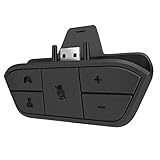


Our Top Picks
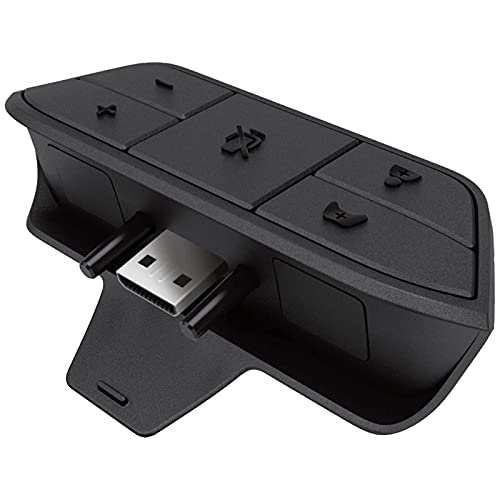


Top 3 picks at a glance
Quick Recommended Settings
| Setting | Recommended value | Why |
|---|---|---|
| Connection for Audio | USB wired or Xbox Wireless Adapter over Bluetooth | Wired and Xbox Wireless have higher bandwidth and stable headset audio; Bluetooth on PC compresses mic audio and disables headset volume controls |
| Xbox: Headset Volume | 7 to 8 of 10 | Loud enough to avoid maxing Windows/game volume, low enough to prevent clipping on the controller amp |
| Xbox: Headset Chat Mixer | 60% game / 40% chat (2 clicks toward game) | Keeps callouts audible without drowning footsteps and directional cues |
| Xbox: Mic Monitoring | 2 to 3 of 10 | Lets you hear your own level without echo or sidetone feedback loop |
| Windows: Output Device | Headset (Xbox Controller) set as Default | Forces game and system audio through controller DAC correctly |
| Windows: Spatial Sound | Windows Sonic for Headphones – On | Free, system-wide virtual surround with minimal processing; turn off in-game 3D audio if you use this |
| Windows: Mic Volume | 75 to 85 of 100 | Strong signal without digital clipping; pair with controller-level mic mute |
| In-Game: Voice Chat Output | Headset or Headphones | Prevents chat from routing to speakers while game goes to headset |
| In-Game: Master Volume | 80 to 90 of 100 | Leaves headroom for Windows/controller volume to control final level |
| Xbox Accessories App: Firmware | Updated to latest | Fixes audio dropout and mic level bugs |
Setting-by-Setting
1. Connection Type – Use USB or Xbox Wireless Adapter
Exact value: On PC, prefer USB-C cable to controller or Microsoft Xbox Wireless Adapter for Windows. Use Bluetooth only if you must go wireless without the adapter.
Trade-off: USB and Xbox Wireless support full headset audio, chat mixer controls, and firmware updates through Settings > Devices & connections > Accessories on console or Xbox Accessories app on PC. Bluetooth on Windows 10/11 switches the headset profile to Hands-Free AG Audio, which caps audio quality, disables the Xbox Headset Volume slider, and forces mono mic input. You gain cable-free convenience with Bluetooth but lose reliable audio controls and stereo quality. If you hear robotic voice or your friends say your mic sounds muffled on Bluetooth, that is the reason.
2. Headset Volume – 7 to 8 on Xbox Slider, 70 to 84 in Windows
Menu path Xbox console: Press Xbox button > Audio & music (speaker icon) > Headset volume slider 0 to 10.
Menu path Windows PC: Settings > System > Sound > Output > Headset (Xbox Controller) > Volume 0 to 100. Or use Xbox Game Bar with Win + G > Audio widget > Headset (Xbox Controller) volume.
Exact value: Set Xbox slider to 7 or 8. On PC set Windows volume to 70 to 84. Then fine-tune with in-game master at 80 to 90.
Trade-off: Running controller volume at 10 pushes the small built-in amp into distortion, especially with low-impedance earbuds. Running it too low (3 to 4) forces you to boost Windows/game volume to 100, which raises noise floor. The middle-high range keeps dynamic range intact.
3. Headset Chat Mixer – 60% Game / 40% Chat
Menu path: Xbox button > Audio & music > Headset chat mixer slider. Center is 50/50. Move two notches toward the game controller icon.
On PC with Xbox Game Bar: Win + G > Audio > Voice tab > use Game/Chat balance slider if available. In Discord, set Output Device to Headset (Xbox Controller) and use Discord’s Attenuation off to avoid double ducking: Discord > User Settings > Voice & Video > Attenuation slider to 0%.
Trade-off: Pushing all the way to game makes teammates inaudible. Pushing all the way to chat buries footsteps and reload cues. A slight game bias works for competitive shooters; flip to 50/50 for casual co-op where callouts matter more.
4. Mic Monitoring (Sidetone) – 2 to 3
Menu path: Xbox button > Audio & music > Mic monitoring 0 to 10.
Exact value: 2 to 3 for closed-back headsets, 1 to 2 for open earbuds or IEMs.
Trade-off: At 0 you cannot tell if you are peaking or breathing into the mic. Above 5 you create a feedback loop where you hear yourself with latency and start speaking quieter, which makes your team turn you up and hear more background noise.
5. Mic Level and Mute Behavior
Menu path Windows: Settings > System > Sound > Input > Headset (Xbox Controller) > Input volume 0 to 100. Test with Start test > check input level bar moves to ~75% when speaking normally.
Menu path Xbox: Xbox button > Audio & music > Mic on/off toggle. The controller mute button is the small button near the 3.5mm jack on newer controllers; press to toggle, hold for 3 seconds on Elite Series 2 to lock mute.
Exact value: Windows Input volume 75 to 85. Discord Input Sensitivity: disable Automatically determine input sensitivity and set manual threshold to -45 dB to -35 dB.
Trade-off: Higher mic gain helps quiet mics but captures keyboard and controller clicks. Lower gain needs you to be closer to the boom mic.
6. Spatial Sound – Windows Sonic for Headphones
Menu path Windows: Settings > System > Sound > Output > Headset (Xbox Controller) > Spatial sound > Type: Windows Sonic for Headphones > Apply.
Menu path Xbox console: Settings > General > Volume & audio output > Headset audio > Headset format > Windows Sonic for Headphones.
Exact value: Windows Sonic = On for most users. If you own Dolby Atmos for Headphones license, use Dolby Atmos for Headphones instead, but not both. Set in the same menu.
Trade-off: Windows Sonic adds virtual 7.1 from stereo headphones without extra cost and works system-wide. Dolby Atmos for Headphones can sound wider in supported games but requires license activation via Dolby Access app. Never stack spatial sound: if a game has its own Headphone 3D Audio or HRTF option (e.g., in Call of Duty under Audio > 3D Headphones), turn either the game option OR Windows Sonic on, not both. Double processing makes directionality worse.
7. Xbox Accessories App and Firmware
Menu path PC: Open Microsoft Store > Xbox Accessories > open app with controller connected via USB > … menu > Check for updates. File location for logs if update fails: %LOCALAPPDATA%\Packages\Microsoft.XboxAccessories_8wekyb3d8bbwe\LocalState
Menu path Console: Settings > Devices & connections > Accessories > select controller > … > Firmware version > Update now.
Exact value: Always update when prompted. Key combo to re-pair after update: Hold Pair button on controller (next to USB-C) + Pair button on console or adapter for 3 seconds.
Trade-off: Firmware updates occasionally reset Headset volume and Chat mixer to defaults, so re-check Audio & music after updating.
By Hardware Tier
Low Tier – Wired Earbuds or Basic 3.5mm Headset on Laptop
Use a wired USB connection to the controller to avoid Bluetooth mic compression. In Windows set Output to Headset (Xbox Controller) and keep Input volume at 80. Set Xbox Headset Volume to 6, Mic Monitoring to 1, and Spatial Sound to Off if your earbuds distort on virtual surround. In competitive games, disable any in-game Equalizer Preset and set Audio Mix to Headphones or Small Speakers. This keeps the signal clean for weak drivers. If you get static, lower Windows volume to 70 before lowering controller volume.
Mid Tier – Closed-Back Gaming Headset (40mm to 50mm drivers)
This is the sweet spot for Xbox controller audio. Connect via Xbox Wireless Adapter for low latency. Set Headset Volume to 7 to 8, Chat Mixer to 60/40 game/chat, Mic Monitoring to 2 to 3. Enable Windows Sonic for Headphones on PC or Headset format > Windows Sonic on console. In Settings > System > Sound > Output > Equalizer (if your headset software provides one), keep EQ flat with a slight 2 dB cut at 4 kHz to reduce harshness from the controller DAC. For chat apps, set attenuation to 0% to avoid automatic game ducking.
High Tier – Premium Headset or IEMs with External DAC/AMP Intent
If you own a high-impedance headset (over 32 ohm) or audiophile IEMs, the controller amp is the bottleneck. For best quality, bypass controller audio entirely: plug headset via USB or optical to console/PC and use the controller only for input. If you must use the controller jack, keep Headset Volume at 6 to 7 to limit distortion and let your inline amp do the work. Enable Dolby Atmos for Headphones via Dolby Access app for object-based audio, and turn OFF Windows Sonic and in-game 3D audio to avoid stacking. Set Mic Monitoring to 1 since sensitive IEMs reveal sidetone noise. Update controller firmware via USB before any tournament.
Common Mistakes
Mistake 1 – No Sound Through Headset After Plugging In
What causes it: Windows keeps the previous Default Output (Speakers) or the game is locked to a different device. On Xbox, Headset volume defaults to 0 after firmware update.
How to check: On PC, press Win + G and look at the Audio widget. Check which Output has the checkmark. On Xbox, press Xbox button > Audio & music and see if Headset volume shows 0 or grayed out.
What to do: On PC, go to Settings > System > Sound > Output and select Headset (Xbox Controller), click Set as default. Then in Settings > System > Sound > Volume mixer, set your game to Output: Headset (Xbox Controller). On Xbox, drag Headset volume to 7 and unmute Mute headset mic.
How to undo: Set Default Output back to Speakers or TV and set Headset volume to 5 if you switch back to speaker play.
Mistake 2 – Microphone Sounds Muffled or Mono on PC
What causes it: Bluetooth Hands-Free Profile. When connected via Bluetooth, Windows creates two devices: Headset (Hands-Free AG Audio) for chat and Headphones (Stereo) for audio, but only one works at a time.
How to check: Go to Settings > System > Sound > Output. If you see both Headset (Xbox Controller Hands-Free AG Audio) and Headphones (Xbox Controller Stereo), you are on Bluetooth.
What to do: Switch to USB cable or Xbox Wireless Adapter. Then disable Hands-Free: Settings > Bluetooth & devices > Devices > More devices and printer settings > right-click Xbox Controller > Properties > Services tab > uncheck Handsfree Telephony > Apply.
How to undo: Re-check Handsfree Telephony if you need Bluetooth headset mic while away from adapter.
Mistake 3 – Echo, Double Audio, or Hollow Sound
What causes it: Stacked spatial processing. Windows Sonic plus in-game 3D Headphones plus headset vendor surround are all active.
How to check: Listen for reverb on menu clicks. Check Settings > System > Sound > Spatial sound and in-game Audio > 3D Audio / Headphone Mode. If both are On, they stack.
What to do: Keep only one. Recommended: Keep Windows Sonic On and set in-game 3D Audio to Off or Stereo. Or keep in-game 3D On and set Windows Spatial sound to Off. In Dolby Access app, set Dolby Atmos for Headphones to Off if you chose Windows Sonic.
How to undo: Set Spatial sound back to Windows Sonic and re-enable in-game 3D Audio if you prefer the game’s HRTF.
Mistake 4 – Chat Too Loud or Game Audio Ducks When Someone Talks
What causes it: Discord Attenuation or Xbox Chat Mixer ducking, plus Windows Communications setting reducing volume by 80%.
How to check: In Discord go to User Settings > Voice & Video > Attenuation. On PC go to Settings > System > Sound > More sound settings > Communications tab.
What to do: Set Discord Attenuation to 0%. Set Windows Communications to Do nothing. On Xbox, set Headset chat mixer to center, then move 2 clicks toward game. In Xbox Game Bar with Win + G, set Chat slider lower than Game slider.
How to undo: Set Communications back to Reduce the volume of other sounds by 80% and Discord Attenuation to 50% if you want ducking for focus.
FAQ
Where is the headset volume control on an Xbox controller?
There is no dedicated wheel on the standard controller. Use Xbox button > Audio & music > Headset volume slider. On PC you can also use Win + G > Audio widget or Settings > System > Sound > Output > Headset (Xbox Controller) > Volume. On Elite Series 2, you can map the paddle short-press to mic mute in Xbox Accessories > Configure > Slot 1 > Button mapping. The physical mute is the small button by the 3.5mm jack. Hold Pair + Menu for 6 seconds to fully power-cycle the controller if sliders are grayed out.
Should I use Windows Sonic, Dolby Atmos, or DTS Headphone:X?
For Xbox controller audio, Windows Sonic for Headphones is the safest default because it is free, built into Windows and Xbox, and has the least compatibility risk. Use Dolby Atmos for Headphones if you already own the license in Dolby Access and play Atmos-supported titles; enable it at Settings > System > Sound > Spatial sound > Dolby Atmos for Headphones. DTS Headphone:X requires the DTS Sound Unbound app license. Whichever you pick, use only one. In-game, set Output to Headphones or Home Theater if using Atmos, or Stereo/Headphones if using Sonic, following the game’s recommendation.
Why does my controller headset mic not work in games on PC?
Three places can mute you. Check in order: 1) Xbox button > Audio & music > Mic on. 2) Windows Settings > System > Sound > Input > Headset (Xbox Controller) > Input volume not 0, and Settings > Privacy & security > Microphone > Let apps access your microphone = On. 3) In-game Audio > Voice Chat > Input Device set to Headset (Xbox Controller) and Voice Chat enabled, plus Xbox Game Bar > Audio > Voice > Microphone selected. If using Steam, check Steam > Settings > Voice > Input Device. After fixing, test with Win + H to open voice typing or Settings > System > Sound > Input > Start test.
How do I reset Xbox controller audio settings if sound is distorted?
On console, go to Settings > General > Volume & audio output > Headset audio > Reset to default. On PC, go to Settings > System > Sound > Output > Headset (Xbox Controller) > Reset, then set Spatial sound to Off, volume to 75, and re-apply Windows Sonic. Also reset controller profile in Xbox Accessories > Configure > … > Restore to default. If distortion persists after firmware update, perform hard reset: hold Xbox button for 10 seconds until controller off, disconnect USB, remove batteries for 30 seconds, reconnect via USB-C and re-pair. File location to delete corrupted profile cache on PC: %LOCALAPPDATA%\Packages\Microsoft.XboxAccessories_8wekyb3d8bbwe\LocalState\userProfiles.json – delete and restart app to rebuild.









