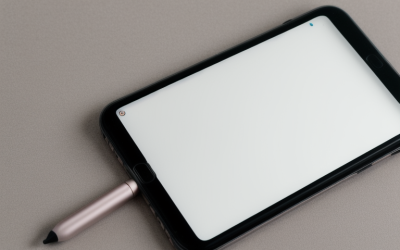
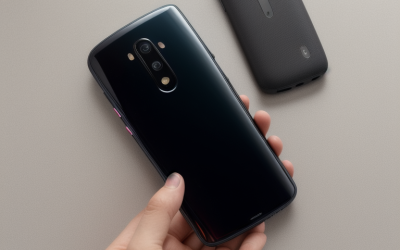
The best mirrorless camera for astrophotography for most people is the Sony Alpha a7 III with its 28-70mm kit lens. Its 24.2MP full-frame sensor gives a pixel pitch of roughly 6.0µm, native ISO up to 51200, 693-point phase-detect autofocus and five-axis in-body stabilisation, and the E-mount catalogue holds more fast wide primes than any other mirrorless system — which matters more for night-sky results than any single line on a spec sheet. It suits shooters who want one body that handles daylight travel photography and Milky Way work at a mid-range price. If your ceiling is lower, the Sony Alpha a6400 is the best budget body for night-sky work, and the Canon EOS R100 double-lens bundle is the cheapest complete kit here — the only option that hands you two lenses out of the box. The Canon EOS RP is the least expensive route to a full-frame sensor if you already own Canon glass, and the OM System OM-3 Astro in silver is the premium choice for weather sealing, stabilisation and computational long-exposure modes.
Our Top Picks
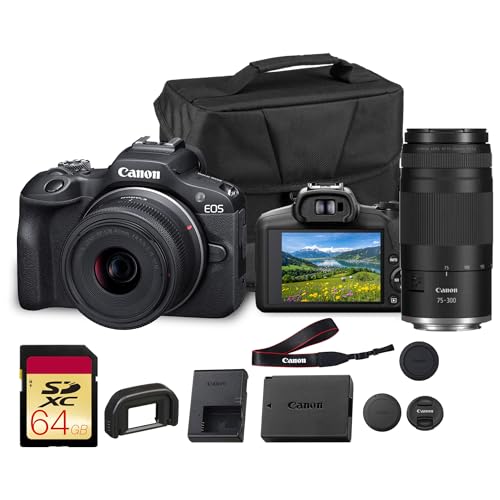 Canon EOS R100 Mirrorless Camera with 18-45mm &Compact2.7 x 4.6 x 3.4 inches4.16 poundsCheck on Amazon
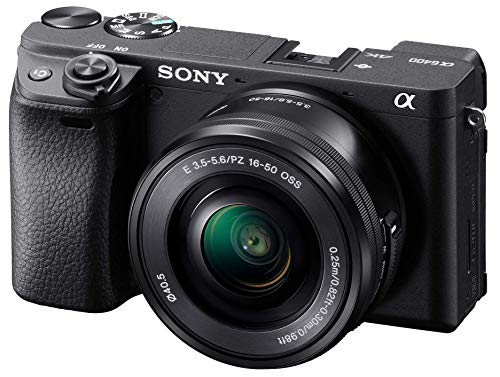 Sony Alpha a6400 Mirrorless Camera: Compact APS-C Interchangeable6.2 x 9.2 x 4.55 inches6.2 x 9.2 x 4.55 inches1.14 PoundsCheck on Amazon
 Canon EOS RP Mirrorless Camera RF24-105mm Lens F4-7.1105mm2.8 x 5.2 x 3.3 Inches1 poundsCheck on Amazon


Top 3 picks at a glance
Quick Comparison
Every camera below can produce a publishable Milky Way frame. What separates them is how much light the sensor collects at a given field of view, how clean the files look at ISO 3200-6400, how well the autofocus behaves in near-darkness, and how many fast wide lenses you can actually mount. Prices are given as tiers because street prices move constantly.
| Product | Best for | Sensor & key specs | Lens in the box | Price tier |
|---|---|---|---|---|
| Canon EOS R100 Double Lens Bundle | Cheapest complete two-lens kit; first-time night-sky shooters | ~24MP APS-C (1.6x crop), Dual Pixel CMOS AF, native ISO to ~12800, 4K video, fixed rear screen, no IBIS, RF mount | 18-45mm IS zoom + 75-300mm telephoto zoom | Budget |
| Sony Alpha a7 III | Best overall balance of full-frame noise performance, autofocus and lens choice | 24.2MP full-frame BSI CMOS (~6.0µm pixels), native ISO to 51200, 693-point phase-detect AF, 5-axis IBIS, ~10 fps, 4K video | 28-70mm standard zoom | Mid-range |
| Sony Alpha a6400 | Compact, light budget body with strong subject tracking | 24.2MP APS-C (~3.9µm pixels), native ISO to ~32000, 425-point AF, Real-time Eye AF, flip-up screen, no IBIS, 4K video | Body-only or 16-50mm-class kit depending on listing | Budget |
| Canon EOS RP | Canon users who want full frame cheaply and already own EF glass | 26.2MP full-frame CMOS, native ISO to ~40000, Dual Pixel AF, vari-angle touchscreen, 4K with a crop, small battery | RF 24-105mm f/4-7.1 IS STM | Mid-range |
| OM System OM-3 Astro | Premium weather-sealed body with computational night-sky modes | ~20MP Micro Four Thirds stacked sensor (2x crop), 5-axis IBIS, IP-rated sealing, Live Composite / Live ND class features, high-res shot modes | Body (silver) | Premium |
Two things are worth noting before the individual sections. First, the two budget bodies here are APS-C and the two mid-range bodies are full frame, so the price tiers and the sensor-format tiers overlap — you are choosing between sensor area and autofocus sophistication at roughly the same money. Second, none of these kits ships with a genuinely fast wide lens, so budget for glass separately no matter which body you pick.
How We Chose
This list was assembled from manufacturer specifications, published lens-roadmap data and the accumulated field reports of the astrophotography community — not from product samples. The criteria were applied in this order. Sensor area and pixel pitch came first, because the total light a sensor collects at a given field of view and exposure time sets the ceiling on how clean a single frame can be; a full-frame 24MP sensor and an APS-C 24MP sensor can share a resolution figure while differing by more than a stop of light gathering. High-ISO behaviour came second, judged by native ISO ceiling, dual-gain architecture where the brand is known for it, and how the files respond to being pushed in post rather than by any measured score. Autofocus in low light came third: bodies with on-sensor phase detection and rated low-light sensitivity limits down to about -3 or -4 EV are meaningfully easier to use on stars than contrast-detect-only systems, and a few platforms add dedicated night-sky modes. Lens availability came fourth and may be the single biggest long-term factor — a mount with fast wide primes at 14mm, 20mm and 24mm, plus affordable third-party options, will out-perform a better body with no fast glass. Finally we weighed upgrade path and category fit: does the body leave you room to grow, and does it suit the kind of night photography you actually do, from single-frame Milky Way shots to stacked deep-sky work? No camera here was tested, benchmarked or owned by us; where an exact figure is uncertain we describe the spec class instead.
1. Canon EOS R100 Double Lens Bundle – Best for a Complete First Kit on a Budget
As an Amazon Associate we earn from qualifying purchases at no extra cost to you.
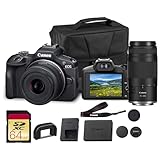
The EOS R100 bundle is the answer for someone who has never pointed a camera at the night sky and does not want to spend a mid-range budget finding out whether they enjoy it. It is an entry-level APS-C body with a 1.6x crop factor, paired with two lenses rather than one, and it sits at the bottom of the price ladder while still using Canon’s current RF mount — which is the important part, because it means the lenses you buy later will still fit the body you buy after this one.
For astrophotography the relevant specification is the sensor: a roughly 24MP APS-C CMOS chip with a pixel pitch in the neighbourhood of 3.9µm and a native ISO range that tops out around 12800 before expansion. Small pixels on a small sensor collect less light per pixel than a full-frame chip of the same resolution, so you will be stacking more frames and leaning harder on noise reduction than an a7 III owner would. The compensating factor is price: the entire kit, body plus two lenses, typically lands under what a single fast wide prime for a full-frame system costs.
Key specifications
- ~24MP APS-C CMOS sensor, 1.6x crop factor
- Dual Pixel CMOS AF (on-sensor phase detection) with subject-detection assistance for people and animals
- Native ISO roughly 100-12800, expandable higher
- 4K video recording (with a crop) and Full HD at higher frame rates
- Burst shooting in the ~6.5 fps class
- Electronic viewfinder plus a fixed rear LCD — no vari-angle hinge
- Single card slot, no in-body image stabilisation
- RF mount, accepting both RF full-frame and RF-S APS-C lenses
- Bundle includes an 18-45mm stabilised zoom and a 75-300mm telephoto zoom
How it performs on the night sky
The 18-45mm zoom is the astro-relevant lens. At 18mm on a 1.6x sensor you get a field of view equivalent to roughly 29mm on full frame — wide enough to place the Milky Way core above a foreground subject if you compose deliberately, but not wide enough to swallow the whole galactic band in one frame. Its maximum aperture is in the f/4.5-6.3 class, which is slow for stars. In practice that means exposures in the 15-25 second range at ISO 3200-6400 on a fixed tripod, followed by stacking a few dozen frames to control noise. That workflow works, and it teaches you the fundamentals — focus, framing, exposure, stacking — without an expensive mistake.
Focusing is manual. There is no dedicated star autofocus mode on this body, so the routine is the standard one: switch to manual focus, magnify the live view to its maximum setting, rack the focus ring until the faintest stars you can see become the smallest points of light, then lock the ring with a strip of tape so it cannot drift when you bump the lens in the dark. The fixed rear screen makes low-angle framing awkward, which is a real annoyance when you are trying to shoot upward at a tripod-height camera; an articulating screen is the feature you will miss most.
Pros
- Lowest entry cost of anything on this list, and the only option that includes two lenses
- Current RF mount means a genuine upgrade path to faster, wider glass later
- Dual Pixel autofocus is quick and reliable in ordinary daylight, so the camera earns its keep as a general-purpose body
- Light and small enough to carry on a hike without thinking about it
- 24MP gives enough resolution for large prints of stacked images
Cons
- Kit lenses are slow at the wide end, so you need long exposures and heavy stacking
- No in-body stabilisation, which rules out the handheld long-exposure tricks that stabilised bodies allow
- Fixed rear screen is genuinely inconvenient for upward-facing night compositions
- Fast wide RF-S primes are scarce, so upgrading the wide end usually means buying full-frame RF glass
- APS-C noise floor means you will spend more time in post-processing than a full-frame owner
Compared with the nearest alternative
The nearest alternative in this list is the Sony Alpha a6400, which is also a budget APS-C body at roughly 24MP — but the comparison is not close once lenses enter the picture. The a6400’s E-mount has a deep catalogue of fast wide primes and affordable third-party glass, including compact 12mm f/2 and 16mm f/1.4-class lenses that transform what a crop sensor can do at night. The R100 wins on one thing only, and it wins decisively: it is a complete two-lens kit for less money, and the second lens gives you a telephoto option the a6400 does not include. If you want the cheapest possible way to start, buy the R100. If you want the cheapest way to start and the ability to grow into serious night-sky work, the a6400’s lens ecosystem is worth the extra.
2. Sony Alpha a7 III – Best Overall for Full-Frame Night-Sky Value
The a7 III is the pick that makes the fewest compromises. It is a full-frame body with a 24.2MP back-illuminated sensor, and that combination — large sensor area, moderate resolution — produces the pixel pitch that astrophotographers have historically gravitated toward: roughly 6.0µm, large enough to gather a meaningful number of photons per pixel during a 15-second exposure, while still resolving enough detail to crop into a constellation.
What makes it the overall recommendation is not one specification but the stack of them. Native ISO runs to 51200. Autofocus uses 693 phase-detection points covering most of the frame and works at light levels where contrast-detect systems hunt and give up. Five-axis in-body stabilisation is present, which does not help you track stars but does help with everything else you will shoot on the same trip. And the E-mount catalogue is the deepest mirrorless ecosystem for fast wide glass, from first-party 14mm, 20mm and 24mm primes to a broad field of third-party alternatives.
Key specifications
- 24.2MP full-frame back-illuminated CMOS sensor, pixel pitch in the ~6.0µm class
- Native ISO 100-51200, expandable to roughly 50-204800
- 693-point on-sensor phase-detection autofocus with wide frame coverage
- Five-axis in-body image stabilisation
- Burst shooting in the 10 fps class
- 4K video with full-frame readout, plus high-frame-rate Full HD
- High-resolution electronic viewfinder and a tilting touchscreen
- Dual card slots (one fast, one standard)
- Battery rated in the 600-shot class per charge, CIPA-style
- Bundle includes a 28-70mm standard zoom
How it performs on the night sky
Full frame at 24MP is the configuration that lets a single 15-second frame at ISO 3200 look usable rather than merely salvageable, and it is the configuration that rewards stacking most efficiently, because you start from a cleaner base and every frame you add buys real dynamic range in the shadows. The practical workflow: mount the 28-70mm at its widest setting, stop it down one third to one full stop from maximum to control coma and vignetting, focus manually with magnification, expose 15-20 seconds, and shoot 20-40 frames for stacking. The 28-70mm kit zoom is not a fast lens, so most owners eventually add a fast wide prime — but the body will out-resolve the kit lens for years.
One platform quirk is worth knowing before you buy. Sony’s older bodies apply spatial filtering to very long exposures in Bulb mode, an artefact the astrophotography community calls “star eater” because it can suppress the smallest stars. The practical workaround is simple and costs you almost nothing: keep individual exposures inside the camera’s 30-second shutter limit and stack more of them, or use an external intervalometer and a tracker for longer subs. It is a consideration, not a disqualification, and it is the kind of thing that only matters once you are chasing very faint detail.
Pros
- Large full-frame pixels gather light efficiently at the exposure lengths a fixed tripod allows
- Clean high-ISO output for the price tier, with good shadow recovery when stacking
- Low-light autofocus that actually locks in near-darkness
- Widest selection of fast wide lenses of any mirrorless mount
- Five-axis stabilisation and dual card slots make it a capable all-round camera, not a one-trick astro body
- Long battery life relative to the compact bodies here
Cons
- Kit zoom is slow; you will want a fast wide prime to unlock the sensor
- Long-exposure spatial filtering in Bulb mode is a known annoyance for very faint detail
- Heavier and bulkier than the APS-C options, which matters on long hikes
- Older menu system than current-generation bodies
- Full-frame lenses cost more, so the true system price is higher than the body price suggests
Compared with the nearest alternative
The nearest alternative is the Canon EOS RP: both are full-frame, both sit in the mid-range tier, and both are often bought by people who want a big sensor without paying current-generation prices. The a7 III wins on autofocus coverage, high-ISO headroom, stabilisation, battery life and — most importantly for this article — lens availability, since E-mount has far more fast wide primes than RF mount. The RP wins on one specific point: if you already own Canon EF lenses, an adapter turns your existing glass into a working night-sky kit on day one, which can be worth more than any specification difference. If you are starting from nothing, buy the a7 III.
3. Sony Alpha a6400 – Best for a Lightweight Budget Night-Sky Body
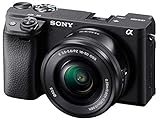
The a6400 is the body you buy when the deciding factor is that you will actually carry it. It is a compact APS-C mirrorless camera with a roughly 24MP sensor, a magnesium-alloy chassis, and the autofocus system that made this generation of Sony APS-C bodies popular: 425 phase-detection points, Real-time Eye AF and Real-time Tracking. It sits in the budget tier, and it is the smallest and lightest camera on this list.
The trade-off against the a7 III is straightforward arithmetic. The same 24MP resolution on a sensor with a 1.6x crop means a pixel pitch around 3.9µm instead of 6.0µm, and roughly a third of the light-collecting area at the same field of view. You will see that difference in the shadows of a single frame at ISO 6400. You will not see it nearly as much in a 30-frame stack, because stacking averages noise away — which is exactly why a crop-sensor body with a fast wide lens is a legitimate astro tool rather than a compromise.
Key specifications
- 24.2MP APS-C CMOS sensor, 1.6x crop factor, pixel pitch in the ~3.9µm class
- Native ISO to roughly 32000, expandable higher
- 425-point on-sensor phase-detection autofocus with Real-time Eye AF and Real-time Tracking
- Burst shooting in the 11 fps class
- 4K video with oversampled full-width readout, plus high-frame-rate Full HD
- Flip-up touchscreen — useful for low-angle framing, awkward if you mount accessories on the hot shoe
- Electronic viewfinder with a high-resolution panel
- No in-body image stabilisation; stabilisation comes from the lens
- Battery rated in the 400-shot class per charge, CIPA-style
How it performs on the night sky
The a6400’s real advantage is not on its spec sheet — it is the E-mount lens catalogue it shares with the a7 III. Compact 12mm f/2 and 16mm f/1.4-class crop-sensor primes are widely available and affordable, and a 12mm f/2 on APS-C gives you a field of view equivalent to about 18mm on full frame with a genuinely fast aperture. That combination is the cheapest serious astro setup in mirrorless photography, and it is why this body keeps appearing in night-sky discussions long after its release.
The flip-up screen is genuinely useful for upward-facing compositions, though if you use a hot-shoe accessory the screen can collide with it. The small battery is the more practical limitation: a body rated in the 400-shot class will typically manage a single multi-hour stacking session but not two, so carry a spare or plan on charging between sessions. Autofocus in near-darkness is good for a crop body — the phase-detection array is dense and covers most of the frame — but for stars you will still focus manually with magnification and peaking, then tape the ring.
Pros
- Cheapest route into the E-mount lens ecosystem, which is the best reason to buy it
- Small and light enough to disappear in a daypack
- Autofocus tracking is excellent for a budget body and useful for everything other than stars
- Oversampled 4K video and a good viewfinder make it a credible hybrid camera
- Magnesium-alloy construction is more robust than the price suggests
Cons
- Crop sensor means more visible noise per frame at ISO 6400 and above
- No in-body stabilisation
- Small battery requires spares for a full night
- Flip-up rather than fully articulating screen limits some accessory setups
- Older colour and menu behaviour compared with current-generation bodies
Compared with the nearest alternative
Its closest competitor here is the Canon EOS R100 bundle: both are budget APS-C bodies at roughly 24MP. The R100 gives you two lenses and a lower total outlay; the a6400 gives you a far better autofocus system, a more robust body, a flip-up screen, and access to the widest selection of fast wide crop-sensor primes in mirrorless photography. For night-sky work specifically, the lens advantage decides it — a 12mm f/2 or 16mm f/1.4-class prime on the a6400 collects several times more light than the R100’s f/4.5-6.3 kit zoom, and that gap is far larger than the sensor difference between the two bodies.
4. Canon EOS RP – Best Full-Frame Value for Existing Canon Shooters

The EOS RP is the least expensive way to put a full-frame sensor in front of a night sky, and it comes with the feature that matters most when you are crouched behind a tripod in the dark: a vari-angle touchscreen. It is a 26.2MP full-frame body using Canon’s Dual Pixel autofocus, sold here with the RF 24-105mm f/4-7.1 IS STM lens, and it sits in the mid-range tier.
Full frame changes the maths. A 26.2MP sensor on a 36×24mm chip has a pixel pitch in the neighbourhood of 5.9-6.0µm — essentially the same light-gathering-per-pixel profile as the a7 III, and noticeably better than either APS-C body here. The difference shows up in shadow noise at ISO 3200-6400 and in how much detail survives when you lift the exposure of a single frame in post.
Key specifications
- 26.2MP full-frame CMOS sensor, pixel pitch in the ~6.0µm class
- Native ISO 100-40000, expandable to roughly 50-102400
- Dual Pixel CMOS AF with thousands of selectable focus positions and eye detection
- Burst shooting in the 5 fps class, lower with continuous tracking
- 4K video with a 1.6x crop and reduced autofocus capability in that mode; Full HD at up to 60p
- Vari-angle touchscreen — the most useful feature here for low-angle night compositions
- Electronic viewfinder with a high-resolution panel
- No in-body image stabilisation; the kit lens provides optical stabilisation
- Small battery, rated in the ~250-shot class per charge, CIPA-style
- Single card slot; RF mount with full compatibility with adapted EF lenses
How it performs on the night sky
The RF 24-105mm f/4-7.1 IS STM is a versatile walkaround lens and a serviceable astro lens at its wide end. At 24mm on full frame you get a genuinely wide field of view, which is the correct focal length class for Milky Way compositions with foreground interest. The maximum aperture is slow — f/4 at the wide end — so plan on ISO 3200-6400 and 15-20 second exposures on a fixed tripod, with 20-40 frames stacked to clean up the result. The lens’s stabilisation helps with handheld daylight work and does nothing for star fields, which is fine.
The RP’s defining practical issue is power. Its battery is small for a full-frame body — the CIPA rating is roughly 250 shots — and a night session of stacked 20-second exposures keeps the sensor and screen awake continuously for an hour or more. Two or three spares is not paranoia; it is the realistic requirement. The vari-angle screen more than compensates in usability, letting you tilt the display upward while the camera sits low on a tripod, which is exactly the posture night photography demands.
The second reason to consider this body is adaptation. Canon’s EF-to-RF adapter is a mature, widely used accessory, and it means an existing collection of EF-mount lenses — including fast wide primes — becomes usable on a full-frame mirrorless body immediately. For a photographer with Canon glass already in a bag, that changes the total cost of switching systems dramatically.
Pros
- Cheapest full-frame entry on this list, with the pixel pitch to match larger sensors
- Vari-angle touchscreen is the best screen design here for low-angle framing
- Dual Pixel autofocus is reliable and pleasant to use
- Full compatibility with adapted EF lenses makes it a natural upgrade for Canon owners
- RF mount shares glass with the R100, so the two bodies in this list can share a lens bag
Cons
- Small battery needs two or three spares for a full night
- No in-body stabilisation
- 4K video is cropped and autofocus is limited in that mode
- Slower burst rate than the alternatives here
- RF mount still has fewer fast wide primes than E-mount, though adapted EF glass fills the gap
Compared with the nearest alternative
The nearest alternative is the Sony Alpha a7 III, and the two are close enough that the decision usually comes down to what is already in your camera bag. The a7 III has the better autofocus system, better battery life, in-body stabilisation and a deeper native lens catalogue. The RP has the better screen for night framing and the cheaper route in for anyone with Canon EF lenses. If you own no lenses and no particular brand loyalty, the a7 III is the safer long-term buy. If you own EF glass, the RP is the cheaper path to a full-frame night-sky rig by a wide margin.
5. OM System OM-3 Astro – Best Premium Body for Weather-Sealed Night Work

The OM-3 Astro in silver is the specialist of this group. It is a Micro Four Thirds body — a 2x crop sensor — with a roughly 20MP stacked sensor, five-axis in-body stabilisation, IP-rated weather sealing, and the computational photography feature set that OM System inherited from the Olympus OM-D line. The Astro designation points at the platform’s night-sky capabilities rather than at a different sensor, and that framing is the right way to understand it.
On raw light-gathering arithmetic, Micro Four Thirds is the smallest sensor here: at the same field of view and aperture, a 2x crop body collects roughly a fifth of the light a full-frame sensor does, which is about two and a third stops. That sounds disqualifying and it is not, because the OM-3 compensates with tools no other body on this list offers. Live Composite builds an exposure additively in real time, so you can watch star trails accumulate and stop when the frame looks right, without ever blowing out the foreground. Live ND simulates long exposures in-camera. High-resolution shot modes combine multiple frames into a roughly 50MP handheld or higher tripod-based file, which recovers detail that a single 20MP frame would lose. And the platform’s night-sky autofocus mode — the star-oriented focusing feature OM System bodies are known for — is exactly the kind of thing that turns a frustrating manual-focus routine into a two-second operation.
Key specifications
- Approximately 20MP Micro Four Thirds stacked BSI sensor, 2x crop factor
- Five-axis in-body image stabilisation, rated in the class-leading 6.5-stop range body-only, higher with compatible stabilised lenses
- Weather sealing to an IP rating, which matters enormously for dew and cold-night condensation
- Computational modes including Live Composite, Live ND and multi-shot high-resolution capture
- Night-sky-oriented autofocus mode plus on-sensor phase-detection autofocus
- High-resolution electronic viewfinder and a vari-angle touchscreen
- Compact, retro-styled silver body with dedicated control dials
- Micro Four Thirds mount, with access to a mature catalogue of compact fast primes
How it performs on the night sky
The