Our Top Picks
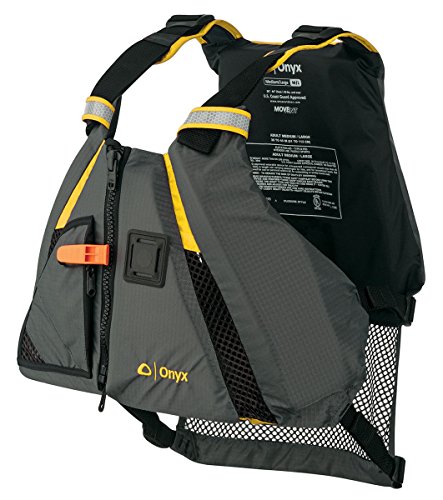 Onyx MoveVent Dynamic Paddle Vest Adult Life JacketMedium-Large23 x 20 x 4 Inches1.7 PoundsCheck on Amazon
 Onyx M-16 Manual Inflatable Belt Pack Life JacketOne Size3 x 9 x 12 inches0.45 PoundsCheck on Amazon
 Hardcore Life Jacket Paddle Vest; Coast Guard ApprovedAdult Universal18 x 16 x 3 inches0.86 poundsCheck on Amazon
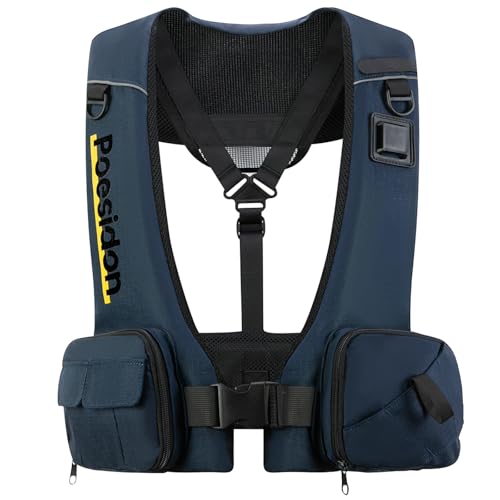
Top 3 picks at a glance

Best Paddle Board Life Jackets for Safety & Comfort
The best paddle board life jackets are properly fitted, approved personal flotation devices (PFDs) with enough buoyancy for your conditions, freedom to paddle, and pockets only if you’ll use them. For most adults on calm water, start with a properly sized recreational or paddling PFD; choose a high-back design if you use a kayak-style seat, and favor a low-profile vest or belt only when its approval and your local rules fit your situation.
Choose by fit and use—not pocket count
A PFD’s label matters more than its marketing. In the United States, look for a U.S. Coast Guard approval label and the intended activity and user range. Rules differ by country and waterway, so check local requirements. A manually inflatable belt pack may be legal in some settings but can have restrictions, require inflation to provide buoyancy, and be unsuitable for children or people who cannot swim. It is not a like-for-like substitute for a wearable foam vest.
As an Amazon Associate we earn from qualifying purchases at no extra cost to you.

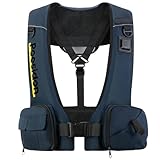

For typical stand-up paddleboarding, compare these design classes before comparing features:
- Low-profile foam vest: A practical all-round choice for frequent paddling. It provides flotation without an inflation step, while a cut-away armhole and adjustable sides can reduce rubbing.
- High-back paddling vest: The tall back panel is shaped to sit above a kayak seat. It can work well on a SUP with a seat attachment, but may feel bulky when standing unless the back panel and seat are compatible.
- Inflatable belt pack: Keeps the torso free and can suit experienced swimmers on appropriate, calm water if permitted. It must be worn as directed, maintained, and accessible; it offers less immediate protection than a ready-to-wear foam vest if you fall in and cannot activate it.
- Rescue-style vest: Built for specific professional or moving-water use, often with extra hardware. The added bulk and features are unnecessary for many recreational SUP users.
Compare the features that affect a real paddle
| Feature | What to look for | Why it matters on a SUP |
|---|---|---|
| Approval and buoyancy | Approval label for your jurisdiction and activity; adult sizing that matches your weight and chest measurements | Approval is the compliance check; buoyancy rating alone does not guarantee the vest fits or suits your conditions. |
| Fit adjustment | Shoulder and side adjustments, secure front closure, no loose straps | A vest that rides up can interfere with movement and may not stay positioned as intended. |
| Arm mobility | Wide arm openings, low-bulk shoulder seams, flexible side panels | Repeated forward reaches can make a tight or chafing vest uncomfortable quickly. |
| Back panel | Low profile for standing; high-back shape only if it clears your seat | Prevents the vest from pressing into a seat or restricting torso movement. |
| Pockets and attachment points | Small, secure pockets that close; attachment points that do not snag | Useful for a whistle or compact essentials, but bulky or open pockets can catch water or clutter the vest. |
| Visibility | Bright color and reflective details where appropriate | Makes a paddler easier to spot in changing light or among other water users. |
Some U.S. adult PFD labels state a minimum buoyancy of 15.5 pounds for an approved wearable device. Treat that as a label-specific minimum, not a universal rule or a guarantee that the PFD will turn every wearer face-up. Body shape, clothing, water conditions, and the exact device affect performance. Don’t choose a vest by adding up pounds of buoyancy alone; confirm the approval, intended use, and fit.
Fit it before you buy—or before you launch
Use the manufacturer’s size chart, which may use both chest circumference and weight. If you fall between sizes, try both with the clothing you expect to paddle in rather than assuming the larger one is more comfortable.
- Fasten every closure and tighten the straps until the vest is secure without restricting a full breath or arm movement.
- Lift the shoulder panels gently. The vest should not slide up over your chin or ears. If it does, tighten the adjustments or try a different size or cut.
- Reach and rotate. Mimic a forward stroke, a cross-body reach, and a recovery from a kneeling position. Check for pinching at the armpits and rubbing at the neck.
- Check it with your board setup. Sit on any SUP seat you use, wear your usual sun shirt or layers, and confirm that straps and pockets do not snag on the board, leash, or paddle.
Never rely on a PFD that is too loose, damaged, modified, or outside its approved use. Children need correctly sized child PFDs—not adult vests cinched down—and should be supervised according to local rules.
Match the design to your paddling
| Your situation | Best starting point | Trade-off to check |
|---|---|---|
| New paddler, family outing, or changing conditions | Approved wearable foam vest in the correct size | It is more noticeable than an inflatable belt but provides flotation without an activation step. |
| Long, warm-weather flatwater trips | Low-profile vest with open arm movement and minimal, secure storage | Ventilation and chafe matter more over many strokes than extra pocket capacity. |
| SUP with a kayak-style seat | High-back paddling vest or a low-profile model verified to clear the seat | Test the seated fit: a tall back panel can press uncomfortably against the seat. |
| Experienced swimmer seeking an unobstructed torso | Approved inflatable belt pack, only where permitted and suitable | Check activation method, maintenance schedule, rearming supplies, and whether you can reach and use it under stress. |
| Cold water, remote routes, or rougher conditions | Wearable PFD suited to the activity, with enough coverage for planned layers | Do not let compactness or pocket layout override the conditions and relevant safety guidance. |
Storage: carry essentials, not a gear pile
A pocket is useful only if it stays closed, remains reachable, and does not obstruct your stroke. A small zippered or hook-and-loop pocket can hold a whistle or other compact item; a secure attachment point may be better for a whistle that must stay accessible. Keep a phone in a suitable waterproof case and tether it as appropriate—ordinary vest pockets are not waterproof compartments.
Avoid packing heavy or sharp objects into chest pockets, where they can press into you during a fall. Do not attach gear in a way that could snag on the paddle, leash, vegetation, or rescue equipment. A PFD is not a substitute for carrying the communication and emergency equipment appropriate to your route.
Before each trip: a quick safety check
- Confirm the label, size, closures, straps, and flotation material are intact.
- For an inflatable model, check its status indicator, cylinder, rearming mechanism, and inspection instructions; follow the manufacturer’s maintenance schedule.
- Wear the PFD as designed. Having it on the board or within reach is not the same as wearing it.
- Match clothing and equipment to water temperature, not just air temperature, and check the forecast and route before launching.
- Follow local PFD and leash rules. A leash can create entanglement hazards in moving water, so use a setup appropriate to the conditions and seek local instruction when needed.
Frequently asked questions
Does a paddle board life jacket need to be Coast Guard approved?
In the United States, check for a U.S. Coast Guard approval label that matches the intended activity and user range. Requirements vary by country and waterway, so check local rules. Approval is a compliance check, but it does not by itself confirm that a PFD fits you or suits your conditions.
Can I use an inflatable belt pack instead of a foam vest?
An inflatable belt pack may suit an experienced swimmer in appropriate conditions if it is permitted, but it is not a like-for-like substitute for a wearable foam vest. It requires activation to provide buoyancy and may have restrictions. Check its activation method, maintenance needs, and whether you can reach and use it under stress.
How can I tell if a paddle board life jacket fits correctly?
Fasten every closure and adjust the straps so the vest stays secure without limiting a full breath or arm movement. Gently lift the shoulder panels; the vest should not slide up over your chin or ears. Then try a forward stroke and cross-body reach, checking for pinching or rubbing.
What should children wear while paddleboarding?
Children need correctly sized child PFDs, not adult vests cinched down. Choose one that fits the child and follow local supervision rules. Check the label and intended user range, and make sure the closures and straps are secure before launching.
Are life jacket pockets waterproof enough for a phone?
No. The article advises keeping a phone in a suitable waterproof case and tethering it as appropriate, because ordinary vest pockets are not waterproof compartments. Keep pockets small and secure, and avoid heavy or sharp objects that could press into you during a fall.
Bottom line
For most recreational paddleboarders, the best starting choice is an approved, correctly fitted foam vest with open arm movement and a secure closure. Pick a high-back cut if it works with your seat; consider an inflatable belt only when you understand its limitations and it is allowed for your use. Prioritize a fit that stays in place through a full stroke, then choose pockets and extras that serve a specific purpose.