Roof prism binoculars are the straight-barrel design you see on most modern hunting, birding, and travel pairs, and the keyword tells you exactly what a buyer is trying to decide: how much slimmer, lighter, and more compact do I want my binoculars to be, and what am I willing to give up for it? Compared with older Porro prism designs, roof prism models line the objective lenses up with the eyepieces, which makes a narrower body that is easier to pack, hold one-handed, and waterproof. The trade-off is that good roof prisms require precise glass and coatings, so quality differences between models show up in brightness, edge sharpness, and how well the image holds up as light fades.
This guide compares six roof prism pairs from Vortex, National Geographic, Athlon, and Celestron, ranging from 8×42 walk-around models to a 12×50 built for long glassing sessions. It is for birders, hunters, hikers, and stadium-seat spectators shopping in 2026 who want clear optics and a rugged body. All judgments below come from the specs written in the product titles, such as magnification, objective size, glass type, and coatings, since the real-world feel of binoculars varies with eye shape and conditions.
Our Top Picks


Top 3 picks at a glance
Quick Picks
As an Amazon Associate we earn from qualifying purchases at no extra cost to you.



| Product | Best for | Key spec from the title |
|---|---|---|
| Vortex Viper HD 12×50 | Long-range glassing from a tripod | 12×50, HD optics, XR coatings, locking diopter |
| Vortex Crossfire HD 10×42 | All-around hunting and wildlife | 10×42, HD optics, waterproof, fogproof, shockproof |
| Vortex Diamondback HD 8×42 | Birding and wide field of view | 8×42, HD optics, tripod adaptable |
| National Geographic 10×42 | Budget-minded outdoor use | Fully multi-coated roof prism, 283 ft field of view at 1000 yd |
| Athlon Midas UHD 8×42 | Glass-quality focus | ED glass, waterproof, 8×42 |
| Celestron Nature DX 8×42 | Bird watching on a modest budget | Phase-coated BaK-4 prisms, fully multi-coated optics |
How to Choose
Magnification and Objective Size
The two numbers in a label like 8×42 mean 8 times magnification and 42 millimeter objective lenses. For most handheld use, 8x gives a steadier image and a wider field of view, which helps you find a bird or animal quickly. 10x brings subjects closer but amplifies hand shake. A 12×50 pair gathers more light and magnifies more, but weighs more and really calls for a tripod. If you will hold the binoculars for hours, start with 8×42 unless you know you need the extra reach.
Glass, Coatings, and Prism Quality
Look for phrases like HD optics, ED glass, fully multi-coated, and phase-coated BaK-4 prisms. ED and HD glass reduce color fringing, which shows up as colored edges on bright subjects. Phase coating on roof prisms improves contrast and resolution, which matters because the roof design splits light paths. Budget pairs often skip phase coating or use lower-grade glass, so this is where sharpness and edge clarity differ most. Ignore vague terms like “powerful” or “high definition” if no coating or glass is named.
Field of View, Eye Relief, and Focus
Field of view tells you how wide an area you see at a set distance, such as 283 feet at 1000 yards in one listing. A wider field helps you track moving subjects. Eye relief matters if you wear glasses, since long eye relief lets you see the full image with glasses on. A locking diopter keeps your eye adjustment from drifting during a hike. Check that the focus wheel feels smooth, because stiff or loose focus is a common complaint at the lowest price tiers.
Durability, Warranty, and Tripod Use
Waterproof, fogproof, and shockproof are standard on the better pairs in this guide, and nitrogen or argon purging is a common way manufacturers achieve fogproofing. Tripod adaptable means there is a threaded socket for a mount adapter, a plus for heavier or higher-magnification models. Warranty terms vary widely. Vortex titles in this list mention an unlimited, unconditional warranty, which is a real advantage if your gear sees rough use. Budget brands may offer shorter or more limited coverage, so read the terms before assuming a repair or replacement is simple.
The 6 Best Options
Vortex Viper HD 12×50
The Viper HD is the biggest pair here, at 12×50, with HD optics, XR lens coatings, tripod adaptability, a locking diopter, and a GlassPak case. It fits users who glass distant ridgelines, open water, or wide fields and are willing to mount on a tripod for steady viewing. Elk watchers, hawk-migration counters, and coastal birders who sit in one spot for hours are the natural audience, and the included GlassPak case protects the pair in a truck or pack.
- Strength: 12x magnification with 50 mm objectives for long-range viewing.
- Strength: A locking diopter and tripod adaptability support extended sessions.
- Trade-off: Size and magnification make it harder to hold steady by hand for long stretches.
Skip it if you want a compact pair for hiking or casual birding.
Vortex Crossfire HD 10×42
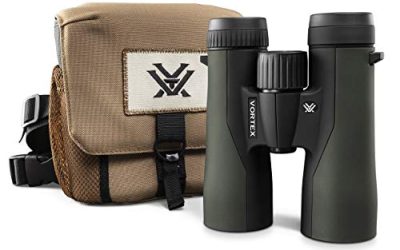
The Crossfire HD offers 10×42 magnification with HD optics, tripod adaptability, and waterproof, fogproof, shockproof construction, plus a GlassPak harness. It is a flexible middle ground for hunters and wildlife watchers who want reach without the weight of a 50 mm pair. It is the kind of pair a family might share, passing it between a deer stand, a lake dock, and a campground.
- Strength: The 10x magnification brings game and birds closer.
- Strength: A harness is included, which keeps the binoculars comfortable on long outings.
- Trade-off: 10x magnification can feel less steady than 8x when you hold the pair freehand.
Skip it if you mostly watch close subjects in tight woods, where a wider field helps more.
Vortex Diamondback HD 8×42
The Diamondback HD 8×42 pairs HD optics with tripod adaptability and the same waterproof, fogproof, shockproof construction. At 8x, it prioritizes a steady image and a wider view, a combination birders tend to prefer when scanning branches or shorelines. Newer hobbyists often find that an easy-to-hold 8x pair gets used far more often than a heavier, higher-power one that stays in the closet.
- Strength: 8×42 is a versatile spec for walking, hiking, and birding.
- Strength: HD optics and a rugged build come with a warranty described as unlimited and unconditional.
- Trade-off: Less reach than 10x models if you need to identify distant subjects.
Skip it if you regularly view subjects far across open terrain.
National Geographic 10×42 Waterproof Binoculars
National Geographic offers a fully multi-coated roof prism design in 10×42 with a harness, fogproof construction, and a listed 283 ft field of view at 1000 yd. It suits buyers who want solid outdoor basics without stepping up to HD-labeled glass. A parent buying a first serious pair, or a camper who wants one durable set for the whole family, is the type of buyer this listing speaks to.
- Strength: A stated field of view makes the specification easy to compare.
- Strength: Includes a harness, keeping the pair comfortable during long walks.
- Trade-off: The title does not mention HD or ED glass, so expect less color correction than premium pairs.
Skip it if low-light contrast and color fringing control are priorities.
Athlon Midas UHD 8×42
The Athlon Midas UHD pairs ED glass with 8×42 optics, a waterproof design, and a stated fit for hunting, birdwatching, adults, and kids. ED glass is the headline here, aimed at buyers who care about reducing color fringing on bright birds or sunlit scenes. Anyone who has noticed purple or green halos around a white gull against dark water will understand why this matters, and the kid-friendly wording suggests a body that adults and younger users can share.
- Strength: ED glass is a named upgrade focused on color and clarity.
- Strength: Eye relief is mentioned in the title, helpful for eyeglass wearers.
- Trade-off: The brand has a smaller footprint than the best-known optics names, so service reach may vary.
Skip it if you want a harness and warranty wording spelled out in the title.
Celestron Nature DX 8×42
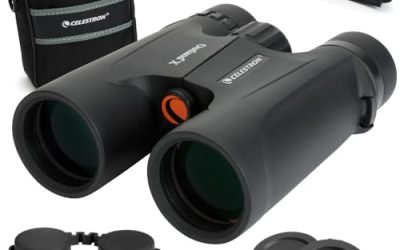
The Celestron Nature DX 8×42 emphasizes phase-coated BaK-4 prisms and bright, fully multi-coated optics in a waterproof body for bird watching and outdoor use. It is a pragmatic choice for newer birders who want solid coatings without a big spend. It also suits travelers who want a dependable pair for safaris, cruises, and city overlooks without packing something heavy.
- Strength: Phase-coated BaK-4 prisms are named, a good sign for contrast and sharpness.
- Strength: 8×42 suits birding, hiking, and general nature watching.
- Trade-off: The title does not mention HD or ED glass, so color correction is likely more modest.
Skip it if you want premium glass or a tripod-ready design. Pairing it with a simple harness or strap turns it into an easy all-day carry.
Which One Fits Your Situation
You Glass Open Country from a Fixed Spot
Pick the Vortex Viper HD 12×50. The magnification and larger objectives reward a tripod and long looks at distant terrain.
You Hunt and Hike with the Same Pair
The Vortex Crossfire HD 10×42 is the all-rounder, with a harness, rugged construction, and reach that suits both hunting and trail days. Between the two 10×42 pairs here, this Vortex model adds HD optics and a stated tripod socket, which makes it the more versatile all-purpose choice.
You Watch Birds at Close and Medium Range
Choose the Vortex Diamondback HD 8×42 or the Celestron Nature DX 8×42. Both use the 8×42 format, and the Diamondback adds HD optics while the Celestron names phase-coated prisms.
You Care About Glass Quality Above All
The Athlon Midas UHD 8×42 is built around ED glass, so it fits buyers who notice color fringing and want it reduced. Photographers who also carry a camera and like a crisp, neutral view will see the logic in paying attention to glass type first.
Common Mistakes
- Choosing 12x magnification for handheld use and then struggling with shake.
- Ignoring eye relief when wearing glasses and seeing a cropped image.
- Buying on magnification alone while skipping coatings and glass type.
- Skipping the diopter adjustment, which leaves one eye out of focus.
- Leaving binoculars in a hot car, which can stress seals and coatings over time.
Related guides
- How To Clean Quest 3 Lenses And Facial Interface
- Micro Sd Cards For Samsung Galaxy Phones
- Vr Facial Interfaces For Glasses Wearers
Frequently Asked Questions
What is the difference between roof prism and Porro prism?
Roof prism binoculars have a straight barrel design that is slimmer and often easier to seal against water. Porro prism models have an offset shape and are traditionally wider but can offer depth at a lower cost.
Is 8×42 or 10×42 better for birding?
Many birders prefer 8×42 for its steadier image and wider field of view. 10×42 brings birds closer but magnifies hand movement, so it suits users with steady hands or who rest their elbows.
What does phase coating do?
Phase coating on roof prisms corrects light-path differences, improving contrast and sharpness. Without it, images can look slightly softer, especially at the edges.
Do I need a tripod?
Not for 8×42 pairs in casual use. For 12×50 or long glassing sessions, a tripod adapter helps keep the image stable and reduces fatigue.