Ten-power magnification paired with 50-millimeter objective lenses is the old compromise for people who watch things that are far away and often dim: a hawk on a ridge at dusk, a freighter on a night harbor, the moons of Jupiter from a driveway. The formula is simple. Ten times magnification pulls distant subjects in, while the big front glass gathers enough light to keep the image usable when the sun is low. If your list says “10×50” and not “8×42” or “12×50,” you already know you care more about brightness and reach than about carrying the smallest possible pair.
This guide covers six models whose titles state a true 10×50 layout, from entry-level Porro-prism designs to HD-glass models with armored bodies. It is written for backyard stargazers, hunters scanning a hillside, boaters, and stadium or racetrack fans who want one pair that does a bit of everything. Because 10×50 glass is bigger and heavier than compact pairs, the decisions below focus on weight, steadiness, glass quality, and whether you plan to mount the pair on a tripod. Everything here is judged on the specs the product titles list for 2026 listings, not on claims of field use.
Our Top Picks


Top 3 picks at a glance
Quick Picks
As an Amazon Associate we earn from qualifying purchases at no extra cost to you.


| Product | Best for | Key spec from title |
|---|---|---|
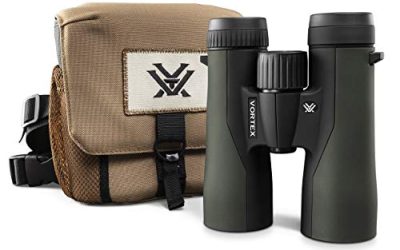
| Vortex Diamondback HD 10×50 | All-weather general use with a tripod option | HD optics, waterproof, fogproof, shockproof |
| Bushnell Falcon 10×50 | Simple, easy sharing among family members | Porro prism, InstaFocus, fold-down eyecups |
| Bushnell PowerView 2 10×50 | Wide scanning on a modest budget | Multi-coated lenses, aluminum alloy chassis, wide field of view |
| Celestron UpClose G2 10×50 | Casual stargazing and nature viewing | Porro prism, multi-coated optics, 50mm objectives |
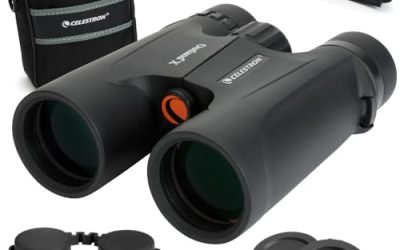
| Celestron Outland X 10×50 | Dawn and dusk wildlife watching | Enhanced low-light performance, rubber armor, waterproof |
| Nikon ACTION 10×50 | Buyers who want a known optics brand at entry level | Multilayer-coated optics, turn-and-slide eyecups |
How to Choose
Understand What 10×50 Gives You
Divide 50 by 10 and you get a 5 millimeter exit pupil, the beam of light that leaves each eyepiece. Five millimeters is plenty for twilight use and matches the pupil of an adult eye at dusk, so the view stays bright when light fades. The cost is shake. Ten-power magnification amplifies every pulse and tremor in your hands, and many people find a 10×50 pair tiring after a minute or two without support. If you expect long viewing sessions, prioritize a tripod-adaptable body, because a standard threaded tripod mount turns a shaky image into a locked one.
Prism Type and Glass Quality
Porro-prism binoculars have the offset, zigzag body shape and deliver strong depth and brightness at a low cost. Roof-prism designs are slimmer but cost more to make well. Next, look at the glass: BK7 prisms are common at the entry tier, while BAK4 and HD or extra-low-dispersion glass reduce color fringing and edge softness. Fully multi-coated lenses matter more than any single number on a box, because coatings control glare and light loss. Ignore vague words like “ruby” or “mirror” coatings, which often signal marketing more than optical gain.
Weather Sealing and Build
If you will use the pair near water, in fog, or in a truck, look for the words waterproof and fogproof together, since fogproof usually means the body is sealed and purged with gas. Rubber armor protects against bumps and gives a grip that stays steady in wet hands. Entry-level pairs may skip full sealing and still work fine for a backyard, but a cold morning can fog a non-sealed set. Warranty wording matters too, because a strong, transferable policy is often the better value than slightly sharper glass.
Weight, Eye Relief, and Comfort
Full-size 10×50 pairs commonly weigh around two pounds, so test the neck strap and balance before buying. If you wear glasses, look for fold-down or twist-up eyecups and aim for at least 14 to 15 millimeters of eye relief, so you can see the whole field with spectacles on. Check close-focus distance if you also watch insects or birds nearby. Skip the gimmicks, such as built-in compasses or oversized zoom claims, which add weight without improving the optics.
One more practical check is the focus wheel. A center wheel that turns smoothly and holds its position makes it easier to track a bird across a field, while a stiff or loose wheel quickly becomes annoying. Also confirm the diopter adjustment, the small ring that balances your two eyes, because an uneven setting is a common cause of headaches. If a seller lists a field of view, anything near 340 feet at 1,000 yards is typical for this class, and wider is better for scanning.
The 6 Best Options
Vortex Diamondback HD 10×50
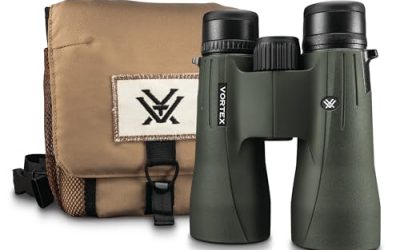
This is the pick for buyers who want the most complete package in the group. The title lists HD optics, a tripod-adaptable body, waterproof, fogproof, and shockproof construction, and the included GlassPak harness. The listing also points to unlimited, unconditional warranty wording.
- Strength: HD optics aim at cleaner color and edge detail, which helps with distant birds and dim light.
- Strength: the sealed, shockproof body suits rain, boats, and rough trips.
- Trade-off: it sits at the higher end of this roundup, so it is more than a casual owner needs.
Skip it if you only glass the backyard twice a month and would rather spend less on a simpler pair. The extra features pay off mainly for people who head outdoors weekly, carry the pair in a pack, and want a body that tolerates drops, drizzle, and long days without fuss.
Bushnell Falcon 10×50
The Falcon is an old-school Porro design with wide-angle viewing and a focus system built for speed. The title lists InstaFocus, BK7 prisms, fold-down eyecups, and a non-slip grip, which together describe a pair that one person can hand to the next without any fiddling.
- Strength: InstaFocus suits quick sharing and moving subjects such as stadium action.
- Strength: fold-down eyecups make it workable for glasses wearers.
- Trade-off: BK7 glass and no stated weatherproofing mean it is better for dry days than harsh conditions.
Skip it if you need a sealed body for boats or wet climates. It makes more sense as a shared household pair kept in a closet or glove box, where simplicity and wide viewing matter more than extreme-weather durability or the finest color correction.
Bushnell PowerView 2 10×50
PowerView 2 emphasizes a wide field of view and a sturdy chassis. The title mentions multi-coated lenses and a durable aluminum alloy frame, which gives the body a rigid feel and fits scanning a landscape rather than studying one tiny subject.
- Strength: the wide field of view makes it easier to find and follow moving subjects.
- Strength: multi-coated lenses help brightness over untreated glass.
- Trade-off: the title does not list waterproofing, so treat it as a fair-weather pair.
Skip it if your plans involve rain, spray, or heavy fog. It suits road trips, ballparks, scenic overlooks, and open-country scanning, where a rigid frame and a generous window onto the scene count for more than sealed construction.
Celestron UpClose G2 10×50
Celestron aims this Porro-prism model at two audiences at once, wildlife watchers and astronomy beginners. Its 50mm objectives and multi-coated optics are the main selling points, and the title frames it for nature viewing.
- Strength: big 50mm lenses collect plenty of light for the moon and bright star clusters.
- Strength: the multi-coated optics and Porro design keep cost in the entry tier.
- Trade-off: it is a basic pair without listed HD glass or sealing claims.
Skip it if you want premium color correction or a body ready for rough weather. Think of it as a first pair for a curious beginner who wants to try the moon, a nearby pond, and a distant treeline before deciding how much to invest in better glass later.
Celestron Outland X 10×50
Outland X leans into low-light wildlife viewing. The title lists large 50mm objectives, enhanced low-light performance, a rubber-armored body, and waterproofing, so it targets the dawn-and-dusk crowd who want a tougher body than a basic Porro.
- Strength: the waterproof, rubber-armored body is better prepared for outdoor mishaps.
- Strength: the low-light focus fits early morning and evening sightings.
- Trade-off: titles describe performance in general terms, so look for measured field-of-view figures before buying.
Skip it if you plan to attach a heavy accessory or want a lightweight carry. It is aimed at people who watch from a blind, a truck window, or a lakeshore at first light, when a rugged body and strong brightness count for more than a slim profile.
Nikon ACTION 10×50
Nikon’s ACTION series is the entry door to a well-known optics maker. The title cites multilayer-coated optics, bright 50mm objectives, turn-and-slide adjustable eyecups, and wording that points to tripod use.
- Strength: turn-and-slide eyecups suit both bare-eyed and eyeglass users.
- Strength: multilayer coatings and a brand with a long optical history give confidence.
- Trade-off: the title does not list HD or extra-low-dispersion glass, so color control is basic.
Skip it if you want ED glass or premium sealing. It works best for a buyer who wants a recognizable name, a bright 10x view, and the option of a tripod, without climbing into the pricier HD tier of the market.
Which One Fits Your Situation
You Watch Birds and Wildlife in Changing Weather
Go with the Vortex Diamondback HD 10×50. Sealing, HD optics, and a tripod-ready body cover wet mornings, long sessions, and distant subjects better than any other pair here. If you often stand still for an hour waiting for a heron or an owl, the ability to mount the pair and rest your arms is worth as much as the glass itself.
You Mostly Stargaze from the Backyard
The Celestron UpClose G2 10×50 fits, since the title itself names astronomy and uses large 50mm lenses. Add a tripod adapter and the shake that plagues 10x views mostly disappears.
You Want Something the Whole Family Can Share
The Bushnell Falcon 10×50 offers InstaFocus and fold-down eyecups, so kids, grandparents, and glasses wearers can all get a clear image quickly.
You Spend Time on Boats or in Damp Climates
Choose the Celestron Outland X 10×50 for its waterproof, rubber-armored body and low-light emphasis, or step up to the Diamondback if your plans involve heavier use.
Common Mistakes
- Buying on magnification alone and ignoring the shake that 10x brings without support.
- Assuming every 50mm pair is waterproof when many entry models are only splash resistant or not sealed at all.
- Ignoring eye relief, which makes the view shrink to a keyhole for glasses wearers.
- Skipping a tripod adapter, then blaming the glass for a trembling image.
- Paying for oversized extras like built-in compasses or fancy cases instead of better coatings and glass.
Related guides
- How To Clean Quest 3 Lenses And Facial Interface
- Vr Facial Interfaces For Glasses Wearers
- Micro Sd Cards For Samsung Galaxy Phones
Frequently Asked Questions
Is 10×50 too heavy for all-day carry?
Full-size 10×50 pairs are among the heavier common sizes, so a padded or harness-style strap helps. If you will hike for hours, a lighter 10×42 may be easier to live with.
Can I use 10×50 binoculars for astronomy?
Yes. The 5 millimeter exit pupil gathers enough light for the moon, star clusters, and the brighter planets. A tripod makes a major difference at this magnification.
What is the difference between BK7 and BAK4 prisms?
BAK4 glass is denser and gives a rounder, brighter exit pupil with less edge shadowing. BK7 prisms are common at the entry tier and work well for casual use, but they can show softer edges.
Do I need waterproof binoculars?
If you only use them in dry weather, no. For boats, hunting, birding in damp climates, or any trip where rain is possible, sealed and fogproof bodies prevent internal fogging and damage.