Pick up a pair of 10×42 binoculars and you are making a specific bet: you want more reach than the classic 8×42, and you are willing to trade a little steadiness and field of view to get it. Ten-power glass pulls a distant hawk, a far hillside, or a stadium scoreboard noticeably closer, while the 42 millimeter objective lenses still gather enough light for dawn and dusk. If your hands are steady, or you can brace against a fence post or a tripod, that bet usually pays off.
This guide is for buyers who have already settled on the 10×42 format and now need to choose among brands, glass types, and budgets for 2026. The six models below run from entry-level rubber-armored bodies to HD-glass options with locking diopters and harness systems. We compare them using only the features stated in each listing, so you can match a pair to your own habits rather than chase a brand name.
Our Top Picks


Top 3 picks at a glance
Quick Picks
As an Amazon Associate we earn from qualifying purchases at no extra cost to you.


| Product | Best for | Key spec from the title |
|---|---|---|
| Vortex Crossfire HD 10×42 | All-round outdoor use at a sensible tier | HD optics, tripod adaptable, waterproof, fogproof, shockproof |
| Vortex Triumph HD 10×42 | Buyers who want a step up in the same family | HD optics, tripod adaptable, GlassPak harness included |
| Nikon PROSTAFF P3 10×42 | Eyeglass wearers and wide scanning | Wide field of view, long eye relief, rubber-armored |
| Luzsco 10×42 | Budget-minded hikers and casual birders | Waterproof, lightweight design, carrying case |
| Celestron Outland X 10×42 | Rugged hunting and wildlife trips | Rubber-armored body, BaK-4 prisms, multi-coated |
| Vortex Viper HD 10×42 | Long sessions and tripod work | XR lens coatings, locking diopter, tripod adaptable |
How to Choose
Know what ten-power does to your hands
Every extra step of magnification magnifies hand tremor too. At 10x, many people notice a gentle shimmer in the image after a minute of holding the barrels up, especially after a climb or in cold air. Look for a body with a good grip surface, a thumb-friendly hinge, and a tripod adapter thread. Several models here are described as tripod adaptable, which matters if you plan to glass a valley for twenty minutes at a time. If you know you will only use quick, handheld looks, consider whether 8×42 might serve you better.
Weight is the other half of this story. A full-size 42 millimeter roof prism pair typically lands somewhere around two pounds, and the heavier the barrels, the more your forearms tire. Check the listed weight if it is given, and favor a body with a textured barrel that lets you wrap your fingers around it instead of pinching the hinge.
Read the glass and coating language
Terms like HD optics, XR coatings, BaK-4 prisms, and multi-coated lenses each tell a different story. BaK-4 is a higher-grade prism glass than BK-7 and helps the image stay bright to the edge of the frame. Multi-coated means several layers on the lens surfaces to cut reflections. HD glass in the Vortex models is meant to reduce color fringing around high-contrast edges, such as a dark bird against a bright sky. A budget pair with BaK-4 and multi-coating is a reasonable baseline; do not expect it to match HD glass at the edges.
Where do budget models cut corners? Usually at the edge of the field, where the image softens, and in the coatings on the prism surfaces, which affect how bright the view looks in low light. If you mostly watch in full daylight, those differences shrink. If you glass at first light or after sunset, they grow, and the step up to HD and extended coatings becomes easier to justify.
Check eye relief, diopter, and fit
Eye relief is the distance your eye can sit behind the eyepiece and still see the full image. If you wear glasses, aim for roughly 15 millimeters or more and twist-down eyecups that click into position. The Nikon listing calls out long eye relief, which is the key reason to shortlist it. A locking diopter, listed on the Viper, keeps the focus correction for your weaker eye from drifting while the binocular rides in a pack. Cheaper models often skip the lock, so you may need to reset it now and then.
Also look at how far the two barrels can fold toward each other. A narrow interpupillary range can be a problem for people with small faces, while a wide range helps larger heads. Aim to see the image merge into a single clean circle without needing to squint or tilt your head.
Weatherproofing and warranty are separate questions
Waterproof and fogproof usually means the body is sealed and purged with gas so moisture cannot get inside. All six models here advertise some version of this. What differs is the promise behind it: the Vortex titles mention an unlimited, unconditional warranty, which is useful if a strap lug breaks or an eyecup cracks years from now. For unbranded or lesser-known models, read the return window and warranty terms before you rely on the seal. Ignore marketing lines such as “military grade” unless the listing names a real standard.
One more detail worth reading: a shockproof label means the housing is designed to take bumps, but it is not a promise the alignment will survive a hard drop onto rock. Treat every pair as precision glass and store it in the case or harness whenever you are not using it.
The 6 Best Options
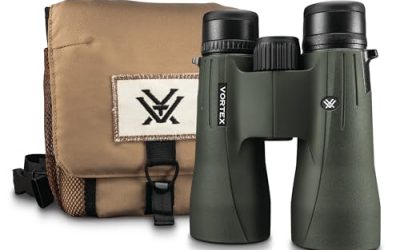
Vortex Crossfire HD 10×42
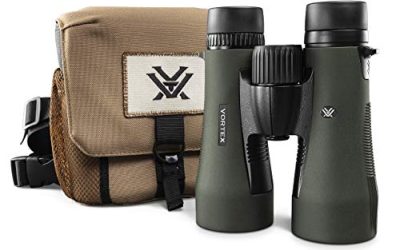
The Crossfire HD is the sensible starting point if you want name-brand optics with a clear upgrade path. The listing highlights HD optics, tripod adaptability, and a waterproof, fogproof, shockproof build, plus a GlassPak harness in the box. That harness spreads weight across your chest instead of your neck, which helps on all-day walks. It is a sensible fit for someone buying their first serious pair who wants branded HD glass without leaping to the top of the range.
- Strength: HD optics aimed at cleaner color and edges than basic glass.
- Strength: Tripod adaptable, handy for long scanning sessions.
- Trade-off: As the entry model in the family, it lacks the extra coatings and locking diopter found higher up.
Skip it if you already know you want premium coatings or a diopter lock.
Vortex Triumph HD 10×42
The Triumph HD shares the same feature list as the Crossfire in its title: HD optics, tripod adaptable, waterproof, fogproof, shockproof, and an included GlassPak harness. That similarity is the point: the family look, harness, and warranty stay constant while the model number changes. It suits buyers who like the Vortex approach and want the model that sits a rung above the Crossfire in the lineup.
- Strength: Same rugged protection and carry system as its sibling.
- Strength: Backed by the unlimited, unconditional warranty language in the listing.
- Trade-off: The title does not spell out what separates it from the Crossfire, so compare the full spec sheets before paying extra.
Skip it if the Crossfire already covers your needs and you would rather save the difference.
Nikon PROSTAFF P3 10×42
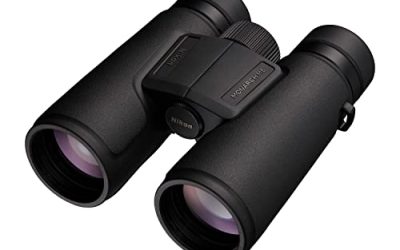
Nikon markets the P3 as a full-size, rubber-armored binocular with a wide field of view and long eye relief. Those two traits make it friendly to people who wear glasses and to anyone who wants to scan a treeline without feeling boxed in.
- Strength: Long eye relief helps eyeglass wearers see the whole image.
- Strength: Wide field of view makes it easier to find and follow moving subjects.
- Trade-off: The listing does not mention HD glass or tripod adaptability, so it leans toward handheld, general use.
Skip it if you plan to mount it on a tripod regularly.
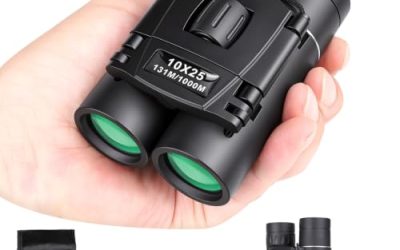
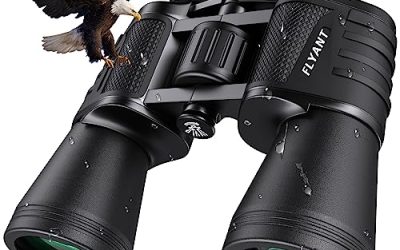
Luzsco 10×42 Binoculars
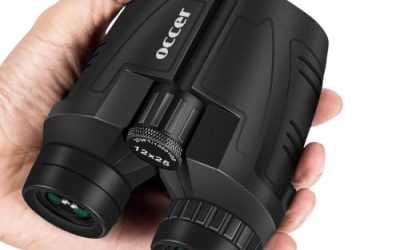
Luzsco targets adults who want a high-powered, waterproof pair for bird watching, hunting, hiking, and sports without a big spend. The listing stresses a clear, wide view and a lightweight design, and it comes with a carrying accessory.
- Strength: Lightweight design suits long walks and stadium days.
- Strength: Waterproof body with HD marketing at a budget tier.
- Trade-off: Little brand-backed detail on coatings or warranty, so expect fewer assurances than the Vortex or Nikon models.
Skip it if you want proven edge sharpness or long-term service support.
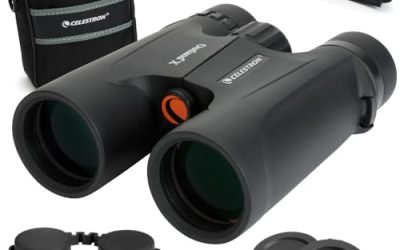
Celestron Outland X 10×42
The Outland X is pitched at wildlife and hunting use, with a rugged rubber-armored body, waterproof construction, BaK-4 prisms, and multi-coated optics. It is the kind of pair you can toss in a truck door pocket without worry, and it suits hunters or hikers who value toughness over polish.
- Strength: Rubber armor gives a secure grip and protects against bumps.
- Strength: BaK-4 prisms and multi-coated lenses at a modest tier.
- Trade-off: The title lists no HD glass or locking diopter, so fine detail at the edges may trail the premium models.
Skip it if color fringing on bright backgrounds bothers you.
Vortex Viper HD 10×42
The Viper HD is the most feature-rich Vortex listing here. It names HD optics, XR lens coatings, tripod adaptability, a locking diopter, and the included GlassPak. For buyers who spend hours at the eyepiece, that combination is worth examining closely.
- Strength: XR coatings are intended to improve light transmission and contrast.
- Strength: Locking diopter holds your focus setting through bumps.
- Trade-off: It sits at the premium end of this group, so casual users may not use every feature.
Skip it if you only glass a few times a year.
Which One Fits Your Situation
You wear glasses and scan wide landscapes
The Nikon PROSTAFF P3 is the natural shortlist leader because its listing calls out long eye relief and a wide field of view. Those two traits reduce the tunnel-vision effect that eyeglass wearers often report with high-power binoculars.
You spend long mornings behind a tripod
Go for the Vortex Viper HD. The locking diopter and tripod adaptability keep the view stable and the focus fixed, so you are not constantly readjusting. The Crossfire HD is a lower-tier way into the same tripod-friendly idea.
You want rugged and affordable for the truck or boat
The Celestron Outland X fits here, thanks to its rubber-armored body and waterproof build. If the budget is even tighter, the Luzsco is the lightweight alternative, though with fewer stated assurances.
You want to buy once and carry comfortably
Choose the Vortex Triumph HD or Crossfire HD and use the included GlassPak harness. Chest carry matters more than most buyers expect once the pair has been around your neck for several hours.
Common Mistakes
- Assuming bigger magnification is always better; at 10x, shake can hide the extra detail.
- Ignoring eye relief when you wear glasses, then finding a blacked-out ring around the image.
- Paying for HD glass but never adjusting the diopter, so one eye stays soft.
- Trusting a waterproof claim without checking the warranty or return terms.
- Skipping a harness or tripod adapter on a heavier pair and then blaming the binocular for fatigue.
Related guides
- How To Clean Quest 3 Lenses And Facial Interface
- Vr Facial Interfaces For Glasses Wearers
- Micro Sd Cards For Samsung Galaxy Phones
Frequently Asked Questions
Is 10×42 better than 8×42 for birding?
It depends on how you watch. Ten-power gives more reach for distant perched birds, but 8×42 is steadier and offers a wider view for tracking fast movers in trees.
What does the 42 in 10×42 mean?
It is the diameter of each objective lens in millimeters. Divide 42 by 10 and you get an exit pupil of about 4.2 millimeters, which is bright enough for most daylight and twilight use.
Do I need HD glass?
No, but it helps. Buyers who often view high-contrast scenes, such as dark birds against bright sky, tend to notice cleaner edges with HD or extra-low-dispersion glass.
Can I use these on a tripod?
Models described as tripod adaptable, including the Vortex Crossfire HD, Triumph HD, and Viper HD, have a threaded socket for an adapter. Check that your tripod head and adapter match before ordering.