Ordinary binoculars hand every tremor in your wrists straight to your eyes. At 8x the shake is tolerable; at 16x or 18x the image becomes a jittering blur unless you lean on a tree or a tripod. Image stabilization is the feature that solves this, using a gyroscope-driven mechanism to hold the view steady while your hands move. The catch is that stabilized binoculars cost more, weigh more and need a power source, so the real decision is whether the steadiness is worth that trade for what you actually do with them.
This guide is for people who spend long stretches glassing: hunters scanning distant ridgelines, boaters reading buoys from a rolling deck, birders who follow a warbler through the canopy, and anyone who has given up on high-power glass because of shaky hands. It compares eight stabilized models from Canon, SIG Sauer and Kite Optics across a wide magnification range. Spec thresholds that matter in 2026 are magnification versus weight, objective size for dim light, and whether the housing is waterproof for field use.
Our Top Picks
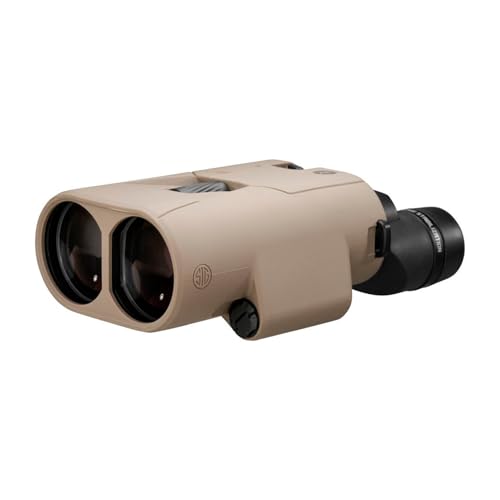
 SIG SAUER ZULU6 HDX Marine Image Stabilized Binoculars10x30mm6.8 x 8.4 x 10.2 Inches2.4 poundsCheck on Amazon


Top 3 picks at a glance

Quick Picks
As an Amazon Associate we earn from qualifying purchases at no extra cost to you.


| Product | Best for | Key spec from the title |
|---|---|---|
| SIG Sauer Zulu6 HDX PRO 18×50 FDE | Long-range hunting | 18×50, waterproof, fogproof, 40 hour figure in title |
| Canon 12×36 IS III | Birding and general viewing | 12×36 image stabilization |
| SIG Sauer Zulu6 HDX OIS 16×42 | Portable high magnification | 16×42 roof prism, waterproof, fog-proof |
| SIG Sauer Zulu6 HDX Marine | Boating and navigation | IPX7 waterproof, floating strap |
| Canon 10×30 IS II | Light carry and travel | 10×30, lead-free glass |
| Canon 10×42 L IS WP | All-weather stabilized viewing | 10×42, L series, WP |
| Kite Optics APC 16×42 | Wide-angle long-range glassing | 16×42 stabilized, waterproof |
| SIG Sauer Zulu6 HDX PRO 18×50 Marine | Offshore use with polarized cover | 18×50, OmniScan, ED glass, IPX7 |
How to Choose
Magnification, objective size and the weight you will carry
Stabilization is most valuable above roughly 10x, where unaided hands lose detail. The lineup here runs from 10×30 up to 18×50. The first number is magnification and the second is the objective lens diameter in millimeters. A 50mm objective gathers more light for dusk and dawn, but a bigger housing also means more weight around your neck. A 10×30 or 12×36 model suits a day hike, while an 18×50 suits a tripod-free glassing session where you sit down. Match the size to how long you will hold them, not to the biggest number on the box. A practical test is to picture the longest stretch you will hold the binoculars at eye level. If it is a few minutes of scanning, weight barely matters; if it is an hour on a bluff or a boat, every extra ounce shows up as neck strain, and a lighter 10x or 12x model with stabilization will give you more usable viewing time than a heavy 18x you leave in the bag.
Power source and how the stabilizer is engaged
Every model here relies on a powered stabilization system, so battery behavior matters. The SIG Sauer Zulu6 PRO title cites a 40 hour figure, and the Canon models use stabilization that you switch on while viewing. Read the full listing for what power the unit takes, how long it runs, and what happens when the power runs out. A stabilized binocular with dead batteries should still work as ordinary glass, and that is worth confirming for a hunting trip or a long boat day.
Weather sealing and field durability
Look for explicit terms: waterproof, fogproof, WP, or an IPX7 rating, which means the housing is rated for short immersion. Several SIG Sauer models in this list carry IPX7 and marine features such as a floating strap, a polarized objective cover and a hard case. If you glass in rain, mist or salt spray, treat sealing as a requirement. Indoor and fair-weather birders can relax this constraint and put the money toward optical quality.
Glass quality and what to ignore
Terms like HDX, ED glass, multicoated lenses and anti-glare coatings indicate efforts to reduce color fringing and increase brightness. Treat them as pointers, not guarantees, and compare which brands name specific glass types. Ignore vague claims like extra-wide stunning clarity. Budget stabilized binoculars tend to cut corners on glass and coatings first, so a smaller, lighter model from a brand with a clear optical spec often beats an oversized one with a thin description. Also consider eyeglass wearers: if you keep your glasses on while viewing, look for generous eye relief in the full specification, because a stabilized binocular that forces you to push your face against the eyecups will not stay steady for long.
The 8 Best Options
SIG Sauer Zulu6 HDX PRO 18×50 FDE
A big-glass stabilized binocular in a flat dark earth finish, built around 18x magnification and a 50mm objective. The title lists waterproof, fogproof, ergonomic construction and multicoated anti-glare lenses, with a 40 hour figure also noted. It fits hunters and spotters who study distant terrain from a seat or a rest and want maximum reach without a tripod.
- Strength: 18×50 delivers high magnification with a generous objective.
- Strength: waterproof and fogproof construction named in the title.
- Trade-off: at this magnification and size, expect a bulkier body than the 10x or 12x options.
Skip it if you want a light, pocketable binocular for casual walks.
Canon 12×36 IS III
This Canon is a 12×36 binocular with image stabilization, a sweet spot for birding and general scenic viewing. The 12x power gives noticeable reach, and the stabilization steadies the view during longer observation. It is a smaller object than the 50mm class, which makes it easier to carry through a day.
- Strength: moderate size paired with 12x magnification.
- Strength: third-generation stabilization from a long-established brand.
- Trade-off: the title does not list a waterproof rating, so rain protection is unclear.
Skip it if you need a verified waterproof or marine-rated housing.
SIG Sauer Zulu6 HDX OIS 16×42
The Zulu6 16×42 is a roof prism binocular with optical image stabilization, described as waterproof, fog-proof and portable. It aims at buyers who want more reach than 10x or 12x but with a 42mm objective that keeps weight down compared with the 50mm models. Hunters and birders who like the in-between size will find the specification balanced.
- Strength: 16x magnification in a 42mm roof prism body.
- Strength: waterproof and fog-proof named in the title.
- Trade-off: less light-gathering than a 50mm objective at dusk.
Skip it if your main use is low-light glassing at the edge of the day.
SIG Sauer Zulu6 HDX Marine
This variant is aimed squarely at boaters. The title lists the HDX lens system, optical stabilization, IPX7 waterproofing and a floating strap, which is the kind of detail that matters on deck. If a binocular goes over the side, a strap that floats is a practical safeguard, and IPX7 handles splashes and brief immersion.
- Strength: IPX7 waterproofing and a floating strap suit marine use.
- Strength: optical stabilization helps while the vessel moves.
- Trade-off: marine features raise the price tier compared with land-focused models.
Skip it if you never go near the water and want to spend on optics instead.
Canon 10×30 IS II
The smallest and lightest option here, a 10×30 stabilized binocular with eco-friendly lead-free glass listed in the title. It is a good entry into stabilization for travelers, concertgoers and day hikers who want steadiness at 10x without a heavy body hanging on the neck.
- Strength: compact 10×30 format is easy to carry.
- Strength: lead-free glass called out in the title.
- Trade-off: the 30mm objective is the least light-gathering in this list.
Skip it if you need to glass in dim conditions or at very long range.
Canon 10×42 L IS WP
The L in the name signals Canon’s premium lens line, and WP signals weather protection. At 10×42 this is a middle-weight stabilized binocular for people who want all-weather performance with moderate magnification. It is a sensible pick for birders and hikers who work in mixed conditions.
- Strength: L series branding and WP weather protection in the title.
- Strength: 10×42 is a versatile, widely used configuration.
- Trade-off: only 10x power, so less reach than the 16x and 18x models.
Skip it if you want maximum magnification for distant game.
Kite Optics APC 16×42
Kite Optics describes this as a wide-angle stabilized binocular for hunting, bird watching and long-range viewing at 16x. The wide field helps you find a moving subject faster, and the waterproof listing supports outdoor use. It appeals to people who want 16x reach from a brand outside the better-known names.
- Strength: wide-angle design with 16x magnification.
- Strength: waterproof, per the title.
- Trade-off: a 42mm objective at 16x gathers less light than the 50mm competitors.
Skip it if you prefer a brand with a long track record in stabilized glass.
SIG Sauer Zulu6 HDX PRO 18×50 Marine
The top-end marine version pairs 18×50 optics with OmniScan image stabilization, HDX ED glass, a polarized objective cover and IPX7 waterproofing, plus a rugged case. It is built for offshore observers who need to identify distant vessels and landmarks while the deck moves, and the polarized cover helps with glare off the water.
- Strength: ED glass and OmniScan stabilization at 18×50.
- Strength: polarized cover and IPX7 rating for glare and spray.
- Trade-off: the largest and most specialized option in the group.
Skip it if you want a compact binocular for walking trails.
Which One Fits Your Situation
You hunt and glass from a fixed seat
The SIG Sauer Zulu6 HDX PRO 18×50 FDE gives you the biggest objective and the highest magnification in the standard-finish models. Pair it with a rest or a bipod and you gain steadiness on top of reach.
You are a birder who walks all day
The Canon 12×36 IS III or the Canon 10×42 L IS WP balance weight and magnification. Choose the 10×42 if you will be out in wet weather.
You spend your days on a boat
Take the SIG Sauer Zulu6 HDX Marine for its floating strap and IPX7 rating, or step up to the 18×50 Marine for longer-range navigation and glare control.
You want steadiness without bulk
The Canon 10×30 IS II is the lightest stabilized pick here, suited to travel, sporting events and hikes where every ounce counts. If you later decide you want more reach, the Kite Optics APC 16×42 offers a wide-angle step up without moving to a 50mm body.
Common Mistakes
- Buying the highest magnification on offer without considering weight and fatigue.
- Assuming every stabilized binocular is waterproof; read the title for the rating.
- Ignoring how the stabilizer is powered and what happens when it runs out.
- Choosing a 30mm objective for dawn and dusk glassing, where a larger objective matters.
- Paying for marine features when you never leave dry land.
Related guides
- How To Clean Quest 3 Lenses And Facial Interface
- Vr Facial Interfaces For Glasses Wearers
- Micro Sd Cards For Samsung Galaxy Phones
Frequently Asked Questions
Do image stabilized binoculars work without power?
Most behave like ordinary binoculars when the stabilizer is off or unpowered, but check each listing. It is worth confirming before a long trip.
What magnification benefits most from stabilization?
The advantage becomes clear above about 10x and is large at 16x and 18x, where hand tremor is magnified. At 8x the benefit is smaller.
What does IPX7 mean?
It indicates the housing is rated to survive brief immersion in water, which suits boating and rainy conditions. It is not the same as being built for diving.
Are stabilized binoculars heavier than normal ones?
Generally yes, because of the stabilizing mechanism and power source. The 10×30 Canon is the lightest option listed here.