Bird watching punishes the wrong pair of binoculars in ways that casual use never does. A warbler flicks through a hedge in two seconds, a hawk sits on a ridge a quarter mile away, and a heron stands motionless at dusk in poor light. The decision behind this keyword is not simply “which binoculars are good” but which balance of magnification, lens size, weight, and close focus lets you find a bird quickly, hold it steady, and see the field marks that separate one species from another. Every pair below can be judged against that single question.
This guide is for backyard feeder watchers, weekend trail walkers, and travelers who want one pair that handles woodland, wetlands, and the occasional cruise-ship wildlife stop. Eight models are compared using only the specifications that appear in their listings, from compact 10×25 pocket glasses to full-size 10×42 optics and big 20×50 and 15×52 models. Because buyers in 2026 face a market crowded with near-identical numbers, the sections below explain which numbers matter and which are marketing noise.
Our Top Picks
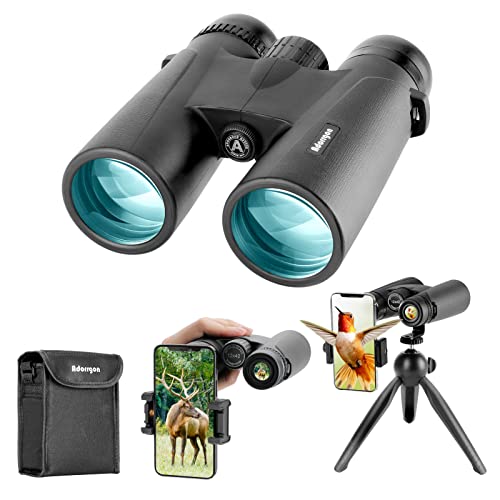 Adorrgon 12x42 High Powered Binoculars for Adults12x425.75 x 4.95 x 2.1 inches1.1 poundsCheck on Amazon



Top 3 picks at a glance
Quick Picks
As an Amazon Associate we earn from qualifying purchases at no extra cost to you.




| Product | Best for | Key spec from the listing |
|---|---|---|
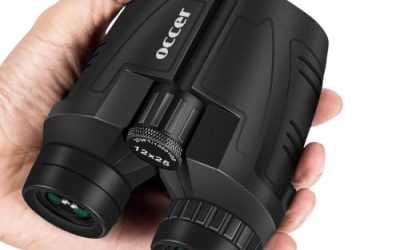
| Occer 12×25 | Pocket carry and kids | 12×25 compact, easy focus, large eyepiece |
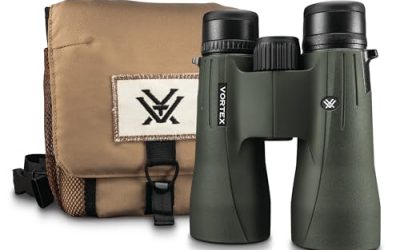
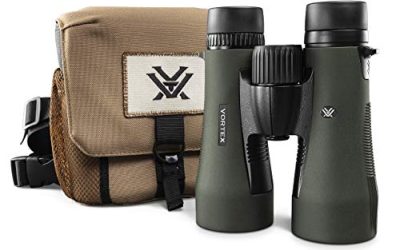
| Vortex Triumph HD 10×42 | Serious all-round birding | HD optics, waterproof, fogproof, tripod adaptable |
| 20×50 High Powered | Distant, open-country birds | 20×50, waterproof, low light vision |
| Hontry 10×25 | Light travel and casual use | 10×25 compact, built for travel and cruise ships |
| Adorrgon 12×42 | Digiscoping on a budget | Phone adapter, tripod, BAK4 prism, 367ft wide view |
| Vortex Crossfire HD 10×42 | Value-minded full-size pair | HD optics, waterproof, harness included |
| 15×52 HD | Long-range scanning | 15×52, upgraded phone adapter, waterproof |
| 10×42 ED Optics | Lightweight full-size comfort | ED optics, IPX7, 1.4 pounds, long eye relief |
How to Choose
Magnification and the shake problem
For birds, 8x to 10x is the sweet spot for most people because hand tremor scales with magnification. At 10x a small movement is already visible; at 12x it is obvious; at 15x and 20x most hands cannot hold a stable image without a tripod, a wall, or a fence post to lean on. Higher numbers also narrow the field of view, which makes it harder to find a fast-moving bird in the first place. If you are new to the hobby, a 10x pair will teach you more than a 20x pair that you cannot hold still.
It also helps to think about close focus. Many songbirds feed within a few yards of a trail, and binoculars that cannot focus near enough force you to back away and lose the bird. Check the minimum focus distance on the spec sheet when it is listed, and ignore vague claims about “extreme zoom” that are not tied to a real magnification figure. A pair that you will actually carry on every walk beats a powerful pair that stays at home.
Objective lens size and brightness
The second number in a spec such as 10×42 is the front lens diameter in millimeters. Dividing it by the magnification gives the exit pupil: 4.2 mm for a 10×42, roughly 2.1 mm for a 12×25, and 2.5 mm for a 20×50. A larger exit pupil delivers a brighter image at dawn and dusk, when birds are most active. Compact 25 mm models are easy to carry but will look dim in dense forest or at the end of the day. Full-size 42 mm models are the standard compromise between brightness and weight.
Glass, coatings, and what the labels mean
Look for BAK4 prisms and fully multi-coated lenses as a minimum. HD or ED glass is a step up that reduces the color fringing you see on a white gull against dark water. Be wary of sheer claims such as “night vision” on a hobby pair; binoculars gather light but do not intensify it. A listed field of view such as 367 feet helps wide scanning, while long eye relief matters if you wear eyeglasses, because it lets you see the full image without pressing your face into the cups.
Weather sealing, weight, and accessories
Waterproof and fogproof construction is worth paying for if you bird in rain, mist, or marshes, because nitrogen or argon purging stops internal fogging when temperatures swing. An IPX7 rating means temporary submersion protection. Weight matters over a full morning: compact models are far lighter, while 50 mm and 52 mm models strain the neck without a harness. Phone adapters and tripod mounts are useful for photographing birds through the lens, but they do not improve the optics. Budget models most often cut corners on glass quality, focus mechanism smoothness, and how well the two barrels stay aligned.
The 8 Best Options
Occer 12×25 Compact
This is a small, high-magnification pair aimed at adults and kids who want something that disappears into a jacket pocket. The listing highlights easy focus and a large eyepiece, both helpful for first-time users who struggle to find the image quickly.
- Strength: Compact 12×25 build is easy to carry on every walk.
- Strength: Large eyepiece and easy focus suit beginners and younger family members.
- Trade-off: A 25 mm lens gathers limited light, so dawn and dense woodland will look dim.
Skip it if your main birding happens in low light or you need the stable, bright view of a full-size pair.
Vortex Triumph HD 10×42
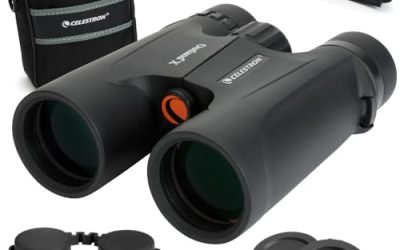
The Triumph pairs the classic 10×42 layout with HD optics, waterproof and fogproof construction, and shockproof build. The listing also notes tripod adaptability and an included harness, which is a real comfort advantage over a thin neck strap during long sessions.
- Strength: HD optics and 42 mm lenses suit serious field identification.
- Strength: Waterproof, fogproof, and shockproof sealing handles rough weather and bumps.
- Trade-off: It sits in the premium tier, which is more than a casual feeder watcher needs.
Skip it if you only watch birds a few times a year or want a pocketable pair.
20×50 High Powered Binoculars
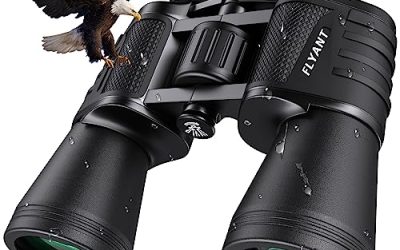
This generic 20×50 model is built for reaching distant subjects, with waterproof construction and the listing’s low light vision claim. It targets people who watch open fields, lakes, and coastlines where birds sit far away.
- Strength: Very high magnification brings far-off waterfowl and raptors closer.
- Strength: 50 mm lenses and waterproof construction add versatility for camping and hiking.
- Trade-off: At 20x, hand shake is severe and the field of view is narrow without support.
Skip it if you track fast woodland birds by hand; plan on a tripod or a steady rest.
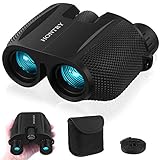
Hontry 10×25 Compact
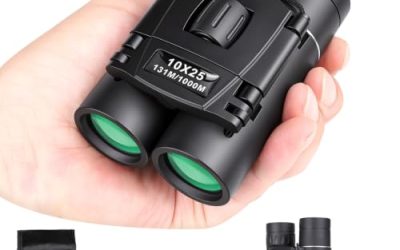
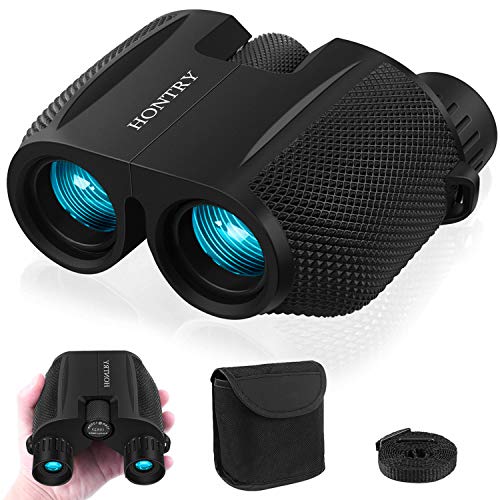
The Hontry is a travel-oriented compact pair listed for birding, cruise ships, sports games, theater, and concerts. Ten-times magnification is easier to hold than 12x, which makes this a friendlier pocket option for steady viewing.
- Strength: 10x magnification is a more stable choice than higher-power compacts.
- Strength: Versatile enough for birds, trips, and events with one purchase.
- Trade-off: The small 25 mm objective will struggle in low light and under tree canopy.
Skip it if you want full-size brightness or weather sealing as your top priority.
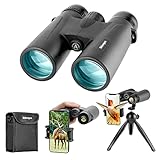
Adorrgon 12×42
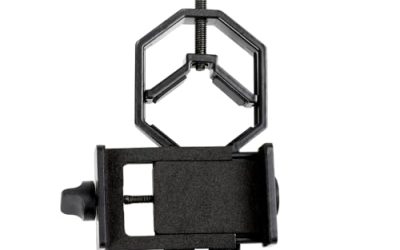
This 12×42 package bundles a phone adapter and tripod with BAK4 prisms and FMC optics, a listed 367 ft wide view, and 18.5 mm eyepieces. For someone curious about photographing birds through the lens, it comes with the accessories to start.
- Strength: The included phone adapter and tripod make casual digiscoping possible out of the box.
- Strength: BAK4 prisms and FMC coatings are the right baseline features for brightness.
- Trade-off: 12x magnification magnifies hand shake, so the tripod becomes a necessity.
Skip it if you want a premium glass experience rather than a feature-rich bundle.
Vortex Crossfire HD 10×42
The Crossfire HD offers the same 10×42 format as the Triumph with HD optics, waterproof, fogproof, shockproof construction, tripod adaptability, and an included GlassPak harness. It sits lower in the Vortex range, which makes it appealing to value-minded buyers.
- Strength: Full-size 10×42 format covers nearly every birding situation.
- Strength: Sealed, shockproof body and harness add trail durability.
- Trade-off: As a lower tier model, it should not be expected to match a premium pair in edge clarity.
Skip it if you already own a pair of compacts and want something dramatically different, such as a spotting-style magnification.
15×52 HD Binoculars
This 15×52 model is listed with bright and sharp HD optics, clear low light vision, a large view, waterproof construction, and an upgraded phone adapter. It occupies the middle ground between 10×42 and 20×50 in both reach and stability.
- Strength: 15x power extends reach for shorebirds and raptors.
- Strength: A 52 mm lens and phone adapter support dusk viewing and photo attempts.
- Trade-off: It is a heavy, long-barrel design that is tiring to hold unsupported.
Skip it if you hike long distances or prefer quick-handling binoculars for forest birds.
10×42 ED Optics Binoculars
Here the listing emphasizes ED optics, BAK4 prisms, a weight of 1.4 pounds, IPX7 waterproofing, and long eye relief. That mix is unusually friendly to eyeglass wearers who want a full-size pair that does not feel heavy.
- Strength: ED glass and 10×42 format target clean color and detail.
- Strength: Long eye relief and 1.4 pounds suit extended sessions and glasses wearers.
- Trade-off: The listing gives fewer brand-backed assurances about service than the Vortex models.
Skip it if warranty backing matters more to you than the spec sheet.
Which One Fits Your Situation
You are starting out on a budget
Start with the Hontry 10×25 or the Occer 12×25. Both are compact and easy to use, and 10x is the gentler choice if hand shake bothers you. Expect dimmer views in shade.
You want one serious everyday pair
Choose the Vortex Triumph HD 10×42 for the stronger optical tier, or the Vortex Crossfire HD 10×42 if you want the same format at a more moderate cost. Both include a harness and are sealed for weather.
You wear glasses and want light weight
The 10×42 ED Optics model lists long eye relief and a weight of 1.4 pounds, which is the combination eyeglass wearers usually look for.
You want to photograph birds with your phone
The Adorrgon 12×42 bundles a phone adapter and tripod, and the 15×52 HD adds an upgraded adapter for more reach. Treat either as a starter digiscoping kit.
Common Mistakes
- Buying the highest magnification available and then being unable to hold the image steady.
- Ignoring the exit pupil, which makes compact 25 mm models look dim at dawn and dusk.
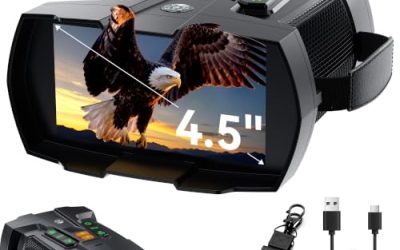
- Trusting “night vision” language on standard binoculars instead of checking lens size and coatings.
- Forgetting eye relief when you wear glasses, leading to a clipped, tunnel-like view.
- Skipping a harness on 50 mm or larger models, then finding them tiring after an hour.
Related guides
- How To Clean Quest 3 Lenses And Facial Interface
- Vr Facial Interfaces For Glasses Wearers
- Micro Sd Cards For Samsung Galaxy Phones
Frequently Asked Questions
Is 10×42 or 8×42 better for birds?
Both are standard birding formats. 10x brings birds closer but shakes more and narrows the field, while 8x is steadier and easier for beginners. The models here are mostly 10x, so consider your hand steadiness.
Do I need waterproof binoculars for bird watching?
If you watch in rain, mist, or near water, yes. Sealed, purged construction prevents internal fogging and protects the optics from moisture over the years.
Are compact binoculars good enough for birding?
They work for daylight viewing and casual use, but their small lenses gather less light. Many birders keep a compact pair for travel and a full-size pair for dedicated outings.
Are phone adapters worth it?
They are fun for record shots, but they do not improve the optics. Stable support and a lens you already like matter more than the adapter.