The best motherboard VRM for overclocking in this group is the one that gives you the highest per-stage rating on the socket you already own, and on the titles alone the MSI MPG Z890 EDGE TI WIFI stands out with a 90A SPS VRM for Intel Core Ultra Series 2. Seven boards are compared here, covering Intel LGA 1700, Intel LGA 1851 and AMD AM5. The comparison rests on listing titles, manufacturer documentation and general knowledge of how voltage regulators work, so each figure is the seller’s claim until you confirm it on the product page.
Our Top Picks
Top picks at a glance

MSI PRO Z790-A WiFi II Motherboard, ATX - Supports Intel Core 14th, 13th & 12th Gen Processors, LGA 1700-80A SPS VRM, DDR5 Memory Boost 7800+MT/s/OC, PCIe 5.0 x16, 4 x M.2 Gen4, Wi-Fi 6E, 2.5G LAN


As an Amazon Associate we earn from qualifying purchases. Product prices and availability are accurate as of the date/time indicated.

MSI MAG B850 Tomahawk MAX WiFi II Motherboard - Supports AMD Ryzen 9000/8000 / 7000 Processors, AM5-80A SPS VRM, DDR5 Memory Boost (up to 8400+ MT/s OC), PCIe 5.0 x16, M.2 Gen5, Wi-Fi 7, 5G L


As an Amazon Associate we earn from qualifying purchases. Product prices and availability are accurate as of the date/time indicated.

GIGABYTE B850 AORUS Elite-P Ice Motherboard | AMD Ryzen 9000 Series CPUs, digital 16+2+2-phase VRM, up to 8200MHz DDR5 (OC), 1xPCIe 5.0 + 3xPCIe 4.0 M.2, 5GbE-LAN


As an Amazon Associate we earn from qualifying purchases. Product prices and availability are accurate as of the date/time indicated.

MSI MAG B850 Tomahawk WiFi AM5 ATX Motherboard | Supports AMD Ryzen 9000/8000/7000 processors, -80A SPS VRM, DDR5 Memory Boost 8200+ MT/s (OC), PCIe 5.0 x16, M.2 Gen5


As an Amazon Associate we earn from qualifying purchases. Product prices and availability are accurate as of the date/time indicated.

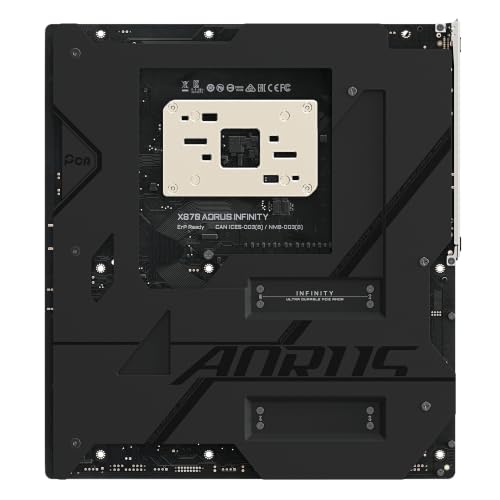
GIGABYTE X870 AORUS Infinity Motherboard | AMD Ryzen 9000 CPUs, digital 18+2+2-phase VRM, up to 11400MHz DDR5(OC), 2xPCIe 5.0 + 1xPCIe 4.0, Wi-Fi 7, 5GbE LAN, USB 4



As an Amazon Associate we earn from qualifying purchases. Product prices and availability are accurate as of the date/time indicated.

MSI MPG Z890 EDGE TI WIFI Motherboard, ATX - Supports Intel Core Ultra Processors (Series 2), LGA 1851-90A SPS VRM, DDR5 Memory Boost (9066+ MT/s OC), PCIe 5.0 x16 & 4.0 x16, M.2 Gen5, Wi-Fi 7, 5G L


As an Amazon Associate we earn from qualifying purchases. Product prices and availability are accurate as of the date/time indicated.

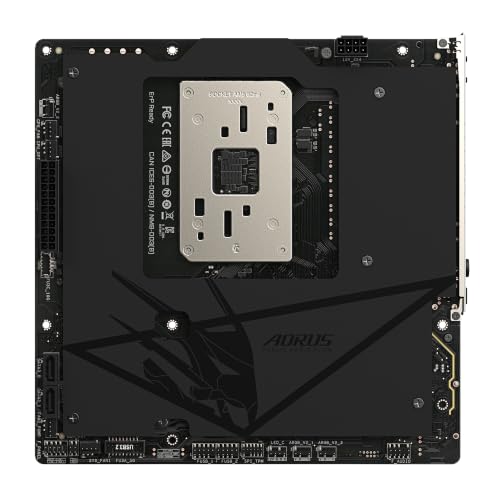
GIGABYTE B850M AORUS Stealth Motherboard | AMD Ryzen 9000 Series CPUs, Digital 8+2+2-Phase VRM, up to 8200MHz DDR5 (OC), 1xPCIe 5.0 + 2xPCIe 4.0 M.2, Wi-Fi 7



As an Amazon Associate we earn from qualifying purchases. Product prices and availability are accurate as of the date/time indicated.
| Model | Key points from the title | Price tier | Best for |
|---|---|---|---|
| MSI MPG Z890 EDGE TI WIFI | LGA 1851, 90A SPS VRM, DDR5 9066+ OC, Wi-Fi 7 | Mid to premium | Core Ultra Series 2 overclockers |
| GIGABYTE X870 AORUS Infinity | AM5, 18+2+2-phase digital VRM, DDR5 up to 11400 OC, USB 4 | Premium | Flagship AM5 builds |
| GIGABYTE B850 AORUS Elite-P Ice | AM5, 16+2+2-phase digital VRM, 5GbE LAN | Mid to premium | Ryzen 9000 builds that want phase count |
| MSI MAG B850 Tomahawk MAX WiFi II | AM5, 80A SPS VRM, DDR5 8400+ OC, Wi-Fi 7 | Mid | Balanced Ryzen builds |
| MSI MAG B850 Tomahawk WiFi | AM5, 80A SPS VRM, DDR5 8200+ OC | Mid | Same platform with older Wi-Fi labeling |
| MSI PRO Z790-A WiFi II | LGA 1700, 80A SPS VRM, 4 x M.2 Gen4, Wi-Fi 6E | Mid | 12th to 14th Gen Intel owners |
| GIGABYTE B850M AORUS Stealth | AM5, 8+2+2-phase digital VRM, Wi-Fi 7 | Mid | Compact builds with a smaller feature set |
Tiers are relative inside this set of seven. Check the current listing for price.
Reading VRM claims in listing titles
A voltage regulator module, or VRM, converts the 12V supply from your power supply into the low, precisely controlled voltage the processor needs. Under load the processor can draw a lot of current, so the VRM is built from several parallel power stages, each with a switch, an inductor and capacitors. The total current capacity depends on how many stages exist, what each can handle and how well the heat leaves the board.
Here is the trap: MSI titles quote an amp rating per stage (80A or 90A) but not the stage count, while GIGABYTE titles quote the phase layout (16+2+2, for example) but not the amp rating. The two styles cannot be compared directly from titles alone. You need the missing half of each from the manufacturer specification page before you can say one board has more regulator capacity than another.
| Spec concept | What to look for | Why it matters |
|---|---|---|
| Power stage rating | Amps per stage (for example 80A or 90A SPS) | Sets the ceiling for current each stage can pass |
| Phase layout | Numbers such as 16+2+2: CPU phases, then others | More stages share the load, lowering heat per stage |
| VRM heatsink | Size, heatpipe and thermal pad mentions | Heat limits sustained output more than the headline amp rating |
| CPU power connectors | Number of 8-pin or 4-pin inputs | Delivers the 12V input to the VRM |
| BIOS options | Power limit, load-line and voltage controls | Decides how much you can safely tune |
| Memory validation | Listed OC speed and number of modules | Shows the best case, not a guarantee |
How we picked these
Boards were grouped by socket and compared on the VRM claim each title makes, the memory and storage features listed, and the connectivity. Near-duplicate listings and truncated titles are flagged in the entries. Nobody on the team used or measured these units. The basis is published specifications, manufacturer documentation and buyer reviews, and the performance reasoning below is general knowledge about regulators, not a result from any board.
The seven boards
MSI MPG Z890 EDGE TI WIFI
This ATX board for Intel Core Ultra processors (Series 2) on the LGA 1851 socket carries the highest per-stage claim in the group: a 90A SPS VRM. It also lists DDR5 memory up to 9066+ MT/s with OC labeling, PCIe 5.0 x16 alongside a PCIe 4.0 x16, M.2 Gen5 and Wi-Fi 7. The LAN text is cut off at “5G L”, so confirm the exact network spec on the listing.
It suits someone building on the newest Intel platform who intends to adjust power limits and memory timings. A board with a high stage rating gives margin for sustained load, though the processor and cooler still set the practical limit. The title does not give the number of stages, so look at the specification sheet before assuming it outclasses an 80A board with more stages.
- Pro: highest stage rating in the set at 90A.
- Pro: PCIe 5.0, M.2 Gen5 and Wi-Fi 7 are current features.
- Con: the newer socket means a processor and memory purchase cost on top of the board.
- Con: LAN specification is truncated in the title.
A practical note: Core Ultra Series 2 processors use DDR5 only, and the memory figure in the title assumes a kit the manufacturer has validated. Plan the memory purchase alongside the board, not afterward.
Question to ask before buying: how many power stages feed the CPU on this board?
GIGABYTE X870 AORUS Infinity
The flagship of the set is an AM5 board with an 18+2+2-phase digital VRM, DDR5 up to 11400MHz with an OC label, PCIe 5.0 and 4.0 slots, Wi-Fi 7, 5GbE LAN and USB 4. The phase layout is the largest in the group, which suggests the load is spread widely, but the title gives no amp rating per stage. The 11400 memory figure is a headline validation number that assumes specific modules and a favorable processor.
It is built for someone who wants every feature on AM5: fast networking, USB 4 and a robust power design in one board. Unless you will use USB 4, 5GbE and the high-end connectivity, the money is better spent elsewhere. A mid-range AM5 board with a good cooler gets most users to the same performance.
- Pro: largest phase layout and the richest connectivity in the group.
- Pro: USB 4 and 5GbE LAN on the same board.
- Con: the highest tier in the set, with features many builders will not use.
- Con: no per-stage amp rating in the title.
If you only need a fast network port and a couple of storage slots, a B850 board covers that for much less, and the flagship only pays off when you can name the features you will use.
Question to ask before buying: will you actually use USB 4 and 5GbE, or is that paying for unused capability?
GIGABYTE B850 AORUS Elite-P Ice
A B850 board with a 16+2+2-phase digital VRM, support for Ryzen 9000 series processors, DDR5 up to 8200MHz OC, one PCIe 5.0 and three PCIe 4.0 M.2 slots and 5GbE LAN. “Ice” in the name suggests a white color scheme, a cosmetic point rather than a technical one. It is notably priced above the other B850 boards in this set, which makes the comparison with the MSI Tomahawk listings worth a second look.
The 16-phase layout is a plus for sustained load on a Ryzen 9000 chip, but the missing per-stage rating prevents a direct comparison. Four M.2 slots are useful for a storage-heavy build, and the 5GbE LAN is faster than the usual 2.5G. If those features do not matter, the extra money is hard to justify.
- Pro: large phase count for a B850 board.
- Pro: four M.2 slots and 5GbE LAN.
- Con: costs more than the MSI B850 boards for similar chipset features.
- Con: title does not give the stage rating or Wi-Fi standard.
Question to ask before buying: what is the power stage rating, and is Wi-Fi included on this variant?
MSI MAG B850 Tomahawk MAX WiFi II
This AM5 board supports Ryzen 9000, 8000 and 7000 processors with an 80A SPS VRM, DDR5 up to 8400+ MT/s with OC labeling, PCIe 5.0 x16, M.2 Gen5 and Wi-Fi 7. The LAN line is truncated after “5G L”, the same as on the Z890 board, so confirm the exact network speed. It is the more current of the two Tomahawk listings, with a higher stated memory speed and a Wi-Fi 7 mention.
It suits a builder who wants strong power delivery without paying for flagship connectivity. An 80A stage is a common rating on mid-range boards today, and if the stage count is reasonable it handles the sustained power of a Ryzen chip under tuning. The wide processor support also helps if you start with a Ryzen 7000 and move up later.
- Pro: supports Ryzen 7000, 8000 and 9000.
- Pro: 80A SPS, Wi-Fi 7 and M.2 Gen5 at a mid tier.
- Con: title cuts off the LAN specification.
- Con: stage count not given in the title.
Question to ask before buying: how does the stage count compare with the non-MAX Tomahawk below?
MSI MAG B850 Tomahawk WiFi
This board is nearly the same as the entry above: AM5, the same processor support, an 80A SPS VRM, DDR5 up to 8200+ MT/s and PCIe 5.0 x16 with M.2 Gen5. The differences by title are a slightly lower memory figure and no stated Wi-Fi generation, since the title only says WiFi. These two are close enough that the pair counts as near-duplicates for planning purposes.
The decision comes down to whether you value the newer Wi-Fi 7 and higher memory claim of the MAX WiFi II. If the price gap is small, take the newer one; if the older one is cheaper, the VRM claim is the same, so you lose little for overclocking purposes. Read both specification pages side by side before choosing.
- Pro: same 80A SPS VRM claim as the newer sibling.
- Pro: likely the better value if priced lower.
- Con: Wi-Fi generation is not stated in the title.
- Con: lower stated memory speed than the MAX WiFi II.
Question to ask before buying: which Wi-Fi standard and LAN speed does this variant carry?
MSI PRO Z790-A WiFi II
The only LGA 1700 board in the group, it supports Intel Core 14th, 13th and 12th Gen processors with an 80A SPS VRM, DDR5 memory boost up to 7800+ MT/s OC, PCIe 5.0 x16, four M.2 Gen4 slots, Wi-Fi 6E and 2.5G LAN. The Z790 chipset is Intel’s enthusiast tier for processor and memory tuning on this socket.
It fits someone who already owns a 12th to 14th Gen Intel processor and wants a fresh, capable board. Because the socket is at the end of its life, there is no future upgrade path, so it is a board for the processor you own, not for a platform you plan to extend. The four M.2 slots help storage-heavy builds, though all are Gen4.
- Pro: supports a wide range of 12th to 14th Gen processors.
- Pro: four M.2 Gen4 slots and 2.5G LAN.
- Con: no upgrade path beyond LGA 1700 processors.
- Con: Wi-Fi 6E and PCIe 5.0 x16 only, with no Gen5 storage.
Because the same socket covers three processor generations, a board may ship with firmware that predates your chip. Look for a flash-without-processor feature or ask the seller about the shipped BIOS version.
Question to ask before buying: does this board need a firmware update to recognize your processor?
GIGABYTE B850M AORUS Stealth
An AM5 board with an 8+2+2-phase digital VRM, support for Ryzen 9000, DDR5 up to 8200MHz OC, one PCIe 5.0 and two PCIe 4.0 M.2 slots and Wi-Fi 7. The M in the name usually indicates a micro-ATX form factor, so confirm the size against your case. Its 8-phase CPU layout is the smallest in the set, which is a signal to read the stage rating and heatsink details before pairing it with a high-power Ryzen chip.
It suits a compact build with a modest processor. For light tuning on a Ryzen 5 or Ryzen 7, a smaller layout is usually fine. For a high-power Ryzen 9 under heavy manual overclocking, the larger layouts in this set give more margin.
- Pro: smaller form factor with Wi-Fi 7 and M.2 Gen5.
- Pro: lower tier than the full-size B850 boards.
- Con: smallest phase layout in the set.
- Con: fewer expansion slots than ATX boards.
Check the case, too. Micro-ATX boards fit many compact cases but leave fewer expansion slots, which matters if you plan a capture card or a second add-in device later.
Question to ask before buying: what is the stage rating and what does the VRM heatsink look like?
Which board for which user
| If you are… | Start with | Why | Watch for |
|---|---|---|---|
| On the newest Intel platform | MSI MPG Z890 EDGE TI WIFI | 90A stage rating, Gen5 storage | Platform cost and truncated LAN text |
| Wanting a flagship AM5 board | GIGABYTE X870 AORUS Infinity | Largest layout, USB 4, 5GbE | Paying for unused features |
| Wanting many phases on B850 | GIGABYTE B850 AORUS Elite-P Ice | 16+2+2 layout, four M.2 slots | Higher cost than MSI B850 boards |
| Balanced Ryzen build | MSI MAG B850 Tomahawk MAX WiFi II | 80A stages, Wi-Fi 7, wide CPU support | Unstated stage count |
| Same platform, lower cost | MSI MAG B850 Tomahawk WiFi | Near-identical VRM claim | Unstated Wi-Fi generation |
| Owning a 12th to 14th Gen Intel chip | MSI PRO Z790-A WiFi II | Z790 overclocking support | No future upgrade path |
| Building small with a mid processor | GIGABYTE B850M AORUS Stealth | Compact, Wi-Fi 7 | Smallest phase count |
Worked example: how much current does the VRM carry?
These are assumptions, not measurements. Power equals voltage times current, so a processor drawing 250W of package power at a core voltage of about 1.25V pulls roughly 200A through the VRM. If the regulator runs at about 90 percent efficiency, it takes in around 278W and turns about 28W into heat inside the VRM area, mostly in the power stages and inductors.
| Assumed package power | Core voltage | Current at the processor | Heat at 90% efficiency |
|---|---|---|---|
| 125W | 1.25V | About 100A | About 14W |
| 250W | 1.25V | About 200A | About 28W |
| 300W | 1.25V | About 240A | About 33W |
Now compare a hypothetical board with twelve CPU power stages, each rated 80A. The sum is 960A, many times the 200A in the table. The rating is a ceiling, though, and real boards run well below it because of switching losses, inductor limits and heat. This is why the practical question is not whether a board can supply 200A in theory but whether its heatsink and airflow keep the stages cool at that load for hours. For most overclockers, the board is not the limit; the processor cooler and the silicon are. A board with a larger heatsink and a clear airflow path across it earns its keep before the headline amp rating does.
Compatibility and common mistakes
| Mistake | What goes wrong | Fix |
|---|---|---|
| Buying the wrong socket | Processor does not fit or run | Match LGA 1700, LGA 1851 or AM5 to your chip |
| Comparing phase count to amp rating | Different metrics, no valid ranking | Find both numbers on the specification page |
| Trusting the OC memory speed | Kit and processor may not reach it | Check the memory support list for your kit |
| Ignoring the VRM heatsink | Throttling under sustained load | Look at heatsink size and airflow |
| Skipping a firmware update | New processor not recognized | Check the supported processor list and BIOS version |
| Forgetting form factor | Board does not fit the case | Confirm ATX or micro-ATX against the case |
If you are building around a headset, our guide on what to look for in a VR-ready motherboard covers slots, USB and network features that matter beyond the VRM.
Before you tune anything
Overclocking raises heat and can reduce component life or affect warranty terms, so follow the processor and motherboard manufacturers’ documentation and keep changes small. A checklist that works for most builders:
- Confirm the socket and chipset match your processor.
- Get the stage rating and stage count from the specification page.
- Check the VRM heatsink and plan for airflow across it.
- Choose a cooler sized for the processor, since it limits you before the VRM does.
- Update the BIOS before installing the processor if the listing says it is required.
- Start with the memory profile the manufacturer supports before touching voltage.
Verdict by use case
On titles alone, the MSI MPG Z890 EDGE TI WIFI offers the highest stated stage rating for Intel Core Ultra buyers. For AM5, the GIGABYTE X870 AORUS Infinity has the biggest layout but the highest tier, the B850 AORUS Elite-P Ice offers a 16-phase layout at a lower tier, and the MSI Tomahawk pair is the practical choice for most Ryzen builds. The Z790-A WiFi II makes sense only if you already own a compatible 12th to 14th Gen processor. The B850M AORUS Stealth is a compact option for a modest processor with light tuning.
Related guides
- How To Check Motherboard Vrm Temperature In Hwinfo
- How To Clean Quest 3 Lenses And Facial Interface
- Vr Facial Interfaces For Glasses Wearers
Frequently asked questions
Does a higher phase count always mean a better overclocking VRM?
No. Phase count tells you how many power stages share the load, but the rating of each stage, the controller design, the heatsink and the airflow decide how much current the board can deliver without overheating. A board with fewer stages rated for more amps can match or beat one with a bigger number on the box. Compare the stage rating and the cooling hardware, not the phase figure alone, and confirm on the manufacturer page.
What does 80A SPS VRM mean in a listing?
SPS stands for smart power stage, a chip that combines the high-side and low-side switches with current sensing and a driver. The 80A figure is the maximum current rating of each stage. It is a ceiling set by the chip, not a promise of sustained output, because heat, airflow and the board layout reduce what you can use in practice. The title does not say how many stages the board has, so check that separately.
Do I need an expensive board to overclock a modern processor?
Not for modest gains. Many current processors already boost aggressively, and manual overclocking on them often delivers less than people expect. A well-cooled mid-range board with a solid power stage rating is enough for most users, while flagship boards earn their price through extra connectivity, premium audio and larger heatsinks. Spend first on a good cooler, then on the board features you will actually use.
Are the DDR5 speeds in the titles guaranteed?
No. Figures like 8200 or 9066 MT/s with an OC label describe the highest memory speeds the manufacturer has validated under specific conditions, usually one or two modules from a named kit and a compatible processor. Real-world results depend on the memory kit, the processor’s memory controller and the number of modules installed. Use them as a ceiling for comparison, then check the board’s memory support list.
Can I use an AMD processor on the Intel boards in this list?
No. The sockets are physically and electrically different. The Z790 board uses Intel’s LGA 1700 socket, the Z890 board uses LGA 1851 for Core Ultra Series 2, and the B850 and X870 boards use AMD’s AM5 socket. Pick the processor family first, then the board. Within a socket, also check the supported processor list and any firmware update needed for newer chips.
Is overclocking safe for the processor and board?
It carries risk. Raising voltage and power limits increases heat and can shorten component life or void parts of a warranty, depending on the maker’s terms. Keep changes small, watch temperatures and follow the processor and board manufacturers’ documentation. If you want performance with less risk, enable the manufacturer’s supported memory profile and use a good cooler rather than pushing core voltage.