The best jobsite table saws balance three things that rarely improve together: rip capacity, fence accuracy, and carry weight. For most buyers, the DeWalt DWE7491RS is the strongest all-round 10-inch choice, the DeWalt DWE7485 is the best compact corded pick, and the SawStop Compact Table Saw (CTS) is the most compelling safety-focused option.
As an Amazon Associate we earn from qualifying purchases at no extra cost to you.
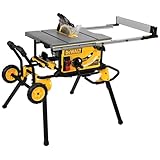


Our Top Picks
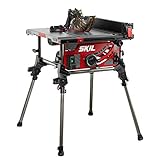
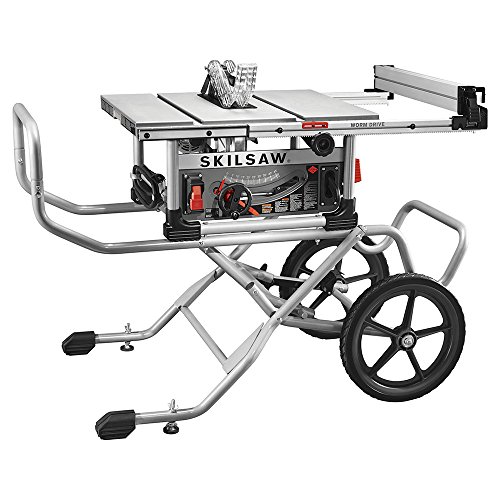 SKIL 10 Inch Heavy Duty Worm Drive Table52.6 x 29.5 x 35 inches52.6 x 29.53 x 35.08 inches94.3 PoundsCheck on Amazon

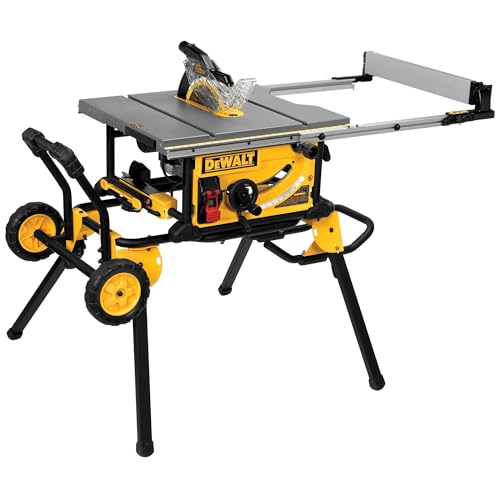

Top 3 picks at a glance
Best Jobsite Table Saws at a Glance
| Model | Blade | Maximum rip, right of blade | Approx. tool weight | Best for |
|---|---|---|---|---|
| DeWalt DWE7491RS | 10 inches | 32-1/2 inches | About 90 lb with stand | Large sheet goods and general construction |
| DeWalt DWE7485 | 8-1/4 inches | 24-1/2 inches | About 46 lb | Portable trim and remodeling work |
| SawStop Compact Table Saw CTS | 8-1/4 inches | 25-1/2 inches | About 68 lb | Portable cutting with blade-brake safety |
| Bosch 4100XC-10 | 10 inches | 25 inches | About 60 lb, plus stand | Fast setup and rolling transport |
| Milwaukee M18 FUEL ONE-KEY 8-1/4-inch Table Saw | 8-1/4 inches | 24-1/2 inches | About 55 lb without battery | Cordless work on unfinished sites |
Specifications can vary slightly by package and market, particularly when a stand, battery, or accessory kit is included. The practical differences are more important than the headline horsepower: a rigid fence and stable table often produce straighter cuts than a larger motor paired with a flexible fence.
Our Top Picks
DeWalt DWE7491RS: Best Overall for Maximum Rip Capacity
The DWE7491RS is the easiest recommendation when cutting full-width plywood, shelving, cabinets, or long construction pieces is part of the job. Its 32-1/2-inch rip capacity gives it a substantial advantage over compact 8-1/4-inch saws, while the rack-and-pinion fence adjustment makes small width changes faster and more repeatable.
Its rolling stand adds useful stability and makes a heavy saw manageable across a driveway or garage. The trade-off is obvious: at roughly 90 pounds with the stand, it is portable rather than effortless to carry. It also occupies more vehicle and storage space than compact models.
- Choose it for: frequent sheet-goods work, framing, built-ins, and a primary jobsite saw.
- Watch for: the weight and the need for adequate dust collection indoors.
- Typical market range: usually $600–$800, depending on the stand package and promotions.
DeWalt DWE7485: Best Lightweight Corded Saw
The DWE7485 gives up blade diameter and roughly eight inches of rip capacity compared with the DWE7491RS, but its approximately 46-pound weight makes it far easier to lift onto a bench, carry upstairs, or store between projects. Its fence uses the same useful rack-and-pinion concept, so adjustments are less fiddly than on many entry-level portable saws.
An 8-1/4-inch blade is enough for most trim, flooring, framing, and cabinet-panel cuts. The limitation appears when you need maximum depth through thick stock or regularly rip wide sheets. For occasional plywood, its smaller table can also require a separate outfeed or side-support setup.
- Choose it for: remodelers, finish carpenters, DIY workshops, and anyone who moves the saw alone.
- Watch for: the 24-1/2-inch rip limit and reduced cutting depth versus 10-inch models.
- Typical market range: usually $350–$500.
SawStop Compact Table Saw CTS: Best Portable Safety Feature
The SawStop CTS uses an electronic blade-brake system designed to stop the blade when it detects contact with conductive skin. That feature does not replace safe technique, guards, push sticks, or attention, but it is a meaningful differentiator for a portable saw used by families, small crews, or less experienced operators.
Its 25-1/2-inch rip capacity is competitive with other compact saws, and its overall design is easier to transport than a full-size 10-inch machine. The price and proprietary safety components make it a more expensive choice, while the 8-1/4-inch blade keeps it in the compact-performance category rather than the heavy-duty sheet-goods class.
- Choose it for: buyers who prioritize active blade-brake technology and compact transport.
- Watch for: higher ownership cost and the need to follow the manufacturer’s material-compatibility guidance.
- Typical market range: usually $900–$1,200, before optional support equipment.
Bosch 4100XC-10: Best for Quick Rolling Setup
The Bosch 4100XC-10 pairs a 10-inch blade with a gravity-rise stand. The stand is the main reason to consider it: it folds and deploys quickly, and the large wheels are useful when the saw must move across rough ground. This makes it a good fit for contractors who set up and tear down repeatedly rather than leaving a saw on a permanent bench.
Its roughly 25-inch rip capacity is more limited than the DWE7491RS, and fence-adjustment precision is not the same reason to buy it as DeWalt’s rack-and-pinion systems. It is better viewed as a mobile 10-inch workhorse with a convenient stand than as a maximum-capacity sheet-goods saw.
- Choose it for: frequent transport, fast deployment, and 10-inch blade depth.
- Watch for: less rip width than the largest jobsite saws.
- Typical market range: usually $500–$700.
Milwaukee M18 FUEL ONE-KEY Table Saw: Best Cordless Option
Milwaukee’s cordless 8-1/4-inch table saw is useful where extension cords are inconvenient, power is not yet connected, or several tools already share the M18 battery system. It provides compact-saw rip capacity without tying the operator to a generator or wall outlet.
The key calculation is runtime rather than motor wattage. A 12.0Ah M18 battery stores approximately:
18 volts × 12 amp-hours = 216 watt-hours.
If cutting and idle losses average roughly 500 watts during actual work, the theoretical continuous runtime is about 26 minutes. Real jobsite use includes startup surges, pauses, and varying loads, so practical cutting time is lower and depends heavily on material. A second battery is often more valuable than a larger accessory kit.
- Choose it for: remote sites and crews already invested in M18 batteries.
- Watch for: battery cost, runtime limits, and the smaller blade size.
- Typical market range: usually $450–$700 for the tool or kit, depending on batteries and charger.
How to Choose Between Capacity, Accuracy, and Weight
| Your situation | Prioritize | Best fit | Why |
|---|---|---|---|
| Frequent 4-by-8-foot plywood work | At least 30 inches of rip capacity and stable support | DeWalt DWE7491RS | Wide fence travel reduces awkward sheet repositioning |
| Stairs, small vehicles, or solo setup | Low weight and compact storage | DeWalt DWE7485 | Much easier to lift without sacrificing fence adjustability |
| Maximum concern about accidental blade contact | Active blade-brake technology | SawStop CTS | Safety system is the primary differentiator |
| Constant setup and teardown | Rolling stand and fast deployment | Bosch 4100XC-10 | Gravity-rise stand saves setup effort |
| No reliable electrical supply | Cordless operation and spare batteries | Milwaukee M18 model | Removes extension-cord and generator constraints |
Fence Accuracy Matters More Than a Large Rip Number
A large rip capacity is useful only if the fence remains parallel to the blade and locks firmly. Before buying, check whether the fence adjusts from one control point, whether it has visible scales on both ends, and whether the table provides enough support beyond the blade. Rack-and-pinion fences are particularly helpful when repeatedly changing between dimensions such as 3-1/2, 5-1/2, and 11-1/4 inches.
After setup, verify accuracy with a reliable square or rule rather than trusting the printed scale. Unplug the saw, raise the blade, and measure from the same tooth at the front and rear of the blade to the fence. A small difference can steer stock into the blade and increase burning or kickback risk. Correct the fence or table alignment according to the manual before making production cuts.
Important Setup Details
- Use a sharp, appropriate combination or ripping blade instead of the supplied blade for every material.
- Provide outfeed support for boards or panels that extend beyond the table; a helper should not support a falling offcut by hand.
- Keep the riving knife, blade guard, and anti-kickback pawls installed whenever the cut allows.
- Connect dust extraction indoors, but do not let a hose pull against the fence or obstruct the workpiece.
- Use a dedicated circuit when possible. A long, undersized extension cord can cause voltage drop and reduce motor performance.
Frequently asked questions
What does rip capacity mean on a jobsite table saw?
Rip capacity is the maximum width the saw can cut to the right of the blade. It matters when cutting wide plywood, shelving, cabinets, or other sheet goods. The DeWalt DWE7491RS offers 32-1/2 inches, while compact models in the article provide less capacity and may need additional support for wide panels.
Can the SawStop CTS prevent every table-saw injury?
No. Its electronic blade-brake system is designed to stop the blade when it detects contact with conductive skin, but it does not replace safe technique, guards, push sticks, or attention. The article presents this feature as a meaningful differentiator, not as a substitute for normal table-saw safety practices.
Is a cordless table saw practical without an extra battery?
It can be practical, but runtime depends heavily on the material and workload. The Milwaukee M18 FUEL ONE-KEY model uses an M18 battery, and the article notes that a second battery may be more valuable than a larger accessory kit. Startup surges, pauses, and varying loads reduce practical cutting time.
Why would someone choose an 8-1/4-inch table saw over a 10-inch model?
An 8-1/4-inch saw is generally easier to move and store than a full-size 10-inch machine. The DeWalt DWE7485 weighs about 46 pounds and suits trim, flooring, framing, and cabinet-panel cuts. The trade-off is reduced cutting depth and less capacity for regularly ripping wide sheets or thick stock.
What should be checked before making accurate cuts?
Unplug the saw, raise the blade, and measure from the same tooth at the front and rear of the blade to the fence. Confirm that the fence remains parallel to the blade and locks firmly. If the measurements differ, correct the fence or table alignment according to the manual before production cuts.
Final Verdict
Choose the DeWalt DWE7491RS if wide ripping and a stable rolling stand matter most. Choose the DeWalt DWE7485 when every pound matters and 24-1/2 inches of capacity is enough. The SawStop CTS is the specialist choice for portable blade-brake protection, while the Bosch 4100XC-10 suits rapid rolling setup. If cords are the problem, the Milwaukee M18 model makes sense—but budget for spare batteries and plan around realistic runtime.
Related guides
- Best Streaming Gear for Twitch: Webcams, Capture Card, Backdrop and Light (2026)
- Best Over Ear Headphones: 9 Closed, Open-Back and Bluetooth Picks Explained (2026)
- Best Monitor for Console Gaming: Eight 1080p and 1440p Screens Compared by HDMI and Refresh Rate (2026)
- Best Monitors for PS5 Pro 4K 120Hz: Eight Screens and the HDMI Bandwidth Check (2026)