
The best external SSDs for gaming are the Samsung T7 Shield for most PC and console owners, the Crucial X9 Pro for affordable everyday storage, and a USB 3.2 Gen 2×2 model such as the Kingston XS2000 or Crucial X10 Pro when your computer supports the faster port.
As an Amazon Associate we earn from qualifying purchases at no extra cost to you.



Our Top Picks
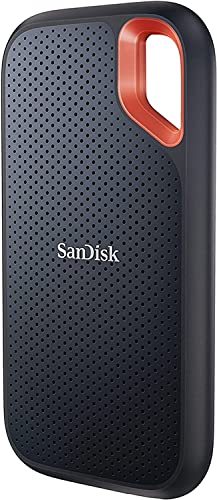


Top 3 picks at a glance
Quick comparison: best external SSDs for gaming
| Model | Advertised sequential speed | Durability | Best capacity choices | Best for |
|---|---|---|---|---|
| Samsung T7 Shield | Up to 1,050 MB/s read, 1,000 MB/s write | IP65, drop resistance up to 3 m | 1TB, 2TB, 4TB | Most PC, PS5, and Xbox owners |
| Crucial X9 Pro | Up to 1,050 MB/s read and write | IP55, drop resistance up to 2 m | 1TB, 2TB, 4TB | Good value and portable libraries |
| Kingston XS2000 | Up to 2,000 MB/s read and write | IP55 with included rubber sleeve | 1TB, 2TB, 4TB | Fast USB 3.2 Gen 2×2 PCs |
| Crucial X10 Pro | Up to 2,100 MB/s read, 2,000 MB/s write | IP55, drop resistance up to 2 m | 1TB, 2TB, 4TB | Large PC game libraries and frequent transfers |
| WD_BLACK P40 | Up to 2,000 MB/s read and write | Portable metal design with customizable RGB lighting | 500GB, 1TB, 2TB | Gaming desktops and laptops with Gen 2×2 |
Advertised speeds are maximum sequential figures under ideal conditions. Real transfers can be slower because of the host port, cable, file size, drive temperature, free space, and whether the SSD is writing into its fast cache. Game loading also depends heavily on the game engine and CPU, so a 2,000 MB/s drive will not make every title load twice as fast as a 1,000 MB/s drive.
Our top picks
Samsung T7 Shield: the safest all-round choice
The Samsung T7 Shield is the easiest recommendation for mixed PC and console use. Its USB 3.2 Gen 2 interface reaches approximately 1,050 MB/s read and 1,000 MB/s write, which is already close to the practical ceiling of many USB-C and USB-A gaming devices. The rubberized exterior, IP65 dust and water resistance, and drop resistance up to 3 meters make it better suited to a backpack than a bare portable SSD.
Choose the 1TB version for a secondary game drive, 2TB for a substantial library, or 4TB if you regularly move large PC games and creative files. It includes USB-C and USB-A connection options, but use the shortest suitable cable and connect directly to the computer or console rather than through an unpowered hub.
Crucial X9 Pro: value without giving up useful durability
The Crucial X9 Pro offers roughly the same 1,050 MB/s class performance as the T7 Shield in a compact enclosure. Its IP55 rating protects against dust and water jets, and it is rated for drops up to 2 meters. That is enough for normal travel, although the Samsung is the stronger choice if the drive will frequently be exposed to rain, dust, or rough handling.
It is a practical 2TB choice for a PC or PlayStation library. The X9 Pro is also a sensible option when its market price is noticeably below other 1TB-class portable SSDs. For ordinary game installation and loading, its performance is generally more important than chasing a higher peak specification.
Kingston XS2000: fast, tiny, and dependent on the right port
The Kingston XS2000 can reach up to 2,000 MB/s over USB 3.2 Gen 2×2. It is exceptionally small and includes a removable rubber sleeve that adds IP55 protection. The limitation is compatibility: USB 3.2 Gen 2×2 is not the same as USB 3.2 Gen 2, Thunderbolt, or USB4. A Gen 2×2 SSD plugged into a normal 10Gbps port will operate near the 1,000 MB/s class instead.
Buy it for a desktop or laptop with a confirmed USB 3.2 Gen 2×2 port, especially if you often copy 100GB-plus games, video projects, or backups. Do not pay a premium for its headline speed if your console or laptop cannot provide that connection.
Crucial X10 Pro: high-speed storage for large PC libraries
The Crucial X10 Pro is another USB 3.2 Gen 2×2 option, rated for up to 2,100 MB/s read and 2,000 MB/s write. Its 4TB capacity is particularly useful for PC owners who want one portable drive for games and other large files. Like the XS2000, it only delivers its main advantage when connected to a compatible 20Gbps port.
For a console, its extra speed is usually wasted. For a modern PC with Gen 2×2, it can shorten large sequential transfers, but game launch and level-loading improvements will vary by title. Sustained writes may fall after the drive’s dynamic cache fills, so it is not a replacement for a high-end internal PCIe NVMe SSD when repeatedly copying hundreds of gigabytes.
WD_BLACK P40: a gaming-focused PC option
The WD_BLACK P40 supports USB 3.2 Gen 2×2 and is rated for up to 2,000 MB/s read and write. Its design and configurable RGB lighting suit a gaming desktop, while the 500GB, 1TB, and 2TB capacities cover smaller installs and moderate libraries.
It is less compelling for console buyers because consoles generally cannot exploit the 20Gbps interface. Pick it when your PC has the correct port and you value its gaming-oriented design; otherwise, a 1,000 MB/s model usually provides better value per terabyte.
Compatibility: choose by platform before speed
| Your setup | Recommended interface | What the external SSD can do | Best capacity |
|---|---|---|---|
| Gaming laptop with USB 3.2 Gen 2 | 10Gbps, approximately 1,000 MB/s class | Install and play most PC games; move large f
Frequently asked questionsCan I use these external SSDs with a game console?Yes, the Samsung T7 Shield is presented as suitable for most PC, PS5, and Xbox owners, while the Crucial X9 Pro is a practical choice for a PC or PlayStation library. The Kingston XS2000, Crucial X10 Pro, and WD_BLACK P40 need USB 3.2 Gen 2×2 to deliver their headline speeds, which consoles generally cannot exploit. What capacity should I choose for gaming?Choose 1TB for a secondary game drive, 2TB for a substantial library, or 4TB for a larger PC library and other large files. The WD_BLACK P40 also comes in 500GB, which can suit smaller installs. Capacity depends on how many games and other files you plan to keep available, rather than on the advertised sequential speed. Will a faster external SSD make games load twice as quickly?No, a 2,000 MB/s drive will not make every game load twice as fast as a 1,000 MB/s drive. Game loading depends heavily on the game engine and CPU, as well as the storage connection. Higher advertised speeds are most useful for large sequential transfers, and actual improvements in launching or loading vary by title. How should I connect an external SSD for the best performance?Connect the SSD directly to the computer or console rather than through an unpowered hub, and use the shortest suitable cable. A USB 3.2 Gen 2×2 SSD needs a confirmed 20Gbps port to provide its main speed advantage. On a normal 10Gbps port, it will operate near the 1,000 MB/s class instead. Can these SSDs replace an internal PCIe NVMe SSD?No, the article says the Crucial X10 Pro is not a replacement for a high-end internal PCIe NVMe SSD when repeatedly copying hundreds of gigabytes. External models can provide portable game storage and shorten large sequential transfers when the connection is suitable. Sustained writes may fall after a drive’s dynamic cache fills, so performance is not constant for every workload. Related guides

How to Improve VRM Cooling: Airflow, Heatsinks, Thermal Pads and Power LimitsHow to improve VRM cooling in a gaming PC: move air over the socket, fix case pressure, check heatsink contact and trim power limits, with a repeatable test. 
Does an AIO Cooler Affect VRM Temperature? Radiator Placement, Airflow and a Fair Way to CompareDoes an AIO cooler affect VRM temperature? It can, mostly by removing airflow near the socket. Radiator placement, a fair comparison method and fixes. 
Does a Case Fan Help VRM Cooling? What Airflow Can and Cannot Fix on a MotherboardDoes a case fan help VRM cooling? Yes, if air reaches the heatsink. See fan placement rules, a heat-loss worked example and when to replace the board. 
Can a Weak VRM Cause CPU Throttling? Signs, Checks and FixesCan weak VRM cause CPU throttling? Yes, on budget boards under heavy CPUs. Learn the signs, how to tell it from a cooler problem, and what to do about it. 
12GB vs 16GB VRAM: Which One Does Your Gaming PC Need?12gb vs 16gb vram explained: 12GB covers most 1440p play, 16GB pays off at 4K, heavy ray tracing and texture mods. Includes a VRAM budget worked example. 
4 Best 4K Gaming PCs in 2026: GPU and CPU Picks by BudgetThe best 4K gaming PC in 2026 pairs a GeForce RTX 5080... 
RTX 5060 Ti 16GB vs 8GB: Which Should You Buy?The Short Answer For 1440p and VR gaming in 2026, the RTX... 
Best Value Graphics Cards & GPUs Right Now: 4 Compared (2026)Best Value Graphics Cards & GPUs Right Now (2026) The best value... 
Best Nvidia Graphics Cards for Every Budget: 9 Compared (2026)Quick Comparison Every card below is matched to the resolution and refresh... 
Best Liquid Coolers for Gaming PCs and Performance: 4 Compared (2026)The best liquid coolers for gaming PCs in 2026 are 240mm AIOs... |