The best backpack leaf blowers for most homeowners are gas models like the Stihl BR 800 X, Husqvarna 580BTS Mark III, and Echo PB-9010 for large properties, while battery models like the Milwaukee M18 FUEL Dual-Battery Backpack Blower and Stihl BR 700e are better for noise-sensitive neighborhoods and yards under 1/2 acre where you want zero fuel maintenance.
As an Amazon Associate we earn from qualifying purchases at no extra cost to you.



Our Top Picks
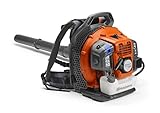
 Greenworks 80V Backpack Leaf BlowerBackpack Blower (750 CFM), 4.0Ah22.64 x 22.64 x 11.32 Inches9.48 poundsCheck on Amazon



Top 3 picks at a glance
How to Choose: The 5 Specs That Matter
Do not shop by CFM or MPH alone. Manufacturers often quote CFM inside the housing and MPH at the nozzle tip, which never occur at the same time. The number that best predicts real pushing power is Newtons (N) of blowing force, which is CFM x air velocity combined. For comparison, use Newtons first, then check weight, runtime, noise, and harness design.
1. Airflow and Blowing Force
For yard work, Newtons translate directly to what you can move:
- 15-20 N: Dry leaves and grass clippings on lawn and driveway
- 21-30 N: Damp leaves, pine needles, light mulched debris
- 31-40+ N: Wet, matted leaves, heavy acorn/pine cone cleanup, large gravel-free areas
A blower that hits 200+ MPH at the nozzle sounds powerful, but if its CFM is low, it will scatter leaves without moving a pile. High CFM with moderate MPH moves piles faster with less sweeping motion.
2. Weight and Harness Comfort
Backpack blowers range from about 12 lbs for lightweight battery units to 27 lbs for large gas units with a full fuel tank. Look beyond the weight number:
- Hip belt: Transfers 30-40% of load off shoulders. Essential if you will run more than 15 minutes.
- Ventilated back pad: Prevents back sweat and shifting during long jobs. Stihl and Husqvarna use vented foam with channels; Echo uses a padded L-frame.
- Tube throttle position: Tube-mounted throttles reduce wrist fatigue. Hip-mounted throttles are harder to feather for delicate beds.
If you have back or shoulder issues, prioritize a battery backpack blower in the 13-18 lb range even if you sacrifice some Newtons.
3. Runtime and Fuel Use
Gas backpack blowers run on a 50:1 two-stroke mix and will run 60-90 minutes on a 60-75 oz fuel tank at typical throttle. Battery backpack blowers depend entirely on battery capacity, measured in watt-hours (Wh).
4. Noise
Measured at 50 feet, most gas backpack blowers are 97-107 dB(A), battery models are 59-65 dB(A) on low and 65-72 dB(A) on turbo. Many municipalities have 65 dB(A) limits before 8 AM. If you have close neighbors or HOA restrictions, battery is the only compliant option for early work.
Worked Calculation: How Long Will a Battery Backpack Blower Actually Run?
Spec sheets list “up to 90 minutes” but that is on low. You can estimate real runtime with this formula:
Runtime (hours) = Battery Capacity (Wh) / Average Power Draw (Watts)
Example for a common dual-battery setup:
- Two Milwaukee M18 REDLITHIUM HD12.0 batteries: 12.0Ah x 18V = 216 Wh each, 432 Wh total
- Manufacturer rated power draw: ~1200W on low, ~2400W on high/turbo
- On high: 432 Wh / 2400W = 0.18 hours = ~10-11 minutes of continuous turbo
- On medium (typical leaf cleanup throttle): 432 Wh / 1600W = 0.27 hours = ~16 minutes continuous
- With intermittent trigger use (30% off-throttle walking between piles): ~22-25 minutes effective yard time
For comparison, a Stihl BR 800 X with a 67.5 oz fuel tank burns roughly 30-38 oz of fuel per hour under load, giving you about 80-110 minutes of continuous runtime per tank. Refueling takes 30 seconds vs. 60-120 minutes to recharge batteries. If your cleanup takes longer than 30 minutes non-stop, gas still has a clear endurance advantage unless you own 3-4 battery sets, which typically cost $250-$450 per set.
Best Backpack Leaf Blowers Compared
This table uses manufacturer-published specs for 2025-2026 current models in standard tube configuration. Newtons, CFM, and MPH are measured at the nozzle with standard tube.
| Model | Type | Blowing Force | CFM / MPH | Dry Weight | Tank / Battery | Noise at 50 ft |
|---|---|---|---|---|---|---|
| Stihl BR 800 X | Gas 79.9cc 4-MIX | 41 N | 940 CFM / 199 MPH | 23.7 lbs | 67.5 oz | 104 dB(A) |
| Echo PB-9010T | Gas 79.9cc 2-stroke | 48 N | 1110 CFM / 220 MPH | 26.4 lbs | 83.8 oz | 107 dB(A) |
| Husqvarna 580BTS Mark III | Gas 75.6cc 2-stroke | 40 N | 975 CFM / 206 MPH | 25.2 lbs | 87.9 oz | 103 dB(A) |
| Stihl BR 600 | Gas 64.8cc 4-MIX | 32 N | 677 CFM / 238 MPH | 21.9 lbs | 47.3 oz | 100 dB(A) |
| Milwaukee M18 FUEL Dual-Battery (3009-20) | Battery 36V (2x18V) | 24 N (turbo) | 650 CFM / 155 MPH | 15.5 lbs w/o batteries | 2x M18 12.0Ah (432 Wh) | 62-68 dB(A) |
| Husqvarna 550iBTX | Battery 36V | 21 N | 580 CFM / 145 MPH | 15.0 lbs w/o battery | BLi950X 891 Wh | 60-67 dB(A) |
| Stihl BR 700e | Battery AP System | 23 N | 610 CFM / 151 MPH | 18.1 lbs w/o battery | AP 500 S 337 Wh | 61-68 dB(A) |
General market price ranges in 2026: Light gas backpack blowers like the Stihl BR 600 and Husqvarna 350BT usually $400-$550, high-power gas models like the BR 800 X, Echo PB-9010, and 580BTS Mark III usually $550-$700, and battery backpack kits with batteries and charger usually $500-$800 depending on battery size.
Decision Matrix: Which Class Fits Your Yard?
| Your Situation | Best Match | Why |
|---|---|---|
| 1/4 acre or less, mostly lawn + driveway, noise restrictions | Battery 20-24N class (Milwaukee, Stihl BR 700e, Husqvarna 550iBTX) | Lightest weight, quietest, enough force for dry leaves. One large battery set is enough. |
| 1/4 to 1/2 acre, deciduous trees, damp leaves, mulched beds | Mid-power gas 30-35N (Stihl BR 600, Husqvarna 360BT) or high-capacity battery with 2 batteries | Balance of power and fatigue. Gas gives longer runtime; battery needs spare set. |
| 1/2 to 2+ acres, dense oaks/pines, wet piles, gravel drives | High-power gas 40N+ (Echo PB-9010, Stihl BR 800 X, Husqvarna 580BTS Mark III) | Needed to move heavy, matted debris without raking first. Large fuel tank prevents refuel stops. |
| Commercial / all-day use, or steep terrain | High-power gas with full hip belt and vented harness | Harness comfort and refuel speed matter more than noise over 4+ hours. |
Comfort and Usability Details Spec Sheets Hide
Two blowers with the same Newtons can feel very different after 20 minutes. Pay attention to:
- Throttle cruise control: Stihl BR 800 X and Echo PB-9010T have a lever that locks RPM so you do not hold the trigger constantly. This reduces hand fatigue more than any harness tweak.
- Tube length and nozzle shape: A shorter round nozzle gives higher MPH for dislodging wet leaves from grass; a wide flat nozzle gives broader sweep for open pavement. Echo and Husqvarna include both nozzles.
- Vibration: Gas models in the 75cc+ class transmit more vibration through the tube at full throttle. Look for models with anti-vibration mounts between the engine and frame if you have wrist issues.
- Air intake position: Side-intake blowers can suck in jacket fabric or leaves if you work near a pile. Rear-intake designs like the Husqvarna 580BTS are less prone to clogging.
Fuel vs Battery: Total Cost and Maintenance
Gas requires pre-mixed 2-stroke fuel, air filter cleaning every 25 hours, and spark plug replacement annually. Ethanol-free fuel or pre-mixed canned fuel reduces carburetor issues during off-season storage. Battery eliminates fuel, oil, and pull starts, but you must store batteries at 30-60% charge in a dry space above freezing; capacity degrades noticeably after 300-500 full cycles. If you already own batteries from the same platform (Milwaukee M18, Husqvarna BLi, Stihl AP), the blower-only cost is much lower than buying a new battery system.
FAQ
Is higher MPH or CFM more important?
Neither alone. Blowing force in Newtons combines both and is the best single metric. Between two blowers with equal Newtons, choose higher CFM for open areas and higher MPH for dislodging stuck, wet leaves.
Can a battery backpack blower replace a gas 40N blower?
For dry leaves and regular maintenance, yes. For heavy, wet fall cleanup on 1+ acre with mature trees, most battery backpack blowers still fall 30-40% short on Newtons and runtime. You will need multiple high-capacity batteries or longer job time.
What blower weight is too heavy for most homeowners?
Most adults can work comfortably with 22-24 lbs including fuel for 30-45 minutes if the harness has a hip belt and chest strap. Above 25 lbs dry weight, fatigue increases quickly without frequent breaks, especially on slopes.
How loud is too loud for neighborhoods?
At 50 feet, gas backpack blowers are typically 100+ dB(A), which is heard clearly inside nearby homes with windows closed. Battery models at 65 dB(A) are comparable to a loud conversation and are far less likely to prompt complaints.
Related guides
- Best Streaming Gear for Twitch: Webcams, Capture Card, Backdrop and Light (2026)
- Best Over Ear Headphones: 9 Closed, Open-Back and Bluetooth Picks Explained (2026)
- Best Monitor for Console Gaming: Eight 1080p and 1440p Screens Compared by HDMI and Refresh Rate (2026)
- Best Monitors for PS5 Pro 4K 120Hz: Eight Screens and the HDMI Bandwidth Check (2026)