The best 14 inch bandsaws for woodworking balance a 12 to 13-inch resaw capacity with a 1 to 1.75 HP motor, tool-less blade changes, and a rigid T-square style fence, with the Laguna 14BX, Jet JWBS-14DXPRO, Rikon 10-326, and Grizzly G0555LX representing the top tiers for small to mid-size shops in 2026.
As an Amazon Associate we earn from qualifying purchases at no extra cost to you.


Our Top Picks
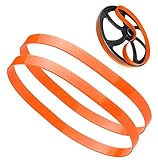
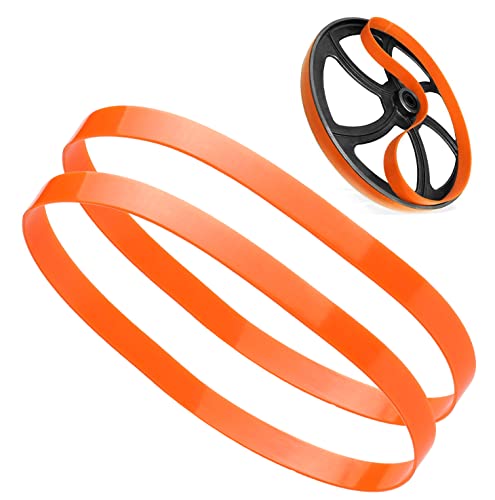
 POWERTEC 71725 14" Band Saw Tires14" band saw tires9.8 x 4.92 x 1.19 inches0.4 PoundsCheck on Amazon


Top 3 picks at a glance
What Makes a 14-Inch Bandsaw the Right Size?
A 14-inch bandsaw refers to the throat depth – the distance from the blade to the inside of the frame column – not the cutting height. For most furniture, cabinet, and bowl-blank work, that 13.5 to 14-inch throat paired with a resaw height of 10 to 13 inches covers 90% of tasks without requiring the 220V dedicated circuit, floor space, and blade cost of an 18-inch machine. If you primarily cut curves, rip small stock, and resaw boards up to 12 inches wide for book-matching, a 14-inch model is the efficiency sweet spot. You only need to move larger if you regularly resaw 14-inch+ slabs or run production curves in 12/4 hardwood.
Best 14 Inch Bandsaws Compared: Core Specs
These four classes dominate recommendations for woodworkers in 2026 because they have proven parts availability, standard blade lengths, and cast-iron tables. All run on 110V/115V with the option to rewire to 220V/230V for more efficient operation, except where noted.
| Model Class | Motor | Resaw / Throat | Blade Length & Width Range | Fence System | Typical Market Range |
|---|---|---|---|---|---|
| Laguna 14BX | 1.75 HP, 110V/220V | 13 in / 14 in | 115 in, 1/8 to 3/4 in | Laguna DriftMaster compatible, heavy T-square, resaw fence included | usually $1,100 – $1,400 |
| Jet JWBS-14DXPRO / JWBS-14SFX | 1.25 HP, 115V/230V | 12 in / 13.5 in | 105 in, 1/8 to 3/4 in | Steel T-square with micro-adjust, 2-position resaw pin | usually $900 – $1,200 |
| Rikon 10-326 | 1.75 HP, 110V/220V | 13 in / 13.5 in | 111 in, 3/16 to 3/4 in | Tool-less T-square, quick adjust, tall resaw fence | usually $950 – $1,200 |
| Grizzly G0555LX / G0555XH | 1 HP (G0555LX) / 1.5 HP (G0555XH), 110V/220V | 6 in standard, 12 in with riser kit / 12.5 in / 14 in | 93.5 in standard, 105 in with riser, 1/8 to 3/4 in | Basic square tube T-style, aluminum extrusion upgrade common | usually $700 – $1,000 |
The Laguna and Rikon lead on out-of-the-box resaw height and power, while the Jet balances fit-and-finish with quiet poly-V belt drive. The Grizzly is the budget platform – excellent value if you add the riser block and aftermarket fence, but its stock 6-inch resaw is insufficient for serious veneer or book-matching.
Decision Criteria: How to Choose for Your Materials and Shop
1. Cutting Capacity vs. Your Stock
Do not buy on resaw number alone. Check three dimensions: maximum cutting height under the guides, throat depth, and table size. A 12-inch resaw is meaningless if the guide post flexes at full height. Steel-frame saws like the Laguna 14BX and Rikon 10-326 use a rigid C-frame that keeps the upper guides aligned at 13 inches. Cast-iron frame saws like the Grizzly G0555 need a riser block to reach 12 inches, which adds a joint and slightly reduces rigidity unless tuned carefully.
For bowl blanks and curves, throat matters more than height. All 14-inch saws handle a 14-inch circle on the table, but only those with a 21 x 16 inch or larger cast-iron table support large blanks without tipping.
2. Motor Power: A Worked Power Budget
Motor ratings can be misleading. Use amps and cutting load to estimate real capability.
Worked calculation: Resawing creates the highest load. The power required can be estimated as:
HP needed = (Kerf [in] x Feed Rate [in/min] x Cutting Resistance [HP per cubic inch/min])
For dense hard maple, cutting resistance is roughly 0.7 to 0.9 HP per cubic inch of material removed per minute with a sharp 3 TPI hook blade. Take a common case: resawing 12-inch tall hard maple with a 0.035-inch kerf 3/4-inch blade, at a modest hand-feed rate of 5 feet per minute (60 in/min).
Material removal rate = 12 x 0.035 x 60 = 25.2 cubic inches per minute.
Power required = 25.2 x 0.035 (specific cutting energy factor for bandsaw) ≈ 0.88 HP at the blade. Factor in 60-70% drive efficiency (belt, guides, friction), and you need ~1.3 to 1.5 HP at the motor to maintain that feed without stalling or burning.
This is why a 1 HP motor will resaw 6 to 8 inches in hard maple comfortably, but bogs down and produces washboard cuts at 12 inches unless you feed at 2-3 feet per minute. If you plan to resaw 10 to 12-inch hardwoods or make veneer, choose 1.5 HP or higher. For softwoods, curves, and resaws under 8 inches, 1 HP is sufficient and runs well on a standard 15A 110V circuit.
On 110V, a 1.75 HP motor will draw 14-15A at full load. If your shop shares a circuit with a dust collector, rewire to 220V to halve amperage, reduce voltage drop, and improve startup torque.
3. Blade Changes and Guide System
Blade changes affect how often you will actually switch to the right blade, which affects cut quality more than any other spec. Look for:
- Tool-less tension release lever: All four models above have it. It de-tensions quickly to preserve tires and speeds blade swaps to under 2 minutes.
- Guide style: Ceramic guides (Laguna) run cooler with no bearings to seize and allow closer support for thin blades, but require careful adjustment. Sealed ball-bearing guides (Jet, Rikon, Grizzly) are more forgiving for beginners and easy to set with a dollar-bill gap. Euro-style carbide guides are the most durable for wide resaw blades.
- Tension window or gauge: Built-in tension gauges are approximate at best. Judging deflection (about 1/4-inch side deflection under moderate thumb pressure) or using a tension meter is more accurate, especially for 1/2 to 3/4-inch blades that need 15,000 to 20,000 PSI.
- Quick-release trunnion: A rack-and-pinion guide post that stays square at full height prevents drift when you raise the guides for resawing.
If you change between 1/4-inch for curves and 3/4-inch for resaw weekly, prioritize the Rikon 10-326 and Laguna 14BX for their toolless guide adjustment and large blade tension handwheels.
4. Fence Quality and Drift Control
A bandsaw fence does not need to be a cabinet-saw fence, but it must lock parallel and resist deflection. There are three tiers:
- T-square steel fence (Laguna, Jet, Rikon): Locks at the front rail with a single lever, stays parallel without rear support, and has a tall resaw face that supports wide boards vertically. This is the minimum for accurate resawing. Check for micro-adjust – critical for dialing in veneer thickness to 0.01 inch.
- Square tube / clamp fence (base Grizzly): Functional for curves and ripping, but often needs tapping to square and can deflect under pressure from a 12-inch board. Woodworkers typically add an aftermarket Kreg or Grizzly upgraded fence.
- Drift-adjusting fence: Jet’s fence includes a dial to compensate for blade drift without skewing the fence. Laguna’s DriftMaster is a separate add-on that lets you angle the fence to the blade’s natural drift, which is faster than adjusting the tracking.
For resawing, fence height matters. A 6-inch tall fence face keeps a 12-inch board registered vertically. If your fence is low, add a shop-made auxiliary tall face from MDF and clamp it on.
Compatibility and Decision Matrix
Match your primary work and shop constraints to the right class instead of chasing the highest resaw number:
| Your Situation | Recommended Class | Why |
|---|---|---|
| Small shop, 110V 15A circuit, curves and resaw under 8 in, budget focused | Grizzly G0555LX (without riser) | Lowest amp draw, compact footprint, 93.5 in blades cost less, handles 90% of small project needs |
| Need 12 in resaw for book-matching and veneer in hardwood, single 110V circuit | Rikon 10-326 or Laguna 14BX on 110V | 1.75 HP provides true 12 in hard maple capacity per calculation above, large table and tall fence included |
| Shared shop / garage with dust collector on same circuit | Any 1.5-1.75 HP model rewired to 220V | Halves current draw, prevents breaker trips during startup, cooler motor |
| Frequent blade swaps (scroll work to resaw) | Rikon 10-326 or Jet JWBS-14DXPRO | Fastest tool-less guides and de-tension lever, bearing guides tolerant of repeated adjustment |
| Maximum fit and finish, low noise for attached garage | Jet JWBS-14SFX or Laguna 14BX | Poly-V belt and balanced wheels reduce vibration and noise vs. V-belt economy models |
Setup Settings That Actually Affect Cut Quality
Once you choose the saw, these concrete settings prevent drift, washboarding, and premature blade wear:
- Blade selection: Use 3-4 TPI hook tooth, 1/2 to 3/4 inch wide for resawing; 6-10 TPI regular tooth, 1/4 to 3/8 inch for curves. No single blade does both well. Keep tooth count such that 3 to 6 teeth are in the cut at all times – for 12-inch resaw, 3 TPI is ideal.
- Tension: Tension a 1/2-inch blade to where it rings at a clear tone when plucked and deflects no more than 1/4 inch sideways. Over-tensioning a 3/4-inch blade on a 14-inch saw fatigues the frame without improving cuts. Follow the blade manufacturer’s PSI chart, not the saw’s arbitrary scale.
- Guide spacing: Set side guides 0.004 to 0.008 inch from the blade (about a dollar bill thickness) and the thrust bearing 1/32 inch behind the blade when idle. The blade should only contact the thrust bearing during the cut.
- Feed rate: Let the blade do the work. If you need to push hard, the blade is dull or tension is low. For 12-inch hard maple with a sharp 3 TPI blade, a steady 3 to 5 feet per minute produces a clean surface without scalloping. Listen for a constant pitch – wavering pitch means uneven feed.
- Dust extraction: Connect a 4-inch port to at least 600 CFM. Sawdust packed between the tire and blade causes tracking wander and premature tire wear. Clean the tires with a dry rag after heavy resaw sessions.
Final Recommendation
For most woodworkers buying a 14-inch bandsaw in 2026, the Rikon 10-326 and Laguna 14BX offer the most complete package: true 12 to 13-inch resaw in hardwood without voltage upgrades, tool-less setup, and a fence you will not need to replace. The Jet JWBS-14DXPRO is the quieter, more refined alternative if you value fit and finish over the last inch of resaw. Choose the Grizzly G0555LX if your work stays under 8 inches and you prefer to invest the price difference in quality blades and a fence upgrade, or step to the G0555XH/riser version if you need height on a tighter budget.
Budget for blades: a 115-inch or 111-inch Starrett, Lenox, or Timber Wolf 3 TPI resaw blade and a 1/4-inch 6 TPI blade will cover nearly all tasks and have a bigger impact on results than the final half-horsepower.
FAQ
Can a 1 HP 14-inch bandsaw resaw 12 inches?
Mechanically yes with a riser, but practically no in hardwoods at a usable feed rate. As shown in the power budget, 12 inches of hard maple needs about 1.3 to 1.5 HP at the motor to maintain 5 feet per minute. A 1 HP saw will do it in softwoods or at 2 feet per minute with a very sharp blade, but cut quality and blade life suffer.
What blade length do I need?
Blade length is model-specific and not interchangeable: Laguna 14BX uses 115 inches, Rikon 10-326 uses 111 inches, Jet 14DXPRO uses 105 inches, Grizzly G0555 uses 93.5 inches (105 inches with riser). Always confirm in the manual before ordering.
Do I need 220V for a 14-inch bandsaw?
No, but it helps. All the saws above can run on 110V/115V on a dedicated 15A circuit. If the saw shares a circuit with a dust collector or heater, or if you experience dimming lights on startup, rewiring to 220V provides smoother starts and lower line loss with no change in cutting power.
Related guides
- Best Streaming Gear for Twitch: Webcams, Capture Card, Backdrop and Light (2026)
- Best Over Ear Headphones: 9 Closed, Open-Back and Bluetooth Picks Explained (2026)
- Best Monitor for Console Gaming: Eight 1080p and 1440p Screens Compared by HDMI and Refresh Rate (2026)
- Best Monitors for PS5 Pro 4K 120Hz: Eight Screens and the HDMI Bandwidth Check (2026)