
Integrating gaming consoles into a modern living space is a delicate balancing act. As a home editor, I often see beautiful entertainment centers compromised by cluttered wiring, bulky plastic accessories, or worse—the distracting whine of a struggling cooling fan. When it comes to the Nintendo Switch, managing heat is crucial. When docked and outputting 1080p resolution to a television, the console works its hardest, drawing up to 15 watts of power and generating significant internal heat. Over time, this heat can degrade the lithium-ion battery or even warp the console’s plastic shell.
To combat this, homeowners must choose between two distinct design philosophies: active cooling docks vs passive cooling stands for switch. Active cooling docks rely on motorized fans to force air through the console’s vents, while passive stands rely on elevated, open-air geometry to maximize natural convection. Deciding between the two isn’t just about thermal performance; it affects your living room’s acoustics, visual clutter, dust accumulation, and overall furniture layout. Choosing the wrong style can leave you with an eyesore on your media console or an annoying background hum during quiet movie nights.
As an Amazon Associate we earn from qualifying purchases at no extra cost to you.



Our Top Picks
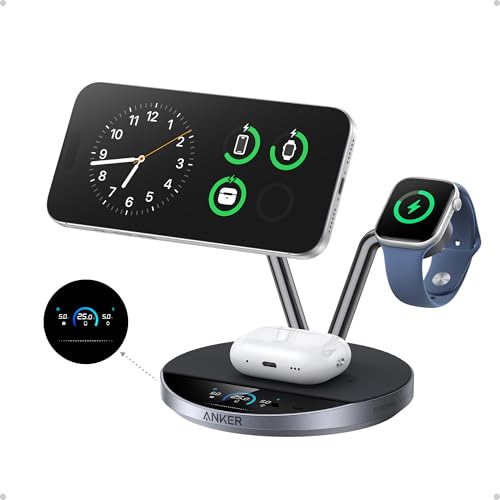 Anker Prime 3-in-1 Qi2.2 MagSafe Compatible 25W Wireless6.65 x 4.92 x 5.43 inches6.65 x 4.92 x 5.43 inches1.37 poundsCheck on Amazon


Top 3 picks at a glance
Quick Verdict
For most clean, minimalist living rooms, a passive cooling stand is the superior choice. It operates in absolute silence (0 dB), requires no extra cables, and relies on structural design rather than cheap moving parts that will eventually fail. However, if your console lives inside a closed, poorly ventilated entertainment center, or if your household engages in marathon 6-hour gaming sessions, an active cooling dock is a necessary utility to prevent thermal throttling, despite its minor fan noise and added cable management.
Side by Side
Before diving into the specifics of each system, let us look at how these two approaches compare across key home-integration metrics.
| Feature | Active Cooling Docks | Passive Cooling Stands |
|---|---|---|
| Acoustic Comfort | Humming noise (30 to 45 dB depending on fan speed) | Completely silent (0 dB) |
| Durability & Lifespan | Moderate; motorized fans typically fail after 1 to 3 years | Virtually lifetime; no moving parts to break |
| Average Price Range | $15 to $45 | $10 to $25 |
| Maintenance Required | High; requires regular dusting of fan blades and intakes | None; occasional wiping down with a micro-fiber cloth |
| Space Needed | Larger footprint (approx. 6 x 4 inches); requires cable routing | Compact and often foldable (approx. 4 x 3 inches) |
| Visual Aesthetics | Industrial look, often featuring LED lights and extra wires | Minimalist, sculptural, blends easily with decor |
| Resale Value of Console | Protects battery health better during heavy use | Standard protection; console may show minor thermal wear over years |
| Best For | Closed media cabinets, hot climates, and hardcore gamers | Open shelving, minimalist desks, and quiet living spaces |
Where Active Cooling Docks Wins
Active cooling docks excel in environments where natural airflow is restricted. If your television console features closed wooden doors or tight cubbies with less than 4 inches of clearance above the Switch, passive cooling simply cannot keep up. In these tight quarters, hot air pools around the console, creating a heat island. Active docks, utilizing small 5V or 12V motorized fans, physically push this stagnant, hot air away from the console’s intake vents.
Products like the NEWDERY Cooling Fan for Nintendo Switch 2 Dock, Dual-Fan Cooling Stand (around $17) demonstrate how targeted airflow can lower operating temperatures by several degrees. By clipping directly onto the existing dock, these active systems pull heat straight from the main motherboard casing. For even more control, options like the Cooling Fan for Nintendo Switch 1/2, Cooler Replacement Kit for Nintendo Switch Docking Station Dock Set (around $17) offer adjustable fan speeds and built-in LED temperature displays. This level of monitoring is incredibly helpful if you live in an older home without central air conditioning, where indoor summer temperatures can regularly climb above 80°F.
By keeping the console’s internal temperature down from a stressful 115°F to a stable 85°F, active docks preserve the longevity of the console’s internal thermal paste and sensitive battery cells. This makes them the clear winner for dedicated gaming setups where performance and hardware preservation are the top priorities.
Where Passive Cooling Stands for Switch Wins
The primary advantage of passive cooling stands is their absolute simplicity and aesthetic integration. A passive stand uses elevation and open-backed geometry to expose the entire rear panel of the Switch to the room’s ambient air. Because the Nintendo Switch draws cool air from its bottom-rear vents and exhausts hot air out the top, simply lifting the console 2 inches off a dusty wooden shelf can reduce operating temperatures by up to 10% compared to the standard, restrictive OEM dock.
From a home design perspective, passive stands are a dream. They require no additional power cords, meaning you do not have to find room on your power strip or route another wire through your media console’s grommet holes. While modern charging setups like the Qi2.2 25W Magnetic 4-in-1 Wireless Charging Station, TEC Active Cooling MagSafe Charger Stand with Night Light (around $29) or the premium Anker Prime 3-in-1 Qi2.2 MagSafe Compatible 25W Wireless Charging Station (around $140) look great on a nightstand, adding another motorized active cooling device to your living room entertainment center can quickly make it look like an office server room. Passive stands avoid this entirely, maintaining a clean, cable-free aesthetic.
Furthermore, passive stands do not pull dust, lint, or pet hair into your console. Active fans act like miniature vacuum cleaners, sucking airborne debris directly into the Switch’s internal heat sink. A passive stand relies on natural thermal convection, meaning dust accumulation is minimal, keeping your living room cleaner and your console maintenance-free.
Cost Over 5 Years
When evaluating the true cost of active cooling docks vs passive cooling stands for switch, you must look beyond the initial checkout price. A high-quality passive aluminum stand typically costs between $12 and $25. Because it has no electrical components, its lifespan is virtually infinite. Over 5 years, the cost remains exactly what you paid on day one: around $15, with zero maintenance costs or energy draw.
Active cooling docks, while affordable upfront (typically $15 to $40), carry hidden long-term costs. Small, high-RPM plastic fans are notorious for bearing failure. After 18 to 24 months of spinning, dust buildup and friction can cause the fans to rattle, squeal, or stop working entirely, requiring a replacement. Additionally, active docks draw 2 to 5 watts of power continuously when running. While this adds only pennies to your monthly utility bill, the compounded cost of replacement units over 5 years can easily push your total expenditure past $60. If a fan fails while you are away and the console remains trapped in a hot dock, it could even lead to an expensive console repair.
Which One for Your Home
To help you decide which cooling style matches your living habits, let us look at how each option performs in different household layouts.
Small Apartment
In an apartment under 800 square feet, every sound carries. The low-frequency hum of an active cooling fan can be incredibly distracting when you are trying to read, work, or sleep in an adjacent area. In tight spaces, a passive cooling stand is the ideal choice. Its silent operation preserves the acoustic peace of your home, and its small, often foldable footprint means it can be easily tucked away in a drawer when not in use.
Family with Kids and Pets
In a busy household with children and shedding pets, active cooling docks are highly recommended. Kids often leave consoles running demanding games for hours on end, and pet hair quickly settles into low-lying entertainment centers. An active dock with a protective fan cover ensures that the console receives a steady stream of air, even if it gets surrounded by toys or covered in a light layer of pet dander. Just be sure to clean the fan vents once a month.
Rental Home
If you are renting, you likely want to avoid drilling holes for complex cable management or dealing with limited outlet options. A passive cooling stand requires no power outlet and can be set up on any surface—from a floating shelf to a bedside table—without adding to your cord clutter. It is highly portable, making it easy to pack up and move when your lease is up.
Long-Term Home
For those designing a permanent, integrated smart home setup for 2026 and beyond, an active cooling dock is worth the investment if you can hide it. Placing an active dock inside a ventilated media cabinet keeps the wires out of sight and muffles the fan noise entirely. This allows you to enjoy maximum thermal protection for your console while keeping your living room looking like a high-end, professionally designed space.
FAQ
Do passive stands actually lower the Switch’s temperature?
Yes. By elevating the Nintendo Switch and exposing the rear intake vents to open air, a passive stand prevents heat from radiating back into the console from the surface of your furniture. While it won’t cool as aggressively as an active fan, it provides a significant thermal improvement over the standard, enclosed plastic dock.
Are active cooling fans loud enough to ruin a movie night?
In a quiet room, yes. Most active cooling docks produce between 30 and 45 decibels of sound, which is comparable to a soft computer fan or a running refrigerator. If your media console is close to your couch, you will likely hear a faint hum during quiet scenes in movies or games.
Do active cooling docks require their own power outlet?
No, most active cooling systems are designed to draw power directly from the Nintendo Switch dock’s built-in USB ports. They typically run on a low-voltage 5V connection, meaning you do not need to plug them into an additional wall outlet, though they will draw a small amount of power from your console’s power supply.
Can I use a passive stand while playing in handheld mode?
Absolutely. Many passive stands are designed to cradle the Switch in both tabletop and docked configurations. This makes them highly versatile for gamers who want to play with a controller while sitting at a kitchen island or a desk, without having to hold the console.
Related guides
- Best Free MMOs on Steam: Subscription Limits, Pay-to-Win and Time Cost (2026)
- Best Free Horror Games on Steam: How to Pick One That Fits Your PC and Your Nerves (2026)
- Black Frame Insertion vs VRR: Which Smoothness Feature Should You Use?
- Best Webcams for Streaming: 11 Listings Compared by Resolution, Focus and Light (2026)








