Our Top Picks


The Short Answer
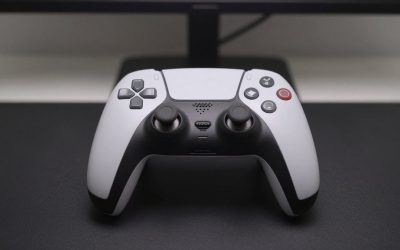
Yes, Hall Effect controllers are absolutely worth it for the Xbox Series X, but under one primary condition: you must be comfortable using a wired connection. Because Microsoft strictly licenses its proprietary Xbox Wireless protocol, almost all third-party controllers equipped with magnetic Hall Effect sensors require a physical USB-C cable to connect to your console. If you game at a desk or do not mind running a 10-foot cable across your living room, the upgrade eliminates stick drift permanently, provides near-zero deadzones, and saves you from buying replacement controllers every year.
What You Actually Get
To understand why Hall Effect technology is a major leap forward for the Xbox Series X, you have to look at how standard controllers are built. The official Xbox Series X controller (which retails between $50 and $60 and weighs roughly 280 grams with AA batteries installed) uses traditional potentiometer joysticks. Inside these joysticks, tiny metal brushes scrape against a resistive carbon track to measure physical movement. Over time, this friction inevitably wears down the carbon material, causing sensor inaccuracies. The console reads this wear as movement even when your thumb is off the stick—a frustrating defect known as stick drift.
As an Amazon Associate we earn from qualifying purchases at no extra cost to you.


Hall Effect controllers replace this mechanical scraping with magnets and electrical conductors. When you move the joystick, the magnet moves relative to a sensor chip without ever touching it. Because there is zero physical contact, there is zero friction, meaning the joysticks will never wear down or develop stick drift over years of heavy use.
Furthermore, many premium options are incorporating Tunneling Magnetoresistance (TMR) sticks. TMR is a sister technology to Hall Effect that also uses magnets but measures change in electrical resistance through an ultra-thin insulating layer. This allows for even higher resolution tracking, lower power consumption, and a snappier return-to-center feel.
When you buy a Hall Effect controller like the GameSir G7 SE (around $44) or a TMR-equipped hybrid like the GameSir G7 Pro (around $79), you get several tangible upgrades over a standard Xbox controller:
- Magnetic Joysticks and Triggers: Non-contact sensors on both the analog sticks and the LT/RT triggers, which register 256 levels of pressure sensitivity for precise throttle control in racing games.
- Ultra-Low Deadzones: Because the sensors are highly accurate and do not drift, you can set your in-game controller deadzones to 0%, resulting in instant micro-adjustments in first-person shooters.
- Higher Polling Rates: While a standard wireless Xbox controller polls at roughly 125Hz (an 8ms delay), wired Hall Effect controllers can be configured up to 1000Hz (a 1ms delay) via software, drastically reducing input lag.
- Customizable Profiles: Companion apps on the Xbox store allow you to map back buttons, adjust trigger hair-trigger modes, and calibrate stick sensitivity curves directly on your console.
Pros
- Immunity to Stick Drift: The physical design prevents the sensor degradation that dooms standard controllers, giving these gamepads a lifespan that can easily last the entire generation.
- Exceptional Cost Efficiency: At around $44 for a highly rated model like the GameSir G7 SE, these controllers cost less than a standard Microsoft wireless controller while offering double the lifespan.
- Competitive Edge in FPS and Racing Games: The ability to run 0% deadzones and utilize 1000Hz polling rates provides a snappier, more immediate connection to your gameplay.
- Incredible Trigger Precision: Hall Effect triggers use magnetic induction to measure pull distance down to the millimeter, which is perfect for modulating brakes or instantly firing weapons.
- No Batteries Required: Since they are wired, you save money on AA batteries or rechargeable battery packs, and the controller is physically lighter (around 250 grams) as a result.
Cons
- Tethered to the Console: You must use a USB-C cable (typically 10 feet or 3 meters long). This can be a tripping hazard in open-concept living rooms or a hassle for couch setups.
- Slightly Different Tension: Some players note that magnetic joysticks feel slightly looser or lighter to move than traditional ALPS potentiometers, which can require a brief adjustment period.
- Lack of First-Party Wireless Convenience: You cannot turn on your Xbox Series X remotely by pressing the guide button on a wired third-party controller; you must turn the console on manually or use a media remote.
- No Accessories Support: Many third-party wired controllers do not support old-school Xbox accessories like the chatpad or certain third-party stereo headset adapters that plug into the bottom data port.
Who Should Buy It
You should buy a Hall Effect controller if you are a competitive gamer who plays fast-paced multiplayer titles like Call of Duty, Apex Legends, or Assetto Corsa. The absolute precision of zero-deadzone sticks and the rapid response of a wired connection will immediately improve your aiming consistency. It is also an excellent buy for families or casual gamers who are tired of replacing broken, drifting controllers every 12 months and want a reliable, durable option that “just works” whenever it is plugged in.
Who Should Skip It
You should skip these controllers if your Xbox Series X is located across a large living room and your couch sits more than 8 to 10 feet away from your television. Tripping over a cord or having it stretched tight across your floor ruins the gaming experience. Similarly, if you are a casual player who primarily plays narrative games like Starfield or Minecraft and has never experienced stick drift, the standard wireless controller that came in your Xbox box is perfectly adequate for your needs.
Cheaper Alternatives
If you are on a budget or aren’t sure if you want to commit to a wired Hall Effect setup, there are other options on the market. Below is a breakdown of how they compare in cost and functionality:
| Option | Cost Range | Trade-off |
|---|---|---|
| Standard OEM Xbox Wireless Controller | around $50 – around $60 | Uses traditional carbon potentiometers that will eventually drift; requires AA batteries; limited to 125Hz polling rate. |
| GameSir G7 SE (Budget Hall Effect) | around $40 – around $45 | Requires a permanent wired connection; some users find the plastic shell feels lighter and less premium than first-party controllers. |
| PowerA Enhanced Wired Controller | around $25 – around $35 | Very cheap upfront cost, but uses cheap analog sticks that are highly susceptible to early drift; lower overall build quality. |
| DIY Joystick Replacement Kits | around $10 – around $15 | Incredibly cheap, but requires precision soldering skills, specialized tools, and risks permanently damaging your controller’s motherboard. |
FAQ
Do Hall Effect controllers completely eliminate stick drift?
Yes, they eliminate physical stick drift caused by sensor wear. Traditional controllers drift because the internal parts physically grind against each other and degrade. Because Hall Effect sensors use non-contact magnets to measure movement, there is no physical wear. However, keep in mind that “software drift” can still occur if your console’s calibration is misaligned, though this is easily fixed with a quick recalibration in the controller’s app.
Why are there no fully wireless third-party Hall Effect controllers for Xbox?
Microsoft uses a proprietary, encrypted wireless protocol for its consoles. Third-party manufacturers must pay high licensing fees and adhere to strict design constraints to use this wireless chip. To keep retail prices affordable (often under $50), manufacturers choose to make their controllers wired, bypassing the expensive wireless chip while offering superior internal tech like Hall Effect sensors.
What is the difference between Hall Effect and TMR joysticks?
Both systems use magnets to avoid physical contact wear, but they read the magnetic fields differently. Hall Effect sensors measure voltage changes caused by a magnetic field, while Tunneling Magnetoresistance (TMR) sensors measure changes in electrical resistance. In practice, TMR sticks offer even higher resolution (more precise aiming), lower power consumption, and a slightly tighter mechanical tension that feels closer to a traditional controller.
Is a wired connection really that much faster than wireless?
Yes. A standard wireless Xbox Series X controller operates at a polling rate of roughly 125Hz, which translates to about an 8ms delay between your physical movement and the console registering it. A wired Hall Effect controller like the GameSir G7 Pro can be configured via software to run at up to 1000Hz, cutting that input delay down to just 1ms. While casual players might not notice, competitive players will instantly feel the increased responsiveness.
As we head toward 2026, magnetic sensor technologies are rapidly transitioning from niche enthusiast upgrades to the baseline expectation for any serious gaming setup. If you can handle the physical cable, making the switch to a Hall Effect controller is one of the smartest, most cost-effective upgrades you can make for your Xbox Series X.
Related guides
- Best Free MMOs on Steam: Subscription Limits, Pay-to-Win and Time Cost (2026)
- Best Free Horror Games on Steam: How to Pick One That Fits Your PC and Your Nerves (2026)
- Black Frame Insertion vs VRR: Which Smoothness Feature Should You Use?
- Best Webcams for Streaming: 11 Listings Compared by Resolution, Focus and Light (2026)