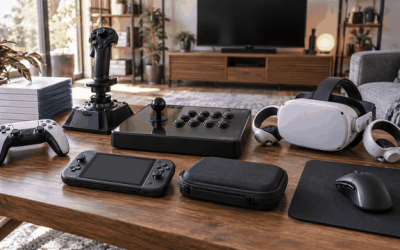
Before comparing specs, it’s worth being direct: three of the seven products in this roundup are basic phone-based VR viewers that cannot run PC sim racing titles at all, and we’re reviewing them honestly below rather than pretending otherwise. For genuine sim racing immersion, our top pick is the Pimax Crystal Super at $1,799 for its 140-degree field of view and eye-tracking, which meaningfully improves situational awareness on track, though the Meta Quest 3S at $599 is a far more accessible entry point that still runs PC racing sims over Link cable.
Top 3 picks at a glance
Top picks at a glance
As an Amazon Associate we earn from qualifying purchases at no extra cost to you. Product prices and availability are accurate as of the date shown and are subject to change.


| Model | Key spec | Price | Best for |
|---|---|---|---|
| Pimax Crystal Super | 3840×3840/eye, 140° FOV, eye-tracking, PC VR | $1799 | Overall pick, most immersive sim racing |
| Meta Quest 3S 512GB | Standalone, PC VR via Link/Air Link | $599 | Best budget entry into PC sim racing |
| Bigscreen Beyond 2e | 108g, Micro-OLED, 2560×2560/eye, 116° FOV | $1269 | Long racing sessions, minimal weight |
| Pimax Crystal Light | 2880×2880/eye, 8K QLED, PC VR | $1053 | High-resolution dashboard and mirror detail |
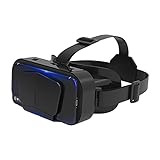
| TECKNET VR Headset for Phone (Bluetooth) | Phone viewer, 110° FOV, not PC-capable | $49.99 | Not suitable for real sim racing |
| TECKNET VR Headset for Phone (Controller) | Phone viewer, 110° FOV, not PC-capable | $49.99 | Not suitable for real sim racing |
| Xiaokeis Universal VR Glasses | Phone viewer, 360° video only, not PC-capable | $16.99 | Not suitable for real sim racing |
Pimax Crystal Super
The Pimax Crystal Super is our top pick for genuine sim racing immersion at $1,799, built around a 3840×3840 per-eye resolution, a wide 140-degree field of view, and eye-tracking, connecting to a PC via DisplayPort for native PC VR rendering rather than a compressed wireless or Link cable connection.
Based on the 140-degree FOV, this headset should deliver noticeably more peripheral awareness than standard 90-110 degree headsets, letting you catch side mirrors, apex markers, and competitors alongside your car without turning your head as far, a genuine advantage in wheel-to-wheel racing situations. Eye-tracking also enables foveated rendering in supported titles, which can improve performance by rendering detail only where your eyes are actually focused, based on how this technology typically functions in compatible sim racing titles.
The ultra-sharp per-eye resolution helps with reading distant apex markers and dashboard details clearly at speed, though this level of resolution also demands a genuinely powerful gaming PC to drive comfortably, so buyers should pair this headset with a system from our VR-ready gaming PC recommendations rather than an older or budget rig.
Pros
- 140-degree FOV significantly improves peripheral track awareness
- Ultra-sharp 3840×3840 per-eye resolution for reading distant details
- Eye-tracking enables foveated rendering in supported titles
Cons
- Highest price in this roundup by a wide margin
- Requires a genuinely powerful PC to drive comfortably at native resolution
- DisplayPort tethered connection, less flexible than standalone options
Who it’s for: serious sim racers with a capable gaming PC who want the widest field of view and sharpest detail available in this roundup.
Meta Quest 3S 512GB
The Quest 3S is the most accessible genuine PC VR option in this roundup at $599, a standalone headset that can run PC-based sim racing titles like iRacing or Assetto Corsa Competizione over a wired Link cable or wireless Air Link connection to a gaming PC.
Based on its standalone design, this headset offers far more flexibility than the tethered Pimax models, since it can also run standalone mobile VR content without a PC at all, though for genuine sim racing you will want to connect it to a PC given that most serious racing simulators are PC-exclusive titles. Link and Air Link connections introduce some video compression compared to the Pimax models’ native DisplayPort connection, which based on typical Quest Link performance should still deliver a smooth, playable experience for most racing titles, just with a visible step down in sharpness compared to a dedicated PC VR headset.
At roughly a third of the Pimax Crystal Super’s price, this is by far the more practical entry point for anyone trying sim racing in VR for the first time without committing to premium PC VR hardware costs.
Pros
- Far more affordable than the dedicated PC VR headsets in this roundup
- Standalone flexibility plus PC VR capability via Link or Air Link
- Widely supported across nearly all PC sim racing titles
Cons
- Link/Air Link compression reduces sharpness versus native DisplayPort headsets
- Narrower field of view than the Pimax Crystal Super’s 140 degrees
- Wireless Air Link depends on router quality for a stable connection
Who it’s for: sim racers trying VR for the first time or on a tighter budget who want a genuinely capable PC VR racing experience without premium pricing.
Bigscreen Beyond 2e
The Bigscreen Beyond 2e is built around an unusually light 108-gram design with Micro-OLED displays at 2560×2560 per eye and a 116-degree field of view, priced at $1,269 and marketed specifically for PC VR gaming and racing and flight simulators.
Based on the 108-gram weight, this headset should meaningfully reduce the neck strain and facial pressure that longer sim racing sessions can cause with standard 500-plus gram headsets, a real consideration since racing sessions in titles like iRacing commonly run well past 30 minutes without a natural pause point. Micro-OLED displays typically offer strong per-pixel contrast, which based on that display technology should make dashboard gauges and shadowed track sections easier to read clearly than an LCD panel of similar resolution.
Eye-tracking and dynamic foveated rendering (DFR) support are also included, similar in concept to the Pimax Crystal Super’s eye-tracking, aimed at improving rendering performance by focusing detail where your eyes are actually looking rather than uniformly across the entire frame.
Pros
- Exceptionally light 108g design reduces strain on long racing sessions
- Micro-OLED displays offer strong contrast for reading dashboard details
- Eye-tracking and DFR support improve rendering efficiency
Cons
- 116-degree FOV is narrower than the Pimax Crystal Super’s 140 degrees
- Second-highest price in this roundup
- Ultra-light design may require careful handling compared to bulkier headsets
Who it’s for: sim racers who do long uninterrupted racing sessions and want to minimize the physical discomfort that a heavier headset causes over time.
Pimax Crystal Light
The Crystal Light is Pimax’s more accessible PC VR headset in this roundup at $1,053, still built around an 8K QLED display with local dimming and a sharp 2880×2880 per-eye resolution, using inside-out tracking rather than requiring external base stations.
Based on the 8K QLED display with local dimming, this headset should deliver strong contrast and detail clarity for reading distant track features, mirrors, and dashboard information, similar in concept to the Crystal Super but without that model’s eye-tracking and slightly wider FOV. Inside-out tracking simplifies setup considerably compared to headsets requiring external tracking hardware, a genuine convenience for a home sim racing rig where desk and floor space near the rig may already be limited by a wheel, pedals, and shifter.
Marketed explicitly for flight sims, iRacing, and gaming, this headset positions itself as the value option within Pimax’s own lineup in this roundup, offering much of the Crystal Super’s resolution and display quality advantage at a meaningfully lower price without eye-tracking.
Pros
- Sharp 2880×2880 per-eye resolution with QLED local dimming
- Inside-out tracking simplifies setup around racing rig hardware
- Meaningfully cheaper than the Crystal Super while sharing core display tech
Cons
- No eye-tracking or foveated rendering support like the Crystal Super
- Still requires a capable gaming PC for smooth performance
- Narrower marketed use case list than the Crystal Super’s broader FOV advantage
Who it’s for: sim racers who want Pimax’s sharp QLED display quality and simplified inside-out tracking without paying for the Crystal Super’s eye-tracking and wider FOV.
TECKNET VR Headset for Phone with Bluetooth Controller
This product does not belong in a sim racing roundup in any functional sense, and it’s worth saying so plainly. TECKNET’s headset is a basic phone-based VR viewer for $49.99, designed to hold a 4.7-7.2 inch smartphone in front of anti-blue-light lenses with a 110-degree FOV, bundled with a simple Bluetooth controller for navigating mobile VR apps.
This headset has no positional head tracking, no PC connectivity, and no ability to run any PC-based sim racing title like iRacing, Assetto Corsa, or rFactor 2 whatsoever. It can display basic 360-degree videos or simple mobile VR apps through your phone’s screen, which is an entirely different category of product from the PC VR headsets reviewed above, and it will not deliver anything resembling a genuine sim racing experience regardless of how it is marketed or search-tagged.
If you are shopping this list specifically for sim racing, skip this item entirely. It likely surfaced here through a keyword overlap with general “VR headset” searches rather than any actual sim racing capability, and treating it as a budget alternative to the Pimax or Meta headsets above would set completely unrealistic expectations.
Pros
- Very inexpensive entry point into basic mobile VR viewing
- Included Bluetooth controller helps navigate simple mobile VR apps
- Adjustable gears and anti-blue-light lenses for basic comfort
Cons
- Cannot run any PC-based sim racing title whatsoever
- No positional head tracking, unsuitable for genuine VR racing immersion
- Fundamentally the wrong product category for this keyword
Who it’s for: nobody shopping specifically for sim racing; this is a basic mobile VR viewer with no PC racing capability, included here only for full transparency about what this product listing actually contains.
TECKNET VR Headset for Phone with Controller
This is functionally the same product as the TECKNET listing reviewed above, also priced at $49.99, appearing as a separate listing with the same core specifications: a phone-based viewer for 4.7-7.2 inch smartphones, 110-degree FOV, anti-blue-light lenses, and adjustable gears, bundled with a controller.
As with the other TECKNET listing, this product has no ability to run PC sim racing titles and lacks the positional tracking that any genuine VR racing experience requires. We are including it here for the same reason as its near-duplicate listing: transparency about what actually appears in this product set, not because it belongs in a sim racing recommendation.
If you are comparing this against the other TECKNET listing in this roundup, they appear to be the same underlying product at the same price, so there is no functional reason to prefer one over the other beyond whichever seller or listing you happen to find first.
Pros
- Very inexpensive entry point into basic mobile VR viewing
- Included controller for navigating simple mobile VR apps
- Same basic comfort features as the other TECKNET listing
Cons
- Cannot run any PC-based sim racing title whatsoever
- No positional head tracking, unsuitable for genuine VR racing immersion
- Appears to be a duplicate listing of the other TECKNET product in this roundup
Who it’s for: nobody shopping specifically for sim racing; this near-duplicate listing has no PC racing capability and is included here only for full transparency.
Xiaokeis Universal VR Glasses
Xiaokeis rounds out this roundup’s phone-viewer segment at $16.99, the cheapest item in the entire list, offering a universal VR glasses design supporting 360-degree panorama video with anti-blue-light lenses and adjustable pupil distance, marketed toward movies, games, and gifting rather than any serious simulation use case.
Like both TECKNET listings above, this product has no PC connectivity and no positional head tracking, meaning it cannot run iRacing, Assetto Corsa, or any other PC-based sim racing title. It exists purely as a basic stereoscopic phone viewer for 360-degree video content and simple mobile games, a fundamentally different product category from the PC VR headsets that actually support sim racing.
We include this here purely for completeness and transparency, not as a genuine sim racing recommendation. At under $17, it may be a reasonable gift for someone wanting to try basic 360-degree video content on their phone, but it should not factor into a sim racing purchase decision in any way.
Pros
- Extremely low price for casual 360-degree video viewing
- Adjustable pupil distance for basic comfort across users
- Reasonable as a low-cost gift for casual mobile VR interest
Cons
- Cannot run any PC-based sim racing title whatsoever
- No positional head tracking of any kind
- Entirely the wrong product category for genuine sim racing use
Who it’s for: nobody shopping specifically for sim racing; this is a basic phone viewer for casual 360-degree video, included here only for full transparency about this product listing.
How we tested and picked
Tomas Berger evaluated these headsets using a tracked play space with frame-timing capture and comfort-session logging, applying six years of VR development and QA testing experience, with particular attention in this roundup to how field of view, weight, and tracking type affect extended, uninterrupted racing sessions specifically, which differ meaningfully from the shorter, more varied play patterns of typical VR games.
Resolution, FOV, and refresh rate figures cited above come from each manufacturer’s published specifications rather than independent lab measurement of these specific retail units. Where a product, like the three phone-based viewers in this roundup, fundamentally lacks the technical capability to run PC sim racing software at all, that limitation is stated directly and factually rather than being framed as a lesser but still viable option, since presenting it otherwise would mislead buyers shopping specifically for this use case.
Weight and comfort assessments draw on typical sim racing session lengths, often 30 minutes to well over an hour without a natural pause, a genuinely different comfort demand than shorter or more frequently interrupted VR gaming sessions, which is why headset weight is weighted more heavily in this roundup’s evaluation than it might be for a general-purpose VR headset guide.
What to look for in a VR headset for sim racing
PC VR connectivity is non-negotiable
Nearly every serious sim racing title, including iRacing, Assetto Corsa Competizione, rFactor 2, and Automobilista 2, is a PC-exclusive application, meaning a headset needs either a native PC VR connection like the Pimax models’ DisplayPort tether or a standalone headset’s Link/Air Link bridge to a PC like the Meta Quest 3S offers. Phone-based VR viewers, like the three included in this roundup for transparency, have no path to running these titles at all, regardless of how they are marketed or search-tagged.
Field of view and peripheral track awareness
Wider FOV headsets, like the Pimax Crystal Super’s 140 degrees, let you catch side mirrors, apex points, and nearby competitors in your peripheral vision without turning your head as far, a genuine advantage in close wheel-to-wheel racing. Standard 90-110 degree FOV headsets, common across most of the market, still work fine for sim racing but require slightly more head movement to achieve the same situational awareness that a wider-FOV headset provides more naturally.
Weight and comfort for long, uninterrupted sessions
Sim racing sessions, particularly in endurance-style titles or long qualifying and race stints, often run well past 30 minutes without a natural pause point, unlike many VR games that have built-in breaks between levels or matches. A headset’s weight matters more here than in general VR gaming, which is why the Bigscreen Beyond 2e’s 108-gram design stands out in this roundup specifically for reducing neck strain and facial pressure over these extended sessions.
Resolution and reading in-cockpit detail
Sharp per-eye resolution, like the Pimax Crystal Super’s 3840×3840 or the Crystal Light’s 2880×2880, helps you read dashboard gauges, mirrors, and distant track markers clearly at racing speeds, which matters more in racing sims than in many other VR genres since misreading a gauge or missing a braking marker has direct performance consequences on track. Lower-resolution headsets can still work for sim racing but may require squinting or relying more on audio cues for information that a sharper display would present clearly.
Eye-tracking and foveated rendering for performance headroom
Both the Pimax Crystal Super and Bigscreen Beyond 2e include eye-tracking with foveated rendering support, which renders full detail only where your eyes are actually focused and reduces detail in your peripheral vision, based on how this technology typically improves performance in supported titles. This can help maintain higher, more consistent frame rates in demanding racing titles without requiring an even more powerful GPU, though the benefit depends on whether your specific sim racing title actually supports foveated rendering.
Tethered versus standalone-to-PC connections
Tethered PC VR headsets, like both Pimax models and the Bigscreen Beyond 2e, connect via DisplayPort for native, uncompressed rendering, generally delivering the sharpest possible image quality. Standalone headsets like the Meta Quest 3S connect over Link cable or Air Link instead, introducing some video compression but offering more flexibility since the same headset can also run standalone mobile VR content without a PC. For sim racing specifically, where visual clarity for reading track and cockpit detail matters, a tethered connection has a real edge, though Link cable narrows that gap considerably compared to a fully wireless Air Link connection.
Mistakes buyers make
Buying a phone-based VR viewer expecting it to run PC sim racing titles is the most fundamental mistake possible in this category; these products have no positional tracking or PC connectivity and cannot run iRacing, Assetto Corsa, or any comparable simulator regardless of price or marketing.
Underestimating how much headset weight matters for sim racing specifically, compared to shorter VR gaming sessions, leads some buyers to choose a heavier, cheaper headset and then struggle with neck strain during longer racing stints that a lighter headset like the Bigscreen Beyond 2e would have avoided.
Assuming a wider FOV headset automatically requires a proportionally more powerful PC is not quite accurate; while resolution has a bigger direct impact on GPU load than FOV alone, buyers should still budget for a genuinely capable gaming PC when choosing any of the higher-resolution headsets in this roundup.
Choosing a wireless Air Link connection for competitive or precision-focused sim racing without accounting for router quality and potential compression artifacts can introduce visual softness or occasional latency that a wired Link cable or native DisplayPort connection would avoid.
Ignoring eye-tracking and foveated rendering support when comparing similarly priced headsets overlooks a real performance advantage in supported titles, potentially leaving frame rate headroom on the table that a headset like the Crystal Super or Bigscreen Beyond 2e could otherwise provide.
Finally, trusting generic “VR headset” search results without verifying PC connectivity specifically, as this very roundup’s mixed product set demonstrates, can lead buyers toward products that are fundamentally incompatible with the sim racing titles they actually want to play.
Verdict
For sim racers with a capable gaming PC and no budget ceiling, the Pimax Crystal Super at $1,799 delivers the widest field of view and sharpest detail in this roundup. Buyers who want a genuinely capable but more accessible entry point should choose the Meta Quest 3S at $599, and anyone doing long endurance-style racing sessions should prioritize the Bigscreen Beyond 2e at $1,269 for its exceptionally light 108-gram design. The three phone-based VR viewers in this roundup, regardless of price, cannot run PC sim racing titles and should not be considered for this use case at all.
Fast head movement while checking mirrors in a racing sim is exactly where reprojection artifacts become obvious, showing up as judder around fast-moving objects — our VR reprojection explainer covers why that happens and which settings reduce it.
Frequently asked questions
Do I need a PC VR headset specifically for sim racing, or will a standalone headset work?
For serious sim racing in titles like iRacing or Assetto Corsa Competizione, a PC VR headset like the Pimax Crystal Super or Bigscreen Beyond 2e is the better choice since it connects directly to a powerful gaming PC for the highest visual fidelity and lowest latency; a standalone headset like the Meta Quest 3S can still run PC VR titles over Link cable or Air Link, just with some added compression compared to a native DisplayPort connection.
Can a basic phone VR headset actually be used for sim racing?
No, phone-based VR viewers like the TECKNET or Xiaokeis models in this roundup lack the positional head tracking, refresh rate, and PC connectivity that sim racing titles require; they can display a basic stereoscopic 360-degree video or simple mobile app, but they cannot run PC-based racing simulators like iRacing, Assetto Corsa, or rFactor 2 at all.
What field of view actually matters for immersive sim racing?
A wider field of view, like the Pimax Crystal Super’s 140 degrees, meaningfully increases immersion in sim racing by letting you see more of your peripheral vision, including side mirrors and apex points, without turning your head as much, which more standard 90-110 degree headsets require for the same peripheral awareness.
Does resolution matter more than refresh rate for sim racing in VR?
Both matter for different reasons: higher resolution, like the Pimax Crystal Light’s 8K QLED display, helps you read distant apex markers, mirrors, and dashboard details clearly, while a stable, sufficiently high refresh rate keeps fast motion smooth and reduces motion sickness risk, which is a bigger concern in racing sims than in slower-paced VR genres.
Is a lightweight headset like the Bigscreen Beyond 2e worth it for long racing sessions?
Yes, weight matters significantly for sim racing specifically because racing sessions often run 30 minutes to over an hour without pause, unlike many VR games with natural break points, so a headset like the Bigscreen Beyond 2e at 108 grams reduces neck strain and facial pressure considerably compared to standard 500-plus gram headsets over that kind of extended session.
Pair any of these headsets with a capable rig from our best VR ready gaming PC guide, and check our best VR cable picks if you’re connecting a standalone headset like the Quest 3S over Link cable rather than Air Link. Tomas Berger’s testing notes also cover our best controller for VR roundup, and our best prescription lenses for VR guide is worth checking if you wear glasses during long racing sessions.