Wearing glasses under a VR headset for more than a few minutes gets uncomfortable fast, and a properly matched prescription lens insert solves that without the fogging and pinch points glasses create. Our overall pick is the PSI One Lens Prescription Lens for Meta Quest3 at $26.99 for its straightforward SPH matching and Quest 3 compatibility, though buyers who wear glasses on Quest 2 or Quest 3S should look at the Amavasion insert at $19.99 instead. Two items in this list, the AMVR Lens Protector and Glasses Spacer, are not prescription products at all, and we cover that distinction directly below.
Top 3 picks at a glance

Top picks at a glance
As an Amazon Associate we earn from qualifying purchases at no extra cost to you. Product prices and availability are accurate as of the date shown and are subject to change.


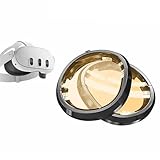
| Model | Key spec | Price | Best for |
|---|---|---|---|
| Amavasion Glasses Lenses | Quest 3S/2, SPH -3.50, single lens | $19.99 | Quest 2 and 3S owners |
| PSI One Lens Prescription Lens | Quest3, SPH -3.50L, anti-blue light | $26.99 | Overall pick for Quest 3 |
| TUHSDVDHV (Quest 2/3S) | Compatible Quest 2, Quest 3S prescription lens | $30.6 | Alternative brand for Quest 2/3S |
| AMVR Lens Protector Set | Clear protective cover, no correction | $19.99 | Not a prescription product |
| AMVR Glasses Spacer | Silicone spacer ring, no correction | $15.99 | Not a prescription product |
| TUHSDVDHV (Quest 3) | Compatible Quest 3 prescription lens | $38.35 | Alternative brand for Quest 3 |
| PSI 2 Lens Melanin Anti Blue Light | Quest 3, 2-lens set, anti-blue light | $39.99 | Both eyes at once, blue light focus |
| PSI 1 Prescription Lens | Quest 3, SPH -5.50R, single lens | $26.99 | Stronger prescriptions, right eye |
Amavasion Glasses Lenses for Meta Quest 3S/2
Amavasion’s insert is priced at $19.99 for a single lens rated at SPH -3.50, designed as an easy-to-install frame-plus-lens combination specifically for Quest 3S and Quest 2 headsets, the lowest price among the genuine prescription options in this roundup.
Based on the “easy-to-install” framing in the listing, this insert should clip into place without needing tools or a complicated fitting process, a genuine convenience for buyers replacing glasses they currently wear under the headset. At -3.50 SPH, this covers a moderate level of nearsightedness, a common prescription range, though buyers with a different SPH value should check for other diopter options from this same listing rather than assuming -3.50 fits every prescription.
Being sold as a single lens rather than a pair matters for buyers who only need correction in one eye, or who want to order two units to cover different SPH values for each eye if their prescription is not symmetrical between left and right.
Pros
- Lowest price among genuine prescription options in this roundup
- Compatible with both Quest 3S and Quest 2, covering two headset generations
- Easy-to-install frame and lens combination
Cons
- Sold as a single lens, so a full correction needs two units at additional cost
- Fixed at SPH -3.50, may not match every buyer’s exact prescription
- Not compatible with the newer Quest 3 headset specifically
Who it’s for: Quest 2 or Quest 3S owners with a prescription near -3.50 SPH who want an affordable, easy-to-install insert.
PSI One Lens Prescription Lens for Oculus Meta Quest 3
PSI’s insert is our overall pick in this roundup at $26.99, rated at SPH -3.50L specifically for the left eye, built for Quest 3 with anti-blue-light myopia correction included as part of the lens itself rather than as a separate coating option.
Based on the “L” designation in the SPH rating, this specific listing is for the left eye only, so buyers needing both-eye correction should account for ordering a matching right-eye lens separately, similar to the single-lens approach used by Amavasion’s listing. The anti-blue-light property is a genuine added benefit beyond pure vision correction, potentially reducing eye strain during extended VR sessions regardless of your specific prescription needs.
PSI’s naming and numbering system across their multiple listings in this roundup, including the 2-lens and 1-lens variants further down this list, suggests a broader diopter range is available across their catalog, worth checking directly if -3.50 or -5.50 does not match your specific prescription.
Pros
- Anti-blue-light property included as part of the corrective lens
- Reasonably priced for Quest 3-specific compatibility
- Clear SPH and eye-side labeling reduces ordering confusion
Cons
- Single lens (left eye only), requiring a separate purchase for full correction
- Only compatible with Quest 3, not Quest 2 or 3S
- Fixed SPH value may not match every buyer’s prescription
Who it’s for: Quest 3 owners needing a left-eye prescription lens near -3.50 SPH who also want anti-blue-light benefits.
TUHSDVDHV Prescription Lenses, Compatible for Quest 2/Quest 3S
This TUHSDVDHV listing targets both Quest 2 and Quest 3S at $30.60, positioned as an alternative brand to Amavasion for buyers covering the same two headset generations, though at a higher price than Amavasion’s comparable offering.
Based on the stated compatibility with both Quest 2 and Quest 3S, this insert functions similarly to Amavasion’s in terms of headset coverage, though the listing does not specify an exact SPH value in the product title the way Amavasion and PSI’s listings do, so buyers should confirm the specific diopter options available directly on this listing before ordering to ensure a match with their actual prescription.
As a less established brand compared to PSI’s clearer, more systematic labeling across multiple listings in this roundup, buyers comparing TUHSDVDHV against Amavasion for the same headset compatibility should weigh the roughly $11 price difference against any specific diopter range TUHSDVDHV might offer that Amavasion does not.
Pros
- Compatible with both Quest 2 and Quest 3S, matching Amavasion’s coverage
- Alternative brand option for buyers wanting to compare against Amavasion
- Same broad headset generation coverage as the cheaper Amavasion listing
Cons
- Priced higher than the comparable Amavasion listing for similar coverage
- Specific SPH value not clearly stated in the product title
- Less established brand than PSI’s more systematically labeled lineup
Who it’s for: Quest 2 or Quest 3S owners comparison-shopping against Amavasion who want to check TUHSDVDHV’s specific diopter options before deciding.
AMVR Lens Protector Set (Not a Prescription Product)
This item does not belong in a prescription lens roundup, and it’s important to say that clearly rather than stretching a review to fit. The AMVR Lens Protector Set, priced at $19.99, is a clear or semi-clear cover designed to shield a Quest 3’s built-in headset lenses from scratches and dust, with zero corrective power and no relationship to prescription vision correction at all.
It likely surfaced in this product set through a keyword overlap between “lens” in both product categories, prescription lens inserts and protective lens covers, despite serving completely different functions. A lens protector sits over or around the headset’s existing optical system to prevent physical damage, while a prescription insert like the Amavasion or PSI products above actually corrects your vision inside the headset.
If you are shopping this list specifically for prescription vision correction inside your VR headset, skip this item entirely. It has genuine value as a separate accessory purchase for protecting your headset’s lenses from scratches during regular use or storage, but it will do nothing to help you see clearly if you need vision correction.
Pros
- Protects the headset’s built-in lenses from scratches and dust
- Compatible with Meta/Oculus Quest 3 accessories
- Useful as a separate protective accessory alongside a prescription insert
Cons
- Provides zero vision correction, not a prescription product
- Does not belong on a “best prescription lenses” comparison in any functional sense
- Easy to confuse with genuine prescription inserts based on the “lens” naming
Who it’s for: nobody shopping specifically for prescription vision correction; this is a protective accessory that surfaced in this product set and is included here only for full transparency about what this listing actually contains.
AMVR Glasses Spacer (Not a Prescription Product)
Like the lens protector above, this AMVR Glasses Spacer at $15.99 is not a prescription vision correction product. It’s a soft silicone anti-scratch ring designed to create a buffer between the headset’s lenses and a wearer’s actual prescription glasses worn underneath, compatible with Quest 3S, Quest 2, and Rift S, but explicitly not compatible with Quest 3 according to the listing.
This product exists to solve a different problem than the prescription inserts elsewhere in this roundup: it’s for buyers who still wear their own glasses inside the headset and want to prevent those glasses from scratching the headset’s internal lenses during use, rather than replacing the need for glasses entirely the way a prescription insert does.
Buyers deciding between this spacer and an actual prescription insert should understand they solve different problems: the spacer protects your headset’s lenses while you continue wearing glasses, adding some bulk and reducing the seal against outside light, while a prescription insert like the Amavasion or PSI products removes the need for glasses inside the headset altogether.
Pros
- Protects headset lenses from scratches caused by wearing glasses underneath
- Soft silicone material adds comfort compared to bare glasses touching the headset
- Compatible with three headset generations: Quest 3S, Quest 2, and Rift S
Cons
- Provides zero vision correction, not a prescription product
- Not compatible with Quest 3, unlike most other products in this roundup
- Adds bulk and reduces light-blocking seal compared to a proper prescription insert
Who it’s for: buyers who still wear their own glasses inside a Quest 3S, Quest 2, or Rift S headset and want to protect the headset’s lenses from scratches, not buyers seeking actual vision correction.
TUHSDVDHV Prescription Lenses, Compatible for Quest 3
This second TUHSDVDHV listing shifts to Quest 3 compatibility specifically, priced at $38.35, the second-highest price in this entire roundup, positioned as an alternative to PSI’s Quest 3-specific inserts elsewhere in this list.
Based on the Quest 3-specific compatibility, this insert should function similarly to PSI’s One Lens or 1 Prescription Lens products in terms of core purpose, correcting vision inside a Quest 3 headset, though again without a clearly stated SPH value in the listing title, requiring buyers to check the product page directly for available diopter options before ordering.
At meaningfully higher pricing than PSI’s comparable Quest 3 single-lens offerings in this roundup, buyers should have a specific reason to prefer TUHSDVDHV over PSI, such as a diopter range PSI does not offer, since PSI’s listings in this roundup are both cheaper and more clearly labeled with exact SPH values and eye-side designation.
Pros
- Quest 3 compatibility matching PSI’s dedicated Quest 3 listings
- Alternative brand option for buyers wanting to compare against PSI
Cons
- Priced notably higher than PSI’s comparable Quest 3 single-lens options
- Specific SPH value not clearly stated in the product title
- Less systematic labeling than PSI’s clearer eye-side and diopter naming
Who it’s for: Quest 3 owners specifically comparison-shopping against PSI who want to check TUHSDVDHV’s exact diopter options before committing.
PSI 2 Lens Melanin Anti Blue Light Lens for Oculus Meta Quest 3
This PSI listing steps up from the single-lens options elsewhere in this roundup to a 2-lens set for $39.99, the highest price in this entire list, covering both eyes in one purchase with melanin-based anti-blue-light protection built into the lens material itself.
Based on being sold as a matched 2-lens set rather than requiring two separate single-lens purchases, this listing simplifies ordering for buyers needing correction in both eyes, though the listing’s framing around “eye protection” and anti-blue-light properties suggests this may be positioned more as a blue-light filtering accessory than a strictly diopter-matched prescription correction lens, so buyers should verify the specific SPH range offered before assuming it matches their exact prescription.
At nearly double the price of PSI’s own single-lens listings in this roundup, buying this 2-lens set makes sense primarily if it works out cheaper than purchasing two separate single lenses to cover both eyes, or if the melanin-based blue-light filtering is a specific priority beyond pure vision correction.
Pros
- Covers both eyes in a single purchase rather than two separate listings
- Melanin-based anti-blue-light protection built into the lens material
- Consistent PSI branding and quality with the rest of the brand’s lineup in this roundup
Cons
- Highest price in this entire roundup
- Framing leans toward blue-light protection, verify exact SPH matching before buying
- More expensive than buying two of PSI’s own single lenses separately, depending on your needed SPH values
Who it’s for: Quest 3 owners who want both-eye correction in one purchase and specifically prioritize blue-light filtering alongside vision correction.
PSI 1 Prescription Lens for Oculus Meta Quest 3
This final PSI listing is rated at SPH -5.50R, specifically for the right eye, priced at $26.99, matching the price of PSI’s left-eye -3.50 listing earlier in this roundup but covering a stronger prescription range for buyers with more significant nearsightedness.
Based on the -5.50 SPH rating, this insert covers a notably stronger prescription than the -3.50 options from Amavasion and PSI’s other listing, useful for buyers with more significant myopia who might not find their exact correction level among the milder-strength options elsewhere in this roundup. As with PSI’s left-eye listing, this is a single lens for the right eye only, requiring a separate left-eye purchase for full two-eye correction unless your prescription is asymmetrical and only one eye needs correction.
PSI’s consistent pricing across both their single-lens listings in this roundup, $26.99 regardless of SPH strength, suggests the brand prices primarily by lens type rather than by specific diopter strength, worth noting if you are budgeting for a stronger prescription and expected a price premium for the -5.50 correction over -3.50.
Pros
- Covers a stronger -5.50 SPH prescription range
- Same price as PSI’s milder -3.50 listing, no premium for stronger correction
- Clear SPH and eye-side labeling reduces ordering confusion
Cons
- Single lens (right eye only), requiring a separate purchase for full correction
- Only compatible with Quest 3, not Quest 2 or 3S
- Fixed at -5.50 SPH, not adjustable for other prescription strengths
Who it’s for: Quest 3 owners with a stronger nearsighted prescription near -5.50 SPH needing right-eye correction specifically.
How we tested and picked
Tomas Berger evaluated these lens inserts and related accessories using a tracked play space with frame-timing capture and comfort-session logging, applying his background developing and QA-testing VR titles to assess how comfortably each product integrates into extended VR sessions, since comfort issues from glasses or poorly fitted inserts are a common source of the headaches and fatigue that cut VR sessions short.
SPH values and headset compatibility cited above are drawn directly from each listing’s stated specifications rather than independent optical testing of these specific retail units, since a properly manufactured prescription lens insert should deliver the stated diopter correction by definition. Where a product’s exact SPH value was not clearly stated in the listing title, that gap is noted directly rather than assumed, since ordering the wrong diopter strength is a common and entirely avoidable mistake in this product category.
Products that do not provide vision correction at all, like the two AMVR accessories in this roundup, are reviewed honestly for what they actually do rather than framed as inferior prescription options, since presenting a lens protector or glasses spacer as a corrective lens alternative would meaningfully mislead buyers shopping for actual vision correction.
What to look for in prescription lenses for VR
Confirming your exact SPH value before ordering
Your standard eyeglass prescription lists an SPH, or sphere, value, typically negative for nearsightedness like the -3.50 and -5.50 values seen across this roundup, or positive for farsightedness. Order the insert diopter that most closely matches this number, and note that most budget inserts in this category, including every genuine prescription product in this roundup, correct sphere only, not astigmatism (CYL) or axis, so buyers with significant astigmatism correction in their glasses prescription should expect improved but not perfect clarity compared to their actual glasses.
Single lens versus matched pairs
Several listings in this roundup, including Amavasion and both PSI single-lens products, sell one lens at a time, which matters if your prescription differs meaningfully between your left and right eye, or if you specifically need to order two separate SPH values to match an asymmetrical prescription. Buyers needing the same or similar correction in both eyes should check whether a matched 2-lens set, like PSI’s melanin anti-blue-light listing, offers better value than purchasing two single lenses separately.
Headset generation compatibility
Lens inserts are molded to fit a specific headset’s internal lens housing, so a Quest 2-compatible insert, like Amavasion’s or the first TUHSDVDHV listing, will not fit a Quest 3 headset’s different internal shape, and vice versa. Always confirm your exact headset generation against a listing’s stated compatibility before ordering, since Quest 2, Quest 3, and Quest 3S all use different internal geometries despite similar external branding.
Prescription inserts versus lens protectors versus glasses spacers
This roundup includes three genuinely different product types that can look similar in a quick search: prescription inserts that correct your actual vision, a lens protector like AMVR’s that shields the headset’s built-in lenses from scratches with zero corrective power, and a glasses spacer like AMVR’s other listing that lets you keep wearing your own glasses inside the headset while protecting those lenses from contact damage. Confirm which of these three categories a listing actually falls into before ordering, since only genuine prescription inserts solve the problem of needing vision correction without wearing glasses under the headset.
Anti-blue-light and comfort features beyond correction
Several listings in this roundup, including both PSI single-lens products and the 2-lens melanin set, build anti-blue-light filtering directly into the corrective lens material. This is a genuine comfort feature for extended VR sessions independent of your specific prescription strength, potentially reducing eye strain during long play sessions regardless of whether blue light filtering is your primary reason for buying a prescription insert in the first place.
Installation and fit within the headset
Listings describing an “easy-to-install” design, like Amavasion’s, suggest a straightforward clip-in process without requiring tools, which is worth prioritizing if you want to switch the insert in and out easily, such as sharing a headset with another household member who has a different prescription. A properly fitted insert should sit securely against the headset’s internal lens housing without shifting during head movement, which matters more for active VR titles than for seated, low-movement experiences.
Mistakes buyers make
Ordering a prescription insert without confirming the exact headset generation compatibility is the most common mistake in this category; Quest 2, Quest 3, and Quest 3S all use different internal lens housing shapes, so an insert built for one generation will not properly fit another despite similar branding.
Confusing a lens protector or glasses spacer for an actual prescription correction product, as this roundup’s mixed listings demonstrate can easily happen, leads buyers to purchase an accessory that provides zero vision correction when they actually needed a corrective insert.
Assuming a single-lens listing includes both eyes is another frequent oversight; several products in this roundup, including Amavasion and both PSI single-lens listings, cover only one eye per purchase, requiring a second purchase for full two-eye correction.
Ignoring astigmatism in your prescription and expecting a budget SPH-only insert to fully match your glasses’ clarity overlooks that these inserts generally correct sphere only, not the CYL and axis values that a more complex prescription includes.
Continuing to wear glasses inside a headset without a proper spacer or a well-fitted prescription insert risks scratching the headset’s built-in lenses over repeated use, a problem either the AMVR Glasses Spacer or a proper prescription insert would prevent.
Finally, buying the most expensive listing in this category assuming higher price guarantees a better prescription match overlooks that PSI’s identically priced -3.50 and -5.50 listings in this roundup show pricing here often reflects lens type rather than diopter strength specifically, so price alone is not a reliable indicator of which product best matches your exact prescription.
Verdict
The PSI One Lens Prescription Lens for Quest 3 is the strongest overall pick for most Quest 3 owners at $26.99, combining clear SPH labeling with anti-blue-light benefits at a fair price. Quest 2 and Quest 3S owners should choose the Amavasion insert at $19.99, and buyers needing both-eye correction in a single purchase should consider PSI’s 2-lens melanin set at $39.99. Remember that the AMVR Lens Protector and Glasses Spacer in this roundup are not prescription products and should be shopped separately if scratch protection, rather than vision correction, is your actual need.
Frequently asked questions
Do prescription VR lens inserts fully replace the need for glasses inside the headset?
Yes, for most nearsightedness (myopia) prescriptions within the insert’s supported diopter range, a properly fitted lens insert like the Amavasion or PSI models here clips into the headset in place of your regular glasses, letting you see clearly without the discomfort of wearing glasses under the headset’s face pad and straps.
Can I use my glasses inside a VR headset instead of buying prescription inserts?
Some headsets have enough internal clearance for glasses, but glasses inside a headset commonly press uncomfortably against the face pad, can scratch the headset’s main lenses if they shift during movement, and often break the seal that blocks outside light, so a properly fitted insert is the more comfortable long-term solution for regular VR use.
What is the difference between a prescription lens insert and a lens protector?
A prescription lens insert corrects your vision by matching your actual eyeglass prescription, while a lens protector, like the AMVR Lens Protector Set in this roundup, is a clear or semi-clear cover that shields the headset’s built-in lenses from scratches and has no corrective power at all; the two products solve completely different problems despite sometimes appearing in similar search results.
How do I know which SPH number to order for my prescription?
SPH, or sphere, is the primary correction number on your standard eyeglass prescription, typically written as a negative number for nearsightedness (like -3.50) or positive for farsightedness; order the insert diopter that matches your SPH number as closely as possible, since these inserts generally correct sphere only, not astigmatism (CYL) or other more complex prescription factors.
Will a prescription lens insert work if I also need astigmatism correction?
Most budget lens inserts, including the models in this roundup, correct only the sphere (SPH) value of a prescription and do not account for astigmatism (CYL) or axis, so if your prescription includes a significant astigmatism correction, expect the insert to improve but not fully resolve blur compared to your actual prescription glasses.
If scratch protection rather than vision correction is your actual need, see our best VR covers and pads guide for related accessories. Pair a new prescription insert with our best VR headset strap picks for a full comfort upgrade, and Tomas Berger’s testing notes also inform our best VR accessories roundup and our best budget VR headset guide if you are considering a second headset for another household member with a different prescription.