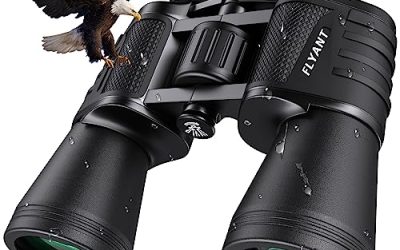
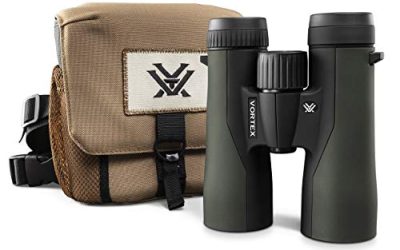
A ceiling of under 500 dollars is generous for a birder. It is enough to cover a solid mid-range roof prism pair, yet most of the models people actually buy for backyard feeders and weekend trails sit well below that line. The real question is not how to spend the full amount, but where a limited budget gets the most useful bird-watching performance: sharper glass, a steadier magnification, a comfortable fit, and a sealed body that survives drizzle on a marsh boardwalk.
That framing matters because the listings in this price range tempt you with huge numbers. Fifteen-power and twenty-power binoculars sound exciting, but a bird that jumps from a branch is hard to find in a shaky, narrow image. This guide compares six options for 2026, from a full-size 8×42 to pocket-size compacts, so you can choose on the basis of how you actually watch rather than on the biggest figure on the box.
Our Top Picks

Top 3 picks at a glance
Quick Picks
As an Amazon Associate we earn from qualifying purchases at no extra cost to you.


| Product | Best for | Key spec from the title |
|---|---|---|
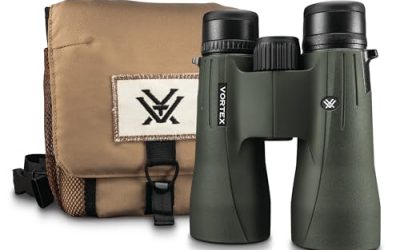
| Celestron Outland X 8×42 | Steady all-round birding | BaK-4 prisms, multi-coated, rubber-armored, waterproof |
| Celestron Nature DX 10×42 | Reach on woodland and shoreline trips | Phase-coated roof prism, nitrogen-purged, twist-up eyecups |
| Deesoo 15×56 | Distant waterfowl with phone photos | 15×56, BAK4 prism, FMC optics, phone adapter |
| 10×26 compact travel binoculars | Pocket carry on cruises and trips | 10×26, waterproof, compact |
| Bushnell PowerView 20×50 | Fixed-position watching | Porro prism, 20x50mm |
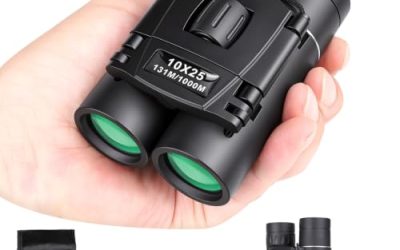
| AROXEN 10×25 pocket | Concerts, light hikes, and kids | BAK4 coated optics, 305ft/1000yds field of view |
How to Choose
Magnification: 8x or 10x is the sweet spot
Birders gravitate to 8x and 10x for a reason. At those powers, you can hold the image steady, locate a bird quickly, and keep it in view as it moves. Beyond about 12x, a handheld image starts to dance, and the field of view narrows so much that finding a small songbird becomes a chore. If you want the extra reach of 15x or 20x, plan to use a tripod, a fence rail, or a car window as a brace.
Think about the birds you watch most. Warblers in leafy canopy reward a wide field and quick focus. Ducks on a far reservoir reward reach and a stable platform. Raptors riding thermals sit somewhere in the middle, where 10x is often a happy compromise. Matching the power to the habitat is more useful than owning the highest number you can afford.
Objective size and weight trade-offs
The second number, such as 42 or 26, is the objective lens diameter in millimeters. Forty-two millimeters gathers plenty of light for dawn chorus walks, while 25 or 26 millimeters is more suited to bright days and pocket carry. Bigger objectives also mean more weight. A full-size pair can feel heavy by the end of a long walk, while a compact pair slips into a jacket pocket but struggles in dim forest light.
Exit pupil is the number to watch: divide the objective by the magnification. An 8×42 gives about 5.25 millimeters and a 10×25 gives about 2.5, which is why the compact looks fine at noon yet dim under a canopy. If you rarely bird before breakfast or after sunset, a compact may be perfectly adequate.
Glass, prisms, and coatings that matter
Look for BaK-4 or BAK4 prisms, fully multi-coated or FMC lenses, and phase-coated roof prisms when available. Phase coatings improve contrast and color in roof prism designs, which helps when picking out a bird against dappled foliage. Porro prism designs, like the Bushnell listed here, give a wider body and often a deeper sense of depth at a lower cost, but they are bulkier. The cap of under 500 dollars lets you step up to ED or HD glass in some brands, but none of these listings call it out, so judge them by their stated coatings.
Because the budget has headroom, there is no need to settle for a blurry edge. When you try a pair, look at a power line against the sky: strong glass keeps it a neat dark line, while weaker glass adds color halos on either side. That quick check is far more telling than any adjective in a product description.
Weatherproofing, eye relief, and what to ignore
Waterproof and nitrogen-purged housings keep out rain and prevent internal fogging when you move between temperatures. Twist-up eyecups and adequate eye relief matter if you wear glasses. Budget compacts usually cut corners on edge sharpness and focus-wheel feel. Ignore vague claims like “super high powered” or “surveillance,” which tell you nothing about image quality and often signal narrow fields of view. Also ignore any claim that a compact “replaces” a full-size pair; the physics of light gathering still apply, and small objectives will always look dimmer in poor light.
The 6 Best Options
Celestron Outland X 8×42
Outland X is explicitly aimed at birding and nature viewing, with a rugged rubber-armored body, waterproof construction, BaK-4 prisms, and multi-coated optics. Eight-power makes it forgiving for newcomers who are still learning to locate birds in a crowded tree. A new birder who tends to lose track of a warbler the moment it moves will find the wider, calmer image easier to work with than a high-power alternative, and the rugged body suggests it will tolerate being tossed into a daypack on the way to the trailhead.
- Strength: 8×42 layout combines steadiness with good light gathering.
- Strength: Rubber armor and waterproofing for rain and bumps.
- Trade-off: The title does not name ED or HD glass.
Skip it if you want phase-coated prisms or a higher magnification.
Celestron Nature DX 10×42
Nature DX adds ten-power, a phase-coated roof prism, and a nitrogen-purged housing to a waterproof birding and hiking design. The listing also mentions twist-up eyecups, which suit glasses wearers. Birders who like to scan estuaries, forest edges, and open fields and want a little more reach than 8x without jumping to extreme power are the target audience here, especially if they often pick up hikes where the weather changes quickly.
- Strength: Phase coating and roof prism for better contrast.
- Strength: Nitrogen-purged housing resists internal fogging.
- Trade-off: Ten-power makes hand shake more noticeable than 8x.
Skip it if you prefer the steadier view of an 8x pair.
Deesoo 15×56
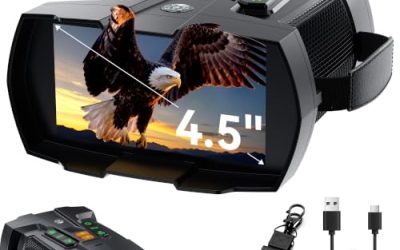
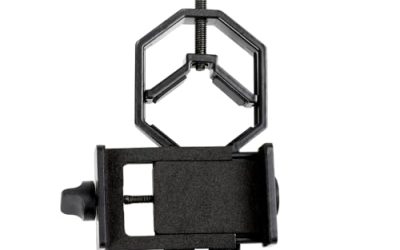
Deesoo pushes magnification to 15x with 56 millimeter lenses, plus a phone adapter, BAK4 prisms, and FMC optics. It is billed for birding, wildlife observation, and cruise ship travel. It is attractive to someone who watches ducks, gulls, and shorebirds at long range from a pier or a lakeside bench, and who wants to snap a record shot of an unusual visitor for a local sightings group.
- Strength: Big objective lenses and strong reach for distant water birds.
- Strength: Phone adapter for capturing sightings.
- Trade-off: Fifteen-power in the hand is shaky and the field of view is narrow.
Skip it if you plan to hold it without any support.
10×26 Compact Travel Binoculars
This unbranded compact is built for adults on trips, cruises, and light birding, and the listing calls it waterproof and high power in a small body. It is the sort of pair that lives in a bag until a good sighting appears. Travelers who want to glance at harbor birds from a ship deck, then tuck the binoculars away before dinner, are the likely audience, along with casual hikers who care more about weight than about squeezing out every last bit of detail.
- Strength: Small and easy to carry everywhere.
- Strength: Waterproof body for travel conditions.
- Trade-off: 26 millimeter lenses are limited in low light.
Skip it if you mostly watch at dawn, dusk, or in dense forest.
Bushnell PowerView 20×50
This is a Porro prism design at 20×50, described as super high powered and ideal for hunting, birding, and hiking. It targets people who want maximum magnification and will likely brace it or mount it. Porro prism bodies are wider than roof prism designs, so this one suits a person who watches from a blind, a car, or a feeder window rather than someone covering miles on foot with the pair swinging at their chest.
- Strength: Very high reach for distant objects.
- Strength: Familiar brand name with a straightforward design.
- Trade-off: Twenty-power amplifies hand shake and narrows the view.
Skip it if you want to track moving birds by hand.
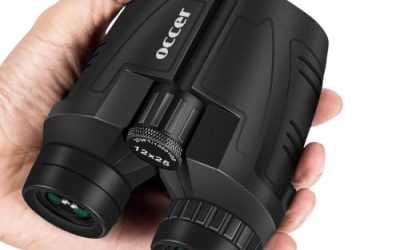
AROXEN 10×25 Compact Pocket Binoculars
AROXEN is a pocket-size, ultralight pair with BAK4 coated optics and a stated 305 feet at 1,000 yards field of view. It also targets kids and concert use, which suggests an easy, forgiving format. It is a reasonable pair for a parent introducing a child to backyard birds, or for an adult who wants something that fits a coat pocket and is ready when a hawk circles overhead during a walk.
- Strength: Wide field of view for a compact.
- Strength: Waterproof and lightweight for casual outings.
- Trade-off: Small objectives reduce brightness at twilight.
Skip it if you want serious dawn performance.
Which One Fits Your Situation
You are new to birding and want one dependable pair
The Celestron Outland X 8×42 is the logical starting point. It combines a steady magnification, multi-coated optics, and a rugged waterproof body without pushing you toward the top of the budget.
You wear glasses and hike through woodland
Consider the Celestron Nature DX 10×42, which lists twist-up eyecups and a nitrogen-purged housing. Its phase-coated roof prism is meant to boost contrast under tree cover.
You watch waterfowl from a fixed spot
The Deesoo 15×56 and the Bushnell PowerView 20×50 both offer major reach. Pair them with a tripod or a window mount to get the benefit without the wobble. The Deesoo adds a phone adapter for record shots, while the Bushnell is the simpler, no-extras choice for pure viewing.
You travel light and want something for the pocket
The AROXEN 10×25 or the 10×26 compact keeps weight down for cruises and day trips. Expect good daytime viewing and less comfort in dim light. They also make sense as a second pair, kept in a glove box or carry-on so you are never caught without optics when an unexpected bird lands nearby.
Common Mistakes
- Chasing 15x or 20x for handheld use and ending up with a shaky, hard-to-aim image.
- Spending the whole budget on magnification instead of glass quality and coatings.
- Choosing a tiny compact and then expecting bright views at dawn.
- Overlooking eyecups and eye relief when you wear glasses.
- Assuming “waterproof” and “fogproof” mean the same thing.
Related guides
- How To Clean Quest 3 Lenses And Facial Interface
- Vr Facial Interfaces For Glasses Wearers
- Micro Sd Cards For Samsung Galaxy Phones
Frequently Asked Questions
What magnification is best for birding?
Most birders choose 8x or 10x. They provide a steady image and a wide enough field of view to find birds quickly.
Is 42 millimeters better than 25 millimeters?
For low light, yes. A 42 millimeter objective gathers more light, but it also weighs more. Compact 25 or 26 millimeter pairs trade brightness for portability.
Do I need to spend the whole under 500 dollars budget?
No. Many good birding pairs cost far less. The cap simply gives you room to move up to better glass if you find a model that fits.
Can I use a phone adapter for bird photos?
Yes, models like the Deesoo include one. It works best when the binoculars are steady, so a tripod or rest improves results.