The best radio scanner for most people in 2026 is the Whistler TRX-1, a handheld digital trunking scanner that covers APCO P25 Phase I and Phase II, programs through Whistler’s EZ Scan software, and runs on rechargeable batteries so it works at a desk, in a vehicle, or on a kitchen counter. It suits anyone whose local police, fire, or EMS traffic has moved to a digital trunked system, which describes most mid-size and large metro areas. If your local agencies still run conventional analog channels and you mainly want something on the nightstand with weather alerts and a clock, the Uniden BC365CRS does that job for a mid-range outlay. If you want the widest digital mode coverage and don’t mind paying premium prices, the SDR-based Uniden SDS150 is the most capable receiver here. And if you only care about tornado and flash-flood warnings, the budget Midland WR120B is the correct answer — not a scanner at all.
Our Top Picks
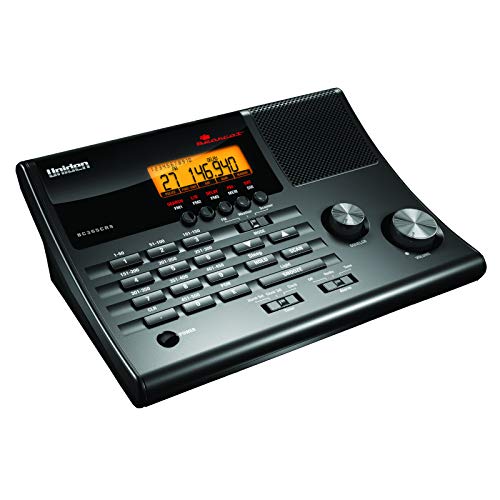 Uniden BC365CRS 500 Channel Scanner and Alarm ClockOne Size8.46 x 3.35 x 8.46 Inches1 poundsCheck on Amazon
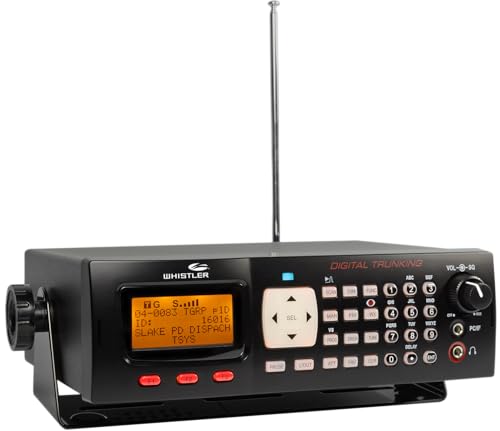
 Whistler TRX-1 Handheld Digital Police Scanner Radio7.75in. x 7.31in. x 5.75in.1.06 x 2.12 x 5.31 Inches0.5 PoundsCheck on Amazon



Top 3 picks at a glance
Quick Comparison
| Product | Best for | Key specs | Price tier |
|---|---|---|---|
| Uniden BC365CRS | Bedside and kitchen-table listening with weather alerts | 500 channels; conventional analog VHF low/high, UHF, 800 MHz; NOAA weather alert; alarm clock with snooze; FM broadcast; telescopic antenna; AC powered | Mid-range |
| Uniden SDS150 | Advanced digital monitoring and the widest mode coverage | SDR-based receiver architecture; digital trunking including P25 Phase I/II plus upgradeable digital modes; large color display; microSD programming and recording; location-based scanning with GPS accessory | Premium |
| Whistler WS1065 | Desktop digital trunking on a fixed base antenna | ~1,800 memory objects; P25 Phase I digital plus Motorola Type II, EDACS and LTR trunking; backlit display; PC programming; BNC antenna jack; AC powered | Premium |
| ZHIWHIS A330 | Shortwave and SSB listening on a budget | Wide-frequency portable receiver; SSB (USB/LSB); LW/MW/SW plus FM broadcast; telescopic antenna; DSP filtering; battery powered | Mid-range |
| Whistler TRX-1 | Portable digital trunking you can carry anywhere | APCO P25 Phase I & II; analog Motorola/EDACS/LTR trunking; EZ Scan PC programming; microSD card; color display; rechargeable battery operation; BNC antenna | Premium |
| BAOFENG UV-5G Plus (2-pack) | GMRS family and group communications | 999 channels; CHIRP compatible; GMRS handheld power class; repeater-capable; NOAA weather receive; two radios in the box | Mid-range |
| Baofeng AR-5RM 10W | Budget long-range amateur handheld use | 10 W transmit; VHF/UHF amateur bands; NOAA weather receive; rechargeable battery; emergency/tactical styling with accessory support | Budget |
| Midland WR120B | Weather alerts and nothing else | NOAA weather band channels; SAME county-code decoding; audible alert and alarm clock; battery backup; external antenna jack | Budget |
| BAOFENG K5PLUS 10W | Tri-band amateur use with accessories included | 10 W transmit; tri-band amateur coverage; long high-gain antenna and speaker mic bundled; rechargeable battery | Budget |
| Uniden BEARTRACKER 885 | CB plus scanning in one vehicle installation | 40-channel CB radio; digital trunking scanner in the same chassis; weather channels; mobile 12 V install; BearTracker warning features | Premium |
| HanRongDa A330 | Pocket shortwave scanning and travel listening | Portable SSB shortwave receiver; wide-frequency coverage; telescopic antenna; DSP; small battery-powered form factor | Mid-range |
| Baofeng UV-5R (Pofung) | First amateur handheld and cheap backup radio | Dual-band VHF/UHF amateur transmit; 128 memory channels; FM broadcast receive; rechargeable battery; needs a programming cable for serious channel work | Budget |
How We Chose
This roundup is built from published manufacturer specifications, product documentation, and the long-standing technical conventions of the scanning hobby — not from bench measurements or sample units. The selection criteria were deliberately narrow. First, frequency coverage: a product had to cover a band set that makes sense for its stated purpose, whether that is conventional public safety in the 137–174 MHz and 400–512 MHz ranges, digital trunked systems in the 700 MHz and 800 MHz bands, the civil airband, or shortwave below 30 MHz. Second, trunking and digital support, because a scanner that cannot follow a P25 Phase II talkgroup is close to useless in a market that has migrated to digital. Third, programming difficulty, which is the single most common reason a scanner ends up in a drawer: bank-and-channel interfaces, object-oriented memory, PC software, and CHIRP compatibility are very different experiences. Fourth, antenna and receiver performance factors — antenna jack type, whether the stock antenna is replaceable, and whether the receiver design handles simulcast distortion. Fifth, display usability, since backlit monochrome LCDs and color displays are not interchangeable for night use. Sixth, portability and upgrade path: battery type, size, accessory ecosystem, and whether the platform can add digital modes later. Products that did not clearly win their niche were left out rather than padded in.
1. Uniden BC365CRS – Best for Bedside and Kitchen-Table Listening
As an Amazon Associate we earn from qualifying purchases at no extra cost to you.
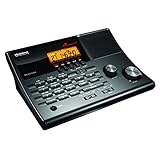
The BC365CRS is the scanner you buy when you do not want to learn a scanner. It is a 500-channel conventional analog receiver with a built-in alarm clock, snooze function, FM broadcast radio, and NOAA weather alerting, and it is designed to sit on a nightstand or a kitchen counter rather than on a radio bench. It suits someone who wants to hear local analog public safety, railroad, marine, aircraft, and amateur traffic without a PC, a license, or a manual the size of a paperback.
Key specs
- 500 programmable channels
- Conventional analog coverage across VHF low band, VHF high band, UHF, and 800 MHz
- NOAA weather band reception with weather alert
- AM/FM broadcast radio reception with alarm clock and snooze
- Service search bands for common categories such as police/fire, weather, marine, aircraft, railroad, and amateur
- Telescopic antenna, AC powered with battery backup for clock memory
- Backlit LCD with direct channel access, priority, and channel lockout
The appeal here is friction. There is no software to install, no microSD card to format, and no object-oriented memory model to wrap your head around. You can punch in a frequency from a local frequency guide and be listening in under a minute. The weather alert function is genuinely useful in a way that a plain weather radio is not, because the same box also scans your local public safety channels and doubles as your bedroom clock radio.
The limitation is equally clear, and it is the one that matters most in 2026. The BC365CRS is analog and conventional only. It does not decode P25 digital audio, and it does not follow trunked systems. In a metro area where police and fire have moved to a P25 Phase II trunked network, this radio will hear the control channel noise and the occasional analog patch, and very little else. Before buying, check what your local agencies actually transmit on — most regional frequency databases list the system type and whether encryption is in use.
Antenna performance is the other soft spot. The supplied telescopic whip is a compromise across a very wide band set, which is true of nearly every desktop scanner in this class. If you live 20 miles from the action, a cheap outdoor discone at roof height will transform reception more than any setting on the radio will.
Pros
- Genuinely simple to operate; no computer required
- Weather alert, clock, and snooze make it a dual-purpose appliance
- 500 channels is far more memory than most casual listeners ever fill
- FM broadcast reception means it earns its counter space even when scanning is quiet
Cons
- No digital decoding at all — no P25, no DMR, no NXDN
- No trunk tracking, so most modern public safety systems are out of reach
- Stock antenna is a wideband compromise
- No PC programming, which becomes tedious past a few dozen channels
Against the Whistler WS1065, the BC365CRS is the cheaper, friendlier, and much less capable radio. The WS1065 adds P25 Phase I digital and full trunk tracking, but it is a desktop base unit that expects a real antenna and a PC for programming. If your local systems are analog, the BC365CRS is the better buy; if they are digital, spending the extra on the Whistler — or the portable TRX-1 — is the difference between hearing traffic and hearing nothing.
2. Uniden SDS150 – Best for Advanced Digital Monitoring

Uniden describes the SDS150 as its most advanced digital radio scanner, built on software-defined radio (SDR) technology. That architecture is the whole story. Instead of a conventional analog front end feeding a dedicated digital decoder chip, an SDR-based scanner digitizes a wide swath of spectrum and does the demodulation, filtering, and trunk tracking in software. The practical payoff is better handling of simulcast distortion — the multipath problem that makes conventional digital scanners sound like they are gargling on the very systems most people want to monitor.
Key specs
- Software-defined radio receiver architecture
- Digital trunk tracking including APCO P25 Phase I and Phase II, with additional digital modes available through Uniden’s upgrade path
- Analog trunk tracking for legacy Motorola, EDACS, and LTR systems
- Large color display with on-screen information density suited to trunked system monitoring
- microSD card for programming, favorites lists, and recording
- Location-based scanning when paired with a compatible GPS accessory
- Rechargeable battery operation with an external antenna connection
Who it suits: the listener who has already been through one or two cheaper scanners, knows their local system type, and is tired of marginal digital audio. If your area runs a simulcast P25 Phase II network with multiple transmitter sites on the same frequency, this is the class of radio that solves the problem. It is also the right pick for someone who wants to monitor several digital modes rather than just one, and who would rather pay once than buy a Phase I radio and discover six months later that the system has moved on.
The costs are real. Premium pricing, a learning curve that assumes you understand talkgroups, sites, and service types, and a programming workflow built around Uniden’s software and database conventions rather than manual frequency entry. This is not a radio you hand to a family member and expect them to operate.
Battery life is the other trade-off inherent to SDR designs. Digitizing and processing a wide bandwidth costs more current than a simple analog receiver, so plan on shorter runtime per charge than an analog handheld of similar size, and carry a spare pack or a USB power source for long monitoring sessions. As a rough calculation: a 3,000 mAh pack drawing an average of 300 mA while scanning with the display lit and audio up gives you about 10 hours; drop the backlight and run at roughly 180 mA average and the same pack stretches past 16 hours. The display and the audio amplifier, not the receiver, are usually what drains the battery.
Pros
- SDR front end handles simulcast distortion better than conventional digital designs
- Broadest digital mode coverage in this roundup, with an upgrade path
- Color display and microSD storage make large favorites lists manageable
- GPS-based location scanning is a genuine quality-of-life feature for travel
Cons
- Premium price tier for a receive-only device
- Steep learning curve; assumes familiarity with trunked system concepts
- Higher current draw than analog handhelds, so shorter battery runtime
- Some digital modes require paid upgrades rather than being included
Compared with the Whistler TRX-1, the SDS150 is the more technically ambitious radio and the better answer to simulcast problems, while the TRX-1 is the easier radio to live with day to day thanks to EZ Scan and a simpler memory model. If you monitor a difficult simulcast system, the Uniden’s architecture is worth the premium. If your systems are clean and you want straightforward portable digital trunking, the TRX-1 gets you there for less.
3. Whistler WS1065 – Best for Desktop Digital Trunking

The WS1065 is a base-station digital trunking scanner with a backlit display and roughly 1,800 memory objects, designed to sit on a desk with a real antenna connected to its BNC jack and a PC handling the programming. It suits the listener who monitors from one location, wants a permanently installed setup, and does not need to carry the radio around. It is the natural upgrade for someone who started with a conventional desktop scanner and discovered their local system went digital.
Key specs
- Approximately 1,800 programmable memory objects
- APCO P25 Phase I digital decoding
- Analog trunk tracking for Motorola Type II, EDACS, and LTR systems
- Conventional analog coverage across VHF low, VHF high, UHF, and 800 MHz
- Backlit LCD display with object-oriented memory organization
- PC programming via Whistler’s software and a data cable
- BNC antenna connector; AC powered
The object-oriented memory model is the defining feature of this platform, and it is worth understanding before you buy. Rather than banks and channels, you create objects — conventional frequencies, talkgroups, and scan lists — and then assign objects to lists. It is more flexible than bank scanning once you grasp it, and considerably more confusing on day one. Budget an evening with the manual and the PC software.
Where the WS1065 falls short is Phase II. It decodes P25 Phase I, which covers a large share of deployed systems, but a network running Phase II will not be fully readable. That is the single most important thing to check before ordering: look up your local system and confirm whether it is Phase I, Phase II, or encrypted. If it is Phase II, the TRX-1 or the SDS150 is the correct purchase instead.
On the antenna side, the WS1065 rewards investment. A desktop base scanner with a BNC jack can be fed from a roof-mounted discone or a band-specific vertical, and that usually matters more than anything else in the chain. Here is the arithmetic that explains why: the wavelength of a signal at 155 MHz is 300 ÷ 155 = 1.94 m, so a quarter-wave vertical for that band is about 48 cm (19 inches). At 460 MHz, the wavelength drops to 0.65 m and the quarter wave is only about 16 cm (6.4 inches). One whip cannot be resonant at both, which is why the stock telescopic antenna on any wideband scanner is a compromise and why a proper wideband discone — non-resonant by design, roughly 1 m across — outperforms it across the board.
Pros
- P25 Phase I digital plus legacy analog trunking in one desktop box
- Object-oriented memory handles large systems better than bank scanning
- BNC connector accepts serious base and outdoor antennas
- Backlit display is readable in a dim room
Cons
- No P25 Phase II support
- PC software and cable are effectively mandatory for setup
- Not portable — AC powered desktop form factor only
- Object-oriented memory has a genuine learning curve
Against the Uniden SDS150, the WS1065 is the simpler, less expensive desktop route into digital monitoring, with the caveat that it stops at Phase I. Against the portable TRX-1, it trades mobility for a fixed installation, a bigger antenna, and typically better audio from a mains-powered chassis. If you monitor from one desk and your system is Phase I, it is the sensible buy; if you need Phase II or portability, look upward in this list.
4. ZHIWHIS A330 – Best for Shortwave and SSB Listening

The ZHIWHIS A330 is a portable wide-frequency receiver with single-sideband (SSB) capability, aimed at shortwave listeners rather than at public safety scanning. It suits someone who wants to hear international broadcasters, HF amateur traffic, utility and maritime stations, and the general shortwave landscape between roughly 1.7 MHz and 30 MHz — content that no trunking scanner will ever receive, because scanners generally do not tune below 25 MHz at all.
Key specs
- Wide-frequency portable receiver covering longwave, mediumwave, shortwave, and FM broadcast
- SSB reception in upper and lower sideband
- DSP filtering for noise reduction and selectivity
- Telescopic antenna with an external antenna option on most versions of this class
- Battery-powered pocketable form factor with headphone output
- Direct frequency entry, scanning, and memory presets
SSB is the feature that separates this radio from a generic portable. Most international shortwave broadcasters use plain amplitude modulation, which any cheap receiver can demodulate. Amateur HF voice, maritime weather, aviation HF, and utility stations mostly use single sideband, which requires a beat-frequency oscillator and fine tuning control. Without SSB, a large and interesting slice of the HF spectrum is unintelligible.
Practically, the A330 is a travel and bedside radio. It fits in a jacket pocket, runs on batteries, and tunes with a thumbwheel or keypad depending on the version. Sensitivity with the telescopic whip is adequate for strong broadcast signals in the evening, when HF propagation opens up, but weak stations reward a long wire antenna clipped to the external antenna terminal. That is not a flaw specific to this radio — it is how HF works. A 10 m length of wire strung as high as you can get it will outperform any whip on shortwave.
The limitation is that this is not a scanner. It has no trunk tracking, no digital voice decoding, and no 700/800 MHz coverage. If your interest is local police and fire, this is the wrong product entirely. It is also worth noting that HF reception quality varies enormously with time of day, season, and solar conditions, so a station that booms in at 9 p.m. may be inaudible at noon.
Pros
- SSB reception opens up amateur and utility HF traffic
- Genuinely pocketable and battery powered
- DSP filtering helps on crowded shortwave bands
- Cheap entry point into shortwave listening compared with a full HF transceiver
Cons
- No trunking, no digital voice modes, no public safety bands
- Whip antenna limits weak-signal reception
- Small speaker; headphones are advisable for long sessions
- HF reception is inherently variable with propagation
The obvious alternative in this list is the HanRongDa A330, which is a very similar portable SSB shortwave receiver in the same price tier and the same general design language. The two are close enough that the deciding factors are usually the bundled accessories, the exact band coverage printed on the listing, and which one is in stock. If you want a larger display and a more substantial feel, the HanRongDa tends to be the slightly more conventional pick; the ZHIWHIS tends to appeal to listeners who want the smallest possible travel radio. Neither competes with a desktop HF receiver, and neither competes with a trunking scanner — they are different tools for a different band.
5. Whistler TRX-1 – Best for Portable Digital Trunking

The TRX-1 is a handheld digital scanner covering APCO P25 Phase I and Phase II, programmed through Whistler’s EZ Scan software with a microSD card holding the configuration. It is the best overall pick in this roundup for most people because it combines the two things that matter most in 2026 — Phase II digital trunking and portability — in a radio that is genuinely usable rather than merely capable.
Key specs
- APCO P25 Phase I and Phase II digital trunk tracking
- Analog trunk tracking for Motorola, EDACS, and LTR systems
- Conventional analog coverage across VHF low, VHF high, UHF, and 800 MHz
- EZ Scan PC software for programming, with microSD card storage
- Color display
- Rechargeable battery operation with a BNC antenna connector
- GPS-compatible location-based scanning on supported configurations
The case for the TRX-1 starts with Phase II. Phase II is the narrowband, two-slot variant of P25 and is what a large share of newer public safety networks in North America run. A Phase I–only radio hears those systems imperfectly or not at all. Buying Phase II capability now is the difference between a radio you keep for a decade and one you replace in eighteen months.
The second argument is EZ Scan. Whistler’s software imports system data, lets you build scan lists on a computer, and writes them to the microSD card. That workflow is dramatically less painful than entering talkgroups by hand on a keypad. If you have ever spent an hour typing frequencies into a scanner, you will understand why this is the feature people actually talk about.
The third argument is form factor. It runs on rechargeable batteries and takes a BNC antenna, so the same radio works on the couch with a stock whip and in a vehicle with a mag-mount on the roof. Runtime depends heavily on how you use it: with the display dimmed, the squelch set properly, and mostly idle listening, a typical rechargeable pack can run well past a full day; with the backlight on and the audio loud, expect that to drop to a handful of hours. The calculation is straightforward — a 2,500 mAh pack averaging 125 mA gives about 20 hours, and the same pack averaging 300 mA gives about 8. The variable is you, not the radio.
Pros
- P25 Phase I and Phase II in a handheld form factor
- EZ Scan software makes large systems manageable
- microSD storage and a color display
- BNC connector accepts upgraded portable and mobile antennas
Cons
- Premium price tier
- Some digital modes beyond P25 require paid upgrades
- Stock antenna is a compromise, as on every handheld
- Simulcast-heavy systems can still be a challenge for this receiver class
Against the Whistler WS1065, the TRX-1 costs more but adds Phase II and portability, which makes it the better long-term purchase for most people. Against the Uniden SDS150, it gives up the SDR front end and its simulcast advantage, but it is easier to program and easier to live with. If your local system is a clean, non-simulcast Phase II network, the TRX-1 is the sweet spot. If it is simulcast and difficult, the SDS150 earns its premium.
6. BAOFENG UV-5G Plus – Best for GMRS Family and Group Communications

The UV-5G Plus is a GMRS handheld sold as a two-pack, with 999 channels and CHIRP compatibility. It is not a scanner in the trunking sense — it is a two-way radio for talking, and that distinction matters. It suits families, hiking groups, event staff, farm and property managers, and anyone who wants reliable short-range voice communications between people without an amateur radio exam.
Key specs
- 999 programmable channels
- CHIRP-compatible programming via computer
- GMRS operation including repeater channels
- NOAA weather channel reception
- Two radios included, each with its own battery and charger
- Handheld form factor with keypad and LCD
The licensing situation is the reason this product exists in the form it does. In the United States, GMRS requires a license, but unlike an amateur license it involves no examination — you pay a fee and receive a call sign that covers your immediate family. That makes GMRS the practical choice for a household that wants radios that work. Repeater access extends range considerably beyond simplex handheld distance, and a well-placed repeater can cover a whole county.
On the scanning question, be realistic about what this radio does. It receives GMRS and FRS channels, weather channels, and a set of programmable receive frequencies within its tuning range, but it does not cover 700/800 MHz public safety, it does not trunk track, and it does not decode P25. It is a communications tool with a scanner-like feature set bolted on, not a monitoring receiver.
The two-pack packaging is the real value proposition. Two radios, two chargers, one purchase — which is exactly what a family needs and exactly what a single-radio purchase does not provide. Add a programming cable and CHIRP and you can load a shared channel plan onto both radios in a few minutes, which is the correct way to set up any group radio system. Pick a small set of channels, label them clearly, and write the plan down somewhere everyone can find it.
Pros
- No-exam GMRS licensing makes it accessible to non-hobbyists
- Two radios included, so a group is operational immediately
- CHIRP compatibility makes channel planning painless
- Repeater capability extends usable range significantly
Cons
- Not a scanner — no trunking, no digital decoding, no 800 MHz
- Requires a GMRS license to transmit legally in the US
- Needs a programming cable and software for anything beyond basic setup
- Stock antenna performance is modest, as with all handhelds in this class
Against the Baofeng UV-5R, the UV-5G Plus is the more legally straightforward option for a family: GMRS licensing is simpler than amateur licensing, and the two-pack removes the need to buy radios individually. Against the AR-5RM, it gives up raw transmit power and amateur band flexibility in exchange for a licensing path that does not require studying for an exam. If your goal is talking to your own group, GMRS wins. If your goal is listening to public safety, neither radio is the right tool — look at the TRX-1 or the SDS150.
7. Baofeng AR-5RM 10W – Best for Budget Long-Range Amateur Handheld Use

The AR-5RM is a 10 W VHF/UHF amateur handheld with NOAA weather reception and a rechargeable battery, positioned by Baofeng as a long-range, emergency-oriented radio. It suits newly licensed amateur operators who want more transmit power than the classic 5 W handhelds provide, and preppers who want a rugged, self-contained radio with weather receive in the same package.
Key specs
- 10 W transmit power on VHF/UHF amateur bands
- NOAA weather channel reception
- Rechargeable battery pack
- Handheld form factor with keypad and LCD
- Accessory support for external microphones and antennas
- Emergency and tactical styling with a reinforced feel
The 10 W figure deserves context, because it is the headline and also the most misunderstood number on the box. Doubling transmit power from 5 W to 10 W adds 3 dB, which is a modest improvement in a real-world link budget — noticeable at the margins, not transformative. Range on VHF/UHF is dominated by antenna height and terrain. A 5 W handheld on a hilltop will out-talk a 10 W handheld in a valley every time. Buy this radio for the ergonomics and the weather receive as much as for the wattage.
Where the extra power does help is on transmit into a marginal repeater, or when using a better antenna. Pairing a 10 W handheld with a quarter-wave whip cut for 2 m — about 50 cm, since the wavelength at 146 MHz is 300 ÷ 146 = 2.05 m and a quarter of that is 0.51 m — gives a meaningfully better signal than the stock wideband antenna. That single change is usually worth more than the power increase.
The licensing caveat is unavoidable: transmitting on amateur bands in the US requires a Technician class license or higher, obtained by passing an exam. Receiving requires no license at all, which is why so many people buy these radios and simply listen. Listening on amateur bands is a legitimate use and a reasonable way to learn whether the hobby interests you before you study for the exam.
Pros
- 10 W transmit gives a small but real edge on marginal links
- NOAA weather receive is genuinely useful in the field
- Cheap enough to buy two and keep one as a spare
- Large accessory ecosystem of antennas, mics, and batteries
Cons
- Requires an amateur license to transmit legally
- Not a scanner — no trunking, no digital voice, no 800 MHz
- The extra 3 dB over 5 W is less significant than antenna improvements
- Stock antenna underperforms a band-specific replacement
Against the Baofeng UV-5R, the AR-5RM is the more modern and more powerful radio with weather receive built in, at a modest price premium. Against the K5PLUS, it trades tri-band coverage and bundled accessories for a simpler dual-band package. If you are choosing between the three budget Baofengs, pick the AR-5RM for power, the K5PLUS for band coverage and included accessories, and the UV-5R for the lowest possible entry price and the largest body of community documentation.
8. Midland WR120B – Best for Weather Alerts and Nothing Else
The WR120B is a NOAA weather alert radio with SAME county-code decoding, an alarm clock, battery backup, and an external antenna jack. It is the one product in this list that is not a scanner and does not pretend to be. It suits households in tornado, flash flood, hurricane, and severe winter storm regions where the requirement is simple: a loud alarm that goes off when your specific county is under a warning, including at 3 a.m. when the power is out.
Key specs
- NOAA weather band channel reception
- SAME (Specific Area Message Encoding) decoding for county-level alerts
- Audible alert tone with alarm clock function
- Battery backup so alerts still work during a power outage
- External antenna jack for improved reception in weak-signal areas
- Simple physical controls, no programming software
SAME is the feature that justifies the purchase over a cheap weather radio. Without SAME, a weather radio alerts on every warning broadcast within reception range, which in a multi-county broadcast area means you get woken up for a storm 60 miles away. With SAME, you program your county’s six-digit code and the radio stays silent unless the alert applies to you. That single feature is the difference between a device people keep plugged in and a device people unplug at night.
Setup is a five-minute job: power it, program the SAME code for your county, select the strongest of the weather channels, and test the alert. The external antenna jack matters more than people expect — weather band signals sit around 162 MHz, and in basements, metal buildings, or fringe coverage areas the stock antenna may not pull in a reliable signal. A simple outdoor antenna on that jack fixes it.
What it will not do is scan anything. No public safety, no aircraft, no amateur bands, no shortwave. That is the point: it is a single-purpose safety appliance, and it does that job better than a general-purpose scanner does, because a scanner cannot decode SAME alerts and will not reliably wake you for a county-specific warning.
Pros
- SAME decoding means alerts are specific to your county
- Battery backup keeps it working during outages, when it matters most
- External antenna jack improves fringe-area reliability
- Budget price tier and near-zero setup complexity
Cons
- No scanning capability whatsoever
- Weather band only — no public safety, airband, or shortwave
- Basic build and controls
- Requires you to look up and enter the correct SAME code
Against the Uniden BC365CRS, the WR120B is the specialist and the BC365CRS is the generalist. The BC365CRS includes weather alerting plus 500 channels of conventional scanning, but it lacks SAME county filtering, so its weather alerts are broader and more nuisance-prone. If your only requirement is severe weather notification, the Midland is the better and cheaper tool. If you want weather alerts plus local scanning in one box, the Uniden is the more versatile choice.
9. BAOFENG K5PLUS 10W – Best for Tri-Band Amateur Use With Accessories Included

The K5PLUS is a 10 W tri-band amateur handheld that ships with a long high-gain antenna and a speaker microphone. It suits licensed amateur operators who want coverage across more than the standard 2 m and 70 cm bands, and who would rather buy a bundle than assemble one from separate parts.
Key specs
- 10 W transmit power
- Tri-band amateur frequency coverage
- Long high-gain antenna included
- Speaker microphone included
- Rechargeable battery
- Handheld form factor with keypad and LCD
The bundled accessories are the reason to look at this radio rather than a bare handheld. A speaker mic matters more than most new operators expect: holding a radio to your face to talk is awkward, and a clip-on mic lets the radio stay on your belt or in a pack while you operate. The included high-gain antenna is likewise a real upgrade over the short rubber ducks that come with entry-level radios, though “high gain” on a handheld antenna is relative — a longer whip improves VHF performance more than UHF, and the improvement is measured in a couple of dB, not in miles.
Tri-band coverage is useful if you have repeaters or activity on the third band in your area. In North America that is often the 1.25 m band, which is lightly used compared with 2 m and 70 cm but has loyal regional followings. Check what is actually active near you before paying extra for a band you will never key up. In many markets the practical difference between a tri-band and a dual-band handheld is negligible.
As with every amateur handheld here, transmitting requires a license. The K5PLUS is not a scanner: it will not trunk track, will not decode P25, and will not cover 700/800 MHz public safety. Buy it to talk on amateur bands, not to monitor public safety.
Pros
- Antenna and speaker mic included, which saves a separate purchase
- 10 W transmit for marginal links
- Tri-band coverage adds a band most dual-band radios lack
- Budget price tier despite the bundle
Cons
- Amateur license required to transmit
- Not a scanner — no trunking, no digital modes, no 800 MHz
- Third band may be unused in your region
- Bundled antenna is better than stock but still a compromise
Against the AR-5RM, the K5PLUS adds tri-band coverage and a bundled speaker mic, making it the better-equipped package for a similar budget outlay. Against the UV-5R, it is a substantially more modern radio with far better accessories and much more transmit power. If you are choosing your first amateur handheld and you want the bundle, the K5PLUS is the strongest value in the budget tier of this roundup.
10. Uniden BEARTRACKER 885 – Best for CB Plus Scanning in One Vehicle Installation

The BEARTRACKER 885 is a hybrid: a 40-channel CB radio and a digital trunking scanner sharing one chassis, designed for mobile installation in a truck, van, or RV. It suits drivers who want CB communication for traffic and convoy coordination and also want to monitor police, fire, ambulance, and DOT channels from the same dashboard footprint, with a single power connection and a single antenna feed.
Key specs
- 40-channel CB radio with standard CB controls
- Digital trunking scanner integrated into the same chassis
- Analog trunk tracking for legacy Motorola, EDACS, and LTR systems
- Conventional analog coverage across VHF low, VHF high, UHF, and 800 MHz
- Weather channels and alerting
- BearTracker warning features for highway monitoring
- 12 V mobile installation with a compact control head
The value proposition is space and wiring. A separate CB and a separate scanner means two power runs, two mounting brackets, two antennas, and a dashboard that looks like a radio shop. Combining them into one chassis halves the installation work. For a long-haul driver or a van-lifer, that is a meaningful practical advantage.
The trade-offs are real. A hybrid means the scanner section is not the best scanner Uniden makes — the SDS150 beats it on digital mode coverage and simulcast handling — and the CB section is a competent but not exceptional 40-channel CB. You are buying convenience, not peak performance in either category. Before ordering, verify which digital trunking protocols your specific model year supports, because Uniden has revised the BearTracker line’s capabilities over time and the digital mode list is the detail that matters most.
Antenna planning is the part people get wrong. A CB antenna is tuned around 27 MHz and a scanner antenna needs to cover 137–174 MHz and 400–512 MHz at
Related guides
- Best Streaming Gear for Twitch: Webcams, Capture Card, Backdrop and Light (2026)
- Best Over Ear Headphones: 9 Closed, Open-Back and Bluetooth Picks Explained (2026)
- Best Monitor for Console Gaming: Eight 1080p and 1440p Screens Compared by HDMI and Refresh Rate (2026)
- Best Monitors for PS5 Pro 4K 120Hz: Eight Screens and the HDMI Bandwidth Check (2026)