The best kinetic recovery ropes match your vehicle’s fully loaded weight, recovery angle, and available space: for most SUVs and half-ton trucks, choose a 7/8-inch rope about 30 feet long with at least 28,000–30,000 pounds of minimum breaking strength; heavier trucks and difficult terrain justify a 1-inch rope rated around 35,000 pounds or more.
As an Amazon Associate we earn from qualifying purchases at no extra cost to you.



Our Top Picks
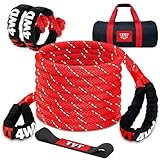
 Kinetic Recovery Rope 1.26" x 30ft 55000lbs1.26"x 30FT+2 Soft Shackle360 x 1.26 x 0.1 InchesCheck on Amazon

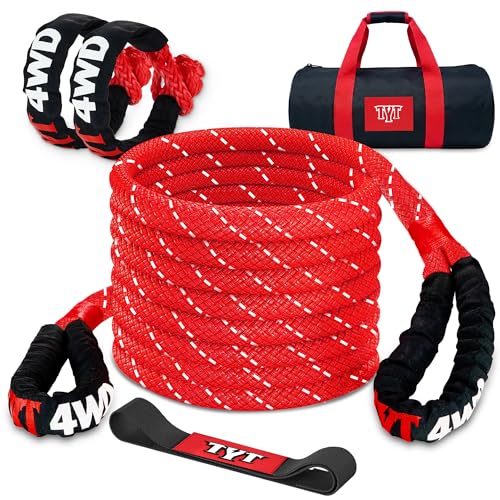

Top 3 picks at a glance
What makes a kinetic recovery rope different?
A kinetic rope is made from stretchable synthetic fiber, usually nylon, so it stores energy as the recovery vehicle moves forward. That stored energy produces a smoother pull than a rigid tow strap, helping free a vehicle from mud, sand, or loose snow without the sharp shock load caused by a sudden jerk.
The three specifications that matter most are:
- Breaking strength: the force at which the rope is expected to fail under laboratory conditions. It is not the same as a safe working load or the weight your vehicle can tow.
- Stretch: typically about 20–30% for a quality kinetic rope. More stretch can create a softer pull, but it also requires more room and careful driving.
- Length: longer ropes provide more distance and energy storage, while shorter ropes are easier to use in tight trails and less likely to drag on obstacles.
Quick comparison: which rope size fits your vehicle?
| Vehicle and recovery situation | Recommended rope class | Typical breaking strength | Useful length | Why choose it |
|---|---|---|---|---|
| Compact SUV, crossover, or small pickup | 5/8-inch kinetic rope | 15,000–20,000 lb | 20–30 ft | Light, compact, and adequate for moderate recoveries |
| Jeep Wrangler, midsize SUV, or midsize pickup | 3/4-inch kinetic rope | 20,000–25,000 lb | 20–30 ft | Good balance of flexibility, strength, and storage size |
| Full-size SUV or half-ton pickup | 7/8-inch kinetic rope | 28,000–32,000 lb | 30 ft | The most versatile size for common trail recoveries |
| Three-quarter-ton or one-ton truck | 1-inch kinetic rope | 35,000–45,000 lb | 30–35 ft | More reserve strength for heavy vehicles and difficult extractions |
| Heavily modified truck or commercial-size recovery | 1 1/4-inch or larger rope | 50,000 lb or more | 30–40 ft | Use only with suitably rated recovery points and hardware |
These are selection ranges, not permission to exceed the ratings of the vehicle, recovery points, shackles, winch, or rope. The weakest component determines the system’s limit.
How to calculate the strength you actually need
Vehicle curb weight is only a starting point. Add passengers, fuel, tools, camping equipment, armor, and spare tires to estimate the recovery weight. Then apply a recovery factor based on how difficult the vehicle is to free.
A practical planning formula is:
Required rope strength = recovery weight × recovery factor
- 1.5×: level-ground recovery from shallow mud or loose sand
- 2×: deeper mud, ruts, snow, or a moderate incline
- 3× or more: steep slopes, heavily buried vehicles, side loads, or recoveries involving significant suction
For example, suppose a loaded midsize SUV weighs 5,000 pounds. A muddy recovery with a 2× factor gives a planning force of 10,000 pounds. A 3/4-inch rope rated at 20,000–25,000 pounds has useful reserve strength, provided the recovery points and shackles are rated at least as highly.
Now consider a loaded three-quarter-ton truck weighing 8,000 pounds in deep mud. At 3×, the planning force is 24,000 pounds. A 7/8-inch rope may have enough nominal breaking strength, but a 1-inch rope rated around 35,000–45,000 pounds provides more margin for imperfect angles, dynamic loading, and wear.
This calculation is deliberately conservative. A kinetic rope does not eliminate shock loads; it reduces them when the recovery is performed correctly.
Breaking strength versus stretch
Breaking strength
Breaking strength helps compare ropes, but it should not be treated as a recommended pulling force. A rope advertised at 30,000 pounds may fail below that figure after abrasion, contamination, knots, sharp bends, or repeated high-load recoveries.
Look for a clearly stated minimum breaking strength, a protective sleeve, sewn eyes, and instructions that identify compatible shackles and recovery points. Avoid products that provide only a vague “heavy duty” label.
Stretch
Most useful kinetic ropes stretch roughly 20–30% under load. A 30-foot rope with 25% potential stretch can extend by about 7.5 feet. That distance is part of the recovery system, so leave enough room for the rope to lengthen without contacting a tree, rock, vehicle, or bystander.
Higher stretch is useful when the stuck vehicle is in soft mud because it allows the moving vehicle to build force progressively. Lower stretch can feel more controlled in a short, tight recovery, but it may transmit more shock if the driver accelerates aggressively.
Choosing between 20-foot and 30-foot ropes
A 20-foot rope is easier to store and works well on narrow trails where the vehicles must remain close. It is also useful when the recovery points are clearly visible and the terrain between vehicles is uncomplicated.
A 30-foot rope is the better general-purpose choice. It gives the recovery vehicle room to gain controlled momentum, keeps the vehicles farther apart in mud or uneven terrain, and offers more usable stretch. Its disadvantages are extra weight, more storage space, and a greater chance of dragging over abrasive ground.
Choose a 30-foot rope for a primary recovery kit unless storage or trail geometry strongly favors a shorter model. A 40-foot rope can help in open sand or snow, but it is unnecessary for many wooded trails and demands careful placement to avoid abrasion.
Notable kinetic-rope options and spec classes
Bubba Rope Gator
The Bubba Rope Gator line is a well-known option for four-wheel-drive recovery and is available in sizes intended for different vehicle weights. Its main appeal is a purpose-built kinetic design with protective sleeves and reinforced eyes. Select the diameter by the loaded vehicle weight rather than buying the largest version automatically; an oversized rope is heavier and can be harder to handle.
Yankum Ropes kinetic recovery ropes
Yankum offers kinetic recovery ropes in multiple diameters and lengths, including options aimed at SUVs, pickups, and heavier trucks. The range is useful when you want to match the rope closely to the vehicle rather than choosing one universal size. Check the current product label for minimum breaking strength, intended vehicle class, and compatible hardware before purchase.
Rhino USA kinetic recovery ropes
Rhino USA sells recovery ropes and kits covering common off-road vehicle sizes. Kits can be convenient because they may include soft shackles or storage equipment, but evaluate every component separately. A high-rated rope does not make an under-rated shackle or factory tie-down point safe.
Generic 7/8-inch and 1-inch ropes
Spec-class ropes can be excellent value when they publish verifiable ratings and construction details. For a generic rope, prioritize minimum breaking strength, rope diameter, stated stretch, eye construction, sleeve coverage, and warranty support over a colorful sheath or an unusually high marketing number.
Decision matrix for common recoveries
| Your situation | Best starting choice | Reason | Upgrade when |
|---|---|---|---|
| 4,000-lb crossover, occasional snow recovery | 5/8-inch, 20–30 ft | Compact and sufficient for light recoveries | You regularly recover larger vehicles |
| 4,500–5,500-lb Jeep or midsize truck | 3/4-inch, 30 ft | Balanced strength and manageable weight | You carry heavy armor or use deep mud |
| 5,500–7,000-lb full-size SUV or half-ton truck | 7/8-inch, 30 ft | Strong general-purpose setup | Vehicle exceeds 7,000 lb loaded or recovery is severe |
| 7,000–10,000-lb diesel or one-ton truck | 1-inch, 30–35 ft | More reserve for high loads and suction | Using commercial equipment or severe side loads |
Safe-use details that matter more than an extra rating
- Attach only to manufacturer-approved recovery points or properly installed rated points. Never use a trailer-ball mount, hitch pin, tie-down loop, or suspension component unless it is specifically designed for recovery.
- Use a rated soft shackle or screw-pin bow shackle with a rating compatible with the rope and recovery points.
- Lay the rope flat and inspect it before every use. Cut fibers, melted sections, severe fuzzing, chemical contamination, and damaged eyes are reasons to retire it.
- Keep people at least clear of the recovery path and never stand inside a bight or near a loaded connection.
- Use gentle throttle and stop if the rope reaches full extension without freeing the vehicle. Reposition, reduce suction, clear mud from the tires, or change the recovery angle.
- Wash mud and grit out with clean water, dry the rope completely, and store it loosely rather than permanently compressed or wet.
Frequently asked questions
Can I use a kinetic recovery rope with a trailer ball or hitch pin?
No. Attach the rope only to manufacturer-approved recovery points or properly installed rated points. The article specifically says never to use a trailer-ball mount, hitch pin, tie-down loop, or suspension component unless it is specifically designed for recovery. Use a rated soft shackle or screw-pin bow shackle whose rating is compatible with both the rope and the recovery points.
How should I inspect a kinetic recovery rope before using it?
Lay the rope flat and inspect it before every use. Retire it if you find cut fibers, melted sections, severe fuzzing, chemical contamination, or damaged eyes. Protective sleeves and sewn eyes are useful features, but they do not replace inspection. Abrasion, contamination, knots, sharp bends, and repeated high-load recoveries can reduce a rope’s actual performance.
How much space should I leave around a stretched recovery rope?
Leave enough room for the rope to lengthen without contacting a tree, rock, vehicle, or bystander. A 30-foot rope with 25% potential stretch can extend by about 7.5 feet. Longer ropes provide more distance and energy storage, but they can also drag over abrasive ground, so place them carefully and keep people clear of the recovery area.
Can a kinetic rope be used with any shackle or recovery point?
No. The weakest component determines the system’s limit. The rope, shackles, recovery points, winch, and vehicle must all have suitable ratings, and a high-rated rope does not make an under-rated shackle or factory tie-down point safe. Follow the rope instructions for compatible hardware and use only properly rated recovery points and shackles.
Why should I avoid choosing the largest rope automatically?
The largest rope is not automatically the best choice because an oversized rope is heavier and can be harder to handle. Choose the diameter by the vehicle’s fully loaded weight, recovery difficulty, and available space. For most SUVs and half-ton trucks, the article recommends a 7/8-inch rope about 30 feet long with at least 28,000–30,000 pounds of minimum breaking strength.
Bottom line
For most recreational off-road drivers, the best kinetic recovery ropes are 7/8-inch, 30-foot models with approximately 28,000–32,000 pounds of stated minimum breaking strength. Choose a 3/4-inch rope for a lighter midsize vehicle when compact storage matters, or step up to a 1-inch rope for a heavy truck, substantial modifications, or frequent deep-mud recoveries. Match every part of the recovery system to the same vehicle-weight calculation, because rope strength alone cannot make an underrated recovery setup safe.
Related guides
- Best Streaming Gear for Twitch: Webcams, Capture Card, Backdrop and Light (2026)
- Best Over Ear Headphones: 9 Closed, Open-Back and Bluetooth Picks Explained (2026)
- Best Monitor for Console Gaming: Eight 1080p and 1440p Screens Compared by HDMI and Refresh Rate (2026)
- Best Monitors for PS5 Pro 4K 120Hz: Eight Screens and the HDMI Bandwidth Check (2026)