Our Top Picks
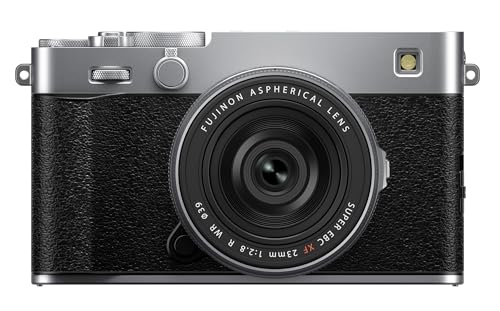 FUJIFILM X-E5 Mirrorless Digital Camera XF23mmF2.8 Lens Kit9.1 x 9.1 x 9.1 inches1.18 poundsCheck on Amazon
 FUJIFILM X-M5 Mirrorless Digital Camera XC15-45mmF3.5-5.6 OIS PZ9.1 x 9.1 x 9.1 inchesCheck on Amazon
 FUJIFILM X-T5 Mirrorless Digital Camera XF16-50mmF2.8-4.8 R LM3 x 6 x 4 inches3.46 poundsCheck on Amazon

Top 3 picks at a glance
Best Fujifilm X Series Cameras in 2026
The best Fujifilm X Series camera for most photographers is the Fujifilm X-T5, while the X-S20 is the better hybrid choice, the X-T50 is the best lightweight high-resolution body, and the X-H2S is the strongest option for fast action and professional video.
All of these cameras use Fujifilm’s APS-C X-mount system, but they are not interchangeable in practice. Sensor resolution, autofocus behavior, stabilization, battery capacity, controls, and body size make each model better suited to a different style of shooting.
As an Amazon Associate we earn from qualifying purchases at no extra cost to you.


Quick decision guide
| Shooting situation | Best choice | Why | Typical body price range |
|---|---|---|---|
| All-purpose photography | Fujifilm X-T5 | 40.2MP sensor, weather resistance, excellent controls, IBIS | Usually $1,500–$1,800 |
| Travel and video | Fujifilm X-S20 | Strong battery, comfortable grip, IBIS, capable 6.2K video | Usually $1,000–$1,300 |
| Small high-resolution kit | Fujifilm X-T50 | 40.2MP sensor and stabilization in a compact body | Usually $1,400–$1,700 |
| Sports, birds, and demanding video | Fujifilm X-H2S | 26.1MP stacked sensor, fast readout, advanced subject tracking | Usually $1,800–$2,300 |
| Maximum detail and studio work | Fujifilm X-H2 | 40.2MP sensor, high-resolution video, large professional body | Usually $1,500–$2,000 |
| Compact everyday photography | Fujifilm X-M5 | Small 26.1MP body with modern autofocus and strong video features | Usually $700–$900 |
| Fixed-lens street photography | Fujifilm X100VI | 40.2MP sensor, 35mm-equivalent lens, hybrid viewfinder, IBIS | Usually $1,600–$2,000 |
Fujifilm X-T5: the best all-round X Series camera
The X-T5 is the strongest general recommendation because it combines the 40.2MP X-Trans CMOS 5 HR sensor with in-body image stabilization, weather resistance, dual card slots, a high-resolution electronic viewfinder, and traditional shutter-speed and ISO dials.
Its resolution is useful for landscapes, portraits, architecture, and wildlife crops. A 40.2MP APS-C file gives you considerably more cropping room than the 26.1MP sensors used in cameras such as the X-S20 and X-M5. The trade-off is larger files and slightly less forgiving storage requirements.
Autofocus is effective for people, animals, birds, vehicles, and other tracked subjects, although the X-H2S remains the better choice when fast movement and minimal viewfinder blackout matter most. The X-T5 can record 6.2K video, but its smaller grip and photography-focused controls are less comfortable for long video sessions.
Its seven-stop-class IBIS can make a major difference with prime lenses or when photographing indoors. It does not freeze a moving subject; stabilization only compensates for camera movement. For a moving person, you may still need around 1/125 second or faster, regardless of the claimed stabilization rating.
Fujifilm X-S20: the best hybrid and travel choice
The X-S20 is the easiest X Series camera to recommend to photographers who also shoot video. Its deep central grip, fully articulating screen, five-axis stabilization, subject-detection autofocus, headphone and microphone support, and large NP-W235 battery make it practical for travel, vlogging, family events, and long handheld shooting.
It uses a 26.1MP APS-C sensor rather than the newer 40.2MP sensor. That is still enough for large prints and substantial cropping, while producing smaller files and slightly reducing storage demands. The camera records 6.2K video and can use a cooling fan accessory for longer recording sessions.
Battery capacity is one of its biggest advantages. The rated battery life is roughly 750 frames in economy mode, although continuous video, image stabilization, autofocus, and screen brightness can reduce real-world endurance. A simple travel power budget illustrates the difference: carrying two NP-W235 batteries gives a rated capacity of about 1,500 still frames, while two smaller NP-W126S batteries in a compact body may provide roughly 600–700 rated frames combined.
Choose the X-S20 over the X-T5 if a comfortable grip, long battery life, and video ergonomics matter more than maximum resolution and dedicated exposure dials.
Fujifilm X-T50: high resolution in a smaller body
The X-T50 puts the 40.2MP sensor and IBIS into a body that is smaller and lighter than the X-T5. It is an excellent match for street photography, travel, portraits, and landscape work when you want high-resolution files without carrying a professional-sized camera.
The main compromises are its smaller battery, single card slot, and less substantial grip. With the standard NP-W126S battery, its rated endurance is around 300 frames, depending on the power mode and shooting configuration. For a full day of travel, carry at least one spare battery or use USB-C charging during breaks.
The dedicated Film Simulation dial is useful if you frequently switch between Fujifilm looks such as Acros, Classic Chrome, and Velvia. However, the body is less ideal for long lenses, large zooms, or extended video work than the X-S20 and X-H2 models.
Fujifilm X-H2S: the best camera for action
The X-H2S is the specialist choice for sports, birds, wildlife, motorsports, and fast-paced documentary work. Its 26.1MP stacked sensor reads the scene much faster than a conventional sensor, reducing rolling-shutter distortion and allowing very responsive bursts.
It can shoot at extremely high electronic-shutter speeds and offers sophisticated subject detection, pre-shot capture, blackout-reduced continuous shooting, and professional video features. The lower resolution compared with the X-T5 and X-H2 is deliberate: the 26.1MP sensor produces smaller files and supports faster readout.
For action, lens choice matters as much as the camera. A 50-140mm zoom is useful for field sports and portraits, while a 100-400mm or 150-600mm lens provides the reach needed for distant wildlife. These lenses are much larger than compact Fujifilm primes, so the X-H2S’s larger grip and optional battery grip are practical advantages rather than unnecessary bulk.
Fujifilm X-H2: the best for detail and serious video
The X-H2 shares the 40.2MP sensor family with the X-T5 but uses a larger, more video-oriented body. It offers strong stabilization, a high-resolution viewfinder, dual card slots, CFexpress Type B support, and advanced video modes including 8K recording.
It is a better fit than the X-T5 for studio photographers, commercial creators, landscape specialists, and filmmakers who need sustained recording, larger controls, or professional media. CFexpress is especially useful for high-bitrate video because its write speeds are far higher than those of ordinary SD cards.
The cost is portability. The X-H2 body, larger batteries, and CFexpress cards add weight and expense to a travel kit. If you rarely record video or need extreme crop flexibility, the X-T5 delivers a more compact experience.
Fujifilm X-M5: the smallest modern interchangeable-lens option
The X-M5 is aimed at creators and travelers who want interchangeable lenses without an electronic viewfinder. Its 26.1MP sensor, subject-detection autofocus, articulating screen, compact body, and modern video features make it attractive for casual photography, social video, and lightweight kits.
The absence of a viewfinder is important. Bright sunlight can make screen composition harder, and photographers who prefer eye-level shooting will be more comfortable with the X-T50, X-T5, or X-E5. The small grip also becomes less comfortable with large zooms.
Pair the X-M5 with a compact prime such as a 23mm, 27mm, or 35mm-equivalent lens for a genuinely portable system. Avoid judging portability by body size alone: a small camera with a large telephoto lens is still a large package.
Fujifilm X100VI: the best fixed-lens street camera
The X100VI is a special case rather than a conventional system camera. It uses the 40.2MP sensor, has in-body stabilization, and includes a fixed 23mm f/2 lens equivalent to 35mm on full-frame. Its hybrid optical/electronic viewfinder, leaf shutter, built-in flash, and compact design make it exceptionally well suited to street photography, travel, and everyday documentation.
The fixed lens is both its strength and its limitation. You get a quiet, compact, balanced camera with no lens-changing decisions, but you cannot switch to a telephoto for wildlife or a wider lens for architecture. Digital teleconverter modes can simulate tighter fields of view, but they reduce the effective resolution compared with using a longer native lens.
Lens compatibility and system planning
Every interchangeable-lens camera listed here uses Fujifilm’s X mount. Fujifilm XF lenses are the premium weather-sealed and optically refined options, while XC lenses are generally smaller, lighter, and more affordable. Third-party X-mount lenses from manufacturers such as Sigma, Tamron, Viltrox, and Samyang expand the system, but autofocus performance and weather sealing can vary by lens.
- Travel: combine a compact 18mm or 23mm prime with a small standard zoom.
- Portraits: consider a 35mm, 50mm, or 56mm lens, depending on the desired working distance.
- Wildlife: prioritize the 70-300mm, 100-400mm, or 150-600mm class and choose the X-H2S if tracking speed is critical.
- Video: look for internal focusing, low focus breathing, stabilization, and a lens with a quiet motor.
Which one should you buy?
Choose the X-T5 for the best balance of resolution, controls, stabilization, and portability. Choose the X-S20 if video, battery life, and grip comfort are priorities. Choose the X-T50 when you want 40.2MP files in a smaller body. Choose the X-H2S for fast action, or the X-H2 for maximum detail and demanding video production. The X-M5 is the value-oriented compact option, while the X100VI is the most coherent choice for photographers who prefer a fixed 35mm-equivalent perspective.
Frequently asked questions
Does image stabilization freeze moving subjects?
No. In-body image stabilization compensates for camera movement, not subject movement. When photographing a moving person, you may still need around 1/125 second or faster, regardless of the claimed stabilization rating. Stabilization is most useful for reducing blur caused by your own hand movement, especially when using prime lenses or photographing indoors.
Which Fujifilm X Series cameras have the best battery endurance?
The X-S20 has the strongest stated battery endurance, with a rated battery life of roughly 750 frames in economy mode. Its NP-W235 battery is larger than the NP-W126S used in compact bodies. Continuous video, stabilization, autofocus, and screen brightness can reduce real-world endurance, so carrying spare batteries or using USB-C charging can help.
Is a higher-resolution sensor always better for photography?
No. The 40.2MP sensors in cameras such as the X-T5, X-T50, X-H2, and X100VI provide more cropping room, but create larger files and greater storage demands. The 26.1MP sensors in the X-S20, X-H2S, and X-M5 still support large prints and substantial cropping, while producing smaller files.
What should I consider when choosing lenses for an X Series camera?
Consider both the subject and the complete size of the kit. A 50-140mm zoom suits field sports and portraits, while a 100-400mm or 150-600mm lens provides more reach for distant wildlife. Compact primes such as 23mm, 27mm, or 35mm-equivalent lenses make small bodies more portable, whereas large telephoto lenses add considerable bulk.
What are the main drawbacks of choosing a camera without an electronic viewfinder?
The X-M5 does not include an electronic viewfinder, so composing in bright sunlight can be harder when using its screen. Photographers who prefer eye-level shooting may be more comfortable with the X-T50, X-T5, or X-E5. Its small grip can also become less comfortable with large zooms, despite the body itself being compact.
Related guides
- Best Streaming Gear for Twitch: Webcams, Capture Card, Backdrop and Light (2026)
- Best Over Ear Headphones: 9 Closed, Open-Back and Bluetooth Picks Explained (2026)
- Best Monitor for Console Gaming: Eight 1080p and 1440p Screens Compared by HDMI and Refresh Rate (2026)
- Best Monitors for PS5 Pro 4K 120Hz: Eight Screens and the HDMI Bandwidth Check (2026)