The best boxing headgear for sparring is the Winning FG-2900 for maximum cheek and jaw coverage, the Winning FG-5000 for a strong face-saver design, the Cleto Reyes Traditional Headgear for a more open field of view, and the Rival RHG30 Intelli-Shock Headgear for adjustable, competition-style training.
Headgear cannot prevent concussion or make hard sparring safe, so your choice should match the intensity of your rounds, your coach’s rules, and how much protection you need around the cheeks, nose, ears, and jaw. More coverage usually means more padding, heat, weight, and visual obstruction.
As an Amazon Associate we earn from qualifying purchases at no extra cost to you.



Our Top Picks
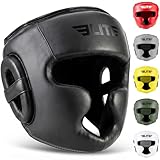
 MaxxMMA Headgear L/XL Boxing MMA Training Kickboxing SparringL XL10 x 8.1 x 3.9 Inches0.9 PoundsCheck on Amazon


Top 3 picks at a glance
Best boxing headgear for sparring: quick comparison
| Headgear | Best for | Coverage | Visibility | Adjustment | Typical market range |
|---|---|---|---|---|---|
| Winning FG-2900 | Frequent technical and hard sparring | High, especially cheeks and jaw | Good | Rear lace and chin strap | Usually $350–$500 |
| Winning FG-5000 | Maximum facial protection | Very high, with face-saver bar | Moderate | Rear lace and chin strap | Usually $400–$600 |
| Cleto Reyes Traditional Headgear | Open, natural movement and sightlines | Medium | Very high | Rear lace, chin strap, and ear openings | Usually $120–$200 |
| Rival RHG30 Intelli-Shock Headgear | Adjustable training protection | Medium-high | Good | Multi-point adjustment | Usually $150–$250 |
| Ringside Deluxe Face Saver Headgear | Budget-conscious nose and face coverage | High at the front | Moderate | Rear adjustment and chin strap | Usually $50–$100 |
Prices vary by size, material, color, and availability. The coverage and visibility descriptions are practical comparisons rather than laboratory protection ratings.
1. Winning FG-2900: best overall for serious sparring
The Winning FG-2900 is the strongest all-round recommendation when your priority is protecting the cheeks, jawline, and sides of the face without using a full face bar. Its thick, rounded padding gives more coverage than open-face competition headgear while leaving the central sightline relatively clear.
The design suits boxers who spar regularly and want to reduce cuts and facial contact during controlled but meaningful rounds. It is particularly useful for partners who exchange hooks and body-head combinations, where open cheekbones and the jaw can take repeated glancing shots.
- Strengths: excellent cheek coverage, comfortable padding, secure fit, and a relatively clean forward view.
- Trade-offs: expensive, warm, and bulkier than open-face headgear.
- Choose it if: you spar several times per week and want high protection without a face bar.
2. Winning FG-5000: best for maximum facial coverage
The Winning FG-5000 uses a face-saver layout with substantial padding around the forehead, cheeks, chin, and nose area. The horizontal bar helps keep direct punches away from the nose and mouth, making it a logical choice for boxers returning from a facial injury or for gym sessions where protection is prioritized over an unobstructed view.
The face bar creates the biggest trade-off in this group. It can interrupt your view of low punches, make it harder to see your own lead hand, and encourage you to rely on peripheral vision. That is not automatically a problem, but you should drill with it before using it in demanding rounds.
- Strengths: excellent front coverage and strong protection for the nose and cheeks.
- Trade-offs: reduced downward visibility, more heat, and a larger profile.
- Choose it if: facial protection matters more than competition-style sightlines.
3. Cleto Reyes Traditional Headgear: best for visibility and mobility
The Cleto Reyes Traditional Headgear is a better fit for boxers who dislike bulky equipment and need to see punches clearly from different angles. Its open design exposes more of the cheeks and jaw than a face-saver model, but it preserves natural peripheral vision and generally feels less restrictive during footwork, defense, and counterpunching drills.
It works especially well for light technical sparring, pad-to-spar transitions, and experienced partners who can control their power. It is less suitable when your sessions regularly include heavy hooks, aggressive pressure, or partners whose punches land hard even when the round is meant to be moderate.
- Strengths: excellent visibility, lower bulk, and natural head movement.
- Trade-offs: less cheek and jaw coverage than the Winning models.
- Choose it if: you can control sparring intensity and regard vision as your main defensive tool.
4. Rival RHG30 Intelli-Shock: best adjustable middle ground
The Rival RHG30 Intelli-Shock Headgear occupies the middle of the protection-versus-visibility trade-off. It offers more structure and coverage than minimalist open-face designs while retaining a useful forward and peripheral view. Its adjustment system is valuable for gyms where several people share equipment or for anyone who finds lace-only headgear difficult to fit consistently.
This is a practical choice for regular training because a secure fit reduces movement when you block, slip, or clinch. It does not turn hard sparring into a low-risk activity, but its balance makes it easier to use across technical rounds and moderate-contact sessions.
- Strengths: useful adjustability, balanced coverage, and a good training-oriented shape.
- Trade-offs: not as protective at the front as a dedicated face saver and not as open as traditional headgear.
- Choose it if: you want one versatile model rather than the maximum or minimum level of coverage.
5. Ringside Deluxe Face Saver: best budget face-saver
The Ringside Deluxe Face Saver Headgear is aimed at boxers who want a face bar and substantial front padding without moving into premium pricing. It can be useful for beginners, recreational boxers, and gyms that need protective equipment for controlled partner work.
At this price level, inspect the fit carefully. A face-saver that shifts upward can expose the nose; one that sits too low can block your vision and interfere with breathing. The correct size and a properly tightened chin strap matter as much as the padding layout.
- Strengths: accessible price and good front-face coverage.
- Trade-offs: less refined fit and ventilation than premium models may provide.
- Choose it if: your priority is inexpensive nose and cheek coverage for controlled sparring.
Match headgear to your sparring situation
| Your situation | Recommended direction | Why | What to avoid |
|---|---|---|---|
| Light technical rounds, high skill level | Cleto Reyes Traditional | Preserves sightlines and movement | Oversized face savers that restrict vision |
| Regular moderate-contact sparring | Winning FG-2900 or Rival RHG30 | Balances coverage, fit, and visibility | Loose open-face gear that shifts on hooks |
| Harder rounds or frequent facial cuts | Winning FG-2900 or FG-5000 | More padding around exposed facial targets | Minimalist headgear selected only for appearance |
| Recent nose injury or strong nose-protection preference | Winning FG-5000 or Ringside Deluxe Face Saver | Face bar reduces direct nose contact | Open-face designs with no front barrier |
| Shared gym equipment or frequent fit changes | Rival RHG30 | Faster, more repeatable adjustment | Headgear that requires an improvised fit |
How to fit boxing headgear correctly
Use this five-point check before every serious session:
- Set the forehead position: the front edge should sit securely without blocking your eyebrows or pressing painfully into them.
- Center the ear openings: your ears should sit naturally inside the openings rather than being folded forward.
- Tighten the rear adjustment: the headgear should not rotate when you turn your head sharply.
- Fasten the chin strap: leave enough room for normal breathing, but not enough for the headgear to lift over your chin.
- Test vision and breathing: look up, down, left, and right, then shadowbox for 30 seconds. If the gear shifts, rubs, or blocks your nose, refit it before sparring.
A useful practical test is the two-finger rule: you should be able to place roughly two fingers between the chin strap and your skin, but the headgear should still remain stable during movement. Hair, sweat, and repeated impact can loosen a marginal fit, so check it again after the first round.
Coverage versus visibility: the decision that matters most
More padding does not always mean better sparring headgear. A large face saver may protect the nose while limiting your view of incoming body-to-head combinations. Open headgear may let you see punches earlier but leaves more of the cheek and jaw available to contact.
For most boxers, the sensible progression is:
- Technical sparring: prioritize visibility and a stable, lightweight fit.
- Moderate sparring: choose cheek coverage with a clear central sightline.
- High-contact training: use maximum coverage only when your coach permits it, while reducing power and round intensity when appropriate.
Do not choose a model because it appears indestructible. Thick padding can reduce cuts and some direct contact, but headgear may also make the target larger and cannot stop the brain from moving inside the skull. Stop a round after dizziness, nausea, confusion, headache, unusual fatigue, or visual disturbance, and seek medical advice.
Frequently asked questions
Can boxing headgear prevent a concussion?
No, boxing headgear cannot prevent concussion or make hard sparring safe. It can help reduce cuts and provide more coverage around areas such as the cheeks, nose, ears, and jaw, but it does not remove the risks of hard contact. Choose equipment according to your sparring intensity, your coach’s rules, and the facial protection you need.
Is a face-saver headgear better than open-face headgear?
A face-saver is better when nose and front-face coverage matter more than an unobstructed view. Its bar can help keep direct punches away from the nose and mouth, but it may reduce downward visibility, add heat, and create a larger profile. Open-face headgear offers more natural sightlines and movement while exposing more of the cheeks and jaw.
How do I know if my headgear is too loose?
Your headgear is too loose if it rotates when you turn sharply, shifts during shadowboxing, or lifts over your chin. Center the ear openings, tighten the rear adjustment, and fasten the chin strap so it allows normal breathing without letting the gear move. Recheck the fit after the first round because sweat and impact can loosen it.
What should I do if headgear blocks my vision or breathing?
Refit the headgear before sparring if it blocks your vision or interferes with breathing. Check the forehead position, ear openings, rear adjustment, and chin strap, then look in every direction and shadowbox for 30 seconds. A face-saver may naturally restrict some sightlines, but it should not sit so low that it blocks your nose or makes breathing difficult.
Can I use the same headgear for light and harder sparring?
You can use one versatile model across light technical and moderate-contact sessions if its coverage and fit suit both situations. The Rival RHG30 is described as a middle-ground option, while the Winning FG-2900 or FG-5000 provides more protection for harder rounds or frequent facial cuts. Regardless of the model, headgear does not make hard sparring low-risk.
Final recommendation
Choose the Winning FG-2900 if you want the best overall balance for frequent sparring. Choose the Winning FG-5000 for maximum nose and facial coverage, the Cleto Reyes Traditional for open visibility and mobility, and the Rival RHG30 for an adjustable middle ground. If budget is the deciding factor, the Ringside Deluxe Face Saver provides a practical entry point, provided it fits securely and your gym’s sparring intensity remains controlled.
Related guides
- Best Streaming Gear for Twitch: Webcams, Capture Card, Backdrop and Light (2026)
- Best Over Ear Headphones: 9 Closed, Open-Back and Bluetooth Picks Explained (2026)
- Best Monitor for Console Gaming: Eight 1080p and 1440p Screens Compared by HDMI and Refresh Rate (2026)
- Best Monitors for PS5 Pro 4K 120Hz: Eight Screens and the HDMI Bandwidth Check (2026)