Our Top Picks


The Short Answer
Yes, a VR gunstock is worth it for shooter immersion — but only if you primarily play tactical or mil-sim shooters where you aim down sights and hold angles for more than a few seconds at a time. If most of your playtime is fast-paced arcade shooters like Pistol Whip, or games that require constant two-handed reloading, throwing grenades, and climbing, a stock will get in the way more than it helps. The deciding condition is simple: you want stability and realism for aiming, and you are willing to trade some controller freedom to get it.
For dedicated players of Pavlov, Ghosts of Tabor, Contractors, Onward, and similar titles, the difference is immediate. Your virtual rifle stops floating and starts feeling anchored to your shoulder, and long-range shots become consistently repeatable instead of shaky. For casual or mixed-library players, that benefit does not justify the cost and learning curve.
As an Amazon Associate we earn from qualifying purchases at no extra cost to you.

What You Actually Get
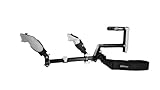
A VR gunstock is a physical frame that holds both motion controllers in a rifle-like alignment. It does not add electronics, haptics, or tracking of its own. Your Quest controllers still do all the tracking; the stock just locks their relative distance and angle.
Most modern designs, including the two most common magnetic options in the $135 to $179 range, share the same basic construction. A central tube or chassis, typically 22 to 28 inches long when fully extended, acts as the main body. Two controller cups or clamps sit at the front and rear. The rear controller acts as your grip and trigger hand, the front as your support hand. High-end stocks use magnetic quick-release cups so you can detach a controller in under a second for sidearm use, reloading, or interacting with objects, then snap it back in.
Weight is modest but noticeable. Most adjustable stocks weigh between 14 and 22 ounces without controllers. Add two Quest 3 controllers at about 4.5 ounces each and you are shouldering roughly 1.5 to 2 pounds total. That is far lighter than a real rifle but heavy enough to provide inertia and reduce micro-jitter.
Adjustability is where price matters. A $135 fully adjustable model like the Armory-R1 typically offers 4 to 6 inches of length adjustment and pivoting controller mounts to match your in-game stock length and your arm length. A $179 option like the WIELD OneStock with included tactical sling adds tool-free adjustments, a wider range of angle tuning, and often a more rigid carbon-fiber or reinforced polymer build that flexes less under pressure. Both are designed to be compatible across Quest 2, Quest 3, Quest 3S, and Quest Pro without changing the cups, though you may need different silicone inserts for each controller generation.
What you do not get is recoil, force feedback, or assisted aiming. A gunstock does not make the game easier by itself. It makes your physical aiming more stable, which translates to better in-game grouping if you practice with it. Expect a 3 to 7 day adjustment period where your muscle memory rewires before you see a benefit.
Pros
- Dramatically steadier aim: By anchoring both controllers to a single rigid frame and bracing the stock against your shoulder, you eliminate the independent float of your hands. This is most obvious when holding a magnified optic at 50+ virtual meters, where small hand tremors are magnified. Most players report they can hold a sight picture two to three times longer without drift.
- Real muscle memory transfer: If you have real-world shooting experience, a gunstock lets you apply a proper cheek weld, eye relief, and support-hand pressure. Even if you do not, it teaches a consistent mount. You learn to shoulder the same way every time instead of chasing a floating front controller in mid-air.
- Stronger immersion and presence: The physical feedback of a stock on your shoulder, a sling pulling across your chest, and two hands moving as one unit closes the gap between what you see and what you feel. For single-player campaigns and slow-paced multiplayer, that added presence is the main reason people keep using it after the novelty wears off.
- Faster follow-up shots on target: Because your controllers return to the same alignment after recoil animation, you can reacquire targets faster than with free-floating hands. This is especially valuable in games with realistic ballistics and sight picture disruption.
- Magnetic quick-detach keeps gameplay fluid: Modern magnetic mounts solve the biggest historical complaint about stocks — being locked in. With a firm pull of 2 to 4 pounds of force, the front controller pops free for grenades, med pens, or handgun transitions, then clicks back in with audible and tactile confirmation.
- Adjustable fit for different body types: Telescoping tubes and rotating cups let you set length of pull from about 11 to 15 inches and adjust controller pitch and yaw. Once locked with thumbscrews or levers, the setup stays put and can be marked for repeatable setup.
Cons
- Interferes with two-handed interactions: Any game that requires you to frequently let go of the rifle — manual reloading, pump shotguns, bow drawing, climbing ladders, or dual-wielding pistols — becomes more awkward. Even with magnets, detaching and reattaching takes a half-second longer than just moving your free hand.
- Not ideal for run-and-gun or hip-fire heavy games: If you play with virtual stocks or laser sights and rarely shoulder your weapon, a physical stock adds weight and limits your turning speed with no benefit. Fast strafe-heavy shooters often feel worse with one.
- Learning curve and calibration need: Your first few sessions will likely be worse, not better. You have to recalibrate controller offsets in-game, retrain your reload motion, and learn to break your mount cleanly. Some players never adjust to the front controller being fixed in place.
- Comfort and space requirements: A 24 to 28 inch physical object in front of your face changes your play space needs. You need about 6.5 by 6.5 feet clear to avoid hitting walls, door frames, or your headset cable when you turn. The stock can also dig into your shoulder or chest during long sessions if you do not pad it or use a sling correctly.
- Compatibility quirks: Not every shooter handles controller offset the same way. A few titles assume free controllers and may show visual hand misalignment when a stock is used, requiring you to disable virtual gunstock settings or tweak controller position in the game’s calibration menu.
- Added cost for a single-genre accessory: Spending $135 to $179 for an accessory that only improves a subset of your library is hard to justify if shooters are less than 60 percent of your playtime. Budget stocks under $80 exist but tend to use friction-fit cups that loosen over time and lack reliable quick-release.
Who Should Buy It
You should buy a VR gunstock if you check most of these boxes:
You spend at least 8 to 10 hours a month in tactical VR shooters and you care about precision. You enjoy holding angles, using scopes and red dots, and you get frustrated by sight wobble. You want your VR sessions to feel more like range time and less like waving controllers in the air. You have a dedicated play space where a two-foot-long frame will not be a hazard, and you are willing to spend a week practicing reloads and transitions to get comfortable. In 2026, with Quest 3 and Quest 3S as the dominant headsets, magnetic stocks have become reliable enough that the detach problem is largely solved, so long-term owners tend to keep them mounted.
Competitive players and mil-sim enthusiasts see the biggest return. If you play in leagues for Onward or Contractors, or you run Ghosts of Tabor extraction runs where a single missed shot costs your kit, the stability gain is a competitive edge. Real-steel shooters who want to maintain cheek weld and support-hand habits in the off-season also benefit more than most.
Who Should Skip It
Skip the gunstock if your library is diverse or movement-heavy. If you split time evenly between shooters, fitness games, puzzle games, and social VR, you will spend more time taking the stock on and off than shooting with it. Also skip it if you primarily play shotgun, pistol, or experimental titles where both hands need to be fully independent at all times.
Kids, smaller-framed players, and anyone with shoulder, neck, or wrist issues should also think twice. Holding 1.5 to 2 pounds at shoulder height for 45 to 60 minutes is more fatiguing than free hands, and the fixed posture can aggravate existing strain. If you have limited space — a small bedroom or an area with low ceilings and nearby walls — the extra length is a liability.
Finally, if you are new to VR entirely, wait. Learn to shoot, reload, and move with free controllers for at least 20 to 30 hours first. Once your baseline is solid, you will actually feel what the stock adds instead of masking fundamental tracking or calibration issues.
Cheaper Alternatives
| Option | Cost | Trade-off |
|---|---|---|
| DIY PVC / 3D-printed stock | $15 to $45 in materials | Very rigid and cheap but no magnetic release; you must fully let go to reload, and fit is fixed unless you reprint or rebuild. |
| In-game virtual stock setting | $0 | Software locks your hands together with no extra hardware; improves stability somewhat but provides zero physical feedback or shoulder anchor. |
| Single-point controller sling or grip enhancer | $12 to $30 | Adds a bit of stability and reduces arm fatigue but does not lock controllers together, so sight wobble remains. |
| Budget friction-fit commercial stock | $60 to $90 | Looks like a real stock and is lighter at 10 to 14 ounces, but cups loosen with use and detaching controllers mid-fight is slow and clunky. |
FAQ
Will a VR gunstock make me a better shooter overnight?
No. It makes you more stable, not more skilled. Expect your accuracy to dip for the first two to three sessions while you adapt to the fixed controller distance and learn to detach smoothly. After that, most dedicated rifle players see tighter groupings and more consistent headshots, especially at medium to long range, because the stock removes hand jitter. It will not compensate for poor tracking, low frame rates, or uncalibrated controller offsets.
Can I still reload and throw grenades with a stock attached?
Yes, but it requires technique. Modern magnetic stocks let you pull the front controller free with a quick tug to perform reloads, rack a charging handle, or toss equipment, then snap it back. The best designs need only 2 to 4 pounds of pull force, so the motion becomes automatic with practice. Two-handed actions like pumping a shotgun or climbing a ladder are still slower than with free hands, so many players keep the front controller detached during close-quarters segments.
Does a gunstock work with all VR shooters?
It works with almost any shooter that lets you hold a rifle with two hands, but it shines only in titles built for realistic weapon handling. Games like Pavlov, Contractors, Contractors: Showdown, Ghosts of Tabor, Onward, and Zero Caliber have calibration options to align your physical stock with the virtual one. Arcade or experimental shooters that use virtual stocks, hip-fire, or frequent weapon swapping gain little or even feel worse with a physical frame.
How much space do I need and is it safe for my controllers?
Plan for at least 6.5 by 6.5 feet of clear floor and 7 feet of vertical clearance. The stock extends 22 to 28 inches in front of your chest, so you will sweep a larger arc when you turn. For controller safety, use silicone protective shells and ensure the cups have soft rubber liners. Magnetic mounts with a 3 to 5 pound hold strength are strong enough to keep controllers secure during normal movement but will release if you strike a wall, which helps protect the controllers from hard impacts. Always tighten all adjustment levers before play and check them every few sessions.