As an Amazon Associate we earn from qualifying purchases at no extra cost to you.

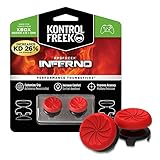


Buying thumbsticks for competitive FPS play sounds simple until you realize how many variables actually affect your aim. Most players grab whatever’s cheapest or whatever a streamer uses, then wonder why their tracking feels worse than before. The biggest mistakes are predictable: buying extenders that are too tall for their hand size, ignoring the difference between concave and convex tops, slapping on $5 grip caps that slide around mid-match, and assuming a taller stick automatically means better precision. None of those are true across the board.
This guide breaks down what actually changes your performance — stick height, dome shape, material, and how the accessory attaches — so you can pick the right setup for your hands, your grip style, and the games you play. Whether you’re grinding ranked in a tactical shooter or just want more consistent flicks, the difference between a good and bad thumbstick upgrade is measurable.
Our Top Picks
 16-in-1 Performance Thumb Grips Joystick Caps for PS5/4/Xbox/SwitchHigh-Rise, Mid-Ris, Low-Rise0.8 x 0.8 x 0.2 inches0 poundsCheck on Amazon


Top 3 picks at a glance
Decide These 3 Things First
Before comparing any products, answer these questions. They eliminate most of the catalog instantly.
1. What’s your current aim problem? If you overshoot targets, a taller stick (around 10–12mm of added height) slows your effective sensitivity and helps fine control. If you feel sluggish tracking fast strafes, you may not need height at all — you need better grip texture. If your thumb slips during sweaty moments, material and texture matter more than geometry.
2. Do you play claw, hybrid, or standard grip? Claw-grip players rest their thumb on the stick differently and usually prefer shorter, concave tops. Standard grip players benefit more from high-rise options. If you don’t know, you’re probably standard grip — most players are.
3. What controller do you actually use? Grip caps and extenders are controller-specific. A set made for Xbox controllers won’t fit a DualSense properly, and a loose fit means wobble, which ruins the precision you bought the sticks for in the first place.
Once you know your problem, grip style, and platform, the factors below become easy to weigh.
Stick Height: The Single Biggest Performance Variable
Height is where marketing and reality diverge most. Here’s what the actual measurements mean:
– Low-rise / stock height: Your controller’s stock stick tops out around 8–10mm above the ring. Best for fast turnarounds, shotguns, and players who use high in-game sensitivity.
– Mid-rise (roughly 5–7mm added): The sweet spot for most competitive players. Enough extra travel to sharpen micro-adjustments without tanking your turn speed.
– High-rise (roughly 9–12mm added): Maximum precision for sniping, long-range tracking, and low-sensitivity players. Expect an adjustment period of one to two weeks as your muscle memory recalibrates.
A practical approach many players use is asymmetric setups — a taller stick on the right (aiming) stick and a stock or low-rise on the left (movement) stick. The KontrolFreek FPS Freek Edge follows exactly this formula: one high-rise convex and one low-rise convex in the box, which lets you test the hybrid approach without buying two sets. At around $16, it’s a low-risk way to find out whether height helps your specific aim.
If you go high-rise on both sticks, like the KontrolFreek FPS Freek Inferno’s dual high-rise concave design, commit to at least two weeks of play before judging. Lower your in-game sensitivity slightly (many players drop 10–20%) to compensate for the longer effective throw.
Top Shape: Concave vs. Convex
This is a genuine performance difference, not just aesthetics:
– Concave (dished) tops: Your thumb sits in a pocket, which improves grip and consistency during long sessions. Better for players who push the stick hard during flicks. The Inferno’s concave high-rise tops are built for this style.
– Convex (domed) tops: Smoother surface contact, easier micro-adjustments, and less thumb fatigue for some players. Preferred by many tracking-focused players who make constant small corrections.
There’s no universally correct answer — console FPS pros use both. If you’ve never tried concave, and you play with high sensitivity and aggressive movement, start there. If your thumb fatigues or you overcorrect, try convex.
Material and Construction: Where Cheap Caps Fail
Construction quality separates a around $16 performance stick from a around $7 multipack more than any spec sheet admits.
Grip caps and extenders: Look for textured rubber or silicone with an anti-slip interior sleeve. The fitting method matters enormously. Silicone grip covers with integrated extenders, like the Playrealm FPS Thumbstick Extender sets, wrap the entire stock stick rather than clipping onto just the top — this eliminates the number-one failure mode of cheap caps, which is popping off mid-match. The Playrealm sets also include a full silicone controller grip cover, which helps overall hand traction during long sessions. Two sets for around $13 is solid value if you want a backup pair or play on both PS5 and PS4 controllers.
Multipack caps: The 16-in-1 Performance Thumb Grips kits at around $7 give you sixteen pieces covering PS5, PS4, Xbox, and Switch Pro controllers. These are ideal for experimentation — you can test heights and shapes cheaply — but expect thinner rubber, less consistent fit, and shorter lifespan (typically three to six months of heavy play versus a year or more for name-brand extenders). That’s a fair trade if you’re still figuring out your preference.
Material hardness: Softer silicone feels comfortable but deforms over time and dampens stick feedback. Harder rubber or hybrid plastic-rubber compounds preserve tactile feedback, which matters when you’re making 1–2mm corrections at range.
Comfort and Long-Session Performance
Competitive play means sessions of two to six hours, and comfort failures show up as fatigue errors. Three things to check:
– Thumb contact area: Concave dishes should be deep enough (roughly 2–3mm) to cradle your thumb without pressure points. Shallow dishes slip; deep ones cramp.
– Weight addition: Extenders add 2–5 grams per stick. This sounds trivial, but heavier tops slightly increase stick spring return time. Sub-3g additions are imperceptible; above 5g some players notice sluggish recentering.
– Heat and sweat: Smooth plastic becomes slick when your hands sweat. Textured rubber and perforated silicone maintain grip. If you play in a warm room or have sweaty hands, prioritize silicone or heavily textured rubber tops.
If possible, test your setup for a full session before committing to it for a tournament or ranked climb. Aim inconsistency during week one is usually adaptation, not a bad product — but blistering or thumb pain means the shape is wrong for your grip.
Price Tiers: What Each Dollar Buys
– Budget ($5–$10): Multipack grip caps like the 16-in-1 kits. Best for experimentation and casual play. Shorter lifespan, variable fit quality.
– Mid-range ($12–$20): Purpose-built extenders and sets like the KontrolFreek options (around $16) and Playrealm sets (around $13). This is where most competitive players should shop — you get engineered heights, consistent materials, and reliable attachment.
– Premium ($25+): Metal-alloy extenders, swappable-height systems, and sticks designed for pro controllers with adjustable tension. Worth it only if you’ve already confirmed which height and shape work for you.
Warranty and Seller Support
Thumbstick accessories are cheap, but support still matters. Name-brand extenders typically carry a 90-day to one-year limited warranty covering manufacturing defects and premature wear. Generic multipacks often carry no warranty at all, so treat them as consumables. Check whether the seller accepts returns on opened packaging — since fit and feel are personal, a 30-day return window is worth more than a longer defect-only warranty. Keep your receipt; adhesive and clip-on accessories occasionally damage stock sticks if removed carelessly, and you’ll want documentation if you need to replace a controller module.
Availability and What to Check Before Ordering
These are small accessories with no assembly required — installation takes under a minute. Caps stretch or clip over your stock stick; silicone grip covers stretch over the controller shell. Verify three things before checkout:
1. Controller compatibility: Confirm the listing names your exact controller generation. DualSense and DualShock 4 sticks differ slightly in diameter; Xbox One and Series X|S sticks are largely interchangeable.
2. Included quantity: Some listings sell single sticks; most competitive players want pairs or asymmetric sets.
3. Shipping timing: These items usually ship in 2–5 days domestically, but if you’re buying before a tournament or a new game’s ranked season, order at least two weeks early to allow adaptation time.
Spec Checklist
| Spec | Budget ($5–$10) | Mid ($12–$20) | Premium ($25+) |
|---|---|---|---|
| Height options | Assorted, unmarked heights | Defined mid/high-rise (5–12mm added) | Swappable heights |
| Top shape | Mixed in multipack | Concave or convex, purpose-built | Interchangeable tops |
| Material | Thin TPU/silicone | Textured rubber, hybrid compounds | Alloy + rubber composite |
| Attachment | Stretch-fit cap | Clip-on extender or wrap sleeve | Screw-on / magnetic system |
| Lifespan (heavy play) | 3–6 months | 9–18 months | 2+ years |
| Warranty | Usually none | 90 days–1 year | 1 year+ |
| Example | 16-in-1 Thumb Grips (around $7) | KontrolFreek Edge / Inferno (around $16), Playrealm sets (around $13) | Pro-controller swappable systems |
Red Flags
– No stated height measurement. If a listing doesn’t tell you how much height the extender adds, you’re buying blind.
– “Universal fit” claims. Stick diameters vary between platforms; genuinely universal caps compromise on fit, and loose caps wobble.
– Hard plastic contact surfaces. They get slick with sweat and feel harsh after two hours.
– Extremely tall extenders (14mm+) marketed to beginners. These wreck turn speed for most players and take a month to adapt to.
– Listings with no return policy. Fit and shape are personal; you need an exit option.
– Caps with smooth, featureless interiors. They’ll spin and slide on the stock stick within weeks.
FAQ
Do taller thumbsticks actually improve aim?
They increase the distance your thumb travels per degree of stick deflection, which effectively lowers sensitivity and makes micro-adjustments easier. For long-range tracking and sniping, most players see real improvement with 5–10mm of added height. For close-range, fast-paced play, the tradeoff in turn speed can hurt. Test before committing to a full high-rise setup.
How long does it take to adjust to new thumbsticks?
Expect one to two weeks of regular play. Your muscle memory is calibrated to your stock sticks, so aim will feel off at first. Lower your in-game sensitivity 10–20% when switching to taller sticks, then tune back up over the following week.
Will thumbstick extenders damage my controller?
Quality clip-on and stretch-fit accessories won’t when installed and removed correctly. The risk comes from forcing ill-fitting caps on and off, which can scuff or stretch the stock stick rubber. Push caps on straight and twist gently to remove — never yank.
Are $7 grip caps good enough for ranked play?
For grip and sweat resistance, yes — a decent silicone cap is a genuine upgrade over worn stock rubber. What budget caps can’t give you is precisely engineered height and consistent shape, which is where mid-range extenders earn their price. A sensible path: buy a multipack first to learn your preferred height and shape, then invest in a purpose-built set.
Related guides
- Best Free MMOs on Steam: Subscription Limits, Pay-to-Win and Time Cost (2026)
- Best Free Horror Games on Steam: How to Pick One That Fits Your PC and Your Nerves (2026)
- Black Frame Insertion vs VRR: Which Smoothness Feature Should You Use?
- Best Webcams for Streaming: 11 Listings Compared by Resolution, Focus and Light (2026)