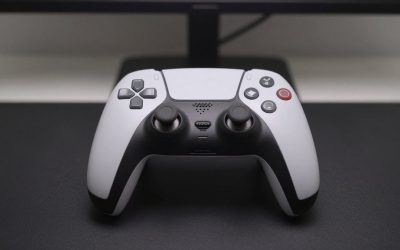
If your controller has started drifting — your character walks when your thumbs are off the sticks, or your aim pulls slightly to one side — you are facing a choice that goes beyond just buying another replacement. The underlying stick technology matters more than the brand on the shell. In 2026, most controllers still ship with traditional potentiometer-based sticks, often called membrane or carbon-film sticks, while an increasing number of third-party and premium options use Hall Effect sensors. Understanding how they handle drift resistance will save you money, frustration, and downtime at home.
The real decision is not just which feels better today, but which stays accurate longer, how easy it is to fix when it does wear, and what makes sense for your living situation and budget. Hall Effect promises a drift-free design with no physical contact, while traditional membrane sticks are cheaper, easier to find, and familiar. Here is how they actually compare for everyday home use.
As an Amazon Associate we earn from qualifying purchases at no extra cost to you.

Our Top Picks


Top 3 picks at a glance
Quick Verdict
Choose Hall Effect sticks if drift resistance and long-term accuracy are your top priorities and you do not mind paying 20 to 40 percent more upfront or installing a replacement module yourself. Choose membrane (potentiometer) sticks if you want the lowest upfront cost, the widest compatibility with existing controllers, and easy, inexpensive repairs using widely available parts. For most homes where controllers get heavy daily use, Hall Effect is the better long-term investment, while membrane remains the practical choice for budget or short-term setups.
Side by Side
| Feature | Hall Effect Sticks | Membrane / Potentiometer Sticks |
|---|---|---|
| Comfort | Smooth, consistent tension with no dead-zone creep; magnets provide linear feel that stays the same over time | Familiar, slightly softer centering feel; tension can feel looser after 6 to 12 months of heavy use |
| Durability | No physical contact between sensor and magnet; rated for 5 to 10 million cycles with minimal wear | Carbon film and wiper make physical contact; typically shows wear after 1 to 2 million cycles or 400 to 600 hours of play |
| Price Range | $16 to $45 per pair as replacement modules; $59 to $129 for new controllers with Hall Effect preinstalled | $6 to $15 per pair as replacement modules; $29 to $69 for standard new controllers |
| Maintenance | Almost none; occasional dusting and thumbstick cap cleaning; no calibration needed for drift | Requires periodic cleaning with isopropyl alcohol, compressed air, and recalibration; drift often returns |
| Space Needed | Module size is identical: approx. 20 x 20 x 12 mm; no extra desk or storage space required | Identical footprint to Hall Effect; fits same controller shells without modification |
| Look | Identical externally; available with same thumbstick cap colors and heights (approx. 10 mm dome height) | Identical externally; wider variety of stock colors and shapes from first-party makers |
| Resale | Higher resale value; controllers advertised with Hall Effect retain 15 to 25 percent more value on secondhand market | Lower resale; buyers expect future drift and price accordingly |
| Best For | Players who want to avoid drift, households with daily gaming, and anyone keeping a controller for 3+ years | Budget-conscious buyers, quick fixes, and homes needing a fast, cheap replacement today |
| Power Consumption | Slightly higher draw, approx. 5 to 10 mA more per stick; negligible impact on battery life (15 to 30 minutes less per charge) | Lower power draw; marginally better battery efficiency |
Where Hall Effect Wins
Hall Effect sticks use magnets and a magnetic sensor to detect position. Because the sensor never touches the moving part, there is no friction layer to wear down. That is the core reason they resist drift. Traditional membrane sticks rely on a small wiper dragging across a carbon resistive pad. Over time, that pad wears, dust and oils build up, and the electrical signal becomes noisy — which your console reads as drift.
For drift resistance, this contactless design is a clear advantage. You will not need to open the controller to clean contacts or apply a drift correction board just to keep the center position stable. Even after a year of daily use, Hall Effect sticks typically re-center within 2 to 3 percent of true center, while worn membrane sticks can deviate 10 percent or more, enough to cause visible movement on screen.
Durability is the second win. With no wiper to degrade, Hall Effect modules handle the sweat, dust, and micro-vibrations of a living room or bedroom setup far better. That is why you are now seeing the technology expand beyond controllers. The same magnetic sensing principle is used in products like the AULA WIN68 HE Mechanical Gaming Keyboard 60% with Hall Effect Magnetic Switch and 8000Hz polling rate at around $39, where adjustable actuation depends on consistent, wear-free sensing.
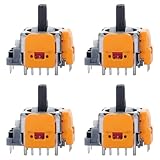
For home users who would rather install once and forget about it, retrofit kits make the upgrade accessible. Options like the Ikpek 4pcs Hall-Effect Joysticks Replacement for DualSense PS5 Controller at around $12 let you swap the original potentiometer modules for magnetic ones without buying a whole new controller, assuming you are comfortable with basic solder work.
Where Membrane Controller Sticks for Drift Resistance Wins
Membrane-based sticks win on cost, availability, and ease of repair. Nearly every first-party controller from PlayStation, Xbox, and Nintendo ships with this design, which means replacement parts are everywhere and cheap. If your stick starts drifting on a Friday night, you can find a compatible set at a local game shop or online with next-day delivery and have it working by the weekend.
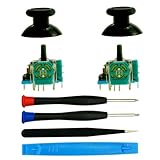
The price gap is real. A standard pair of membrane replacements, such as the 2PCS 3D Analog Joystick Thumbstick for Xbox One Series S X Elite Controller at around $8, costs less than a single Hall Effect module for some models. For a household that goes through controllers quickly or needs to fix multiple gamepads at once, that low per-unit cost adds up.
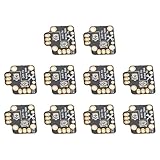
Membrane sticks also win for simple, solder-free drift mitigation. If you do not want to replace the entire module, drift repair boards offer a faster fix. A kit like the Kodrily Drift Repair Board Kit, 10Pcs Controller Stick Drift Fix Mod at around $9, is designed to calibrate out small drift by adjusting the signal without desoldering the stick. It will not prevent future wear the way Hall Effect does, but it can extend a controller’s usable life by 6 to 12 months for under $10 and with only a screwdriver.
Finally, membrane sticks require no learning curve. The feel, tension (typically 60 to 80 gf of operating force), and dead zones are what most players have used for years. If you swap stick caps or adjust in-game sensitivity, everything behaves exactly as you expect, and you do not need to recalibrate hall sensor center points after installation.
Cost Over 5 Years
Upfront, membrane is cheaper. A standard controller with membrane sticks costs $59 to $69. A Hall Effect-equipped controller costs $79 to $129, or around $12 to around $24 to retrofit your existing shell with Hall Effect modules if you do the work yourself. Tools and supplies for a DIY swap — screwdriver set, solder, wick — typically run $15 to $25 if you do not already own them.
Over five years, the math often flips for daily players. A membrane stick set used 15 to 20 hours per week often develops drift within 12 to 18 months. Replacing modules at $8 to $15 per pair, plus around $9 for a drift repair board kit in between, can mean 3 to 4 service events in five years. That totals $35 to $75 in parts alone, plus your time or a repair shop fee of $25 to $45 per visit.
A Hall Effect set, by contrast, usually needs zero replacements for drift in that same period. Even factoring in one set of replacement thumbstick caps ($5 to $9) and a single cleaning, the five-year parts cost stays under $25 if installed correctly. For light users at 3 to 5 hours per week, membrane may last the full five years with one cleaning, making it the lower total cost. For shared family controllers or competitive daily use, Hall Effect typically saves $30 to $60 over five years and avoids the downtime of repeated fixes.
Which One for Your Home
Small Apartment
Space and noise matter. Both stick types are internal and add no clutter, but the advantage in a small apartment is reliability. You likely have one or two controllers and no room for a backup pile. Hall Effect is ideal here because you avoid the cycle of opening controllers on a coffee table and storing repair kits in limited drawer space. If you rent and move often, a single Hall Effect retrofit keeps that one controller accurate without needing a workbench.
Family with Kids or Pets
Dust, crumbs, pet hair, and harder handling accelerate membrane wear. Hall Effect’s contactless sensor is far less sensitive to debris falling into the stick housing and to the sticky residue that builds up with frequent hand-offs between players. For kids, the consistent centering also means fewer complaints that the controller is broken when it is just drift. Keep membrane as a cheap backup if a controller gets physically damaged from drops, but make your primary shared controllers Hall Effect for fewer interruptions.
Rental
If you are furnishing a rental or you do not plan to stay long, keep costs low and flexibility high. Membrane sticks make sense because you can buy an inexpensive controller, use a around $9 drift repair board for a quick fix before you move, and not worry about investing in upgrades you will leave behind. Hall Effect only makes sense here if you will take the controllers with you to your next home.
Long-Term Home
For a home you own or plan to stay in for years, Hall Effect is the set-and-forget choice. Pair it with good habits — store controllers in a drawer or stand to keep dust out, wipe caps weekly, and avoid eating while playing — and you can expect 3 to 5 years of drift-free use without opening the shell. The slightly higher upfront price pays back in fewer replacements and higher resale if you eventually sell or hand down the controller.
FAQ
Can Hall Effect sticks still get drift?
True sensor drift is extremely rare because there is no resistive pad to wear. What can feel like drift is usually a calibration offset after installation, a loose magnet, or debris under the thumbstick cap pressing on the housing. Recentering the controller in system settings or reseating the module typically resolves it. Physical damage from drops can still affect any stick type.
Is it hard to switch from membrane to Hall Effect?
The modules are the same size and fit the same shell, but most require desoldering 14 to 16 pins per stick and soldering the new module in place. If you have basic soldering experience, the swap takes 30 to 45 minutes per controller. If not, drift repair boards that require only a screwdriver are an easier intermediate step for membrane sticks.
Do Hall Effect sticks feel different when playing?
Slightly. Hall Effect has a very linear, smooth response from center to edge with consistent 60 to 80 gf tension, while membrane can feel a touch softer near the center and develop a vague dead zone as it wears. Most players adjust within an hour. You can tune feel with different thumbstick cap heights (short 8 mm vs tall 12 mm) rather than the sensor itself.
Should I replace or repair a drifting membrane stick?
If drift is mild (under 10 percent offset and only occasional movement), a cleaning and a drift repair board for under $10 often buys another 6 to 12 months. If drift is strong, constant, or returns within weeks after cleaning, replacing the module is more cost-effective. For controllers you use daily and plan to keep, upgrading to Hall Effect at that point prevents the repair cycle from repeating.
Related guides
- Best Free MMOs on Steam: Subscription Limits, Pay-to-Win and Time Cost (2026)
- Best Free Horror Games on Steam: How to Pick One That Fits Your PC and Your Nerves (2026)
- Black Frame Insertion vs VRR: Which Smoothness Feature Should You Use?
- Best Webcams for Streaming: 11 Listings Compared by Resolution, Focus and Light (2026)