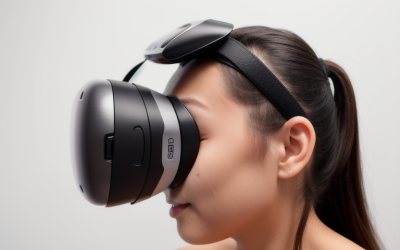
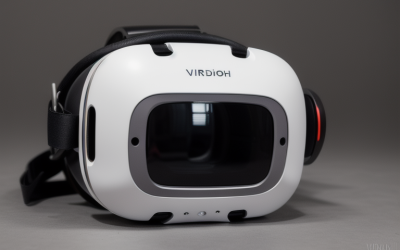
Virtual reality has officially stepped out of dedicated gaming dens and into our mainstream living spaces. Whether you are carving out a corner of your home office for a quick virtual escape or setting up a family-friendly VR zone in the living room, the audio solution you choose dictates how you interact with both the virtual world and your physical household. Selecting between directional audio headsets vs bone conduction headphones for vr is not just a technical choice; it is a lifestyle decision that affects your home’s spatial harmony, safety, and acoustic environment.
When you put on a VR visor, you are visually cut off from your surroundings. If you also seal your ears with traditional directional audio headsets, you enter a state of total sensory isolation. For some, this is the ultimate luxury of private home entertainment. For others—especially those sharing a home with family, roommates, or pets—this total block out can lead to startled encounters, household accidents, or missed deliveries. Understanding how these two distinct audio technologies fit into your home’s layout, aesthetic, and daily routine is the key to making the right investment.
As an Amazon Associate we earn from qualifying purchases at no extra cost to you.


Our Top Picks


Top 3 picks at a glance
Quick Verdict
If your priority is absolute immersion, acoustic privacy, and pinpoint spatial accuracy in a dedicated media room, directional audio headsets are your best choice. They deliver deep bass and isolate you from household noises. However, if you live in a shared household, value situational awareness, want to keep your ears cool during active VR workouts, and prefer a minimalist storage footprint, bone conduction headphones are the superior option for your home.
Side by Side
To help you visualize how these audio options integrate into your living space, here is a detailed side-by-side comparison of their physical, aesthetic, and functional characteristics.
| Feature | Directional Audio Headsets | Bone Conduction Headphones for VR |
|---|---|---|
| Physical Footprint & Weight | Bulky; typically 250g to 410g. Requires dedicated stand or drawer storage. | Ultra-lightweight; typically 25g to 36g. Easily tucks into a small valet tray. |
| Acoustic Isolation | High. Blocks out external household sounds (HVAC, conversation, pets). | None. Ears remain completely open to your surrounding environment. |
| Sound Leakage to Room | Very low. Other people in the room will not hear your game audio. | Moderate at high volumes. A faint buzzing or whispering sound may be audible nearby. |
| Price Range | $35 to $350+ depending on wireless capability and driver size. | $30 to $180 depending on waterproofing and battery life. |
| Maintenance & Hygiene | Moderate. Leatherette or fabric ear pads absorb sweat; require regular wiping. | Very low. Smooth, non-porous silicone or titanium bands wipe clean in seconds. |
| Visual Integration in Home | Prominent. Hard to hide on a desk; often requires cord management. | Minimalist. Low profile, easily blends into modern decor when resting on a shelf. |
| Resale & Longevity | High. Replaceable ear pads extend life; highly sought after by gamers. | Moderate. Battery-dependent; sealed designs mean they are rarely repairable. |
| Best For | Cinematic VR experiences, competitive shooters, quiet solo homes. | Active fitness VR, busy family living rooms, open-plan apartments. |
Where Directional Audio Headsets Wins
Directional audio headsets—specifically over-ear, closed-back designs—are the gold standard for audio fidelity and spatial mapping. By utilizing large physical drivers (typically 40mm to 50mm in diameter) situated directly over your ears, these headsets create an isolated acoustic chamber. This physical barrier blocks out ambient domestic sounds like the hum of a refrigerator, the whir of a washing machine, or family members talking in the next room.
This isolation allows the VR system’s 3D spatial audio engine to shine. In virtual reality, knowing if a sound is coming from above, behind, or slightly to your left is critical for immersion. Directional audio headsets reproduce these subtle phase shifts and binaural cues with incredible precision. Furthermore, because they cup your ears, they can deliver deep, resonant bass frequencies (ranging down to 20 Hz) that you can physically feel during explosive moments or cinematic sequences. For those starting out with a budget-friendly wired setup on a desk, a traditional over-ear gaming option like the Razer BlackShark V2 X Xbox Gaming Headset, 3.5mm Audio Jack, Black — price around $39 demonstrates how cost-effective and immersive this style of audio can be without cluttering your home with complex receivers.
Additionally, directional headsets keep your audio completely private. If you are playing VR in a shared living room while your partner is reading a book nearby, they will not hear a single sound effect. This makes over-ear models highly respectful of shared peace. While some bulky, specialized equipment like the Pyle Pro Dual Over-Ear Headset Microphone – Professional Hands-Free Omni-Directional Boom Condenser Mic with 4-Pin Mini XLR, 3.9ft Cable, Windscreen – Secure Fit, Pro Audio for Presentations (Beige) — price around $20 is tailored more for professional presentation work rather than active gaming, it underscores how traditional over-ear designs prioritize capturing and delivering focused, isolated sound within your home workstation.
Where Bone Conduction Headphones for Vr Wins
Bone conduction technology bypasses your eardrums entirely. Instead of using speakers to push sound waves through the air, these devices use transducers that rest on your cheekbones, sending vibrations directly to your inner ear (cochlea). The most revolutionary benefit of this for a home environment is that your ear canals remain completely unobstructed.
This open-ear design solves the primary safety hazard of home VR: situational awareness. When you are wearing a VR headset, you are already visually blind to your physical surroundings. If you are also auditory-blind, you run the risk of stepping on a pet, colliding with a child who has wandered into your play space, or missing an urgent knock at the door. Bone conduction headphones allow you to hear your virtual world while simultaneously hearing the real-world sounds of your home. You can hold a conversation with someone in the room, listen for a baby monitor, or stay aware of your security system without pausing your session.
From an interior design and maintenance standpoint, bone conduction headphones are incredibly low-profile and hygienic. Because they do not sit inside or over your ears, they do not collect earwax or trap sweat. If you use active VR fitness games to exercise at home, standard over-ear cups can quickly become damp, smelly, and deteriorate over time. An option like the New Waterproof Open-Ear Bone Conduction Headphones – Bluetooth 6.0, Long Battery Life, Ultra-Light Wireless Headset with Stable Connection, Ideal for Running, Cycling, Workout, Hiking — price around $59 is impervious to sweat and can be wiped down with a damp cloth in seconds, keeping your workout gear sanitary and odor-free.
Furthermore, their small, flexible titanium frames take up almost zero visual space on your shelves or entry tables. For a streamlined lifestyle, a lightweight pair such as the PSIER Bone Conduction Headphones, 2026 Upgrade Open Ear Running Headphones — price around $29 can easily rest in a small ceramic dish or valet tray next to your keys, completely avoiding the bulky, high-tech clutter that traditional gaming gear often introduces into a carefully styled room.
Cost Over 5 Years
When calculating the true cost of ownership for your home’s VR audio gear, you must look beyond the initial price tag to consider durability, battery wear, and replacement parts over a five-year lifecycle.
- Initial Purchase: A mid-range directional audio headset costs between $80 and $180, while high-end models reach up to $350. Quality bone conduction headphones generally range from $50 to $160.
- Replacement Parts & Maintenance: Over-ear directional headsets feature soft ear cushions made of foam, leatherette, or fabric. Over five years of regular use, these cushions will flake, tear, or absorb body oils, requiring replacement cushions every 18 to 24 months (costing about $15 to $30 per set). Wired models may also require a new cable if the cord is stepped on or bent repeatedly.
- Battery Degradation: If you choose wireless versions of either technology, the lithium-ion batteries will naturally degrade over five years. Because bone conduction headphones are typically sealed units to maintain waterproof or sweatproof ratings, their batteries cannot be replaced. After three to four years of heavy daily charging, the total runtime may drop by 30% to 50%, eventually requiring you to replace the entire unit.
- Estimated 5-Year Total:
- Wired Directional Headset: $50 initial + $30 replacement pads = $80 total.
- Wireless Directional Headset: $150 initial + $40 replacement pads + battery degradation = $190 total.
- Bone Conduction Headphones: $60 to $120 initial + zero maintenance parts (but potential replacement near year 4 or 5 due to battery wear) = $60 to $120 total.
Which One for Your Home
Small Apartment
In a small apartment, space is at a premium and activities often overlap in a single room. If your VR play area is in the same room where your partner watches television or works, a directional audio headset is the best choice. It isolates you from their noise and, crucially, prevents your game’s sound effects from echoing through your limited square footage, keeping your home peaceful for everyone.
Family with Kids or Pets
If your home is bustling with young children, curious dogs, or roaming cats, safety is your absolute priority. Here, bone conduction headphones are the clear winner. Being able to hear a child call for help, a dog barking near your feet, or the rustle of someone entering your play boundary prevents accidental collisions and ensures you remain present and responsive as a parent or pet owner.
Rental
Renters often need to avoid drilling holes or mounting heavy storage brackets to walls. Large, heavy over-ear headsets require sturdy headphone stands or desk space. Bone conduction headphones, weighing next to nothing, can be hung on a simple adhesive command hook or tucked away in a small decorative box on a bookshelf, leaving zero footprints on your rental property’s walls and surfaces.
Long-Term Home
In a larger, long-term home with a dedicated media room, home theater, or spare bedroom converted into a permanent VR studio, the directional audio headset reigns supreme. With a dedicated space where safety and interruptions are not daily concerns, you can fully indulge in the deep, cinematic, and highly immersive spatial audio that only high-quality over-ear drivers can provide, creating a true escape within your own home.
FAQ
Do bone conduction headphones leak sound to other people in the room?
Yes, but minimally. Because bone conduction transducers vibrate to produce sound, they do create a small amount of acoustic bypass, especially at volumes above 70%. In a very quiet room, someone sitting within three feet of you might hear a faint, high-pitched whispering sound, but it is far less intrusive than open-back traditional headphones.
Can I wear bone conduction headphones comfortably with a VR head strap?
Yes. Most bone conduction models feature a thin, flexible band that wraps around the back of your neck, resting low enough to sit comfortably beneath the rigid plastic or fabric straps of major VR headsets. However, you should put on your bone conduction headphones first, adjust them against your cheekbones, and then lower the VR visor over your head.
Is the spatial 3D audio in VR games lost when using bone conduction?
It is slightly diminished but not lost. While bone conduction headphones can reproduce left and right stereo pan sounds beautifully, they lack the physical acoustic depth and closed-chamber isolation required to perfectly render vertical (above/below) and distant rear spatial cues. For casual gaming and fitness, it is excellent, but for competitive tactical shooters, directional headsets are superior.
Which option is easier to sanitize for multiple household users?
Bone conduction headphones are vastly easier to sanitize. Because they are made of smooth, non-porous silicone and plastic—and often feature high waterproof ratings—you can clean them instantly with an alcohol wipe. Traditional directional headsets feature fabric or foam ear cushions that act like sponges for sweat and skin oils, making them much harder to share hygienically without purchasing separate, wipeable polyurethane (PU) leather faceplates and ear pads.