As an Amazon Associate we earn from qualifying purchases at no extra cost to you.


Setting up room scale VR means dealing with one unavoidable problem: the cable. Whether you’re tethered to a PC with a headset like a Valve Index or a Quest link cable, that wire connecting you to your computer becomes a trip hazard the moment you start physically walking around your play space. Two solutions dominate the conversation among home VR enthusiasts: running your cable through an elastic bungee setup suspended above you, or installing retractable ceiling pulleys that feed the cable down from above. Both keep the cord off the floor, but they solve the problem in noticeably different ways — and the right choice depends more on your living situation than on raw performance numbers.
What you’re actually deciding is this: do you want a lightweight, semi-permanent elastic system you can string up in an afternoon and take down just as fast, or a mechanical retractable system that hides the cable entirely but asks a bit more of your walls, ceiling, and patience. Let’s break down both.
Our Top Picks


Top 3 picks at a glance
Quick Verdict
For most renters, apartment dwellers, and anyone who moves their setup often, bungee cable management is the smarter buy — it costs less, installs without drilling, and adapts to any room layout. For dedicated VR rooms in owned homes, especially with higher ceilings (8.5 feet or more), a ceiling pulley system delivers a cleaner experience with true cable retraction and fewer mid-session adjustments. If you’re on a tight budget, a hybrid approach — bungee ties plus a few adhesive hooks — covers the basics for under $25.
Side by Side
| Factor | Bungee Cable Management | Ceiling Pulley System |
|---|---|---|
| Typical cost | $4–$25 total (elastic ties run $4–$10 per pack) | $14–$50 for a 3-pack of retractable pulleys |
| Installation | No tools; hook-loop ties and adhesive hooks, 20–40 minutes | Adhesive-mount or drill-free brackets; 45–90 minutes |
| Cable tension | Slight elastic drag and bounce as you move | Consistent upward retraction; cable floats overhead |
| Comfort | Good, but you may feel tether pull on fast turns | Excellent; cable lifts fully clear of head and arms |
| Durability | Elastic loses stretch over 1–2 years; ties are cheap to replace | Spring mechanisms typically last 2–4 years of regular use |
| Maintenance | Reposition ties occasionally; replace worn bands for a few dollars | Check adhesive mounts and retraction spring tension monthly |
| Space needed | Works in rooms with 7.5-foot ceilings and up | Best with 8.5–10 foot ceilings for full overhead clearance |
| Look | Visible colored cords and straps; functional but noticeable | Minimal; cable retracts toward the ceiling and disappears from view |
| Rental friendly | Fully removable, no wall damage | Drill-free versions are removable, but adhesive can peel paint |
| Best for | Renters, small rooms, frequent relocations | Dedicated play spaces in owned homes |
Where Bungee Cable Management Wins
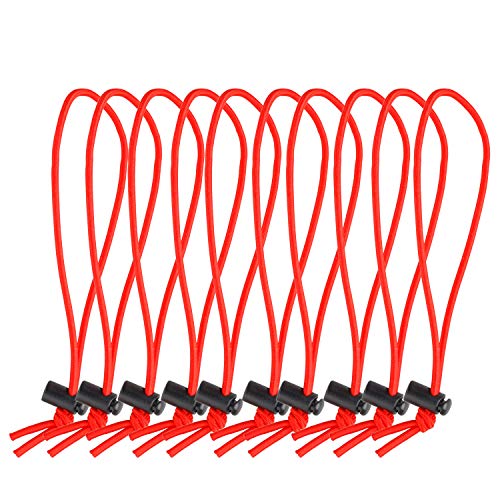
The core appeal of bungee setups is flexibility. Elastic cable ties — like the POWRIG 6-inch elastic bungee ties, which come 10 to a pack for around $10 — let you suspend sections of your cable between ceiling hooks, wall anchors, or even a simple overhead frame. Because the ties stretch, they absorb sudden movements. When you duck, spin, or lunge during a game, the elastic gives slightly instead of yanking your headset.
Cost is the other clear advantage. A basic setup needs maybe 8 to 12 anchor points, and reusable hook-loop straps such as the Nettbe 60-pack of 6-inch cable ties (around $4) handle cable routing along walls and around furniture for pocket change. Even a fully loaded bungee rig rarely crosses $30. If a tie wears out, you replace one $1 component, not a whole assembly.
Installation is genuinely tool-free in most cases. Adhesive ceiling hooks rated for 1–2 pounds hold lightweight headset cables (most link cables weigh under 8 ounces) without drilling, which matters enormously if you’re in an apartment or don’t want to climb a ladder with a drill. Moving to a new place? Peel everything down in ten minutes and rebuild it in the next room.
Bungee systems also adapt to awkward layouts. Sloped ceilings, ceiling fans, light fixtures in the middle of your play area — an elastic system routes around all of it, because you control every anchor point individually.
The downsides are real, though. Elastic sag means your cable hangs lower than a pulley system would allow, and over months the bands lose tension. You’ll also see the whole apparatus — red or black cords looping overhead — which some people find charming and others find cluttered.
Where Ceiling Pulley for Room Scale Vr Wins
A retractable pulley system takes a different approach: each unit is a small housing with an internal spring-loaded reel, attached to the ceiling, with a lanyard that extends down to clip onto your headset cable. Products like the 3-pack drill-free retractable ceiling pulley systems (typically $14–$16) give you three retract points, enough for most play spaces — one near each rear corner of your play area and one toward the front.
The experience difference comes down to tension consistency. Because the reel actively retracts, the cable stays lifted above your head through your entire session. There’s no sag mid-game, no re-clipping after a particularly athletic round of Beat Saber. For long sessions, that consistency translates directly into comfort — you stop noticing the cable at all, which is the entire point.
Retractable systems also win on aesthetics and storage. When you’re done playing, the lanyards retract fully and the cable gathers near the ceiling instead of draping across your furniture. In a living room that doubles as your VR space, that tidiness is worth real money to some buyers.
Three mounting considerations: first, ceiling height. Pulleys perform best with 8.5-foot ceilings or higher; below that, the housing and lanyard stack eats into your overhead clearance. Second, retract radius — most consumer units extend roughly 3 to 5 feet of lanyard, so placement planning matters. Third, adhesive-mounted units hold well on smooth painted ceilings but can fail on textured or popcorn finishes, where drill-mounted brackets are safer.
Cost Over 5 Years
Bungee route: roughly $15–$30 in year one (elastic ties plus hook-loop straps and adhesive hooks). Elastic degrades, so budget $5–$10 in replacements in years two and four. Five-year total: approximately $25–$50.
Pulley route: $14–$50 upfront for a 3-pack, depending on brand and mounting style. Spring mechanisms and adhesive pads may need refreshing once or twice — figure $5–$15 over five years. Five-year total: approximately $20–$65.
The honest conclusion: both systems are so inexpensive that total cost over five years is nearly a wash. The decision should be driven by your ceiling, your lease, and how often you play — not by the price tag. Even the premium scenario (top-tier pulleys plus replacement parts) costs less than a single decent VR game.
By 2026 standards, both approaches are mature, well-sorted solutions with plenty of third-party accessories, so there’s no early-adopter risk in either direction.
Which One for Your Home
Small Apartment
Go bungee. Apartments typically mean 8-foot ceilings, limited play space, and a landlord’s opinion about ceiling holes. A bungee rig with adhesive hooks and reusable strap ties handles all three constraints. Keep your anchor points close together — in spaces under 8 feet by 8 feet, three or four overhead suspension points are plenty. Total investment: under $25.
Family with Kids or Pets
Bungee edges ahead here, but with caveats. Elastic cords sit higher off the floor when properly tensioned, and if a child or cat swats a section, it flexes rather than tearing hardware out of the ceiling. However, loose elastic loops can tempt small hands. Use hook-loop ties to keep slack bundled tight, and mount all hardware above 7 feet. Avoid long dangling pulley lanyards in reach of toddlers — retract them fully after every session.
Rental
Bungee, without hesitation. Everything is removable and damage-free: adhesive hooks peel off cleanly from most painted surfaces, and strap ties leave no marks at all. If you’re set on pulleys, choose a drill-free adhesive model, test one mount on an inconspicuous spot first, and pull slowly at an angle when removing to minimize paint lift. But the bungee route simply has less to explain at your security deposit walkthrough.
Long-Term Home
This is pulley territory. If you own, plan to stay five or more years, and have a room you can dedicate partly or fully to VR, retractable ceiling pulleys reward the slightly higher effort. Install them properly — drilled brackets if your ceiling texture is rough — at each corner of your play area, and you’ll have a clean, always-ready setup that retracts out of sight between sessions. Pair with a few hook-loop ties for wall routing on the way to your PC, and you’ve built the best of both systems for around $30–$50 total.
FAQ
Will a ceiling pulley system work with a wireless headset?
It’s unnecessary for fully wireless headsets, since there’s no cable to manage. Pulleys and bungee systems are for tethered play — PC VR via a link cable or a headset with a wired connection. That said, some pulley owners use a single retract unit to hold an overhead Wi-Fi router or to route a charging cable neatly, so the hardware isn’t useless in a wireless setup.
How high should my ceiling be for room scale VR cable management?
For bungee systems, 7.5 feet works if you keep suspension points tight and the cable loop shallow. For pulleys, aim for 8.5 feet or more — the pulley housing plus retracted lanyard needs about a foot of overhead room. Below 8 feet, the cable can sit low enough to brush your head during jumps.
Can I mix bungee ties and pulleys in the same setup?
Absolutely, and many experienced VR players do. A common hybrid: retractable pulleys overhead for the main span, then hook-loop cable ties routing the cable down the wall to your PC. This keeps the play space clean while the wall run stays tidy and protected from vacuum cleaners and pets.
Do adhesive ceiling hooks actually hold a VR cable?
Yes, for typical cables. Most PC VR link cables weigh 6–8 ounces, and even with bungee tension, per-hook loads stay under a pound. Hooks rated for 1–2 pounds have ample margin. The failure point isn’t weight — it’s ceiling texture. Smooth or satin paint finishes hold adhesive well; popcorn and heavily textured ceilings usually require screw-in hooks. Clean the surface with rubbing alcohol before mounting, and let adhesive cure 24 hours before loading it.