The best DJI drones in 2026 are the DJI Mini 4 Pro for travelers who need sub-250g portability, the DJI Air 3 for creators who want dual cameras and longer flight time without a pro price, and the DJI Mavic 3 Pro for professional aerial photo and video, with the right pick depending on how much weight, camera quality, and obstacle sensing you need.
As an Amazon Associate we earn from qualifying purchases at no extra cost to you.


Our Top Picks


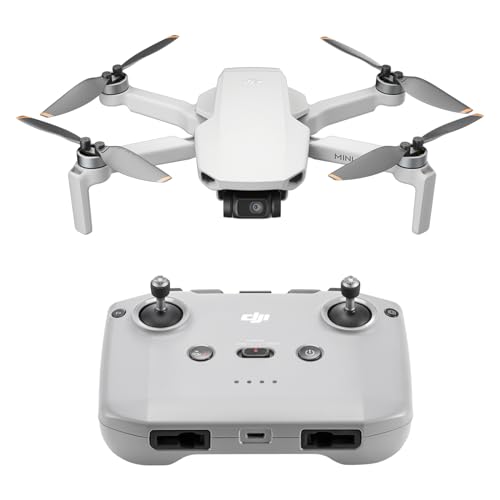

Top 3 picks at a glance
Quick Decision Matrix: Which DJI Drone Fits You
Use this matrix to match your situation to the right class instead of just buying the most expensive option:
| Your Priority | Best Match | Why It Fits | Compromise to Accept |
|---|---|---|---|
| Lightest travel kit, no registration hassle in most countries | DJI Mini 4 Pro | 249g, folds to palm size, true vertical shooting, full omnidirectional sensing | Smaller 1/1.3-inch sensor, more affected by wind than 500g+ drones |
| Best value for 4K video + stills, frequent flights | DJI Air 3 | Dual 48MP cameras (24mm + 70mm), 46 min flight time, weighs 720g | No 1-inch sensor, no variable aperture, less low-light latitude |
| Professional image quality, commercial work | DJI Mavic 3 Pro | Triple camera (4/3 Hasselblad + 70mm + 166mm tele), 5.1K, 20MP RAW, 43 min flight time | Heavier (958g), larger case, usually $1,900–$2,200 for Fly More Combo |
| Indoor, FPV and close-proximity flying | DJI Avata 2 | Ducted propellers, 4K/60 stabilized, flies with Goggles 3 and Motion Controller | Not a traditional camera drone, shorter range, no foldable arms |
| Ultra-compact follow-me and social video | DJI Neo | 135g palm takeoff, subject tracking without controller, usually $180–$280 | Limited wind resistance, basic 12MP sensor, 18 min flight time |
Head-to-Head Comparison: Specs That Actually Affect Use
| Model | Weight (Takeoff) | Camera System | Video Max | Max Flight Time* | Obstacle Sensing | Controller Options |
|---|---|---|---|---|---|---|
| DJI Mini 4 Pro | 249g | 1/1.3-inch 48MP, 24mm f/1.7, single camera | 4K/100fps, 4K/60 HDR | 34 min (45 min with Plus battery) | Omnidirectional vision + downward ToF | DJI RC 2, RC-N2, no phone required |
| DJI Air 3 | 720g | Dual 1/1.3-inch 48MP: 24mm f/1.7 + 70mm f/2.8 | 4K/100fps, 4K/60 HDR, 2.7K vertical | 46 min | Omnidirectional vision | DJI RC 2, RC-N2 |
| DJI Mavic 3 Pro | 958g | 4/3-inch 20MP Hasselblad 24mm f/2.8–f/11 + 1/1.3-inch 70mm + 1/2-inch 166mm tele | 5.1K/50, 4K/120, 10-bit D-Log M/HLG | 43 min | Omnidirectional vision + APAS 5.0 | DJI RC Pro, RC, RC-N2 |
| DJI Avata 2 | 377g | 1/1.3-inch 12MP, 12mm f/2.8 ultra-wide | 4K/60 HDR, 2.7K/120, 10-bit D-Log M | 23 min | Forward/backward binocular vision, downward | Goggles 3 + Motion Controller 3 / RC Motion 3, FPV Remote Controller 3 |
| DJI Neo | 135g | 1/2-inch 12MP, 14mm f/2.8 | 4K/30 | 18 min | No avoidance, relies on infrared hover | Phone, RC-N3, Goggles 3 + Motion (optional) |
* Manufacturer max in still air, no wind. Real-world flight time is typically 15–25% less due to hovering, wind, and return-to-home reserve.
Camera Capabilities: What Changes Your Footage
Sensor size and lens choice
Sensor size matters more than megapixels for travel and aerial photos. The Mavic 3 Pro’s 4/3-inch Hasselblad sensor captures about 2.5x more light per pixel than the 1/1.3-inch sensors in the Mini 4 Pro and Air 3, which gives cleaner shadows at ISO 800–1600 and about 1.5 stops more dynamic range for sunrise/sunset shots. Its variable aperture (f/2.8 to f/11) also lets you keep shutter speed at double your frame rate without always adding ND filters.
The Air 3 closes the gap differently: its dual native focal lengths. The 24mm wide is for landscapes and establishing shots, while the 70mm medium tele creates parallax and compression that makes a single orbit look cinematic without flying dangerously close. The Mini 4 Pro has only the 24mm lens but offers true vertical 4K/60 for social video without cropping.
Color and photo modes
For video, all three camera drones shoot 10-bit D-Log M and HLG, which preserves 12.7+ stops of dynamic range versus 8-bit Normal mode. For photos, Mavic 3 Pro shoots 20MP RAW + 12-bit RAW, while Air 3 and Mini 4 Pro shoot 48MP Bayer RAW that bins to 12MP by default. If you print or crop heavily, the Hasselblad’s larger pixels and natural colors will be noticeable. If you deliver mostly for YouTube, Instagram Reels, or 4K TVs, the Air 3’s dual-camera flexibility often matters more than the absolute sensor size.
Worked calculation: How much storage and battery you actually need
Spec sheets list bitrates, but not what they mean for a travel day. Here is a practical budget:
DJI 4K/60 in H.264 runs about 150 Mbps. Convert to storage:
150 Mbps / 8 = 18.75 MB/s. 18.75 MB/s x 60 = 1,125 MB per minute, or about 67.5 GB per hour.
A single 25-minute real-world flight with 60% recording time = 15 minutes of 4K/60 = ~16.9 GB. Three batteries for an Air 3 (about 115 minutes of real flight) with the same recording ratio = 69 minutes of footage = ~77 GB. That means one 128GB microSD card (usually 119GB usable) will fill before your batteries do. For a full day of shooting with Mavic 3 Pro at 5.1K/50 (200 Mbps = 90 GB/hour), plan on 2x 128GB V30 A2 cards or 1x 256GB card, plus a power bank for the RC controller.
Battery budget: If you get 34 minutes advertised and 26 minutes real per Mini 4 Pro battery in light wind, and you need 15 minutes of safe return reserve across flights, two standard batteries give you about 52 minutes of air time, or roughly 30 minutes of actual recording. The Fly More Combo with three batteries is not an upsell, it is the minimum for a sunrise-to-morning location shoot.
Flight Time and Portability for Travel
For airline travel, sub-250g is the decisive threshold. The Mini 4 Pro and Neo can fly under the 250g exemption in the US, EU, and many other regions, which means no registration for recreational use and fewer restrictions in urban and park zones. You can also pack the Mini 4 Pro with RC 2, three batteries, and a charger in a 1.5L pouch that fits inside a camera cube.
The Air 3 at 720g and Mavic 3 Pro at 958g require registration in most countries and are more sensitive to strict no-fly areas, but they handle wind far better. In a sustained 20–25 mph coastal wind, the Mini 4 Pro will show battery warnings and gimbal corrections sooner, while the Air 3 and Mavic 3 Pro can maintain position with 20–30% lower motor load, which translates to 3–5 minutes more usable time in those conditions. If your travel is mostly mountains, coastline, or desert, that stability is worth the extra 400–700g in your bag.
Flight time hierarchy in real wind is different from the spec sheet: Air 3 (38–42 min real) > Mavic 3 Pro (35–38 min real) > Mini 4 Pro with Plus battery (32–36 min real) > Mini 4 Pro standard (24–27 min real) > Avata 2 (18–20 min real) > Neo (14–16 min real).
Obstacle Sensing and Safety
Obstacle sensing is not just marketing. Mini 4 Pro, Air 3, and Mavic 3 Pro all have omnidirectional sensing (front, back, left, right, up, down) with Advanced Pilot Assistance System (APAS) that will auto-brake and route around objects in Normal and Cine modes. The difference is in processing and speed:
- Mini 4 Pro: Omnidirectional with 360-degree awareness, but limited to slower bypass speeds. Best for beginners and tight hiking trails where you fly at 5–10 mph.
- Air 3: Faster omnidirectional detection with Waypoint and Cruise Control support. Better for autonomous orbits and ActiveTrack where the drone follows you through trees.
- Mavic 3 Pro: APAS 5.0 with 360-degree sensing plus 200m range omnidirectional binocular vision. It can plan a smoother reroute at higher speeds and maintain tracking even when the subject is briefly occluded.
- Avata 2: Only forward/backward and downward sensing. It relies on propeller guards and pilot skill for side impacts, which is intentional for FPV proximity flying.
- Neo: No obstacle avoidance. Do not expect it to stop for branches or walls in follow mode.
For travel video where you fly backward or sideways for reveals, omnidirectional sensing prevents the most common crash. If you plan a lot of ActiveTrack through forests or streets, avoid Neo and Avata 2 as primary tracking drones.
Control Options: Which Controller Makes Sense
DJI now splits controllers into screen vs. phone types:
- DJI RC 2 (with built-in 5.5-inch 700-nit screen): Fast startup, no phone battery drain, no cable, brighter than most phones in sun. Best for travel where you want to launch in 20 seconds. Usually $150–$200 more than phone-based kits.
- DJI RC-N2 / RC-N3 (phone required): Uses your phone as display via DJI Fly app. Cheaper, but adds setup time, occupies your phone, and readability drops in bright sun unless you add a hood.
- DJI RC Pro (Mavic 3 Pro): 1000-nit screen, more processing power for live 10-bit preview, HDMI out for client monitoring. Overkill for hobbyists, essential for paid work.
- Goggles 3 + Motion Controller 3: Only for Avata 2 and Neo. Intuitive hand motion for FPV, but not precise for photography. Add the FPV Remote Controller 3 if you want manual acro mode.
If you own only one DJI drone for travel and photo, the RC 2 kit is the best long-term value. You will fly more often when setup is frictionless, and you keep your phone free for maps and airspace checks in apps like B4UFLY or Drone Assist.
Concrete Settings for Better Aerial Video and Photos
These settings are a starting point for DJI Fly on Mini 4 Pro, Air 3, and Mavic 3 Pro, with the reasoning included:
- Video profile: 4K/60, 10-bit D-Log M, H.265. Reason: 10-bit avoids banding in skies, H.265 saves ~25% card space at same quality, 60fps lets you slow to 24fps for smooth motion without changing shutter.
- Shutter: 1/120 for 60fps (180-degree rule). Reason: Keeps motion blur natural. Add ND8 on bright sun, ND16–ND32 at noon over snow/sand to hold 1/120 at ISO 100.
- White balance: Manual 5500K–6000K daylight. Reason: Prevents color shifts when panning from ground to sky that are hard to match in edit.
- Photo: RAW + JPEG, AEB 5 frames at 0.7 EV steps for high-contrast scenes. Reason: AEB gives you a 2-stop HDR merge without blowing highlights, critical for retaining cloud detail.
- Safety: Set return-to-home altitude 20m above tallest obstacle in the area, and enable “Bypass” not “Brake” for APAS. Reason: Brake will stop in front of a tree during a tracking shot; Bypass will smoothly go around it.
Which Should You Buy in 2026
Choose Mini 4 Pro if you travel by air often, hike long distances, or post vertical video. It is the only option that stays under 250g with pro features and usually costs $750–$1,100 for a Fly More Combo, making it the lowest-risk entry into quality aerial footage.
Choose Air 3 if you want the best all-rounder for YouTube and real estate. The dual cameras and 46-minute endurance mean fewer battery swaps and more creative angles per flight, typically $1,050–$1,550 for a Fly More Combo. It is the sweet spot for most creators.
Choose Mavic 3 Pro if you sell photos, grade log footage, or need the 70mm and 166mm telephoto for compression and inspection work. The 4/3 sensor and variable aperture pay for themselves in low light and windy conditions, usually $1,900–$2,700 depending on controller.
Choose Avata 2 or Neo only as a second drone. Avata 2 is unmatched for immersive, close-proximity flying, and Neo is a fun autonomous selfie drone, but neither replaces a folding camera drone for travel photography.
FAQ
Do I need to register a DJI Mini 4 Pro or Neo for travel in Europe and the US?
In the US, recreational drones under 250g do not need FAA registration, but you still must follow airspace rules and Remote ID requirements, which DJI handles via the DJI Fly app. In the EU under EASA rules, sub-250g drones in category C0 have the fewest restrictions but still require operator registration in most member states if the drone has a camera. Always check local rules before flying in national parks or cities.
Can I use Plus batteries to get 45 minutes on the Mini 4 Pro?
Yes, the Intelligent Flight Battery Plus boosts the Mini 4 Pro to 45 minutes advertised (about 34–36 minutes real), but it pushes takeoff weight to 321g, which removes the sub-250g exemption. For strict 250g travel, carry standard batteries and accept the shorter flight.
Is the Mavic 3 Pro worth it over the Air 3 if I only shoot video for social?
Usually not. The Air 3’s 4K/60 HDR and dual lenses cover 90% of social deliverables, and its longer flight time means more usable clips per charge. Buy the Mavic 3 Pro when you need 5.1K, telephoto compression, or the dynamic range of the 4/3 sensor for paid work.