Our Short List of 3

- Best for: A busy home that needs CAKE SQM working from the first day.
- OpenWrt-based firmware with CAKE SQM
- Bufferbloat grade A+ on independent testing
- 2 x 2.5GbE Ethernet ports
- Filogic 830 processor

- Best for: A gaming household that wants Adaptive QoS with a dedicated gaming port.
- AX5700 dual-band WiFi 6
- Quad-core 2.0GHz processor
- 1GB RAM
- Dedicated gaming port

- Best for: A multi-gigabit plan with WiFi 7 devices and several wired machines.
- Tri-band BE9300 Wi-Fi 7
- 5760 Mbps on 6GHz, 2880 Mbps on 5GHz, 574 Mbps on 2.4GHz
- 5 x 2.5G Ethernet ports (1 WAN and 4 LAN)
- 320MHz channels with multi-link operation
All 3 Picks at a Glance
| Product | Specs | Action |
|---|---|---|
| GL.iNet Flint 2 GL-MT6000 |
| Check price on Amazon |
| ASUS RT-AX86U Pro |
| Check price on Amazon |
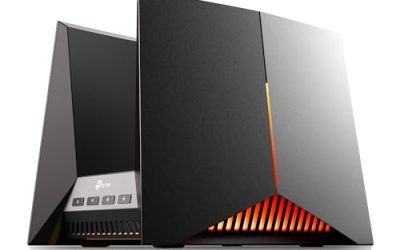
| TP-Link Archer BE550 |
| Check price on Amazon |
Your ping looks fine when the house is quiet, then a cloud backup starts, someone opens a video stream, and your game turns into rubber-banding and delayed shots. That gap is bufferbloat, and the decision is not which router advertises the biggest download number. The decision is which router controls its queues when the connection is busy, because a fast link with bloated buffers makes every small packet wait behind a large one. A router that manages queues keeps gaming traffic, voice calls and video moving while a download saturates the line.
This guide is for three groups: gamers whose ping collapses whenever the household gets busy, people who work from home and need calls to stay clear during uploads, and owners of fast plans whose current router becomes the bottleneck under load. Every pick below was chosen from the product name and specifications on its Amazon listing, and every pick earns its place through queue management, port speed or wireless capacity that directly affects latency under load.
Our Top Picks
Top 3 picks at a glance
Quick Picks
As an Amazon Associate we earn from qualifying purchases
| Product | Best for | Key spec from title |
|---|---|---|
| GL.iNet Flint 2 GL-MT6000 | A home that wants real SQM with CAKE working out of the box | OpenWrt-based router with CAKE SQM and dual 2.5GbE ports |
| ASUS RT-AX86U Pro | A gaming household that wants Adaptive QoS and a dedicated gaming port | AX5700 WiFi 6 router with quad-core 2.0GHz processor and 1GB RAM |
| TP-Link Archer BE550 | A multi-gigabit plan with WiFi 7 devices | Tri-band BE9300 WiFi 7 router with five 2.5G ports |
How to Choose
Put smart queue management first, not headline speed
Bufferbloat is a queue problem, so smart queue management, known as SQM, matters most. SQM shapes traffic so the queue forms inside your router, where it stays short, instead of inside the modem, where it grows without control. CAKE and fq_codel are the two queue algorithms most often named for this job, and a router running one natively gives the strongest starting point. Some routers instead offer adaptive QoS, which prioritises game traffic but does not manage queues the same way, so read the listing and do not treat every QoS label as SQM. If the listing names CAKE or SQM, that router belongs at the top of a bufferbloat shortlist.
Match the processor and the ports to your plan
Queue management costs processing power, and a weak processor can become the new bottleneck once SQM is turned on. Check the processor and the memory on the listing, and favour a quad-core chip with at least 1GB of RAM when your plan is fast or your household is busy. Ports matter just as much: a router with only gigabit ports caps a faster-than-gigabit plan before traffic ever reaches your devices. Look for 2.5GbE WAN and LAN ports when your plan or your wired devices run above gigabit, and count how many wired devices you actually own before settling for a router with a single fast port.
Check the Wi-Fi generation against your devices
Wi-Fi 7 and Wi-Fi 6 both move plenty of data, but only the newer standard adds a 6GHz band and multi-link operation, which lets a capable device use more than one band at once. That helps in a crowded home where the 5GHz band already carries phones, laptops and a console. Before paying for Wi-Fi 7, count how many of your devices actually support it, because a Wi-Fi 7 router still serves older devices on their older standards. A household full of Wi-Fi 6 gear gains little from the newest radio, while a home already buying Wi-Fi 7 laptops and phones gets real headroom from the extra band and wider channels.
Plan where the queue forms before you buy
Even the best router needs its shaper set slightly below the real speed of your line, so the queue forms in the router rather than in the modem. That means measuring your wired speed first, then entering download and upload limits a little under those numbers in the router settings. A wired connection to the gaming PC removes Wi-Fi contention from the test entirely, so run a cable when the desk allows it and treat wireless as the fallback for devices that cannot be wired. If your modem is a combined modem-router unit from the provider, ask for bridge mode so the new router owns the queue, because two layers of queueing undo the benefit of SQM.
The 3 Best Options
GL.iNet Flint 2 GL-MT6000
- Best for: A busy home that needs CAKE SQM working from the first day.
- OpenWrt-based firmware with CAKE SQM
- Bufferbloat grade A+ on independent testing
- 2 x 2.5GbE Ethernet ports
- Filogic 830 processor
A busy home that needs CAKE SQM working from the first day.
Check that your modem can run in bridge mode, so the queue forms in the Flint 2 and not in the modem.
The Flint 2 is the pick for buyers who want bufferbloat handled properly rather than papered over with a gaming label. It runs OpenWrt as its base firmware, and that brings CAKE SQM into the router without flashing anything or hunting for third-party firmware. In practice that means a download or an upload can saturate the connection while gaming packets and voice traffic still get through with latency close to idle, which is exactly the behaviour a bufferbloat test grades. It suits a busy household, a shared flat, or anyone whose ping has to survive a backup, a stream and a game running at the same time.
Watch out for: Check that your modem can run in bridge mode, so the queue forms in the Flint 2 and not in the modem.
ASUS RT-AX86U Pro
- Best for: A gaming household that wants Adaptive QoS with a dedicated gaming port.
- AX5700 dual-band WiFi 6
- Quad-core 2.0GHz processor
- 1GB RAM
- Dedicated gaming port
A gaming household that wants Adaptive QoS with a dedicated gaming port.
The stock firmware uses Adaptive QoS, not CAKE, so buyers who specifically want CAKE should pick the Flint 2 instead.
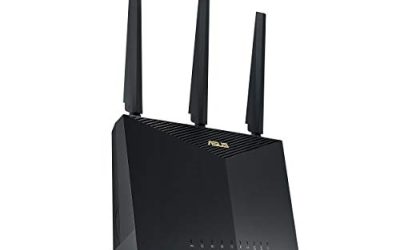
The RT-AX86U Pro is the pick for a gaming household that wants strong queue control without leaving familiar stock firmware behind. Its Adaptive QoS prioritises gaming traffic and keeps latency steadier when the connection fills up, and a dedicated gaming port gives a wired PC or console first claim on the fastest lane. The quad-core processor and 1GB of RAM give the router enough headroom to run its traffic features while serving a house full of devices, and AiProtect adds network security without a separate subscription. It is a straightforward choice for players who want to plug in, turn on the gaming features, and play.
Watch out for: The stock firmware uses Adaptive QoS, not CAKE, so buyers who specifically want CAKE should pick the Flint 2 instead.
TP-Link Archer BE550
- Best for: A multi-gigabit plan with WiFi 7 devices and several wired machines.
- Tri-band BE9300 Wi-Fi 7
- 5760 Mbps on 6GHz, 2880 Mbps on 5GHz, 574 Mbps on 2.4GHz
- 5 x 2.5G Ethernet ports (1 WAN and 4 LAN)
- 320MHz channels with multi-link operation
A multi-gigabit plan with WiFi 7 devices and several wired machines.
Confirm the queue-management options in the firmware before buying if SQM is your top priority, since the listing leads with Wi-Fi 7 speed and ports.
The Archer BE550 is the pick for homes whose plan and devices have already moved past gigabit and into Wi-Fi 7. Its tri-band BE9300 radio spreads traffic across 2.4GHz, 5GHz and a 6GHz band with wide channels and multi-link operation, which keeps a crowded wireless network moving when several devices demand bandwidth at once. All five Ethernet ports run at 2.5G, so a wired gaming PC, a console and a network drive can each take a multi-gigabit lane instead of sharing one fast port. It suits a household upgrading to a faster plan, or one already buying Wi-Fi 7 laptops and phones.
Watch out for: Confirm the queue-management options in the firmware before buying if SQM is your top priority, since the listing leads with Wi-Fi 7 speed and ports.
Which One Fits Your Situation
You game while the house streams and uploads
Pick the GL.iNet Flint 2 GL-MT6000. Its CAKE SQM is the feature built for exactly this situation, because it keeps the queue short for everyone instead of letting one big transfer crowd out small gaming packets. A backup starting mid-match or a housemate opening a 4K stream stops being the event that ruins your ping, and the dual 2.5GbE ports keep a wired gaming PC on a fast lane at the same time.
You want a gaming router that just works
Pick the ASUS RT-AX86U Pro. Its Adaptive QoS and dedicated gaming port are designed for players who do not want to configure queue settings by hand, and the stock firmware keeps setup familiar. Plug the gaming PC or console into the gaming port, turn on Adaptive QoS, and the router gives game traffic priority whenever the connection gets busy.
Your plan is faster than gigabit and your devices are Wi-Fi 7
Pick the TP-Link Archer BE550. Its five 2.5G ports and tri-band BE9300 radio are built for a plan that outruns gigabit Ethernet, and the 6GHz band gives new Wi-Fi 7 devices a clean lane away from older traffic. It is the right fit when the bottleneck is raw capacity and port speed rather than queue discipline alone.
Your gaming desk is fully wired
Pick the TP-Link Archer BE550 when several wired devices share the desk, since its four 2.5G LAN ports give the PC, the console and a drive each their own fast lane. Pick the GL.iNet Flint 2 GL-MT6000 when the desk has one main machine and queue control matters more than port count, because its CAKE SQM protects latency while the single wired PC plays.
Common Mistakes
- Buying the fastest headline speed and ignoring queue management, which is the feature that actually fixes bufferbloat.
- Treating every QoS label as SQM, when adaptive QoS prioritises traffic instead of keeping queues short.
- Leaving the ISP modem-router in place and stacking a second router behind it, so two layers of queueing fight each other.
- Setting the SQM shaper to the full advertised plan speed instead of slightly below the real measured speed.
- Testing latency over Wi-Fi and blaming the router, when wireless contention was skewing the result all along.
Frequently Asked Questions
What is bufferbloat in simple terms?
Bufferbloat is delay caused by oversized queues in your modem or router. When a download or upload fills the connection, packets pile up in a buffer and small, time-sensitive packets such as game movements or voice audio wait behind them. Your download speed can look fine while your ping jumps sharply, and that gap between idle latency and loaded latency is the sign of bufferbloat.
Does a faster internet plan fix bufferbloat?
No, a faster plan usually does not fix it, because bufferbloat comes from how queues are managed, not from a lack of bandwidth. A faster link still fills its buffers when a transfer saturates it, so latency still spikes under load. The fix is smart queue management that keeps queues short, which is why a router with SQM or CAKE helps more than a plan upgrade alone.
Is SQM the same as QoS?
No, they are related but different tools. QoS prioritises one kind of traffic over another, so game packets go first in the queue. SQM keeps the queue itself short for everyone, so no packet waits long regardless of priority. Many routers offer QoS, fewer offer true SQM with CAKE or fq_codel, and the listing should name the algorithm before you assume it is there.
Do I need to replace my modem as well?
Usually not, but the modem must not create its own unmanaged queue in front of the router. If your provider supplied a combined modem-router unit, ask for bridge mode so it passes traffic straight through and the new router owns queue management. A standalone modem in front of the router works fine, since the queue then forms where your SQM settings can control it.
Related guides
More from Amazon
Programs that pair well with the guide above. Offers and eligibility are set by Amazon and may change.
Free shipping on eligible items, Prime Video and more. Eligible new members can start with a free trial.
Start a Prime free trialAd-free music streaming. Eligible new subscribers can start with a free trial.
Try Music Unlimited freeA Prime membership for ages 18-24 with a trial period. Eligibility is set by Amazon.
See Prime for Young AdultsAudiobooks and podcasts to listen to on the go. Eligible new members can start with a free trial.
Try Audible freeAs an Amazon Associate we earn from qualifying purchases.