Our Short List of 3

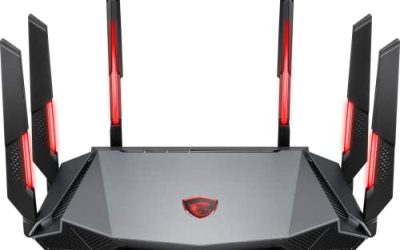
- Best for: Households on multi-gig fiber that want WiFi 7 and the fullest wired port selection in one router.
- WiFi standard: WiFi 7 (802.11be), tri-band
- Combined speed: up to 19 Gbps, 12-stream
- Wired ports: 2 x 10 Gbps, 4 x 2.5 Gbps, USB 3.0
- Antennas: 8 optimally positioned antennas

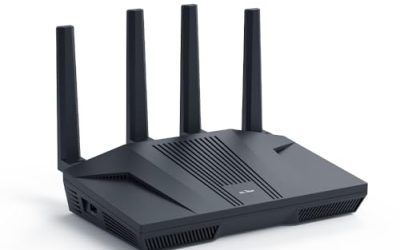
- Best for: Larger homes that want a WiFi 7 router with a stated coverage figure and a 10 Gig internet port.
- WiFi standard: WiFi 7, tri-band
- Speed class: BE19000, up to 19 Gbps
- Internet port: 10 Gig port
- LAN ports: 3 x Gigabit

- Best for: Gamers who can wire their PC or console and want 10G networking with game acceleration on WiFi 6.
- WiFi standard: WiFi 6, tri-band
- Wired ports: 10G port and 2.5G port
- Signal feature: ASUS RangeBoost Plus
- Gaming feature: triple-level game acceleration
All 5 Picks at a Glance
| Product | Specs | Action |
|---|---|---|
| TP-Link Archer GE800 |
| Check price on Amazon |
| NETGEAR Nighthawk RS700S |
| Check price on Amazon |
| ASUS ROG Rapture GT-AX11000 Pro |
| Check price on Amazon |
 ASUS RT-AX86U Pro |
| Check price on Amazon |
 NETGEAR Nighthawk XR1000 |
| Check price on Amazon |
Choosing a home router for gaming is really a decision about sharing. The same connection that carries your matches also carries a partner’s video calls, a 4K stream in the living room, cloud backups and every phone in the house. Headline speed matters less than how the router behaves when all of that traffic collides: whether game packets get priority, whether your PC or console can plug straight in, and whether the WiFi standard matches the plan you actually pay for.
This guide is for households where gaming shares the network rather than owning it. Every pick below is a standalone home router sold on Amazon, chosen from its current listing: two WiFi 7 flagships with multi-gig ports, two ASUS WiFi 6 models with dedicated gaming ports and subscription-free security, and one NETGEAR router whose DumaOS software is built around controlling ping. Match them to your plan speed, house size and wiring options.
Our Top Picks
Top 3 picks at a glance
Quick Picks
As an Amazon Associate we earn from qualifying purchases
| Product | Best for | Key spec from title |
|---|---|---|
| TP-Link Archer GE800 | WiFi 7 future-proofing | BE19000 tri-band WiFi 7, two 10G ports |
| NETGEAR Nighthawk RS700S | Large homes with a stated coverage figure | BE19000 WiFi 7, coverage up to 3,500 sq. ft. |
| ASUS ROG Rapture GT-AX11000 Pro | Wired rigs and 10G networking | Tri-band WiFi 6, 10G and 2.5G ports |
| ASUS RT-AX86U Pro | Control without a security subscription | AX5700 dual-band WiFi 6, 2.5G port |
| NETGEAR Nighthawk XR1000 | Ping control through software | AX5400 WiFi 6, DumaOS 3.0 |
How to Choose
Match the WiFi Standard to Your Devices and Plan
WiFi 7 adds the 6 GHz band, wider 320 MHz channels and Multi-Link Operation, which lets compatible devices use more than one band at once. That headroom helps busy homes, but only WiFi 7 and 6E devices can use the 6 GHz band at all. If your consoles, PCs and phones are WiFi 6 or older, a strong WiFi 6 router can serve them just as well today. Start from your internet plan: a router cannot deliver more than the plan provides, so pair the standard to the speed you actually buy and the devices you own.
Put Traffic Control Ahead of Raw Speed
For gaming, the feature that matters most is how the router handles congestion. Quality of Service settings let you prioritize a console, a PC or game traffic itself, so a big download elsewhere in the house does not spike your ping mid-match. Some models go further: ASUS offers adaptive QoS and a dedicated gaming port, TP-Link lists Quality of Service inside HomeShield plus a game acceleration mode, and NETGEAR’s DumaOS is built around prioritizing game traffic and choosing less congested servers. Decide how much control you want, because setup effort rises with it.
Count Wired Ports and Their Speeds
A wired connection is still the most reliable way to game, so check the back panel before anything else. Look at how many LAN ports you get and how fast each one is. Gigabit ports cap a wired device at gigabit speeds, which is fine for most plans, while 2.5G and 10G ports suit multi-gig fiber and fast local transfers between a PC and a NAS. The TP-Link in this guide carries two 10G and four 2.5G ports; the XR1000 carries four gigabit ports. Count your wired devices, including TVs and work machines, before choosing.
Check Coverage, Mesh Options and Ongoing Costs
A single router has to reach the rooms where people actually play. Some listings state a coverage figure, such as up to 3,500 square feet for the NETGEAR RS700S, which gives you a planning anchor. If your home is larger or split across floors, mesh expansion matters: ASUS AiMesh and TP-Link EasyMesh let you add compatible nodes later instead of replacing the router. Finally, check what the security software costs after any included period ends. ASUS advertises subscription-free network security, while NETGEAR Armor and TP-Link HomeShield place their fuller feature sets in paid tiers.
The 5 Best Options
TP-Link Archer GE800
- Best for: Households on multi-gig fiber that want WiFi 7 and the fullest wired port selection in one router.
- WiFi standard: WiFi 7 (802.11be), tri-band
- Combined speed: up to 19 Gbps, 12-stream
- Wired ports: 2 x 10 Gbps, 4 x 2.5 Gbps, USB 3.0
- Antennas: 8 optimally positioned antennas
Households on multi-gig fiber that want WiFi 7 and the fullest wired port selection in one router.
The free HomeShield tier covers the basics; the listing describes the fuller security and parental control features as part of the premium service.
The Archer GE800 is TP-Link’s WiFi 7 gaming flagship, and its listing leads with capacity: tri-band WiFi 7 rated up to 19 Gbps across twelve streams, with 320 MHz channels and Multi-Link Operation on the 6 GHz band. The wired side is the strongest in this guide, with two 10 Gbps ports and four 2.5 Gbps ports, so a gaming PC, a console and a NAS can all run wired without a switch. Turbo Game Acceleration, a dedicated gaming port and a real-time performance panel round out a router aimed at homes that want one box to do everything.
Watch out for: The free HomeShield tier covers the basics; the listing describes the fuller security and parental control features as part of the premium service.
NETGEAR Nighthawk RS700S
- Best for: Larger homes that want a WiFi 7 router with a stated coverage figure and a 10 Gig internet port.
- WiFi standard: WiFi 7, tri-band
- Speed class: BE19000, up to 19 Gbps
- Internet port: 10 Gig port
- LAN ports: 3 x Gigabit
Larger homes that want a WiFi 7 router with a stated coverage figure and a 10 Gig internet port.
It is a router only, with no built-in modem, and Armor continues as a paid subscription after the included year ends.
The RS700S is NETGEAR’s WiFi 7 entry in this guide, rated BE19000 with speeds up to 19 Gbps across its tri-band radios. Its listing states coverage of up to 3,500 square feet and support for up to 200 devices, which makes it the natural pick when the buying question is whether one router can serve a larger, device-heavy home. A 10 Gig internet port keeps it ahead of multi-gig plans, and NETGEAR Armor powered by Bitdefender is included for the first year, according to the listing, before it becomes a paid service.
Watch out for: It is a router only, with no built-in modem, and Armor continues as a paid subscription after the included year ends.
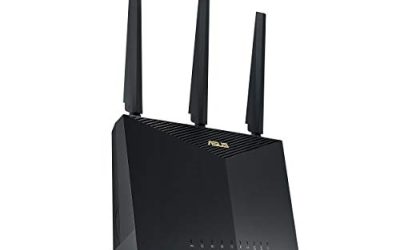
ASUS ROG Rapture GT-AX11000 Pro
- Best for: Gamers who can wire their PC or console and want 10G networking with game acceleration on WiFi 6.
- WiFi standard: WiFi 6, tri-band
- Wired ports: 10G port and 2.5G port
- Signal feature: ASUS RangeBoost Plus
- Gaming feature: triple-level game acceleration
Gamers who can wire their PC or console and want 10G networking with game acceleration on WiFi 6.
There is no 6 GHz band, so WiFi 6E and WiFi 7 devices cannot use their fastest radio with this router.
The GT-AX11000 Pro stays on WiFi 6 but leans hard into wired performance and game traffic handling. Its listing highlights a 10G port and a 2.5G port, ASUS RangeBoost Plus for signal reach, and triple-level game acceleration that prioritizes game packets from the device through the router to the server path. It is also an extendable AiMesh router, so it can anchor a mesh system later rather than being replaced. For households whose gaming machines sit near the router and can plug in, this wired-first design is the appeal, even without a 6 GHz band.
Watch out for: There is no 6 GHz band, so WiFi 6E and WiFi 7 devices cannot use their fastest radio with this router.
ASUS RT-AX86U Pro
- Best for: Households that want gaming QoS and full security features without an ongoing subscription.
- WiFi standard: WiFi 6, dual band
- Speed class: AX5700, up to 5700 Mbps
- Wired ports: 2.5G port and dedicated gaming port
- Gaming features: Mobile Game Mode, port forwarding
Households that want gaming QoS and full security features without an ongoing subscription.
It is dual-band only, and the single 2.5G port has to serve either your internet connection or your fastest wired device, not both.
The RT-AX86U Pro is the control-focused pick: a dual-band WiFi 6 router rated AX5700 with speeds up to 5700 Mbps, a 2.5G port and a dedicated gaming port that prioritizes whatever is plugged into it. Its listing adds Mobile Game Mode for phone players, port forwarding, VPN support and AiMesh compatibility, so it can join or start a mesh setup later. The standout for many households is the security line in the title: subscription-free network security, which means the AiProtection features do not switch to a paid plan after a trial period.
Watch out for: It is dual-band only, and the single 2.5G port has to serve either your internet connection or your fastest wired device, not both.
NETGEAR Nighthawk XR1000
- Best for: Competitive players who care more about ping control and server selection than raw WiFi speed.
- WiFi standard: WiFi 6, 6-stream
- Speed class: AX5400, up to 5.4 Gbps
- Operating system: DumaOS 3.0
- Wired ports: 4 x 1G Ethernet ports
Competitive players who care more about ping control and server selection than raw WiFi speed.
All four LAN ports are gigabit, so it cannot feed a multi-gig wired setup, and DumaOS needs some setup time to pay off.
The XR1000 takes a software-first approach to gaming. It is a WiFi 6 router rated AX5400 with speeds up to 5.4 Gbps, and its DumaOS 3.0 operating system is built to stabilize ping and reduce lag spikes by managing which servers you connect to and how bandwidth is shared. Four gigabit Ethernet ports cover a console, a PC and a couple of extra wired devices. It is an older platform than the WiFi 7 models here, with no multi-gig ports, but for players whose main frustration is ping rather than throughput, the DumaOS toolkit is the reason to pick it.
Watch out for: All four LAN ports are gigabit, so it cannot feed a multi-gig wired setup, and DumaOS needs some setup time to pay off.
Which One Fits Your Situation
You Pay for Multi-Gig Fiber
If your plan runs faster than gigabit, the router’s internet port becomes the bottleneck. The TP-Link Archer GE800 and the NETGEAR RS700S both carry 10 Gig ports, so either can pass the full plan to the house, and the GE800 adds four 2.5 Gbps LAN ports for wired machines. The ASUS GT-AX11000 Pro also fits, with its 10G port, if you prefer WiFi 6 pricing and wired gaming.
One Gamer, Several Streamers
When a match competes with 4K streams, video calls and downloads, traffic control matters more than headline speed. The ASUS RT-AX86U Pro lets you prioritize a gaming port and specific devices, and its security carries no subscription. The TP-Link Archer GE800 answers with HomeShield Quality of Service and its game acceleration mode. Either approach works; choose based on whether you also want WiFi 7 radios for the next round of devices.
Ping Matters More Than Throughput
If your games already download fast enough but matches feel unstable, look at the NETGEAR XR1000. DumaOS 3.0 is designed to stabilize ping, filter distant servers and keep other household traffic from crowding out your game. It gives up multi-gig ports and the 6 GHz band to do that job, so it suits players on gigabit-or-slower plans who compete online often and notice every spike.
A Large or Multi-Storey House
Start with the NETGEAR RS700S, whose listing states coverage up to 3,500 square feet. If your home is bigger, or the gaming room sits far from the router, favor a router you can extend: the ASUS models use AiMesh and the TP-Link GE800 uses EasyMesh, so a compatible node can be added later. Extending a system you already own usually beats replacing a strong router that almost reaches.
Common Mistakes
- Buying WiFi 7 when every gaming device in the house is WiFi 6 or older, leaving the 6 GHz band unused.
- Judging a router by combined headline speed instead of QoS features, port speeds and band layout.
- Plugging a multi-gig fiber plan into a gigabit internet port and capping the whole house.
- Leaving game traffic unprioritized, so one large download elsewhere spikes everyone’s ping.
- Ignoring what the security software costs after the included period ends.
Frequently Asked Questions
Do I need WiFi 7 for gaming at home?
Not necessarily. WiFi 7 helps most in busy homes with WiFi 7 or 6E devices, because the 6 GHz band adds clean capacity and Multi-Link Operation can smooth out interference. If your console, PC and phones are WiFi 6 models, a well-chosen WiFi 6 router with good QoS will feel just as responsive in most matches today.
Will a gaming router lower my ping?
It can help inside your home, mainly by prioritizing game packets when the network is busy and, in the case of DumaOS, by steering you toward closer servers. It cannot shorten the physical distance to a game server or fix a slow internet plan, so treat router features as congestion control rather than a cure for a distant server.
Should I wire my console or PC instead of using WiFi?
Yes, when the layout allows it. A cable removes interference, walls and competing wireless devices from the equation, which usually means steadier ping than any radio can promise. If wiring the gaming machine is impossible, place it on the 5 GHz or 6 GHz band and keep the router in the open, away from thick walls and metal shelving.
Can one router cover a large house, or do I need mesh?
One strong router can cover many homes, especially when the listing states a figure such as 3,500 square feet and the unit sits centrally. Add mesh nodes when the gaming room is separated by several walls or floors, or when speeds collapse at the edges. AiMesh and EasyMesh models in this guide let you extend the same network instead of starting over.
Related guides
More from Amazon
Programs that pair well with the guide above. Offers and eligibility are set by Amazon and may change.
Free shipping on eligible items, Prime Video and more. Eligible new members can start with a free trial.
Start a Prime free trialAd-free music streaming. Eligible new subscribers can start with a free trial.
Try Music Unlimited freeA Prime membership for ages 18-24 with a trial period. Eligibility is set by Amazon.
See Prime for Young AdultsAudiobooks and podcasts to listen to on the go. Eligible new members can start with a free trial.
Try Audible freeAs an Amazon Associate we earn from qualifying purchases.