Our Short List of 3

- Best for: Gigabit-and-above Xfinity homes with Wi-Fi 6E or Wi-Fi 7 gaming devices.
- Model: Archer AXE75
- Wi-Fi class: AXE5400 tri-band Wi-Fi 6E
- Bands: includes the 6 GHz band with 160 MHz channels
- WAN port: 2.5 Gbps

- Best for: Console and PC gamers who want a gaming port, port forwarding and AiMesh expansion.
- Model: RT-AX86U Pro
- Wi-Fi class: AX5700 dual-band Wi-Fi 6, up to 5700 Mbps class
- Ports: 2.5G port and a dedicated gaming port
- Gaming features: Mobile Game Mode and port forwarding

- Best for: Gigabit-and-under Xfinity homes wanting dual-band Wi-Fi 6 with mesh options.
- Model: Archer AX55
- Wi-Fi class: AX3000 dual-band Wi-Fi 6
- Band speeds: 2402 Mbps on 5 GHz and 574 Mbps on 2.4 GHz
- Technology: OFDMA and MU-MIMO
All 3 Picks at a Glance
| Product | Specs | Action |
|---|---|---|
| TP-Link Archer AXE75 (AXE5400) Tri-Band Wi-Fi 6E Router |
| Check price on Amazon |
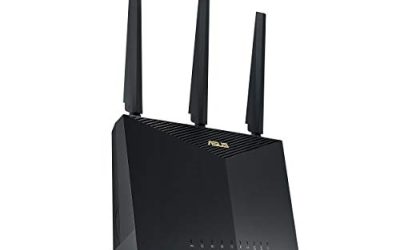
| ASUS RT-AX86U Pro (AX5700) Dual-Band Wi-Fi 6 Gaming Router |
| Check price on Amazon |
| TP-Link Archer AX55 (AX3000) Dual-Band Wi-Fi 6 Router |
| Check price on Amazon |
An Xfinity household shopping for a router faces a decision most router roundups skip: the router is never the part Xfinity approves. Comcast certifies only the modem, so your real choice is how a standalone router sits behind an approved modem or behind the rented xFi Gateway switched into Bridge Mode. Get that arrangement wrong and you land in double NAT, with strict console NAT, broken port forwarding and VPN passthrough that quietly fails.
The three routers below suit different households. Players on gigabit-or-faster tiers who want a multi-gig WAN path should start with the TP-Link Archer AXE75, value-focused gigabit homes are served by the TP-Link Archer AX55, and gamers who want a dedicated gaming port and AiMesh expansion should look at the ASUS RT-AX86U Pro. Each was chosen from its Amazon listing name and stated specs, not from any Xfinity approval list, because no such list exists for routers.
Our Top Picks
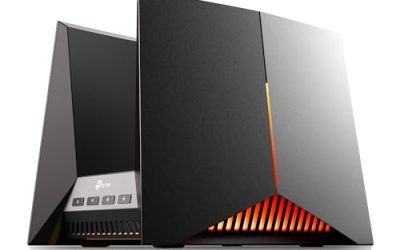
- TP-Link AXE5400 Tri-Band WiFi 6E RouterWiFi 6E, Tri-Band AXE540012.91 x 10.43 x 4.72 inches1.5 poundsCheck on Amazon
Top 3 picks at a glance
Quick Picks
As an Amazon Associate we earn from qualifying purchases.
| Product | Best for | Key spec |
|---|---|---|
| TP-Link Archer AXE75 (AXE5400) Tri-Band Wi-Fi 6E Router | Gigabit-and-above gaming tiers with 6E clients | 2.5 Gbps WAN port |
| ASUS RT-AX86U Pro (AX5700) Dual-Band Wi-Fi 6 Gaming Router | Console and PC players who need open NAT | Dedicated gaming port |
| TP-Link Archer AX55 (AX3000) Dual-Band Wi-Fi 6 Router | Gigabit-and-under homes wanting simple value | 2402 Mbps on 5 GHz |
How to Choose
Settle the Modem and Gateway Arrangement First
Before comparing routers, decide what yours will plug into. One route keeps the xFi Gateway and enables Bridge Mode in its Admin Tool, which turns the gateway into a plain modem and hands the public IP to your router. The other route returns the gateway and pairs your router with a modem you own, and that modem must sit on Xfinity’s approved list for your speed tier. A router itself needs no Xfinity approval at all, since anything with an Ethernet WAN port works behind a modem. Skipping this decision leaves two devices routing at once, which is exactly how double NAT starts.
Match the WAN Port to Your Speed Tier
The WAN port is the ceiling for your whole network, no matter how fast the Wi-Fi radios are. A gigabit WAN port is fine on gigabit-and-under Xfinity tiers, but it quietly caps anything faster before your devices ever see the extra speed. Households on tiers above gigabit should look for a 2.5 Gbps WAN port instead, and then check the other end of the cable: the modem needs a matching multi-gig Ethernet port, or the gateway in Bridge Mode needs to feed that port, otherwise the faster socket goes unused. Match port, modem and tier together rather than buying a headline speed your connection cannot reach.
Choose Bands for the Clients You Actually Own
A tri-band Wi-Fi 6E router adds a 6 GHz band with 160 MHz channels, which gives nearby laptops, handhelds and phones that support 6E a cleaner lane away from crowded 5 GHz traffic. Older consoles, smart TVs and smart-home gadgets gain nothing from that band, because they cannot connect to it. Dual-band Wi-Fi 6 still serves a mixed house well, especially when the listing states strong 5 GHz throughput for the devices that do the gaming and streaming. Read the band figures per model rather than assuming a higher class number helps every device, and count your actual 6E clients before paying for the extra radio.
Plan Coverage Once the Gateway Wi-Fi Switches Off
Bridge Mode has a cost that surprises many households: the gateway’s own Wi-Fi and routing turn off, xFi app features and Advanced Security stop, and WiFi Boost Pods cannot be used at all, with already-activated Pods blocking Bridge Mode until they are removed. Only one device can connect to the bridged gateway, and that device should be your router. Coverage for larger homes therefore has to come from the router side, through systems such as OneMesh, EasyMesh or AiMesh named in the listings below. Xfinity support also will not troubleshoot a third-party router, so setup confidence matters when you choose.
The 3 Best Options
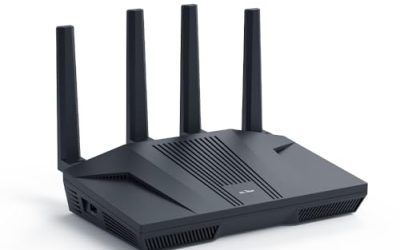
TP-Link Archer AXE75 (AXE5400) Tri-Band Wi-Fi 6E Router
- Best for: Gigabit-and-above Xfinity homes with Wi-Fi 6E or Wi-Fi 7 gaming devices.
- Model: Archer AXE75
- Wi-Fi class: AXE5400 tri-band Wi-Fi 6E
- Bands: includes the 6 GHz band with 160 MHz channels
- WAN port: 2.5 Gbps
Gigabit-and-above Xfinity homes with Wi-Fi 6E or Wi-Fi 7 gaming devices.
The 6 GHz band only helps clients that support it, and the 2.5 Gbps WAN port goes unused unless your modem has a multi-gig port or your bridged gateway feeds it properly.
For Xfinity tiers at or above gigabit, this is the pick that removes the usual bottlenecks in one step. Its 2.5 Gbps WAN port accepts everything a fast tier and a multi-gig modem can deliver, while the 6 GHz band gives Wi-Fi 6E and Wi-Fi 7 clients a clear lane for gaming and large downloads. OneMesh compatibility offers a coverage path after Bridge Mode disables your Pods, and VPN support plus WPA3 cover the security basics. It suits a household that games on several machines, streams in 4K and wants the router to stay relevant as faster Xfinity tiers arrive.
ASUS RT-AX86U Pro (AX5700) Dual-Band Wi-Fi 6 Gaming Router
- Best for: Console and PC gamers who want a gaming port, port forwarding and AiMesh expansion.
- Model: RT-AX86U Pro
- Wi-Fi class: AX5700 dual-band Wi-Fi 6, up to 5700 Mbps class
- Ports: 2.5G port and a dedicated gaming port
- Gaming features: Mobile Game Mode and port forwarding
Console and PC gamers who want a gaming port, port forwarding and AiMesh expansion.
Availability signals for this ASIN are mixed and ASUS is phasing the model toward a Wi-Fi 7 successor, so confirm a live featured offer for a NEW unit under ASIN B0BQ417K47 before ordering, and ignore used or resale offers.
This dual-band gaming router is built around the features double NAT normally breaks, which makes the setup advice around it just as important as the hardware. A dedicated gaming port, Mobile Game Mode and port forwarding are aimed at console and PC players who need predictable NAT behaviour, while AiProtection Pro provides subscription-free network security and AiMesh compatibility lets you extend coverage with compatible ASUS routers after your Pods stop working in Bridge Mode. Choose it when gaming features matter more than a third band, and pair it with Bridge Mode or a modem you own so those features can actually work.
TP-Link Archer AX55 (AX3000) Dual-Band Wi-Fi 6 Router
- Best for: Gigabit-and-under Xfinity homes wanting dual-band Wi-Fi 6 with mesh options.
- Model: Archer AX55
- Wi-Fi class: AX3000 dual-band Wi-Fi 6
- Band speeds: 2402 Mbps on 5 GHz and 574 Mbps on 2.4 GHz
- Technology: OFDMA and MU-MIMO
Gigabit-and-under Xfinity homes wanting dual-band Wi-Fi 6 with mesh options.
Its WAN is gigabit, so it becomes the ceiling on any tier above gigabit, and some HomeShield features are subscription-gated, so do not count on the full suite being included.
The Archer AX55 is the straightforward choice for Xfinity tiers at gigabit and under, where a multi-gig WAN port would sit idle anyway. Its listing splits the AX3000 class into 2402 Mbps on 5 GHz and 574 Mbps on 2.4 GHz, with OFDMA and MU-MIMO helping busy households share airtime, while a USB 3.0 port, VPN server and client support and Alexa compatibility round out a practical feature set. EasyMesh and OneMesh compatibility give it an expansion route for larger homes. Pick it when your tier, your devices and your budget all point to capable dual-band Wi-Fi 6 rather than 6E.
Which One Fits Your Situation
You Play on Console and Keep Seeing Strict NAT
Start with the ASUS RT-AX86U Pro, because its dedicated gaming port, Mobile Game Mode and port forwarding target exactly the problems strict NAT causes. None of that helps until the network arrangement is fixed, though: put the xFi Gateway into Bridge Mode or use a modem you own, so only one device is routing. Run that setup and the gaming features operate as the listing describes, instead of fighting a second router hidden inside the gateway.
Your Xfinity Tier Runs Above Gigabit
Choose the TP-Link Archer AXE75, whose 2.5 Gbps WAN port can accept the full speed of a multi-gig tier. Pair it with a modem that has a multi-gig Ethernet port, or with the gateway in Bridge Mode feeding that port, and add Wi-Fi 6E clients to use the 6 GHz band. Without those partners, the fast port and extra band stay theoretical, and a cheaper dual-band router would serve the same connection.
Your Home Is on Gigabit or Slower and Stays Busy
The TP-Link Archer AX55 fits a household where phones, laptops, consoles and smart devices compete on a gigabit-or-under connection. OFDMA and MU-MIMO keep airtime organised when many devices talk at once, the stated 5 GHz speed carries gaming and streaming, and EasyMesh or OneMesh support lets you extend coverage later. If you expect to upgrade your tier beyond gigabit soon, skip ahead to the AXE75 instead of replacing this router twice.
You Relied on WiFi Boost Pods for Coverage
Losing Pods is the hidden price of Bridge Mode, so pick a router with a mesh path. The ASUS RT-AX86U Pro expands through AiMesh, while both TP-Link models work with OneMesh and the AX55 adds EasyMesh compatibility. Decide your ecosystem before buying, because satellite units added later must speak the same system. A single well-placed router may cover a flat or small house, but multi-storey homes should budget for that expansion from the start.
Common Mistakes
- Calling a router “Xfinity approved” and shopping from that claim: Comcast certifies only modems, and a router simply needs an Ethernet WAN port behind an approved modem or bridged gateway, so approval language on a router listing tells you nothing useful about compatibility.
- Leaving the xFi Gateway routing while your new router also routes: that double NAT setup produces strict NAT on consoles, breaks port forwarding and interferes with VPN passthrough, and it is the single most common reason a good gaming router feels broken on Xfinity.
- Enabling Bridge Mode while WiFi Boost Pods are still active: Pods cannot be used in Bridge Mode and already-activated Pods block it until removed, so households that depend on Pod coverage lose their whole extension system the moment they bridge.
- Buying a multi-gig router for a gigabit modem, or the reverse: a 2.5 Gbps WAN port needs a modem with a multi-gig Ethernet port to matter, while a gigabit WAN port caps any faster tier, so mismatched pairs waste money in both directions.
- Assuming every device benefits from a 6 GHz band: only Wi-Fi 6E and Wi-Fi 7 clients can connect to it, so a house full of older consoles and smart devices sees no gain from the extra radio until those devices are replaced.
Frequently Asked Questions
Does a router need to be approved by Xfinity to work?
No. Comcast certifies only the modem, which must appear on Xfinity’s approved list and support your plan’s speed tier. A router needs no approval at all, because anything with an Ethernet WAN port works behind that modem or behind a gateway in Bridge Mode. Judge routers by their ports, bands and stated features instead of approval claims.
What is Bridge Mode and why do gamers need it?
Bridge Mode turns the xFi Gateway into a plain modem through its Admin Tool, so your own router receives the public IP and handles all routing and Wi-Fi. Gamers need it because running two routers creates double NAT, which causes strict console NAT and broken port forwarding. The trade-offs are real: gateway Wi-Fi, xFi features and Pods all stop working.
Can I return the Xfinity gateway and use my own modem instead?
Yes, and that is the cleanest partner for any router in this guide. The modem you buy must be on Xfinity’s approved list for your speed tier, and its Ethernet port should match your router’s WAN speed. Whether returning the gateway saves money depends on your plan, because some current plans bundle the gateway at no extra cost.
Will Xfinity help me set up a third-party router?
Xfinity support will not troubleshoot third-party routers, so setup is on you or on the router maker’s support channels. That is a support expectation rather than a compatibility limit, since the router itself works behind the modem without approval. Keep the gateway’s Admin Tool address and your modem details handy, and enable Bridge Mode yourself before connecting the new router.
Related guides
More from Amazon
Programs that pair well with the guide above. Offers and eligibility are set by Amazon and may change.
Free shipping on eligible items, Prime Video and more. Eligible new members can start with a free trial.
Start a Prime free trialAd-free music streaming. Eligible new subscribers can start with a free trial.
Try Music Unlimited freeA Prime membership for ages 18-24 with a trial period. Eligibility is set by Amazon.
See Prime for Young AdultsAudiobooks and podcasts to listen to on the go. Eligible new members can start with a free trial.
Try Audible freeAs an Amazon Associate we earn from qualifying purchases.