
Every Xbox Series X|S owner eventually hits the same wall: the internal drive fills up faster than the store updates. With modern titles consuming dozens of gigabytes each, the built-in storage feels like a generous closet that someone keeps shoving furniture into. The solution comes down to two paths—official expansion cards that let you play next-gen games directly off them, or USB 3.0 external drives that handle backward-compatible titles and media while keeping costs noticeably lower.
What separates a smart storage purchase from a frustrating one is knowing which category you are buying for. An external drive cannot run a native Series X|S game in real time, no matter what the box says. An expansion card costs more per gigabyte but removes the need to shuttle files back to the console. Price per gigabyte, compatibility with your actual game library, and build quality over months of daily use are the things that matter once you move past marketing claims.
As an Amazon Associate we earn from qualifying purchases at no extra cost to you. Product prices and availability are accurate as of the date shown and are subject to change.




Top 3 picks at a glance
Quick Picks
| Product | Best for | Price |
|---|---|---|
| Seagate 2TB Game Drive (STKX2000400) | Xbox-branded external storage | $139.99 |
| SANDISK Optimus GX C50 1TB | Native Series X|S game playback | $239.99 |
| WD_Black 1TB C50 Expansion Card | Plug-and-play next-gen expansion | n/a |
| Seagate 2TB Portable HDD (STGX2000400) | Multi-platform external backup | $151.99 |
| Aiolo 500GB Ultra Slim | Cross-device slim portable drive | $37.60 |
| UnionSine 500GB Ultra Slim | Lowest-cost external storage | $35.49 |
| WD_BLACK 4TB P10 Game Drive | Maximum capacity on a budget | $230.97 |
| UnionSine 1TB Ultra Slim | Mid-range capacity at low cost | $73.86 |
How We Picked
We evaluated every drive and card on four criteria: whether it supports native Xbox Series X|S game execution (only expansion cards do), the effective price per gigabyte at current retail pricing, reliability signals from brand history and user feedback patterns, and physical practicality including size, cable requirements, and portability. A product that scores well on one axis but fails on another only gets recommended with explicit caveats about who should and should not buy it.
The 8 Best Xbox Storage Expansion in 2026
Seagate 2TB Game Drive for Xbox (STKX2000400)
Officially licensed and branded for Xbox, this drive is the go-to external option for storing backward-compatible titles and media without paying the premium of an expansion card. The Xbox-specific packaging means the firmware is tuned for the console’s power management, reducing the chance of sleep-wake issues that generic drives sometimes cause.
- Xbox-licensed firmware integration means plug-and-play without configuration
- 2TB capacity handles a substantial library of older titles
- USB 3.0 connection is slower than an expansion card for large sequential loads
Skip this if your library is mostly native Series X|S games—you will need an expansion card to play them directly. As a 2026 storage strategy, it works best as a secondary drive alongside one card.
SANDISK Optimus GX C50 1TB Expansion Card
This is one of the few expansion cards that lets you run Xbox Series X|S optimized titles directly from the card without transferring them back to internal storage. The form factor slides into the dedicated expansion port, taking up zero desk space. For a collector who wants the console to behave like one unified drive, this is the cleanest answer available.
- Plays next-gen games natively with full Quick Resume support
- Compact form factor with no cables or external power
- Price per gigabyte is significantly higher than any external drive here
Skip this if you are building a budget setup or if most of your library is backward-compatible. The cost premium only justifies itself when you need native Series X|S playback.
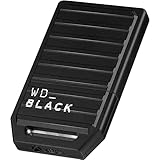
WD_Black 1TB C50 Expansion Card (WDBMPH0010BNC-WCSN)
Another official expansion card with the same fundamental advantage as the SANDISK: native next-gen game playback with no compromises. WD_Black branding signals a gaming-first design philosophy, and the card requires no external power or software installation. It is functionally equivalent in role to the SANDISK option above, and your choice between them often comes down to availability and pricing at the moment you buy.
- Plug-and-play NVMe expansion with zero configuration
- Full Quick Resume compatibility for Series X|S titles
- Only 1TB means you will likely need a second storage solution alongside it
Skip this if 1TB does not cover your active titles. It is designed to supplement internal storage, not replace it, so pair it with a larger external drive for your older library.
Seagate 2TB Portable Hard Drive (STGX2000400)
Seagate’s standard portable line works fine for Xbox as an external drive, despite lacking the Xbox-licensed badge. The same 2TB USB 3.0 interface delivers comparable performance to the Game Drive for backward-compatible content. The practical difference is that this model is designed for cross-platform use, so you can pull it off the console and connect to a PC or laptop without any compatibility surprises.
- Works across Xbox, PC, and Mac for consolidated storage
- Frequently available at a lower price than Xbox-branded equivalents
- No Xbox-specific firmware optimizations, so occasional reconnection quirks are possible
Skip this if you want a strictly Xbox-focused setup with guaranteed compatibility. For multi-device households, the versatility is the selling point.
Aiolo 500GB Ultra Slim External HDD
At under forty dollars, this drive is the cheapest way to add Xbox-recognized external storage to your setup. The ultra-slim profile means it sits behind the console without drawing attention, and USB 3.0 connectivity ensures it is at least as fast as the interface allows for a mechanical drive. The 500GB capacity is enough for a rotating set of backward-compatible titles without breaking the budget.
- Lowest entry price for Xbox-usable external storage
- Compatible with multiple platforms including older Xbox consoles
- 500GB fills up quickly with modern file sizes
Skip this if you need to store more than a handful of titles. It is a stopgap or overflow solution, not a primary storage strategy for anyone with an active library.
UnionSine 500GB Ultra Slim External HDD
This drive occupies the same budget tier as the Aiolo, often undercutting it by a dollar or two. Both serve the identical purpose: add a chunk of external storage for backward-compatible Xbox games without significant investment. UnionSine is a lesser-known brand compared to Seagate or WD, which means warranty support and long-term reliability records are thinner. For a low-stakes overflow drive, that is acceptable; for irreplaceable saves, look elsewhere.
- Competitive price point for basic capacity expansion
- Slim and portable for multi-console households
- Brand is less established, so support and longevity data are limited
Skip this if you value warranty confidence or store anything you cannot easily re-download. A few dollars more buys a name with a longer service track record.
WD_BLACK 4TB P10 Game Drive (WDBA5G0040BBK-WESN)
Four terabytes from a major gaming brand is a compelling proposition for anyone who hoards titles across generations. The P10 includes a one-month Xbox Game Pass trial, which is a small but genuine bonus for new subscribers. At 4TB, this single drive can hold your entire backward-compatible library while leaving room for recordings, screenshots, and media files that clutter internal storage.
- 4TB capacity eliminates the need to manage or shuffle files
- Includes one-month Game Pass for added initial value
- Price per gigabyte is reasonable but total cost still exceeds cheaper cards
Skip this if your primary need is native Series X|S game execution—it cannot run those titles directly. It is a library vault, not a performance upgrade.
UnionSine 1TB Ultra Slim External HDD
Twice the capacity of the smaller UnionSine at roughly double the price, this 1TB model hits a comfortable middle ground for budget-conscious buyers who find 500GB too restrictive. It serves the same role: external storage for backward-compatible titles and media. The slim form factor keeps the setup tidy, and the price makes it an easy addition alongside a small expansion card.
- 1TB provides a realistic buffer for a moderate game library
- Low total cost makes it easy to buy without commitment
- Still limited to backward-compatible titles and media only
Skip this if you already have a drive this size or if you need next-gen game support. It pairs best with an expansion card as a budget dual-drive solution.
Buying Guide
Expansion Card vs External Drive: Know Your Game Type
The single most important decision is whether your storage needs involve native Xbox Series X|S optimized games. Only expansion cards that plug into the dedicated port on the back of the console can run those titles directly. USB external drives—even fast ones—can only store and install next-gen games; you must transfer them to internal storage before playing. If your library is heavily weighted toward older titles, an external drive is both sufficient and dramatically cheaper per gigabyte.
Price Per Gigabyte and Real Capacity Planning
Expansion cards cost several times more per gigabyte than external drives. Before buying, open your Xbox storage settings and note the average file size of your most-played titles. A 1TB card might hold only a handful of the largest next-gen games, while a 2TB external drive stores dozens of backward-compatible ones. Budget buyers should prioritize card capacity for their most-played next-gen titles and fill remaining needs with external drives.
Portability, Power Draw, and Multi-Platform Use
If you plan to move a drive between devices, check whether it requires a separate power adapter or draws all power from the USB port. Slim portable drives typically run on USB alone, which keeps setups clean but may limit performance on lower-output ports. Xbox-licensed drives handle console sleep modes more gracefully than generic ones, which occasionally need a power cycle after the console wakes from standby.
Our Verdict
Best overall: WD_BLACK 4TB P10 Game Drive. It offers the most usable capacity at the best real-world value for the majority of Xbox owners who store backward-compatible titles and media alongside a small expansion card. Budget pick: UnionSine 500GB Ultra Slim at $35.49 is the cheapest functional entry into external storage. One condition favors another product: if your library is almost entirely native Series X|S games and you want unified playback without transfers, the SANDISK Optimus GX C50 expansion card wins because no external drive can match that capability.
FAQ
Can I play Xbox Series X|S games from an external USB drive?
No. Native Series X|S optimized titles must run from the internal SSD or a compatible expansion card. External USB drives can only store these games for transfer to internal storage before playing. Backward-compatible titles from Xbox One, Xbox 360, and original Xbox work fine directly from any USB 3.0 drive.
Do I need an officially licensed Xbox drive or does any USB drive work?
Any USB 3.0 external drive works for backward-compatible storage. Xbox-licensed drives add firmware optimizations for sleep-wake behavior and power management, reducing minor glitches. The functional difference is small for most users, though licensed drives tend to reconnect more reliably after console standby.
How many expansion cards can I use at once?
Only one expansion card can be inserted into the dedicated slot at a time on Xbox Series X|S consoles. If you need more expansion card capacity, you must purchase a larger card rather than stacking multiple ones. External USB drives can be added in multiple units simultaneously, limited only by available USB ports.
Is a 1TB expansion card enough for a new Xbox Series X owner?
For someone installing a handful of next-gen titles, 1TB is a reasonable starting point, though modern games consume substantial space and it fills faster than expected. Pairing a 1TB card with a 2TB or larger external drive for your older library creates a balanced setup that covers both native and backward-compatible playback without excessive cost.


