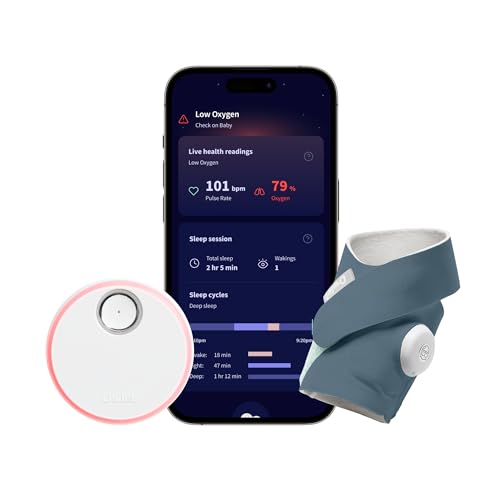
The best Owlet baby monitor for most nurseries in 2026 is the Owlet Dream Duo 3, because it is the only bundle in the current Owlet lineup that pairs the FDA-cleared Dream Sock — which tracks pulse rate and oxygen saturation — with a 2K HD Wi-Fi camera that handles cry alerts and night video inside the same app. It suits parents who want physiology and video on one dashboard and who do not want a mandatory monthly subscription for the core features. If you already own a camera you trust, the Owlet Dream Sock on its own delivers the same physiological readings for less. If you would rather keep the nursery off Wi-Fi entirely, a DECT audio monitor such as the VTech DM221 or the Motorola Nursery audio unit is the simpler and cheaper answer. And if you want a second screen that never depends on your phone, the Philips Avent Premium Connected is the strongest non-Owlet pick. This guide compares all twelve options by what they actually measure, how alerts reach you, how they connect, how much setup they demand, and what they cost to keep running.
Our Top Picks
 Owlet Dream Duo 3 Smart Baby Monitor System3.3 x 4 x 4.5"4.4 x 10 x 5.7 Inches2 PoundsCheck on Amazon
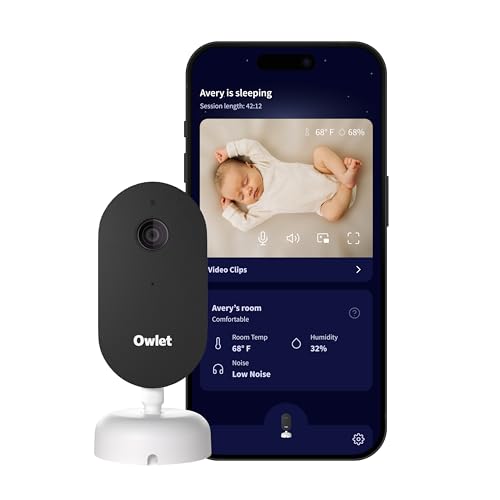


Top 3 picks at a glance
Quick Comparison
Every product below is judged on the same five axes: what it measures, how it alerts you, how it connects, how much setup it needs, and whether it carries an ongoing cost. Price tiers are relative bands within the baby-monitor market, not fixed figures — listing prices move daily.
| Product | Best for | Key specs | Price tier |
|---|---|---|---|
| Owlet Dream Sock | Sock-only sleep tracking, no camera | FDA-cleared pulse rate and oxygen saturation; sleep-state trends; foot sensor pod; base station relays to app over 2.4 GHz Wi-Fi; no video | Premium |
| Owlet Dream Sight | Camera-only households that want cry alerts | 2K HD Wi-Fi camera; cry detection alerts; night vision; two-way audio; no physiology tracking | Mid-range |
| Owlet Dream Duo 3 | Best overall — sock plus 2K video | Dream Sock (pulse rate, oxygen saturation, sleep states) + 2K HD Wi-Fi camera; single app; no mandatory subscription | Premium |
| Owlet Dream Duo 2 | Sock plus HD camera on a bundle budget | Dream Sock + HD-class Wi-Fi camera; second-generation bundle; same sock readings as the Duo 3 | Premium |
| Nanit Smart Baby Video Monitor (camera + floor stand) | Camera-first sleep analytics | 1080p Wi-Fi camera; overhead floor-stand mount; breathing-motion tracking with Nanit Breathing Wear (sold separately); Insights subscription tiers | Mid-range |
| Philips Avent Premium Connected | Dedicated parent screen plus app | 1080p camera; 5″ HD parent unit; app access; no subscription for core features; no physiology tracking | Mid-range |
| Owlet Accessory Fabric Sock | Spares and grow-out replacements | Fabric sock only, listed for 0–18 months; sensor pod and base station sold separately; measures nothing on its own | Budget |
| Motorola Nursery Audio Monitor | No-Wi-Fi audio simplicity | DECT private connection; up to 1,000 ft range; volume control; audio only, no video or physiology | Budget |
| VTech DM221 Audio Monitor | Budget audio with two-way talk | Up to 1,000 ft range; vibrating sound alert; talk-back intercom; sound-level indicator; audio only | Budget |
| Levana Oma Sense | Portable movement alerts | Clips to the diaper; detects movement and responds with vibration and audible alerts; no Wi-Fi, no app, no video | Mid-range |
| Owlet Dream Duo (Gen 1) | Entry point into premium bundles | FDA-cleared Dream Sock + Owlet Cam 2; first-generation bundle; HD camera class | Premium |
| VTech DECT Audio Monitor | Longest battery life in an audio unit | DECT 6.0, no Wi-Fi; stated 8-hour battery; belt clip; up to 1,000 ft range; 5-LED sound indicator | Budget |
How We Chose
This roundup is built from published specifications, manufacturer documentation, regulatory clearances, and the practical realities of nursery hardware — not from any kind of physical evaluation. The selection criteria were deliberately narrow. First, category fit: every device here has to solve a real night-time problem, whether that is physiology tracking, video, audio, or movement monitoring. Second, what the device can honestly measure: a foot sensor using optical pulse oximetry, a camera tracking a printed fabric pattern, a DECT handset, and a clip-on movement sensor are four different technologies, and lumping them together is where most buying advice goes wrong. Third, alert path: how a notification actually reaches a sleeping parent at 3 a.m., because a phone that is face-down on a charger is not an alert. Fourth, setup burden: a sock that needs a base station in the room, a camera that needs a floor stand, and a monitor that needs nothing but a wall outlet are not equivalent projects. Fifth, ongoing cost and upgrade path — subscriptions, consumable fabric socks, and whether the system grows with the child or gets replaced at the one-year mark. Products were included when they were genuinely distinct choices within the Owlet ecosystem or credible alternatives outside it, and excluded when they duplicated another entry without adding a different answer.
1. Owlet Dream Sock – Best for Sleep-Only Tracking
As an Amazon Associate we earn from qualifying purchases at no extra cost to you.
The Dream Sock is the right pick for parents who have already solved video — maybe with a camera they like, maybe with an older monitor — and who now want the physiology layer without buying a second camera they will never use. It is also the pick for anyone who wants the nursery as quiet as possible: no lens, no microphone, no feed to check compulsively at 2 a.m. Just a reading on a foot.
Key specs
- Measures: pulse rate and oxygen saturation from a sensor pod worn on the foot, plus sleep-state trends (awake, light sleep, deep sleep) surfaced in the Owlet Dream App.
- Regulatory class: FDA-cleared for pulse rate and oxygen saturation in healthy infants inside a defined age and weight range — roughly 1 to 18 months and 6 to 30 lb. Always check the current labeling before you buy.
- Hardware: a fabric sock with a snap-in sensor pod, plus a base station that sits in the room.
- Connectivity: a short-range link from the sock to the base station, which relays to your phone over 2.4 GHz Wi-Fi.
- Alerts: in-app notifications plus base station indicators when readings fall outside the configured range.
- Power: a rechargeable pod designed to cover a night’s sleep; daily charging is the routine.
- Cannot do: no camera, no video, no audio, no diagnosis, and no explanation of why a reading changed.
The single-purpose design is the strength. Because there is no camera, there is no feed to refresh and no temptation to stare at a screen instead of sleeping. The base station gives you a physical, phone-independent signal in the room, which matters more than most buyers expect — a phone on silent is not an alert system, and a base station light is visible from a bed without unlocking anything.
What the sock does not do is just as important. It reports two physiological numbers and a sleep state. It does not tell you whether a dip is meaningful, it does not diagnose anything, and it is not a substitute for safe-sleep practice or medical advice. Parents who expect a monitor to prevent a tragedy will be disappointed by every product on this page, including this one. Parents who want a nightly data trail and an early nudge that something looks different will find the sock earns its place.
Pros
- Genuine physiology tracking — pulse rate and oxygen saturation — rather than an inference from video.
- No camera means no video feed, no microphone, and less of a Wi-Fi footprint in the nursery.
- Base station gives a room-level alert that does not depend on your phone.
- Sleep-state trends build a useful picture over weeks, not just a single night.
- Core readings and alerts do not require a monthly plan.
Cons
- Needs a nightly recharge routine, and the pod is useless on a flat battery.
- Fabric socks are a consumable — they wear, they get soiled, and babies grow out of sizes.
- No video at all, so it cannot replace a camera you do not already own.
- Placement matters: a poorly seated sock produces readings you will second-guess.
- Premium tier pricing for a device that answers only one question.
Compared with the Dream Sight, the two are complements rather than rivals — the Sight is the camera half and the Sock is the physiology half, and buying both separately costs more than buying them bundled. Compared with the Dream Duo 3, the crucial detail is that the sock measures the same things in every bundle. The Duo 3’s premium buys a 2K camera, not better physiology. If you already own a camera, the standalone sock is the cheaper route to identical data.
2. Owlet Dream Sight – Best for Camera-Only Households
The Dream Sight is for the parent who wants a modern nursery camera and cry alerts but has no interest in strapping a sensor to a foot. It is also the sensible first purchase for a family that plans to add the Dream Sock later — the two run in the same app, so the upgrade is additive rather than a replacement.
Key specs
- Measures: video and audio. That is the whole list.
- Resolution: 2K HD — the highest camera class in the Owlet lineup as currently listed.
- Alerts: cry detection notifications through the app.
- Vision: night vision for a dark room, plus two-way audio so you can talk back.
- Connectivity: 2.4 GHz Wi-Fi to your home network.
- Cannot do: no pulse rate, no oxygen saturation, no sleep-state data, no breathing analysis.
The pitch here is image quality and simplicity. A 2K sensor gives you roughly 78% more pixels per frame than 1080p at the same frame rate, which shows up as more detail when you zoom into a crib from across the room — useful for checking whether a blanket has moved, not just whether the baby is present. Cry detection adds an active notification layer so the camera is doing something beyond passively streaming.
Because there is no sensor, there is no daily charging routine and no fabric to replace. Setup is a power cable, a Wi-Fi password, and a mounting decision. That lower friction is the real argument for the Sight over any bundle: fewer things to remember at 11 p.m. when you are already tired.
Pros
- 2K resolution is the sharpest camera class Owlet currently lists.
- Cry alerts turn it into an active notifier rather than a passive stream.
- No sensor means no nightly recharge and no consumable fabric.
- Shares the Owlet Dream App with the sock, so adding one later is straightforward.
- Mid-range tier pricing versus the premium bundles.
Cons
- Measures nothing physiological — no pulse rate, no oxygen saturation.
- Fully dependent on your home Wi-Fi; a router outage means no camera.
- Cry detection is a sound trigger, not an analysis of why the baby is crying.
- No dedicated parent screen, so alerts route through a phone or tablet.
- You pay for 2K whether or not your viewing device or network can exploit it.
Compared with the Dream Duo 3, the Sight is the same camera half without the sock — so if you eventually want physiology, the bundle is the cheaper path and the Sight becomes a duplicate camera. Compared with the Philips Avent Premium Connected, the Sight wins on resolution and loses on independence: the Philips ships a dedicated 5″ parent unit that keeps working when your phone is dead.
3. Owlet Dream Duo 3 – Best for Most Families

This is the default recommendation for a first nursery because it answers both questions at once — what is my baby’s body doing, and what does the room look like — without asking you to manage two apps, two alert streams, or two support relationships. It suits parents who want the complete picture and would rather pay once than assemble a system in stages.
Key specs
- Measures: pulse rate and oxygen saturation from the FDA-cleared Dream Sock, sleep-state trends, plus video and audio from the camera.
- Camera: 2K HD Wi-Fi — the top camera class in the Owlet range.
- Alerts: cry detection from the camera and reading-based notifications from the sock, delivered through one app.
- Connectivity: sock to base station over a short-range link; base station and camera to your network over 2.4 GHz Wi-Fi.
- Power: camera on mains power; sock pod recharged nightly.
- Cannot do: diagnose anything, predict events, or explain a reading — and no subscription is required for the core alerts.
The value of the bundle is not a discount so much as a single source of truth. When the sock flags a reading and the camera shows the baby has kicked a leg free, you have both halves of the story in one timeline. Split across two apps, that correlation is manual and slow — which is exactly the moment you do not want to be swiping between screens.
The Duo 3 is also the cleanest upgrade path in the lineup. Because it already contains the top camera class and the current sock, there is nothing meaningful to add later except replacement fabric socks. That is a real advantage over the older bundles: you are not going to find yourself wanting the newer camera eighteen months in.
Pros
- Physiology and 2K video in one app with one alert stream.
- FDA-cleared sock readings, not a video-derived estimate.
- Cry alerts plus night vision plus two-way audio on the camera side.
- No mandatory subscription for the features most parents actually use.
- Nothing significant left to upgrade to within the Owlet ecosystem.
Cons
- Premium tier pricing for a system you may only use for a year.
- Two devices to keep powered and connected instead of one.
- Fabric socks remain an ongoing consumable.
- Still Wi-Fi dependent for the camera and the app link.
- Overkill if you genuinely only want audio.
Compared with the Dream Duo 2, the Duo 3’s advantage is the camera class — 2K versus HD — while the sock readings are identical, which is the single most useful thing to understand about this lineup. Compared with the Dream Duo (Gen 1), the Duo 3 is two bundle generations newer and is the one to buy if the price difference is not decisive for you.
4. Owlet Dream Duo 2 – Best for Second-Generation Bundle Value

The Dream Duo 2 suits the parent who wants the full sock-plus-camera combination and is willing to trade camera resolution for a lower bundle price. It is the right answer when your viewing happens on a phone screen at 3 a.m. rather than on a large display, because at phone scale the difference between HD and 2K is far less visible than the spec sheet suggests.
Key specs
- Measures: pulse rate and oxygen saturation plus sleep-state trends from the Dream Sock, and video and audio from the camera.
- Camera: HD class rather than 2K — the main difference from the Duo 3.
- Alerts: reading-based notifications from the sock and cry alerts from the camera, in one app.
- Connectivity: base station and camera on 2.4 GHz Wi-Fi; short-range link from sock to base.
- Power: camera on mains; sock pod charged nightly.
- Cannot do: no 2K detail, no diagnosis, no predictive warnings.
The honest case for the Duo 2 is that the physiological half — the part that actually generates alerts you will act on — is the same as the flagship. If you have ever woken up to a notification and had to decide in four seconds whether to get out of bed, you already know the camera is supporting evidence, not the primary signal. Spending the difference on the camera instead of on, say, a better mattress or a second fabric sock is a defensible trade.
Where the Duo 2 loses ground is longevity. HD is the older camera class, and if you keep the system for a second child two or three years later, it will feel dated next to whatever ships then. That is a real cost, just a deferred one.
Pros
- Same FDA-cleared sock readings as the flagship Duo 3.
- Lower bundle cost than the 2K-equipped version.
- One app for physiology, video, audio and cry alerts.
- No mandatory subscription for core features.
- Proven two-part structure that is easy to explain to a partner or grandparent.
Cons
- HD camera detail falls short of 2K when you zoom in from across a room.
- Aging generation — less future-proof than the Duo 3.
- Still requires nightly sock charging and periodic fabric replacement.
- Wi-Fi dependency for both camera and app.
- Premium tier pricing even at the lower bundle point.
Compared with the Dream Duo 3, this is a camera-resolution decision and nothing else — the sock, the app, and the alert logic are the same story. Compared with the Dream Duo (Gen 1), the Duo 2 is the newer generation of the same idea, so between the two older bundles, the Duo 2 is usually the more sensible pick unless the Gen 1 bundle is being cleared at a meaningfully lower price.
5. Nanit Smart Baby Video Monitor – Best for Camera-First Sleep Analytics

Nanit suits parents who think in dashboards. If what you want is nightly sleep reports, wake-window patterns, and a camera mounted overhead for a clean top-down view, this is the ecosystem built for that. The included floor stand is the giveaway — Nanit’s whole approach assumes the camera looks straight down into the crib rather than across it from a wall.
Key specs
- Measures: video and audio directly; breathing-motion patterns when the baby wears Nanit Breathing Wear, which is sold separately.
- Camera: 1080p Wi-Fi, mounted on a floor stand for an overhead view.
- Alerts: motion and sound notifications, plus sleep insights through the Nanit app.
- Subscription: Insights tiers are paid — this is the main ongoing cost in this roundup.
- Cannot do: no pulse rate, no oxygen saturation. Breathing motion is inferred from a printed pattern on fabric, not measured optically from the body.
That last point is the one buyers most often get wrong. A camera watching a patterned band move is measuring motion of a pattern. It is not measuring blood oxygen or pulse rate, and it never claims to. Nanit’s value is trend analysis and a well-engineered overhead view, not clinical-grade physiology.
The floor stand is also a genuine practical difference. An overhead camera sees the whole crib and cannot be knocked off a shelf, but it is a piece of furniture in the room, it needs a clear footprint beside the crib, and it must be positioned so the cable is nowhere near reach. Setup is more involved than a shelf camera, and the payoff is a better angle for analytics.
Pros
- Overhead view from the floor stand gives a clean, consistent crib image.
- Strong sleep analytics and nightly reporting when you subscribe.
- Breathing-motion tracking available with Breathing Wear.
- Mature app with a well-developed feature set.
- Mid-range tier hardware pricing before the subscription.
Cons
- Paid subscription tiers for the insights that make it interesting.
- Breathing Wear is an extra purchase and an extra thing to dress the baby in.
- No pulse rate or oxygen saturation at any price.
- Floor stand takes up room and adds setup steps.
- Ongoing cost profile is the worst in this comparison.
Compared with the Owlet Dream Duo 3, this is a philosophy choice: Nanit gives you richer analytics and a better camera angle; Owlet gives you actual physiological readings and no required subscription. Compared with the Philips Avent Premium Connected, Nanit wins on analytics and loses on independence, since Philips ships a dedicated parent screen.
6. Philips Avent Premium Connected – Best for a Dedicated Parent Screen

This is the pick for anyone who has ever had a phone die at 4 a.m. The Philips Avent Premium Connected ships with a dedicated 5″ HD parent unit in addition to app access, which means the monitor works as a standalone appliance and the phone becomes an optional extra rather than a single point of failure.
Key specs
- Measures: video and audio only.
- Camera: 1080p Wi-Fi.
- Parent unit: a dedicated 5″ HD screen that receives the feed without needing a phone.
- Connectivity: Wi-Fi for app features; the dedicated unit handles viewing independently.
- Ongoing cost: none for core features — no subscription tier.
- Cannot do: no pulse rate, no oxygen saturation, no sleep-state physiology.
The dual-path design is the entire argument. A phone-based monitor is convenient right up to the moment the battery dies, the screen locks, or a software update decides to log you out. A dedicated unit sidesteps all of it, and it is also the feature that makes a monitor shareable with a grandparent or a night nurse without handing over your phone credentials.
Against the Owlet cameras, the trade is resolution. 1080p is a step below 2K, so fine detail at distance is slightly softer. Against the audio-only monitors, it is a different class entirely. For a household that values reliability over pixel count, the parent unit outweighs the resolution gap.
Pros
- Dedicated 5″ parent unit works without a phone.
- No subscription for the core feature set.
- Well-established nursery brand with a mature product line.
- App access adds remote viewing when you want it.
- Easy to hand to a caregiver for an evening.
Cons
- 1080p rather than 2K.
- No physiological measurements at all.
- A second device to keep charged and to find when it slides under a couch cushion.
- Smaller ecosystem than Owlet or Nanit.
- Mid-range tier pricing for video only.
Compared with the Owlet Dream Sight, Philips gives up resolution and gains independence — and for many parents that is the better trade. Compared with Nanit, it gives up analytics and subscriptions, which is a feature if you never wanted a monthly bill.
7. Owlet Accessory Fabric Sock – Best for Spares and Grow-Out Replacements

This is not a monitor. It is the fabric half of the Dream Sock system, sold on its own, and it is the item most Owlet owners end up buying more than once. It suits anyone who already owns a Dream Sock and needs a second sock so one can be in the wash while the other is in use, or a replacement because the current one has worn thin.
Key specs
- What it is: a fabric sock that the sensor pod snaps into. Nothing more.
- Listed fit: 0 to 18 months.
- Sensor and base station: sold separately — without them this item measures nothing and alerts on nothing.
- Colour: available in finishes such as dusty rose, which matters if you want the spare to match.
- Ongoing role: this is the consum
Related guides