Our Top Picks


Top 3 picks at a glance
Best Electronic Mouse Traps for Home Use
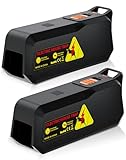
The best electronic mouse traps for most homes are single-catch, enclosed models such as the Victor Electronic Mouse Trap M250S, while multi-catch units such as the Victor Multi-Kill Electronic Mouse Trap M260 make more sense when mice are entering repeatedly or you need fewer daily resets.
Electronic traps use bait to lure a mouse into a chamber, then deliver a high-voltage pulse. Unlike glue boards and poison, they keep the animal contained and avoid leaving toxic bait where pets or children can reach it. The right choice depends less on the headline voltage than on capacity, power source, access control, cleaning routine, and whether the trap can fit along the mouse’s travel route.
As an Amazon Associate we earn from qualifying purchases at no extra cost to you.


Quick comparison: which type fits your home?
| Situation | Best trap type | Typical capacity | Power source | Why it fits |
|---|---|---|---|---|
| One or two mice in a kitchen | Enclosed single-catch trap | 1 mouse | 4 C batteries or similar | Compact, simple to check, and easy to place beside cabinets |
| Regular activity in a basement or garage | Multi-catch electronic trap | Several mice before emptying | Usually batteries | Reduces daily resets and handles a more active route |
| Pet-accessible room | Fully enclosed, tamper-resistant model | Usually 1 mouse | Batteries or mains adapter, depending on model | Limits access to the bait chamber and electrical contacts |
| Remote shed with no convenient outlet | Battery-powered enclosed trap | 1 or several | Replaceable batteries | Works without an extension cord and is easier to relocate |
| Heavy infestation | Several traps or multi-catch units | Varies | Usually batteries | A single trap may saturate quickly; entry-point sealing is also necessary |
1. Best overall for most indoor rooms: enclosed single-catch traps
A single-catch electronic trap is the most practical starting point for a kitchen, pantry, utility room, or apartment. The Victor Electronic Mouse Trap M250S is a familiar example of this category: it has an enclosed tunnel, a bait area, an indicator for a successful catch, and a removable section for disposal and cleaning.
Its main advantage is predictable maintenance. After one catch, you empty the chamber, wipe away residue, rebait it, and set it again. That is more work than a multi-catch trap during a large infestation, but it also means a dead mouse is not left inside for multiple days.
When to choose this type
- You have seen occasional droppings rather than continuous activity.
- The trap needs to fit behind an appliance or beside a narrow cabinet.
- You want a clear “caught” indicator and a simple reset process.
- You can inspect the trap at least once each day.
For most homes, buy two rather than one if activity is visible in more than one room. Mice commonly travel along walls, so placing one trap on each active route is more effective than moving a single trap back and forth.
2. Best for repeated activity: multi-catch electronic traps
A multi-catch electronic trap is a better fit for a basement, garage, loft, or commercial-style storage area where mice may arrive throughout the night. The Victor Multi-Kill Electronic Mouse Trap M260 is an example of this design. Instead of requiring a full reset after every catch, the unit can hold multiple catches before it needs to be opened.
Capacity is useful, but it is not a substitute for checking the trap. A multi-catch unit can become unpleasant quickly in warm conditions, and a full chamber may stop accepting new mice. Check the status indicator daily and empty it sooner if the room is warm, humid, or occupied by pets.
Capacity calculation: when does multi-catch pay off?
Suppose a single-catch trap takes two minutes to open, empty, wipe, rebait, and reset. If you catch four mice over two nights, that is roughly eight minutes of reset work, plus four separate checks. A multi-catch trap that holds four or more mice may reduce the resets to one cleanup session.
That convenience matters most when the trap is in a difficult location, such as behind stored boxes. It matters less in a kitchen where you should inspect the trap every morning anyway.
3. Best for flexible placement: battery-powered models
Battery operation is usually the most useful power arrangement for mouse traps because the best location rarely has a convenient outlet. A trap can sit directly beside a wall, under a sink, or behind a refrigerator without an extension cord crossing a walkway.
Many enclosed electronic traps use four C-size batteries, although the exact requirement varies by model. Battery life depends heavily on the number of activation attempts, indicator lights, temperature, and battery quality. A rough planning estimate is:
Estimated runtime = total battery capacity ÷ average current draw.
For example, if four alkaline C batteries provide a combined usable capacity of approximately 6,000 mAh under intermittent use, and the trap averages 25 mA because it spends most of its time idle, the theoretical runtime is 6,000 ÷ 25 = 240 hours, or about 10 days. Real-world runtime can be longer or shorter because electronic traps draw power differently in standby and after activation. Treat this as a planning estimate, not a manufacturer guarantee.
Use fresh batteries in pairs or as a complete set. Mixing old and new cells can reduce reliability and may cause low-battery indicators to appear prematurely. In an unheated garage, lithium primary batteries can perform better in cold weather, but confirm that the trap’s manual permits them.
4. Mains-powered traps: useful, but less convenient
A mains-powered electronic trap can avoid battery replacement, but it introduces placement restrictions. The cord must not cross a route where someone can trip, and the adapter should remain dry and inaccessible to pets. Do not place a corded trap beside a sink, on a damp basement floor, or where a leaking appliance could wet it.
For an indoor room with a nearby outlet and a stable shelf, mains power can be reasonable. For kitchens and garages, battery power is usually easier because mice often travel along edges that do not line up with outlets.
Safety features worth prioritizing
- Fully enclosed electrodes: The electrical contacts should be inside the tunnel rather than exposed on the outside.
- Tamper-resistant housing: Choose a design that prevents small hands, noses, and paws from reaching the bait or contact area.
- Arming indicator: A visible light or clear status signal reduces the chance of opening an active trap.
- Catch indicator: This tells you when to inspect the chamber instead of relying on smell or guessing.
- Stable base: A broad, non-slip base is preferable near appliances or on smooth flooring.
- Battery compartment isolation: Batteries should not be exposed to bait residue or moisture.
Even an enclosed model should be placed where children and pets cannot knock it over. Keep the trap away from water, never modify the housing, and follow the manufacturer’s instructions before opening it. If you use bait, apply only a small amount so it cannot be pulled out of the chamber.
Cleaning and reset requirements
Cleaning is where electronic traps differ most from passive snap traps. Before handling a caught mouse, switch the unit off or follow the maker’s safe-disposal procedure. Wear disposable gloves, place the contents in a sealed bag, and wash your hands afterward.
Remove loose bait and droppings with disposable material. Wipe hard, non-electrical surfaces with a household disinfectant according to its label, then allow the trap to dry completely. Do not pour liquid into the electronics, immerse the unit, or spray directly into the tunnel. If the interior has a removable plastic insert, take it out before cleaning whenever the instructions allow it.
Replace bait when it becomes dry, dusty, or contaminated. Peanut butter is commonly used because its strong smell and sticky texture make it difficult for a mouse to steal without entering, but use only a pea-sized amount. Chocolate spread, soft pet food, or seeds may work when the local mice ignore peanut butter.
Placement determines success
Place the trap perpendicular to the wall, with the entrance facing the mouse’s expected direction of travel, or position it parallel to the wall if the design has an opening along its side. Mice prefer edges and dark, covered paths, so the middle of an open floor is usually a poor location.
- Set traps beside droppings, gnaw marks, or dark grease marks along baseboards.
- Prioritize gaps beneath cabinets, behind refrigerators, beside washing machines, and near pipe penetrations.
- Remove competing food from counters and floors before setting the trap.
- Keep the entrance clear; do not bury it behind boxes or loose insulation.
- Use two traps at a corner or doorway if activity continues but one trap remains untouched.
If a trap is untouched for three nights, do not assume there are no mice. First check its orientation, bait freshness, battery status, and whether another food source is more attractive. Move it only a short distance toward the nearest evidence rather than relocating it randomly.
What to buy for common indoor settings
Choose an enclosed single-catch model for a normal kitchen or apartment. Choose a multi-catch unit for a basement or garage with recurring activity and infrequent supervision. Choose battery power when placement flexibility matters, and prioritize a tamper-resistant housing wherever children or pets may enter the room.
Electronic traps work best as part of a control plan: seal holes wider than about 6 millimeters, store food in hard containers, repair damaged door sweeps, and remove accessible water. If fresh droppings continue after several days, use multiple traps and consider professional pest control rather than endlessly rebaiting one unit.
Frequently asked questions
Are electronic mouse traps safer than poison indoors?
They avoid the secondary-poison risk associated with rodenticide, but they are not automatically safe. Keep the trap inaccessible to children and pets, and dispose of catches promptly.
How many electronic mouse traps should I use?
Start with one trap per active room, or two in a large room with evidence at opposite ends. More traps are useful when mice have several travel routes, but sealing entry points remains essential.
Should the trap be placed with the opening against the wall?
Follow the trap’s tunnel design. For a front-entry model, place the entrance toward the route and keep it close to the wall. For a side-entry model, run the long side parallel to the wall so the opening intersects the mouse’s path.